Posts

Children’s Bible Program – Level 2: Lesson 11 “God Makes Another Covenant”
Sweeting Publishing | FreeBibleimages.org

Author: Janth English

Read Together: Noah had warned the people, but they would not listen. After Noah and his family entered the ark, God closed the door and sealed it. The rain poured down from the sky, and the waters under the earth were opened up. For forty days and nights it rained, and the waters covered the entire earth. No animal that lived on land survived. After being on the water for five months, the ark came to rest on top of Mt. Ararat, which is in modern-day Turkey. Noah, his family, and all the animals stayed on the ark for another seven months while they waited for the waters to recede. Noah had been on the ark for a year, but the first thing he did upon leaving the ark was to make a sacrifice to God and worship Him. God decided that He would never again destroy everything because of man’s wickedness. God made a covenant with Noah, all his descendants, and every living creature that He would never again destroy the earth by flood. The sign God gave in remembrance of the covenant is the rainbow.

Read Together: Genesis 7:1624; 8:122; 9:117

Parents:

  • Some people believe that the flood was just a local flood somewhere in the Middle East. Explain to your child it was worldwide. (Hint: God said He would destroy “from the face of the earth all living things” [Genesis 7:4], and that “all the high hills under the whole heaven were covered” [Genesis 7:19], and that when the water receded “the tops of the mountains were seen” [Genesis 8:5]).
  • Ask your child what would it be like for Noah and his family to stay aboard the ark for a year. What would they eat? Where would they sleep? Where would they get fresh water for themselves and the animals? Building the ark was no small task, and it took a lot of planning.
  • Point out that God gave Noah, his sons, and their wives the same command that He gave Adam and Eve. Can he or she point out what that command is?
  • Ask your student if he or she has seen a rainbow. Explain that whenever a rainbow in seen in the sky, God wants us to remember that His promise is still in effect. Ask, what was that promise?

Review memorization:  

Genesis 6:9 “This is the genealogy of Noah. Noah was a just man, perfect in his generations. Noah walked with God.”

Printable PDF – L2.11


Children’s Bible Program – Level 2: Lesson 12 “Noah’s Family Expands”

Moody Publishers | FreeBibleimages.org

Author: Janth English

Read Together: Did you know that Noah’s name means “rest”? His name showed the hope his father had that God would use Noah to bring deliverance to His people. And of course, that’s what God did. God used Noah to preserve the human race. When Noah and his family left the ark, God commanded them to be fruitful and multiply. This means God wanted them to have large families. All nations, races, ethnicities, and cultures–all people today can trace their lineage back to Noah. Noah saw many of his children, grandchildren, and great-grandchildren because he lived for 350 years after the flood. He lived a total of 950 years, which was common for people in the pre-flood era. However, after the flood, the length of most people’s life began to shorten. Within about five generations after the flood, people were living less than two hundred years. Noah also lived to see, just as God had said, that man’s heart is inclined toward evil (Genesis 8:21). People did not learn from the problems of the pre-flood world. Not long after the flood, the human family was again walking contrary to God.

Read Together: Genesis 5:28–29; 9:18–29; 10:1–32

Parents:

  • Help your student to see how families are the structural building blocks of society.  Notice that families grown large became nations.
  • Point out to your child the care that God took to record the descendants of Shem, Ham, and Japheth and where they lived. One reason for this is so that we can identify modern nations by their ancient names.
  • Noah was a preacher of righteousness before and after the flood (2 Peter 2:5). He also was the elder and leader (“patriarch,” which means the male head of a family or tribe) of his growing family. Discuss with your child why people did not listen to Noah. Explain that human beings have freedom of choice, but that Satan the devil influences their decisions.
  • The people did not listen to the wisdom of Noah who was a “preacher of righteousness” (2 Pet 2:5). Ask if this is a common problem in families today. Think aloud with your child about Proverbs 1:7–8; 10:21. Ask your child if they can think of an incident in which things went wrong because someone failed to listen to their elders.

Review memorization:

Genesis 6:9 “This is the genealogy of Noah. Noah was a just man, perfect [upright, blameless, or wholehearted] in his generations. Noah walked with God.”

Printable PDF – L1.11

Printable PDF – L1.9-L1.12

Children’s Bible Program – Level 2: Lesson 13 “Nimrod the Mighty Hunter”

Author: Janth English

Read Together: God saved eight people from the great flood He brought upon the earth: Noah and his wife, his sons Shem, Ham, and Japheth, and his sons’ wives. The sons of Noah began to have children, and their families grew into all the nations of the world. The names of their descendants (children, grandchildren, etc.) can be found in Genesis 10. Even as these families grew into tribes and nations, the earth was still very sparsely populated. One of the sons of Ham was named Cush, and one of the sons of Cush was named Nimrod, who was a mighty hunter. The people began to trust in Nimrod for their protection in place of God Almighty. They called Nimrod “the mighty hunter before the LORD” (Genesis 10:9). People began to idolize him, and most of them soon forgot the lessons of the Flood.

Read Together: Genesis 9:18–19; 10:1–8, 13–32; Acts 17:26

Discuss:

  • Explain to your child that knowing the names of the ancient peoples and lands they lived in is important because it helps us identify their descendants today. This also helps us understand prophecies that affect them.
  • Discuss Acts 17:26 with your child. Explain that Acts 17:26 shows that God has given different parts of Noah’s family different lands to inherit.
  • Ask your child to picture himself or herself on the earth about 100 years after the flood. Would it be frightening to live in an area where wild animals outnumber humans? What would be the natural thing to do? What should they have done?
  • Ask your child what lessons he or she thinks people should have learned from the Flood. How does the people’s attitude toward Nimrod show they had not learned those lessons?

Review Memorization:

Genesis 11:9 “Therefore its name is called Babel, because there the LORD confused the language of all the earth; and from there the LORD scattered them abroad over the face of all the earth.”

Printable PDF – L2.13

Children’s Bible Program – Level 2: Lesson 14 “Nimrod’s Kingdom”

The Bible Journey – thebiblejourney.com | FreeBibleImages.org

By Janth English

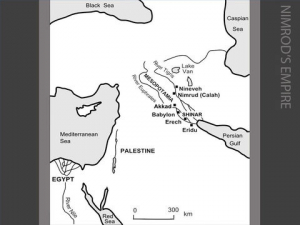
Read Together: The people began to put their faith and trust in Nimrod, and Nimrod began to feel very proud of himself. The name Nimrod can mean “rebel,” and Nimrod was truly a rebel. Nimrod is known in history to be a ruler who turned people from the true worship of God and caused religious confusion. According to some historical sources, he began to gather people together in cities rather than encouraging them to spread out over the earth as God wanted. Initially, the reason for keeping people together might have been for protection. But it soon became clear that Nimrod wanted the people together so he could be a powerful ruler, and he became a cruel tyrant over them. Nimrod set out to establish a world-ruling kingdom and his first city was Babel. He also founded Erech, Accad, and Calneh in the land of Shinar which is near modern-day Iraq. He also took lands in Assyria that were occupied by the descendants of Shem, which included Nineveh, Rehoboth Ir, Calah, and Resen. This was likely not done peacefully, and it is probable that Nimrod introduced war again to the human family after the Flood.

Read Together: Genesis 10:6–12

Discuss:

  • Help your child identify ways in which history suggests Nimrod rebelled against God.
  • Nimrod was born in the third generation after the flood. Discuss with your child how short the time was before mankind forgot the lessons of the Flood. This is a good opportunity to discuss the fact that people who don’t learn from their mistakes are often doomed to repeat them.
  • Nimrod was a “mighty hunter” who helped the people in the beginning. But history says he had pride and credited himself for his accomplishments. Ask your student how humility might have helped Nimrod. Take this opportunity to talk about servant leadership.

Review Memorization:

Genesis 11:9 “Therefore its name is called Babel, because there the LORD confused the language of all the earth; and from there the LORD scattered them abroad over the face of all the earth.”


Printable PDF – L2.14

Children’s Bible Program – Level 2: Lesson 15 “The Tower of Babel”

Sweet Publishing | FreeBibleImages.org

By Janth English

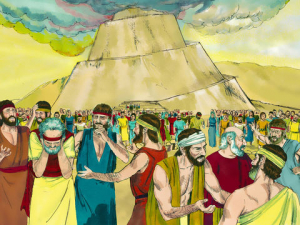
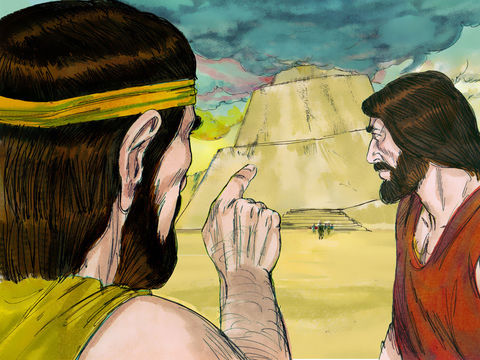
Read Together: The city of Babel was the beginning of Nimrod’s empire, and the beginning of mankind’s post-Flood attempt to govern himself apart from God. Nimrod led the people to build a very tall tower in rebellion against Him. But God was not pleased with their actions, so God decided to confuse the people’s language. They couldn’t share ideas and so they weren’t able to keep working on the tower. The word “Babel” itself means confusion, and you can imagine what happened when God confused the languages. Only those who spoke the same language could understand each other, and God divided the languages along family lines. People stayed with those they could understand, and they began to settle in their own territories as God wanted them to. Needless to say, work on the tower ceased. The Tower of Babel was never completed, but the attitude of mankind’s rebellion against God continues to this day.

Read Together: Genesis 11:1–9

Discuss:

  • Ask what the people of Babel did to show their defiance toward God.
  • Ask your child to imagine working on a group assignment when suddenly he or she could not understand anything other members of the team were saying. Would they be able to work together as a team? This is the same situation that occurred in Babel when God confused the languages.
  • Point out to your child that God wants people to communicate and understand one another. This is why He will restore a pure language to mankind in the Millennium (Zephaniah 3:9).

Review Memorization.

Genesis 11:9 “Therefore its name is called Babel, because there the LORD confused the language of all the earth; and from there the LORD scattered them abroad over the face of all the earth.”

Printable PDF – L2.15

Children’s Bible Program – Level 2: Lesson 16 “Nimrod’s Legacy”

Sweet Publishing | FreeBibleImages.org

By Janth English

Read Together: The Bible portrays Nimrod as an evil man, and we still see the effect of his evil influence today. Nimrod is the first recorded leader to organize people into city-states so that he could rule over them. He was a proud tyrant who was openly rebellious toward God. Nimrod built the city of Babel, and led the effort to undermine God’s plan for people to spread throughout the earth, building a tower that reached to the sky. Many historians trace the pagan traditions that are part of all of the world’s religions today back to this very city. People who are really following God avoid these traditions, even if they are mixed with a worship of Christ. Instead, God’s people keep His Sabbath, Holy Days and other commands.

Read Together: Genesis 10:8–12; 11:5–9; Revelation 17:5; 18:1–2.

Discuss:

  • Ask your child what are some wrong traditions that people in the world’s churches observe?
  • Explain that many modern church traditions of the world started a long time ago. (You may wish to refer to the booklet, “Satan’s Counterfeit Christianity,” pp. 8–10, https://www.tomorrowsworld.org/booklets/satans-counterfeit-christianity).
  • Ask your child, who is really behind the false traditions and religious deception of the world? (Reference Revelation 12:9)
  • Explain to your child that the Bible shows that end-time religious deception (“Babylon”) is just a modern version of traditions started long ago (the city of “Babel”). (Reference Genesis 11:9 and Revelation 17:5; 18:1–2)
  • Explain to your child that we can only understand God’s truth because He opens our mind and helps us not be deceived (John 6:44, Matthew 13:11).
  • Ask your child what about God’s way of life are they most thankful for?

Review Memorization.

Genesis 11:9 “Therefore its name is called Babel, because there the LORD confused the language of all the earth; and from there the LORD scattered them abroad over the face of all the earth.”

Printable PDF – L2.16

Printable PDF – L2.13-L2.16

Children’s Bible Program – Level 2: Lesson 17 “Abram Leaves for Canaan”

Sweet Publishing | FreeBibleImages.org

By Janth English

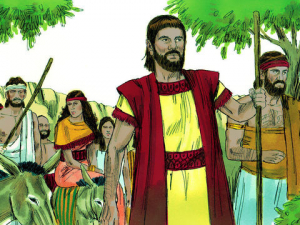
Read Together:  Abram was born 292 years after the flood. His family lived in a city called “Ur”, which was in the area of modern-day Iraq.  He was the youngest son of his father Terah whose ancestor was Shem. Abram married his half-sister Sarai, but they did not have any children. Terah left Ur for Canaan and took Abram, Sarai, and Lot, his grandson, with him.  The family stopped for a while in Haran where Terah died. Abram had become very wealthy in Haran. By the time he was 75 years old, he owned livestock, and had silver, gold, and many servants. This would surely have made it hard to leave Haran. But God commanded Abram to leave his home and go to a distant land that He would show him. In return for his obedience, God promised to make Abram’s descendants a great nation. Amazingly, Abram immediately obeyed God. He simply took his wife, his nephew Lot, and all their possessions and left his home for good.

Read Together: Gen. 11:24-32; 12:1-10; 13:2-4

Discuss:

  • Explain to your child that it was not uncommon for people to marry close relatives in Abraham’s days.  Remind him/her that everyone was closely related after the flood because only one family survived. God later commanded the Israelites not to marry close relatives (Lev. 18:6-17).
  • Discuss with your son or daughter how difficult it must have been for Abram and Sarai to pack up and move to a place that they did not know.  There were no trucks or vans to move them and no hotels along the way. Ask your student what might have been some of the hardships Abram and Sarai could anticipate on their journey.
  • Abram must have known how hard his journey would be. Still, he did not argue with God. He just obeyed what God told him to do. Talk with your child about Abram’s character. Highlight the good example that Abram showed when he obeyed God immediately.
  • God promised Abram that he would become a great nation, but that promise was not fulfilled right away.  Explain to your student that obedience to God must come first before we receive any rewards.

 Review Memorization:

Heb 11:8 NKJV “By faith Abraham obeyed when he was called to go out to the place which he would receive as an inheritance. And he went out, not knowing where he was going.”

Printable PDF – L2.17

Children’s Bible Program – Level 2: Lesson 18 “God’s Promises to Abraham”

Sweet Publishing | FreeBibleImages.org

Read Together: God promised to make Abram a great nation, saying that all the nations of the earth would be blessed through him. God showed Abram all the land of Canaan and promised it to his descendants. Abram had traveled throughout the land of Canaan for 24 years, and now he was 99 years old. God had promised that his descendants would be as numerous as the sand on the seashore, but he still did not have a son. It was at this time that God appeared to Abram and expanded the promises. He told Abram that he was going to make him a father of many nations and that some of his descendants would be kings. God changed Abram’s name to Abraham and his wife’s name, Sarai, to Sarah, to reflect the promise that many nations would come from them. God told Abraham that he and Sarah would have a son the next year, and they were to call him Isaac, which means laughter. Perhaps Isaac was given that name because both Abraham and Sarah laughed when they first heard they would have a son. The next year Isaac was born, just as God had said. Isaac was the beginning of the fulfillment of God’s promises to Abraham.

Read Together:  Genesis 13:14–18; 15:1–6, 18–21; 17:1–24; 18:1–15; 21:1–6

Discuss:

  • Discuss with your child how Abraham remained faithful to God year after year, believing that God’s promises would be fulfilled through his descendants. Include Hebrews 11:1 in the discussion. Remind your son or daughter that if God says something, it is as good as done!
  • Ask your child if they can remember some of the promises God gave to Abraham. Discuss with them how these promises have been fulfilled (e.g. through Jesus Christ, European kingdoms, Great Britain, and the United States).
  • Remind your child that the promises were also made to Sarah. She was an important part of the covenant God made with Abraham. God loves both men and women.  All human beings are created in His image (Genesis 1:27).
  • God names things what they are. From the Bible, we learn that in the Kingdom we will all to be given a new name. Ask your child what name he or she would choose for themselves to reflect their character and personality.

Review Memorization:  Hebrews 11:17–18  “By faith Abraham, when he was tested, offered up Isaac, and he who had received the promises offered up his only begotten son, of whom it was said, ‘In Isaac your seed shall be called,’ concluding that God was able to raise him up, even from the dead, from which he also received him in a figurative sense.”

Printable PDF – L2.18

Children’s Bible Program – Level 2: Lesson 19 “Abraham and Isaac Are Tested”

www.Lambsongs.co.nz | FreeBibleImages.org

By Janth English

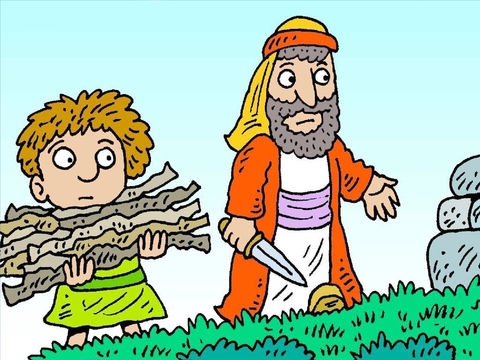
Read Together:  Abraham and Sarah watched and guided Isaac as he grew into a young man. Abraham taught Isaac about God and told him about the promises He had made. Then, when Isaac was still a young man, God told Abraham to take him to the land of Moriah and offer him as a sacrifice! After hearing God’s instruction, Abraham dutifully arose the next morning, prepared for the journey, and headed toward the mountain with Isaac and two of his servants. It took them three days to reach the place where Isaac was to be offered. One can only imagine how difficult this journey was for Abraham. Nevertheless, He was willing to obey God’s command. Remember, God had promised that He would give many descendants to Abraham, and Isaac was the son who was miraculously born to Abraham and Sarah to bring about that promise. He knew that God was able to raise Isaac from the dead, if necessary, to keep His promise. Abraham and Isaac went up to the top of the mountain where Isaac allowed himself to be bound. Then Abraham laid his son on the wood of the altar to become the offering. Abraham raised the knife to slay his son when God stopped him. God then knew without any doubt that Abraham feared Him, trusted Him and loved Him more than anything or anyone – even his own son. God blessed Abraham for his faith and obedience and gave him even greater promises than before! God told him that all the people on earth would be blessed because of Abraham’s obedience!

Read Together:  Genesis 18:17–19; 22:1–18; Hebrews 11:17–19

Discuss:

  • Point out some great examples in the Bible of young people seeking God’s will and obeying Him. Isaac is one of them. Who else can you remember?
  • Discuss with your child some examples in Abraham’s life that validate why he is called the father of the faithful (Romans 4:16).
  • Help your child think about how difficult it would be to sacrifice your child or to be the person who is sacrificed. Ask them to imagine what it would have been like to be Isaac. Isaac could have run away, but instead he followed his father’s instruction, just as Abraham was following God’s instruction. This would have taken great courage and faith on the part of Isaac toward his father!
  • Explain to your child how Abraham and Isaac pictured the Father and Jesus Christ during their test. Abraham was a type of the Father who offered His Son, and Isaac pictured Christ, who willingly laid down His life (John 10:17–18).

Review Memorization:

Hebrews 11:17–18 “By faith Abraham, when he was tested, offered up Isaac, and he who had received the promises offered up his only begotten son, of whom it was said, ‘In Isaac your seed shall be called,’ concluding that God was able to raise him up, even from the dead, from which he also received him in a figurative sense.”

Children’s Bible Program – Level 2: Lesson 20 “Isaac Inherits the Promises”

 Featured Passage: Genesis 23-26


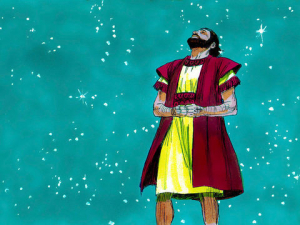
Sarah died in Hebron at the age of 127 years old. God had allowed her to watch her son grow into a man. Shortly after Sarah died, Abraham sent his servant back to his own country to find a wife for Isaac. When the servant arrived at the well outside the city of Nahor, a young woman named Rebekah came to draw water. The servant had prayed asking that the young woman who gave him water to drink and offered to water his camels would be the one chosen to be Isaac’s wife. Rebekah did exactly that. The servant found out that Rebekah was the granddaughter of Abraham’s brother Nahor. Rebekah agreed to leave her family, go to Canaan, and marry a man she had never met. Isaac was forty years old when he and Rebekah were married. Abraham died at 175 years of age and lived to see the birth of Isaac’s sons. This was further evidence that God’s promise of giving Abraham many descendants would be fulfilled. After Abraham died, God spoke to Isaac and made the same promises to him that He had made to Abraham. God said that He would give all the land of Canaan to Isaac’s descendants, and that they would be as numerous as the stars in heaven. God promised that in Isaac’s seed, all the nations would be blessed.

Discuss:

  • Point out to your child that Abraham had seven other sons who are named in the Scriptures – Ishmael (from Hagar), and Zimran, Jokshan, Medan, Midian, Ishbak, and Shuah (from Keturah).  However, Isaac was the son of promise.
  • Discuss with your son or daughter the qualities the servant was looking for in a wife for Isaac by seeing if she would give him water and offer to water his camels.
  • Talk to your child about the blessing Rebekah’s family gave her. How does her blessing relate to the promises God gave to Abraham and his descendants?
  • Ask your child how they think Isaac may have felt when God appeared to him personally. Would that be very encouraging for Isaac?

Memory Challenge:

Hebrews 11:17–18  “By faith Abraham, when he was tested, offered up Isaac, and he who had received the promises offered up his only begotten son, of whom it was said, ‘In Isaac your seed shall be called,’ concluding that God was able to raise him up, even from the dead, from which he also received him in a figurative sense.”

Photo:Richard Gunther, Gunther.net.nz | FreeBibleImages.org