Children’s Bible Program – Level 2: Lesson 32 “Joseph Becomes Governor of Egypt”
/in LivingEd - YouthFeatured Passage: Genesis 41
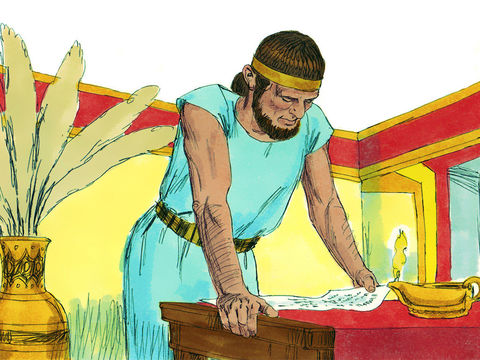
The Pharaoh of Egypt had some odd dreams that bothered him so he wanted to know what they meant. When his butler heard about the problem, he remembered that Joseph was able to interpret dreams. The butler told Pharaoh about Joseph, who was still in prison, and Pharaoh quickly sent for him. Joseph told Pharaoh that his dreams were a warning from God that there would be seven years of abundance followed by seven years of famine. Joseph made some suggestions about how Pharaoh could prepare for the famine, and Pharaoh recognized that God was with Joseph, so he wanted Joseph to work for him. Joseph was seventeen when he was sold into slavery. Now, when he was thirty years old, he became one of the most powerful men in Egypt.
Discuss:

- Who inspired and interpreted Pharaoh’s dreams?
- God was with Joseph every step of the way. Sometimes God allows us to experience trials so that we can learn important lessons. What do you think are some life lessons Joseph may have learned from his years of trials?
- What does it mean to be diligent? How did Joseph exercise diligence?
- Joseph made a plan to save the nation by storing grain while the harvests were good. How can we use this principle in our own lives?
Memory Challenge:
Genesis 41:39-10
Then Pharaoh said to Joseph, “Inasmuch as God has shown you all this, there is no one as discerning and wise as you. You shall be over my house, and all my people shall be ruled according to your word; only in regard to the throne will I be greater than you.”
Children’s Bible Program – Level 1: Lesson 32 “Jacob Returns with a Family”
/in LivingEd - YouthFeatured Passage: Genesis 28-35
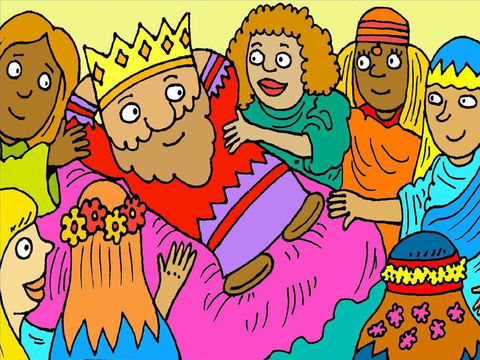
On the way to Haran, God spoke to Jacob in a dream. God promised to be with him and to bring him safely back to Canaan. When Jacob arrived at his uncle Laban’s home he fell in love with Rachel, Laban’s younger daughter. Jacob bargained with Laban to work for seven years in return for Rachel as his wife. When the time came, Laban tricked Jacob and gave him Leah, his older daughter, to Jacob for his wife instead of Rachel! Jacob had to work another seven years to marry Rachel. Jacob had many more adventures, but eventually he and his family made it back to the land of Canaan just as God had promised. He had twelve sons, who became the foundation for the nation of Israel.
Discuss:

- Laban tricked Jacob just as Jacob had tricked Esau. What lessons did Jacob learned from the way Laban treated him?
- God was with Jacob and protected him from Laban and Esau. What can we learn from how God took care of Jacob?
- God changed Jacob’s name from “Supplanter” to Israel which means “Overcomer with God”. Why did God change Jacob’s name?
- Notice how Jacob received the promises God made to Abraham. His large family was important in fulfilling the promise that Abraham would have many descendants.
Memory Challenge:
The Sons of Jacob –
Reuben, Simeon, Levi, Judah, Dan, Naphtali, Gad, Asher, Issachar, Zebulun, Joseph, Benjamin
Life to Lessons: Just Read it!
/in LivingEd - YouthEstimated Reading Time: 1 min. 20 sec.
Ever feel overwhelmed by the amount of information you receive regarding ways to teach your children the Bible?
Many books, websites, blogs, and videos offer their advice, tips, and tools. There are many ideas out there, and many can be very useful and helpful. But don’t get caught up in the idea that having the perfect activities, or the best teaching style is going to be what trains your children to love the Bible.

It’s only been in the past few decades that people have had access to the activities, supplemental materials, and research in child psychology that is available today. Since many young people have grown up to love God and His inspired Word without these extra tools, they cannot not be the primary reason for it. So don’t over-complicate teaching God’s word.
Simply reading the Bible out loud to your children, just as it is written, is one of the best ways to ensure that your children are receiving God’s word in a wholesome way.
You don’t have to add a lot of activities or have access to the cutest Bible coloring pages. Just read the Bible as God wrote it. Reading it out loud to your children every day will help them build good habits of Bible study, and impress upon them that there is no substitution for God’s Book–which, quite honestly, is perfect just the way it is.
Children’s Bible Program – Level 3: Lesson 33 “Ruth Gets Married”
/in LivingEd - YouthFeatured Passage: Ruth 3-4
Boaz was a prominent man in the community, having great wealth and many servants. He was also a close relative of Elimelech, Naomi’s deceased husband. Ruth had found favor with Boaz, and Naomi thought to secure Ruth’s future with him. The law of redemption allowed the nearest of kin to purchase the family land and to marry the widow of the one who owned it. Naomi instructed Ruth to secretly go to Boaz one night, with this statute in mind, and express her desire to put herself into his care. She said to Boaz, “Take your maidservant under your wing, for you are a close relative.” She was basically asking Boaz to marry her! Boaz was glad that she came to him, and said he would be willing to take care of her, only there was a problem. There was another man who was more closely related to her than Boaz. This other man would have to decide not to redeem the land and marry Ruth if Boaz was to have a chance to do so himself. Not wanting to waste any time, Boaz got up early in the morning and went to the gate of the city to see what could be done. The decision made that day would determine what would happen to Ruth and Naomi.
Discuss:

- The book of Ruth is one of two books in the Bible that has a woman’s name in the title.
- Consider the character and honor that Boaz displayed in the book of Ruth. What were some things that he did which reflected favorably on his character?
- True love always shows outgoing concern for others and does no harm. When Boaz showed concern for Ruth’s reputation and went to great lengths to protect her name. What are some other examples of true love from the book of Ruth?
Memory Challenge:
Ruth 3:10-11
Then he said, “Blessed are you of the Lord, my daughter! For you have shown more kindness at the end than at the beginning, in that you did not go after young men, whether poor or rich. And now, my daughter, do not fear. I will do for you all that you request, for all the people of my town know that you are a virtuous woman.”
Digging Deeper: Apple of His Eye
/in LivingEd - Online LearningAuthor: Mr. Kenneth Frank | Faculty in Theology, Living Education
Estimated Reading Time: 6 min., 46 sec.
Did you know that God’s care for His people is so protective and familial that He speaks of protecting them as the “apple of his eye”?
This phrase or one similar appears in five Scriptural passages. These verses reveal something special about the relationship of God to His people. What is an apple of the eye and what does each of these passages tell us about our relationship to God and His way of life? Examining each of these passages will enable us to dig deeper into God’s written word on this theme.
Our first passage is part of Moses’ final words to the new nation of Israel before his death. Israel was just about to cross the Jordan River to inherit the Promised Land. Deuteronomy 32:9-10 KJV reads: “For the LORD’S portion is his people; Jacob is the lot of his inheritance. He found him in a desert land, and in the waste howling wilderness; he led him about, he instructed him, he kept him as the apple of his eye.”
An annotation in the NET Bible explains the word apple: “Heb ‘the little man.’ The term אִישׁוֹן (ʾishon) means literally ‘little man,’ perhaps because when one looks into another’s eyes he sees himself reflected there in miniature.” Matthew Henry’s Commentary on the Whole Bible explains its significance: “He kept him as the apple of his eye, with all the care and tenderness that could be, from the malignant influences of an open sky and air, and all the perils of an inhospitable desert. The pillar of cloud and fire was both a guide and a guard to them.” Continuing this idea, the Jamieson, Fausset and Brown Commentary reports: “It is a beautiful image, and, by alluding to the care with which every person defends his eye from injury, conveys a graphic idea of the tender, vigilant assiduity [care] with which the Lord watched over His people.”
Our second passage from Psalm 17:8 is David’s prayer in which he requests, “Keep me as the apple of the eye, hide me under the shadow of thy wings.” The Dake Annotated Reference Bible comments that “It is an idiom for what is dearest to us; that which must have extreme care and protection. If the eye is lost one is blind. In creation God saw to it that the eye was well protected, being deeply entrenched in the skull and where the hands could easily protect it. He designed it to be further protected from dust and other harm by the eyelashes, eyelids, and eyebrows.” David understood God’s marvelous design of the human body and expressed his special request with this in mind. The NET Bible annotation reads, ” Heb ‘Protect me like the pupil, a daughter of an eye.’” Albert Barnes’ Notes on the Bible explains that daughter denotes, “that which is dependent on, or connected with (Gesenius, Lexicon), as the expression ‘daughters of a city’ denotes the small towns or villages lying around a city, and dependent on its jurisdiction.”
Our third passage is Proverbs 7:2 KJV: “Keep my commandments, and live; and my law as the apple of thine eye.” Here God commands us to diligently observe His teachings. The Jamieson, Fausset and Brown Commentary explains, “As we guard the pupil of the eye from the least mote, which is sufficient to hurt it, so God’s law is so tender and holy a thing that the least violation of it in thought, word, or deed, is sin; and we are so to keep the law as to avoid any violation of it. The law resembles the pupil of the eye also in its being spiritually the organ of light, without which we should be in utter darkness.” Knowing this will impel our commandment-keeping!
Our fourth passage is Lamentations 2:18 KJV :”Their heart cried unto the Lord, O wall of the daughter of Zion, let tears run down like a river day and night: give thyself no rest; let not the apple of thine eye cease.” This lamentation over the fall of Jerusalem to the Babylonians was probably written by the Prophet Jeremiah. An annotation from the NET Bible explains: “Heb ‘the daughter of your eye.’ The term ‘eye’ functions as a metonymy for ‘tears’ that are produced by the eyes. Jeremiah exhorts personified Jerusalem to cry out to the LORD day and night without ceasing in repentance and genuine sorrow for its sins.” Adam Clarke’s Commentary on the Bible supports the notion of tears: ” בת עין bath ayin means either the pupil of the eye, or the tears. Tears are the produce of the eye, and are here elegantly termed the daughter of the eye. Let not thy tears cease.”
Our fifth and last passage is Zechariah 2:8 KJV: “For thus saith the LORD of hosts; After the glory hath he sent me unto the nations which spoiled you: for he that toucheth you toucheth the apple of his eye.” This section of Zechariah’s prophecy is God’s vision to His prophet. The NET Bible notes that, “A scribal emendation (tiqqun sopherim) has apparently altered an original ‘my eye’ to ‘his eye’ in order to allow the prophet to be the speaker throughout vv. Zechariah 2:8-9. This alleviates the problem of the LORD saying, in effect, that he has sent himself on the mission to the nations.” The reason for such a textual emendation is given by E.W. Bullinger in his Companion Bible: “The primitive text read ‘Mine eye’; but the Sopherim [Jewish scribes] say (App-33) that they altered this to ‘His’, regarding it as derogatory to Jehovah to read aloud such pronounced anthropomorphic expressions.”
To explore even further, Adam Clarke’s Commentary on the Bible leads us along to this intriguing possibility: “בבבת עינו bebabath eyno, the babet of his eye. This is a remarkable expression. Any person, by looking into the eye of another, will see his own image perfectly expressed, though in extreme miniature, in the pupil. Does our English word babbet or baby come from this? And does not the expression mean that the eye of God is ever on his follower, and that his person is ever impressed on the eye, the notice, attention, providence, and mercy of God?” The Pulpit Commentary provides us this touching reason for the usage of this term, “Nothing can more finely convey the idea of the exquisitely tender care of Jehovah for the objects of his love. Such interest the Bible teaches with frequency and fervour. Hence we read, ‘In all their affliction, he is afflicted.’ We read, ‘As a father pitieth his children,’ etc. We read, ‘Can a woman forget her sucking child?’ We read, ‘He is touched with a feeling of our infirmities,’ etc.”
These five passages have expressed the depth of God’s love for His people Israel. However, we must remember that the God of the Old Testament is most often the One who became our Savior. Now we can better understand this New Testament passage from the words of Jesus Christ about His followers today. Matthew 25:40 KJV reads: “And the King shall answer and say unto them, Verily I say unto you, Inasmuch as ye have done it unto one of the least of these my brethren, ye have done it unto me.” All of these tender biblical words of God should fortify our appreciation for His abiding love and care.

Kenneth Frank was born and raised in New Jersey, USA, and attended Ambassador College, graduating in 1973. He served in the Canadian ministry from 1973-1999, after which he returned to the USA to pastor churches in Maryland, Virginia, and North Carolina for 15 years. Having earned a BA degree from Ambassador College he later earned a MA degree from Grand Canyon University before being assigned to the Charlotte office to teach at Living University, now Living Education. Currently, he teaches the Survey of the Bible course to the on-campus students and writes the Digging Deeper column for our online Bible study program. He is married, has four children, and seven grandchildren.
Programa Bíblico para Niños – Nivel 1: Lección 4 “”La Re-Creación: Días 5, 6 y 7”
/in LivingEd - YouthPasaje Destacado: Génesis 1:20; 2:3.
En el quinto día de la semana de la recreación, Dios creó los pájaros y los peces. Pájaros cantores junto con aves más grandes volaron por el cielo; los peces poblaron los lagos, arroyos y océanos. Luego, en el sexto día, Dios creó los animales terrestres. Hacia el final del sexto día, Dios creó al primer hombre, Adán, en la propia imagen de Dios. Dios creó el sábado en el séptimo día de la creación descansando en él, dando a la humanidad un ejemplo para que haga lo mismo.
Discusión:
- Pida a sus hijos que piensen en las razones por las cuales Dios creó a los animales.
- Pregunte a quién se parece el ser humano.
- Hablen sobre por qué Dios creó a la humanidad. Recuérdeles que Dios quería una familia.
- Pregunte qué dijo Dios acerca de su creación.
- Hable acerca de lo que le gusta del sábado y por qué es especial para él / ella.
- Recuerde a sus hijos que Dios hizo el sábado y lo apartó para uso santo.
Memorizar y revisar:
Ayude a sus hijos a memorizar los días de la semana de la recreación:
- Día 1 – Dios separa la luz de las tinieblas.
- Día 2 – El cielo y las nubes son separados de las aguas de abajo.
- Dia 3 – La Tierra seca es separada de los mares. Las plantas son creadas.
- Día 4 – El Sol, la Luna y las estrellas son designados para iluminar la Tierra, para separar el día de la noche y para señalar las estaciones.
- Día 5 – Creación de las aves y los peces.
- Día 6 – Creación de los animales terrestres y el hombre.
- Día 7 – Dios creó el sábado descansando.
¡Actividades opcionales!
Algunos niños pueden encontrarlas agradables:
- Usando siete platos de papel, dibujen y coloreen lo que Dios creó cada día y pónganles etiquetas.
- Haga que sus hijos encuentren fotos en revistas o libros que sean ejemplos de la creación de Dios y que digan en qué día fueron creados.
Programa Bíblico para Niños – Nivel 2: Lección 4: “Dios crea el universo”
/in LivingEd - YouthPasaje Destacado: Génesis 1:1; Juan 1:1-3; Job 38:4-7; Hebreos 1:10, 13-14; Romanos 8:19
Antes que existiera el tiempo solo Dios existía. Eran dos seres: Dios y el Verbo, que también era Dios. Dios y el Verbo tuvieron la gran idea de tener una gran familia divina. Primero crearon los ángeles para que fueran servidores de Dios y de Su familia. Después, Dios comenzó a crear el universo físico. Todos los planetas, estrellas, cometas, y todo en la Tierra fue ¡creado por Dios! Todo el universo, todo lo que podemos ver y todo lo que no podemos ver, fue creado en preparación para los futuros hijos e hijas del Dios Todopoderoso.
Discusión:
- Hable acerca de cómo Dios y Jesucristo querían una familia e hicieron la creación para que ellos la disfrutaran. Originalmente, eran solo ellos dos: el Padre y el Verbo y querían una familia mucho más grande.
- Ayude a sus hijos a comprender que Dios es el Creador y que solo Dios puede crear de la nada. Cuando hacemos algo, por ejemplo, utilizamos materiales que Él hizo.
- Explique que Dios creó a los ángeles antes de crear el universo físico
- Muestre a sus hijos que, si bien la mayoría de las veces “hijos de Dios” se refiere a seres humanos, a veces en la Biblia puede referirse a los ángeles (Job 38:4-7).
- Pregunte a sus hijos qué cosas de la creación de Dios disfrutan más. Ayúdelos a que comprendan, de una manera sencilla, que Dios ¡creó todas estas cosas para nosotros!
Memorizar y revisar:
Isaías 45:18 “Porque así dijo el Eterno, que creó los cielos; él es Dios, el que formó la tierra, el que la hizo y la compuso; no la creó en vano, para que fuese habitada la creó: Yo soy el Eterno, y no hay otro”.
Programa Bíblico para Niños – Nivel 3: Lección 4: “Dios crea el universo”
/in LivingEd - YouthPasaje Destacado: Génesis 1:1; Juan 1:1–3, 14; Job 38:4–7; Hebreos 1:10, 13 y 14; Romanos 8:19
Antes que existiera el tiempo solo existía Dios. El habita la eternidad. Eran dos seres: Dios y el Verbo que también era Dios. Dios se propuso reproducirse creando una familia que fuera de su mismo rango divino, pero primero creó los ángeles que fueron seres espirituales mas no del mismo rango divino de Dios. Luego, Dios comenzó a crear el universo físico; en el instante en que el universo llegó a existir, comenzó el tiempo. ¡La habilidad creativa de Dios es realmente asombrosa! Todo el universo, todo lo visible y lo invisible, fue creado en preparación para los futuros hijos e hijas del Dios Todopoderoso.
Discusión:
- Haga que estos versículos “cobren vida” haciendo preguntas a sus hijos sobre cómo debe haber sido antes de que Dios y Jesucristo (el Verbo) crearan algo.
- Explique que Jesús fue el “Verbo” y que más tarde nació como el Hijo de Dios y se llamó Jesús.
- Hable acerca de cómo Dios y el Verbo querían una familia y construyeron una creación para que la disfrutaran. Originalmente, eran solo ellos dos, el Padre y el Verbo, y querían una familia mucho más grande.
- Ayude a sus hijos a comprender que Dios es el creador y que solo Dios puede crear, es decir, que por el poder de su Espíritu hizo lo que se ve de lo que no se veía.
- Explique que Dios creó a los ángeles antes de crear el universo físico.
- Pregúnteles a sus hijos qué cosas en la creación de Dios disfrutan más. ¡Ayúdelos a comprender, de una manera simple, que Dios creó todas estas cosas para nosotros!
Memorizar y revisar:
Isaías 45:18 “Porque así dijo el Eterno, que creó los cielos; él es Dios, el que formó la tierra, el que la hizo y la compuso; no la creó en vano, para que fuese habitada la creó: Yo soy el Eterno, y no hay otro”.
Children’s Bible Program – Level 2: Lesson 33 “Joseph Reunites with his Brothers”
/in LivingEd - YouthFeatured Passage: Genesis 42-50
The seven years of plenty that God promised quickly passed, and soon famine struck Egypt and the land surrounding it. In Canaan, Israel and his family were running out of food, so when he heard that Egypt had grain, he sent his sons to purchase food there. Benjamin did not go because he was Israel’s youngest son and the only surviving son of Rachel. At least, that’s what everyone thought! When the brothers arrived in Egypt, they were brought before Joseph. Even though they were face to face with their own brother, they didn’t recognize him. On the other hand, Joseph immediately recognized who they were. Should he tell them that he was their long-lost brother? Could he overlook their cruelty on that day that they sold him into slavery? As Joseph agonized over what to do, the tables had been turned. Now, their lives were in his hands. Joseph faced a tremendous challenge, and his brothers were in for a big surprise.
Discuss:

- Why do you think Joseph’s brothers did not recognize him when they came to Egypt? (Possible reasons are he was older, he was dressed as an Egyptian, etc.)
- The brothers attributed their problems to what they had done to Joseph many years before. They felt guilty. Repentance is the remedy for guilt. When we repent, God is quick to forgive!
- What was Joseph’s attitude toward his brothers? Was he bitter? Did he want revenge?
- Imagine the great joy Jacob and Joseph felt when they saw each other again.
- What did it mean for Joseph to receive the birthright?
Memory Challenge:
Genesis 45:4-7
And Joseph said to his brothers, “Please come near to me.” So they came near. Then he said: “I am Joseph your brother, whom you sold into Egypt. But now, do not therefore be grieved or angry with yourselves because you sold me here; for God sent me before you to preserve life. For these two years the famine has been in the land, and there are still five years in which there will be neither plowing nor harvesting. And God sent me before you to preserve a posterity for you in the earth, and to save your lives by a great deliverance.”