Children’s Bible Program – Level 1: Lesson 24 “The Exodus and the Days of Unleavened Bread”

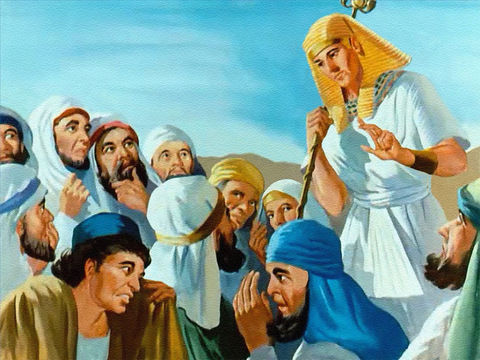
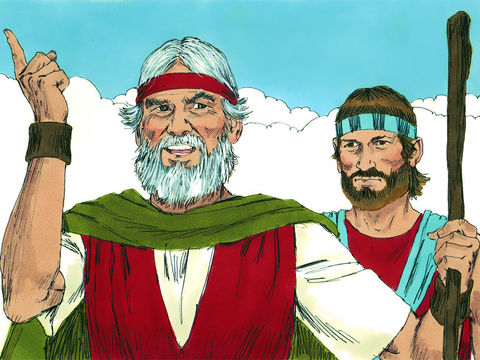
Read Together:  The Lord told Israel to be prepared to leave when they ate the Passover. He knew that Pharaoh would tell the Israelites to get out of Egypt after the death of their firstborn children. The Egyptians also wanted the Israelites to go away.  Before leaving, the Israelites asked the Egyptians for gold, clothing, and things of value, and the Egyptians gave it to them. To prepare for the journey, the people were organized according to their families and tribes, and their armies. Other non-Israelites who had believed Moses and escaped the tenth plague joined with Israel to leave and serve the true God. God also at this time established the Days of Unleavened Bread to commemorate His deliverance of the children of Israel from Egypt. For seven days, Israel was commanded to eat unleavened bread and not have any leavened food in their homes. The night they left Egypt was to be remembered forever as a night of solemn observance. They had to leave so quickly that they did not have time to let their bread rise, so they only had unleavened bread to eat which was in keeping with God’s command. God’s people continue to keep the Feast of Unleavened Bread and the Night to Be Observed as ordained by God. Israel left Egypt with their flocks and their herds, with their silver, gold, and clothing; they left with a high hand. However, God had one more judgment to pass on Egypt. Pharaoh’s heart was hardened  and he sent his army to capture Israel and bring them back. With the army coming, mountains on both sides, and the Red Sea at their backs, Israel thought they were trapped, but God opened a path on dry land through the sea for Israel to escape. When Pharaoh’s army attempted to follow the Israelites through the Red Sea, God caused the waters to come over them, and they drowned. God’s judgment was complete just as He had promised Abraham long ago.

Moody Publishing | FreeBibleImages.org

Read Together: Exodus 12–14

Discuss:

  • Ask your child how it would feel to walk on dry ground with walls of water as tall as skyscrapers on either side.
  • Help your child to understand that it was God who delivered Israel.
  • Help your child think about the miracles God worked to free Israel. God destroyed their economy, devastated their military, and reduced their status as a nation.  Egypt has never recovered to the status they had before God’s judgment on them.
  • Ask your child what he knows about keeping the Days of Unleavened Bread.

Review Memorization:

The Ten Plagues: (1) Waters turned to blood, (2) Frogs, (3) Lice, (4) Flies, (5) Pestilence on the Livestock, (6) Boils, (7) Hail, (8) Locusts, (9) Darkness in the land, (10) Death of the Firstborn

Children’s Bible Program – Level 2: Lesson 24 “Eating Unleavened Bread—Putting on Righteousness”

Read Together: God told ancient Israel that they were to put out all leavening from their homes, and He also instructed them to eat unleavened bread for seven days. The first and seventh days were to be holy convocations.God’s people continue to observe the Feast of Unleavened Bread by eating unleavened bread for seven days and celebrating the first and seventh days as Holy Days. These days have important meanings in God’s plan for mankind. Passover commemorates Christ’s sacrifice in payment of our sins. The Days of Unleavened Bread picture our effort to put sin out of our lives and replace it with living according to God’s ways. We don’t just avoid doing bad things. We must fill our lives wit good actions, just like our elder brother Jesus Christ.

Read Together:  Exodus 12:14–17; Leviticus 23:6–8; Ephesians 4:22–24; John 6:47–51; Galatians 2:20; 2 Timothy 3:16–17; Philippians 1:6; Hebrews 12:2

  • Discuss with your child the biblical meaning of righteousness. Read and discuss Psalm 119:172 together.
  • Remind your child that the Feast of Unleavened Bread is the only one that has two Holy Days and that Passover is a separate feast but it is not a Sabbath.
  • Ask your child to summarize the meaning of the Passover and Days of Unleavened Bread, the first two steps in God’s plan of salvation.

Discuss:

Review Memorization.

1 Corinthians 5:7  “Therefore purge out the old leaven, that you may be a new lump, since you truly are unleavened. For indeed Christ, our Passover, was sacrificed for us.”

Children’s Bible Program- Level 1: Lessons 21-24 Packet: Exodus

Includes the lessons:

  • Lesson 21 “Moses- Up from Egypt”
  • Lesson 22 “Moses Encounters Pharaoh and Pharaoh Encounters God”
  • Lesson 23 “The Passover and the Death of the Firstborn”
  • Lesson 24 “The Exodus and the Days of Unleavened Bread”

Children’s Bible Program- Level 2: Lessons 21-24 Packet: God’s Holy Days

Includes the lessons:

  • Lesson 21 “The Holy Days Picture God’s Plan”
  • Lesson 22 “Passover and the Sacrificial Lamb”
  • Lesson 23 “Putting Sin Out”
  • Lesson 24 “Eating Unleavened Bread — Putting on Righteousness”

Children’s Bible Program – Level 2: Lesson 25 “Jacob and Esau”

By Janth English

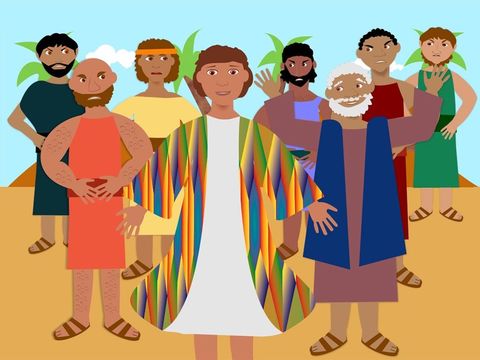
Read Together:  Isaac and Rebekah lived many years before they had children, but God finally blessed them with twin sons, Jacob and Esau. They were twins, but never were two people more different. Esau was hairy, but Jacob had smooth skin. Esau was a skillful hunter, but Jacob was a mild-mannered shepherd. One day Jacob was cooking lentil stew when Esau came from the fields. He had been hunting and was very hungry. Jacob offered his brother some stew in return for his “birthright blessing”. Esau agreed. Jacob seems quite devious, talking his brother out of his birthright. Remember this, however; Esau cared more about his hunger than his birthright. Many years later, an elderly Isaac decided it was time to bestow a final blessing upon each of his sons. His plan was to give the greater blessing to Esau and a lesser blessing on Jacob, because Esau was his favorite son. Since Rebekah’s favorite son was Jacob, she hatched a plot that would have the greater blessing go to him! This lesson’s reading reveals what happened when their plan unfolded. Though the Bible reveals how weak and deceitful people can be, God’s purpose to establish a nation is still revealed. We’ll learn more about that later.

Sweet Publishing | FreeBibleImages.org

Read Together:  Genesis 25:19-34; 27:1-41

Discuss:

  • Discuss with your child the ethics of this situation. Since God had chosen Jacob to inherit the promises He made to Abraham and Isaac, was it wrong for Jacob and his mother to use trickery in getting them?
  • Discuss with your child the fact that Isaac intended to give the blessings to Esau. Think of a few ways that God could have prevented Isaac from giving the blessings to Esau. Can any human cause God’s plans to fail (Isaiah 46:9-10)?
  • Jacob was his mother’s favorite son and Esau his father’s. Ask your child what happens in a family when individual members are shown favoritism.
  • Help your child understand that God chooses individuals for His purpose at His time. Explain that God did not choose Jacob because he was somehow “better” than Esau. This principle applies to those who are called now as well.

Review Memorization Genesis 27:29 “Let peoples serve you, and nations bow down to you. Be master over your brethren and let your mother’s sons bow down to you. Cursed be everyone who curses you, and blessed be those who bless you.”


Children’s Bible Program – Level 1: Lesson 25 “Abram Leaves for Canaan”

Sweet Publishing | FreeBibleImages.org

By Janth English

Read Together:  Abram was born in the city of Ur in Chaldea which was near the Middle Eastern country of modern day Iraq. He was the son of Terah, who was a descendant of Shem. Shem was one of the three sons of Noah, and lived through the Flood. Abram married his very beautiful half-sister Sarai, but they had no children. Terah left Ur for Canaan and took Abram, Sarai, and Lot, his grandson, with him. For a period of time, Terah and his family lived in Haran, where the Bible tells us that Abram became a very wealthy man. He had gold, silver, livestock and many servants. In time, Terah died, leaving Abram as the leader of the family. His life would change dramatically, however, when, God told Abram to take Sarai and leave Haran. Where was he supposed to go? God told Abram that He would guide him to the right place. In return for his obedience, God promised to make Abram a great nation and to bless all nations through him. At this point in his life, Abram was already 75 years old and had a home and great wealth in Haran. He made the right decision, however, and obeyed God. He took his wife, his nephew Lot, all their possessions and left Haran just as God commanded.

Read Together:   Genesis 11:26-32; 12:1-9.

Discuss:

  • Show your child where Abram lived and where he traveled   (There are many maps available over the Internet.) Talk about how different it would have been to travel over long distances in those days, in comparison to today. People walked and used animals like camels to travel instead of cars!
  • Help your child to understand what Abram was willing give up in order to obey God. For Abram and his family, Haran was home. Yet God asked them to leave everything they knew behind.
  • Explain to your child that it took faith for Abram to obey God.  All he had was God’s word to believe that things would work out.

Review Memorization.

Genesis 22:18. “In your seed all the nations of the earth shall be blessed, because you have obeyed My voice.”


Children’s Bible Program – Level 3: Lesson 26 “Deborah the Prophetess – Judge of Israel”

Read Together:  In Judges 4, we read that God chose a woman, Deborah, to judge Israel for a period of time. She was well prepared when God called her to be a prophetess and a judge because she knew God’s laws and was wise in their execution.  God told Deborah to send for Barak and tell him to fight against their oppressors – Jabin, king of Canaan and Sisera, the commander of his army. Barak responded that he would only go if Deborah went with him. Though Deborah knew women did not normally fight in war she agreed to go, but Barak would have to sacrifice the glory of the victory to a woman. God gave them the battle plan which they executed with precision. Barak along with ten thousand troops from Napthali and Zebulun soon had Sisera and his troops on the run. They killed them all, but Sisera escaped from the battle to the tent of Jael, a woman whom he thought was an ally. While Sisera slept, she drove a tent peg through his head, and Jael became the heroine of the battle instead of Barak just as Deborah had said. This marked the end of Jabin’s oppression, and Israel had peace for forty years. Yet after all this, Israel again turned to her evil ways.

John Paul Stanley/ YoMinistry.com | FreeBibleImages.org

Read Together:  Judges 4:1 – 6:1

Discuss:

  • Discuss with your child the role of a prophet(ess) and the role of a judge.  What is the role of women in the Church government structure? (See Ephesians 4:11.)
  • Speculate with your child why God might have called a woman to judge Israel at that time.  Perhaps she was the best qualified. Remember, God is not a respecter of persons (Romans 2:11).
  • Point out to your child that Deborah is not the only prophetess referred to in the scriptures(See Exodus 15:20; 2 Kings 22:14; Isaiah 8:3; Luke 2:36).
  • Ask your child why they feel Barak wanted Deborah to go with him to war. Was Barak’s bravery in question? Remember, Barak is listed in the faith chapter of Hebrews 11
  • Explain to your child that those born into the family of God are neither male nor female (Galatians 3:28).  Everyone will have equal opportunity to serve in the Kingdom of God and and be rewarded based on your works (Matthew 16:27).

Review Memorization:

Judges 21:25  “In those days there was no king in Israel; everyone did what was right in his own eyes.”

Digging Deeper: The Gall of Bitterness

Author: Mr. Kenneth Frank | Faculty in Theology, Living Education


Estimated Reading Time: 5 min., 30 sec.

Did you know that God describes acts of rebellion and idolatry using expressions intended to turn our stomachs?

The Bible contains many colorful and descriptive phrases intended to make an impression on our minds. Hebrew can be very graphic as well as poetic. Understanding how this language conveys bold ideas is critical to capturing the message God wants us to understand.

Acts 8 describes a conversation between the apostle Peter and a magician named Simon. Simon had used sorcery and bewitched the people of Samaria, pretending to be some great one. Philip had been in Samaria preaching the things concerning the kingdom of God and the name of Jesus Christ (Acts 8:12). After hearing this, Simon was baptized and stood amazed at the miracles and signs Philip performed. The Jerusalem apostles sent Peter and John to lay hands on the new converts so that they might receive the Holy Spirit. When Simon saw that the Holy Spirit was conveyed by the laying on of hands by the apostles, he tried to buy this power. Peter rebuked and commanded him to repent, for Peter detected that Simon was “in the gall of bitterness and the bond of iniquity” (Acts 8:23). John Gill’s Exposition of the Bible explains that Simon “was in a state of nature and unregeneracy; under the power and dominion of covetousness, ambition, and hypocrisy; and in a way pernicious to himself, infectious to others, and ungrateful to God, and to good men…” (e-Sword 12.1). Simon begged Peter to pray to the Lord for his forgiveness.

This expression, “the gall of bitterness,” which appears only once in our Bible, has a colorful history. The NET Bible notes that it is “… an idiom meaning to be particularly envious or resentful of someone. In this case Simon was jealous of the apostles’ power to bestow the Holy Spirit by the laying on of hands, and wanted that power for himself” (e-Sword 12.1). This expression is a Hebraism and a superlative intended to convey “excessive bitterness.” Gall was also used in the OT for idolatry: ” Deuteronomy 29:18 KJV  Lest there should be among you man, or woman, or family, or tribe, whose heart turneth away this day from the LORD our God, to go and serve the gods of these nations; lest there should be among you a root that beareth gall and wormwood.” Albert Barnes’ Notes on the Bible explains that gall “denotes properly ‘bile,’ or ‘that bitter, yellowish-green fluid that is secreted in the liver.’ Hence, it means anything very bitter; and also any bad passion of the mind, as anger, malice, etc. We speak of ‘bitterness’ of mind, etc.” (e-Sword 12.1). B. W. Johnson’s Peoples New Testament adds that “The gall of reptiles was considered by ancients the source of their venom. The expression would denote moral corruption” (e-Sword 12.1).

The Greek word for “gall” is chole and appears only in Acts 8:23 and Matthew 27:34, referring to the drink of vinegar with gall that was offered to Christ while on the cross. Adam Clarke’s Commentary on the Bible describes the gall given to Jesus as “no more than bitters of any kind. It was a common custom to administer a stupefying potion compounded of sour wine, which is the same as vinegar, from the French vinaigre, frankincense, and myrrh, to condemned persons, to help to alleviate their sufferings, or so disturb their intellect that they might not be sensible of them” (e-Sword 12.1). This reminds us of Proverbs 31:6 KJV  “Give strong drink unto him that is ready to perish, and wine unto those that be of heavy hearts.”

Bob Utley’s You Can Understand the Bible expands this expression: “The terms ‘gall’ (cholç) and ‘bitterness’ (pikros) both refer to a bitter spirit, usually associated with anger and apostasy (cf. Deuteronomy 29:18; Deuteronomy 32:28-33; Hebrews 12:15). Paul uses the term ‘bitter’ several times in lists of things to avoid (cf. Romans 3:14; Ephesians 4:31)” (e-Sword 12.1). He will later use a similar expression, appearing only once in Scripture, warning Christians, “Hebrews 12:15 KJV  Looking diligently lest any man fail of [fall away from] the grace of God; lest any root of bitterness springing up trouble you, and thereby many be defiled” (e-Sword 12.1). This expression seems to relate back to Deuteronomy 29:18. Adam Clarke’s Commentary on the Bible notes at Deuteronomy 29:18, “That is, as the apostle expresses it, Hebrews 3:12, An evil heart of unbelief departing from the living God; for to this place he evidently refers. It may also signify false doctrines, or idolatrous persons among themselves” (e-Sword 12.1). His note on Hebrews 12:15 adds, “The root of bitterness is here used metaphorically for a bad man, or a man holding unsound doctrines, and endeavoring to spread them in the Church” (Ibid.).

Paul describes troublemakers in God’s church who were influencing Hebrew Christians to apostatize back to Judaism! Bitterness and resentment are poisonous causing contagion in others. Portraying the nature of bitterness, The KJV Study Bible reports that “First it is hidden, but when it is discovered its noxious roots have spread and it springs up as something much bigger and more destructive (cf. Deuteronomy 29:18)” (Tecarta Bible App).

God’s people must be on guard to prevent some evil influence from making us bitter against God or other Christians leading to our departure from God and His church. Regrettably, such departures have occurred over the 2000-year history of the Church of God. By remaining steadfast with God through His written word as taught by His ministers we can prevent a gall or root of bitterness from growing inside us that troubles and defiles us leading to our departure from the faith. Christianity is a life or death struggle. By God’s Holy Spirit we will deflect Satan’s deadly blows. We must stay true to the “Shepherd and Bishop of our souls” (1 Peter 2:25).  


Kenneth Frank headshot

Kenneth Frank was born and raised in New Jersey, USA, and attended Ambassador College, graduating in 1973. He served in the Canadian ministry from 1973-1999, after which he returned to the USA to pastor churches in Maryland, Virginia, and North Carolina for 15 years. Having earned a BA degree from Ambassador College he later earned a MA degree from Grand Canyon University before being assigned to the Charlotte office to teach at Living University, now Living Education. Currently, he teaches the Survey of the Bible course to the on-campus students and writes the Digging Deeper column for our online Bible study program. He is married, has four children, and seven grandchildren.

Children’s Bible Program – Level 3: Lesson 27 “Gideon”

Read Together: When we read about Gideon in the book of Judges, we see that, once again, the children of Israel were in trouble. Year after year, the Midianites swarmed across the land of Israel. These nomadic people would set up their camps, allowing their camels and livestock to roam over the land, eating all the crops of the Israelites, leaving nothing. The children of Israel were left with no food for themselves. They hid in caves to escape the Midianites, with no food and no hope. Finally, they cried out to God to deliver them. The story of what happened next is one of the most amazing stories of bravery in the whole book of Judges. God used Gideon and 300 men to save Israel from the Midianite hordes. Read on to learn how!

Sweet Publishing | FreeBibleImages.org

Read Together:  Judges 6-8

Discuss:

  • Did Gideon blame God for Israel’s problems (Judges 6:13)? Explain that people often blame God, but it is usually because of sin that bad things happen. To help illustrate this point, you may want to select an appropriate news story and discuss how the calamity is a result of sin.
  • God does not leave people unaware of their sins and its consequences (Judges 6:8–10). Why did God allow the Midianites to terrorize Israel? Discuss the Church’s role in warning modern day Israel.
  • Why did God have Gideon send all but 300 warriors home?
  • Discuss with your child how Gideon tested God. God was very patient with Gideon by doing as he asked in order to help Gideon to trust Him.
  • The people wanted to make Gideon their king. What was Gideon’s response?

Review Memorization:

Judges 21:25  “In those days there was no king in Israel; everyone did what was right in his own eyes.”