Children’s Bible Program – Level 2: Lesson 36 “God Sends the Plagues”

Featured Passage: Exodus 7–10

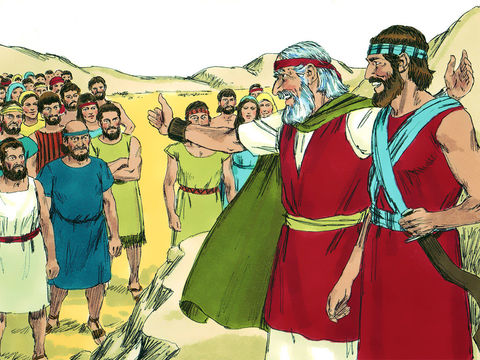
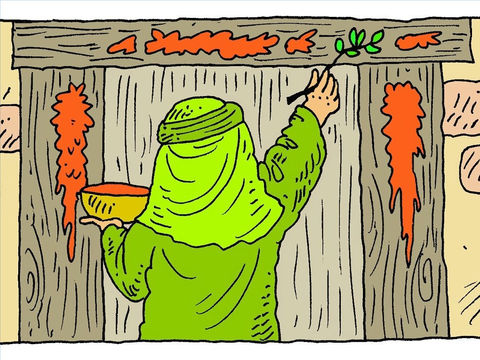
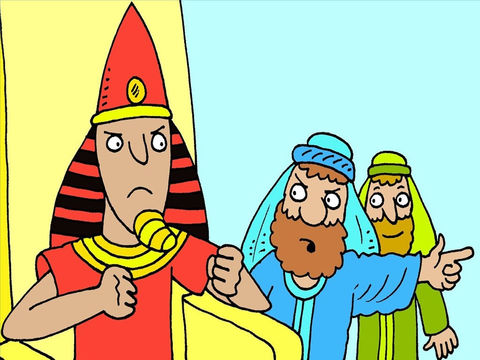
As God had commanded, Moses demanded that Pharaoh release the Israelite slaves. As you might expect, Pharaoh refused. The Egyptians had no respect for God, and to the Pharaoh, Moses’ order from God was just a ploy for the Israelites to abandon their work. Before long, however, God would strike the Egyptians with plagues that would show that believing in the Egyptian gods was utter nonsense. 

Discuss:

007-ls-plagues-1
Richard Gunther (www.lambsongs.co.nz) | FreeBibleImages.org
  • Pharaoh had sorcerers and magicians. What does God’s Word teach us about magic, fortune tellers, etc… (Deuteronomy 18:9–11)?
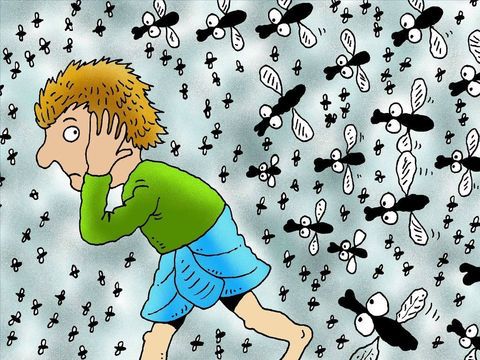
  • What plagues did God send on Egypt? Why did God send these particular plagues? What effect do you think each had on everyday life in Egypt? 
  • After the plagues, Egypt had no crops, no fruit trees nor any other trees, and very few livestock. There was only destruction everywhere (Exodus 10:7). Why did God allowed this to happen?
  • Why do you think Pharaoh continued to have a hard heart? 

Memory Challenge: 

Exodus 7:5 

And the Egyptians shall know that I am the Lord, when I stretch out My hand on Egypt and bring out the children of Israel from among them.


Children’s Bible Program – Level 1: Lesson 36 “Joshua Becomes Israel’s Leader”

Featured Passage: Deuteronomy 31 – Joshua 1

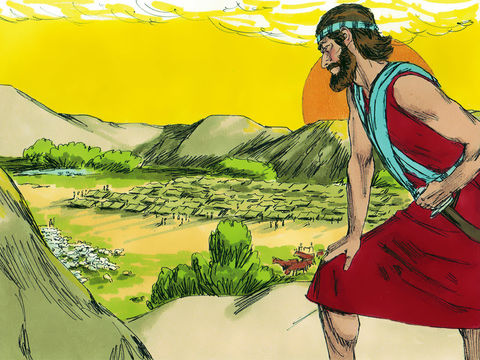
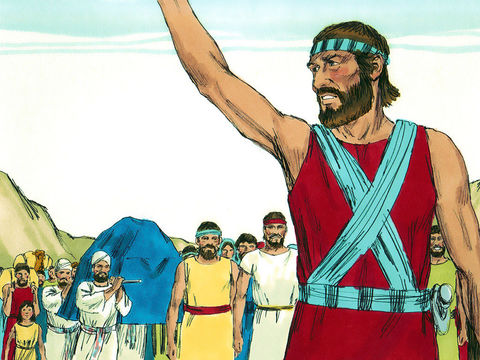
The children of Israel refused to go up to the Promised Land as God had told them. Because of their disobedience, God caused Israel to wander in the wilderness for 40 years. All the adults of that generation died in the wilderness except for Joshua and Caleb. After a long and productive life, it was time for Moses to die. God selected Joshua to be Israel’s next leader and gave him some very important instructions. 

Discuss:

020-moses-joshua
Sweet Publishing | FreeBibleImages.org
  • Why did God allow Joshua and Caleb to survive the 40 years in the wilderness?
  • Joshua had served Moses for more than 40 years, before assuming his role as the new leader of Israel. What are you learning today that will help you be a better leader in the future?
  • God always has a work for His people to do. Joshua’s mission was to lead the children of Israel into Israel, with God’s guidance. What is our mission today? 
  • God inspired Moses to challenge Joshua to be strong and courageous. In what ways do you show strength and courage?

Memory Challenge: 

Joshua 1:9 

Have I not commanded you? Be strong and of good courage; do not be afraid, nor be dismayed, for the Lord your God is with you wherever you go.


Children’s Bible Program – Level 3: Lesson 37 “Solomon’s Legacy”

Featured Passage: 1 Kings 8-11


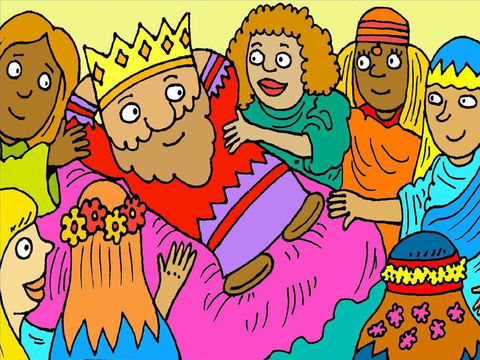
Solomon started his reign as king with fear and reverence for God. God blessed him, and Solomon prospered. His wisdom and accomplishments became famous. Sadly, human beings often forget about God when life goes well. Would Solomon fall into that trap? God warned Israel not to multiply wives, horses (for battle), and riches (Deuteronomy 8:11-18). As a powerful king, Solomon had the opportunity to do all these things. What would Solomon’s legacy be? Would he continue to follow God just like his father King David had done…or would he turn his back on God?

Discuss:

Richard Gunther (www.lambsongs.co.nz) | FreeBibleImages.org
  • Solomon had the opportunity to build and dedicate the temple.What kind of attitude does Solomon show toward God in his prayer for the dedication of the temple? How did God respond to his prayer?
  • God told the Israelites not to marry foreigners. Why did God give this command? (Deuteronomy 7:1-4)
  • Solomon ignored God’s command, and married hundreds of women from a variety of different countries. Why did Solomon do this? What were the results?
  • After Solomon died, God allowed the kingdom of Israel to fracture into two parts, just as it had been before the time of David. What were these two parts called and why did God allow this to happen?
  • What important lessons can we learn from Solomon’s life? 

Memory Challenge: 

1 Kings 8:61

Let your heart, therefore, be loyal to the LORD our God, to walk in His statutes and keep His commandments, as at this day.


Children’s Bible Program – Level 2: Lesson 37 “God Gives Israel the Victory”

Featured Passage: Exodus 11-14


Even though Egypt was nearly destroyed, Pharaoh would not let Israel go. It would take one final dramatic blow to bring Egypt to its knees. This plague would strike so deeply into the heart of every Egyptian that they would demand that the Israelites leave. Every person, from servant to king, would suffer loss. Only the Israelites would be spared – if they followed God’s special instructions. If they followed these instructions to the letter, they would remain unharmed. The Egyptians, on the other hand, would suffer greatly.  

Discuss:

Richard Gunther (www.lambsongs.co.nz) | FreeBibleImages.org
  • What was the last plague that God sent on Egypt? 
  • God gave Moses instructions for the Israelites to follow in order to escape the plague. What were the Israelites commanded to do? 
  • The night that God sent the plague is called the Passover because He passed over every household that followed His special instructions. Why do we still keep Passover today? How is it similar or different to the way the Israelites kept it in Egypt?
  • What other miracles besides the plagues did God use to lead the children of Israel out of Egypt?

Memory Challenge:

Exodus 14:13-14

And Moses said to the people, “Do not be afraid. Stand still, and see the salvation of the LORD, which He will accomplish for you today. For the Egyptians whom you see today, you shall see again no more forever. The LORD will fight for you, and you shall hold your peace.”


Children’s Bible Program – Level 1: Lesson 37 “Joshua’s Leadership in the Promised Land”

Featured Passage: Joshua 2-6


After Moses’ death, God selected Joshua to lead the children of Israel into their new homeland. But it would not be easy! The Canaanites lived there, and would not leave willingly, even though God had promised this land to the Israelites hundreds of years earlier. Joshua knew that God would fight for Israel, if necessary, to fulfill His promise. In Egypt God brought Pharaoh to his knees with plagues, forcing Pharaoh to let the children of Israel go. What miracles would God perform to help His people this time? How would He bring the Israelites into a land flowing with milk and honey? How would God help Israel now? 

Discuss:

Sweet Publishing | FreeBibleImages.org
  • Israel fought many battles to go into the promised land, but who was the one who made sure they won against their enemies?
  • How did Joshua show loyalty to God? 
  • What were some of the miracles that God performed for the Israelites as they came into the land of Canaan?
  • Joshua set a good example as Israel’s leader. What are some things we can do to set a good example for others?

Memory Challenge: 

Joshua 6:27 

So the LORD was with Joshua, and his fame spread throughout all the country.


Life to Lessons: A Guided Approach to the Children’s Lessons

So, you printed the PDF, you’ve grabbed your kid to sit with you on the couch, you’ve got your Bible in hand, and you’re all set to begin the lesson. So what’s next?

Is this the part where you just start reading from the top of the printed Bible lesson, and begin plowing through the summary, the suggested readings, and the discussion questions, before you end with a quick review of the memory scripture? One brief session each Friday evening should be sufficient,  right? Well, not exactly.  The Children’s Bible Lessons have the potential to be so much more than a script that is read while your child sits and listens. 

Here’s a hint. Don’t just think of the Bible Lessons as  “lesson plans”. Lesson plans are detailed, organized scripts for teachers with every question, activity, and topic chosen keeping in mind the needs of the students, the goals of the lesson and the larger unit, and the specific allotment of time. The weekly Children’s Bible Lessons are designed to be different. These lessons are created to assist you, as a parent, as you review the major episodes in the Bible. 

The lessons are very flexible and must be tailored specifically for your children.  That being said, we want to share with you a general approach of one way the Children’s Lessons can be used. Again, this is not meant to be a script, but more of a guide for you as you plan specific lessons with your children.

1. Begin with the big picture in mind!

Think about your goals as a parent to teach your child about the Bible. Some questions to ask yourself might be…Why do I want to teach my children the Bible? What are some Biblical principles that would help me teach my child about God’s Word? What do I want them to gain from the experience of going through the Children’s Bible Lessons?

2. Make a long-term plan

Now that you have some main goals, determine how you will reach those goals long-term. You will need to answer questions like…When during the week will our family set aside time to go through the lessons? What time, each day, will we devote to Bible lessons? How much time can/should I commit to preparing for each lesson as a parent? How much of the Bible do we want to get through in a year, as a family? Will we do each lesson on a weekly cycle, or will we take more time on each lesson?

3. Build your lesson structure

While there is definitely something to be said for spontaneity and variety in lessons, having an organized layout for each lesson will give you a solid foundation for you to work with and develop to suit the needs of your children. Having structure in lessons is key in teaching children, and you will thank yourself later when your child adopts the lessons as habit. Children love structure as it gives them a comfortable place from where they can develop their mind. Less confusion, more peace…what more could a parent want?

4. Plan each lesson

Don’t get too overwhelmed just yet! When it comes to preparing for each lesson, simplicity is key. It doesn’t have to be a major, time-consuming project every time you sit down to prepare a lesson for your kids. Simply come up with one or two goals for the lesson. Ask yourself, what do I want my child to take away from this lesson? Use each topic overview that we provide to help you! You can choose one or two of the discussion questions, or perhaps pick one of the readings as your lesson focus. Just remember to keep the goal in mind!

5.  Add some fun!

The Bible is one of the most exciting, inspiring, adventure-filled pieces of literature in existence. Help bring it alive for your child! Try to read with passion, help your child act out the story, allow them to read aloud in character, or give them opportunities to describe in detail the scenes they are learning. You can also add related activities to each lesson topic such as crafts, songs, games, coloring pages, or other supplemental materials. Choose from our list of recommended activities and supplemental materials, or add your own! Remember, you create the experience for your child, so ask yourself, “What do I want my child to take away from it?”.

The key to teaching your children the Bible is being properly prepared. Keep in mind God’s principles for teaching your children. Here are two to get you started: 1. Teaching is a continuous process (Deuteronomy 6:6-7; 11:19). Teaching God’s way cannot be limited to a few scheduled lesson hours every week. It must be part of daily habits, example, and guidance. 2. Teaching the Bible should teach them to Love God. God is not boring, or impatient, or unenthusiastic about the way He teaches us. The way that parents teach their children the Bible can directly influence how children understand God. (Deuteronomy 11:1, 22-23). How does God want us to teach our children about Him? What is the impression we give our children about God when we talk about Him?

Children’s Bible Program – Level 3: Lesson 38 “Rehoboam Ascends to the Throne”

Featured Passage: 1 Kings 12

When King Solomon died, his son Rehoboam was made king over all of Israel. The Kingdom of Israel had prospered under Solomon. However, there were problems that needed to be resolved. Rehoboam knew it was wise to seek counsel (Proverbs 1:5), but to whom would he listen? Would he listen to the counsel of the men who had advised his father, or would he listen to his friends? The future of the Kingdom of Israel hung in the balance. 

Discussion:

Sweet Publishing | FreeBibleImages.org
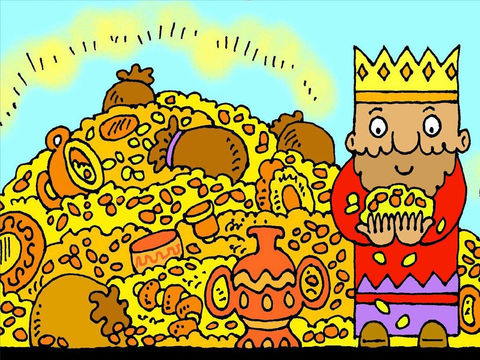
  • The people complained to Rehoboam about how much they had been taxed by his father, Solomon. Why do you think the taxes were so high during Solomon’s reign? For what purpose was Solomon using all that money? 
  • The scripture says that we should seek “wise” counsel. What does it mean to seek counsel? Where can we go for wise counsel?
  • Were Rehoboam’s friends wise counselors? What can we learn from this example?
  • Rehoboam wanted the people’s respect. He tried to show that he was ready to rule by being harsh. Does bullying others in this way earn their respect?
  • How did Solomon’s former advisers say Rehoboam could earn the respect of the people?
  • Rehoboam decided not to listen to the wise men. He decided to tax the people even more, as his friends had advised. What happened to the kingdom of Israel because of Rehoboam’s poor decision?

Memory Challenge: 

Proverbs 1:7 The fear of the Lord is the beginning of knowledge, but fools despise wisdom and instruction.


Protected: Gantt Chart Overviews

There is no excerpt because this is a protected post.

Recommended Reads: Naming the Elephant

Children’s Bible Program – Level 2: Lesson 38 “Between the Army and the Sea”

Featured Passage: Exodus 13-15

God brought the children of Israel out of slavery with many miracles. They were finally headed for the land God promised them. God led the people across the wilderness to edge of the Red Sea where they stopped to camp. In the meantime, Pharaoh changed his mind again! He was angry that he had let his slaves go, so he sent his army after the Israelites. Israel was about to be trapped between Pharaoh’s army and the Red Sea. How would they escape? God had a plan to save them, but how?

Discuss:

Richard Gunther (www.lambsongs.co.nz) | FreeBibleImages.org
  • When the Israelites saw Pharaoh’s army coming, what did they say? What did Moses do? 
  • God worked many miracles to deliver Israel from Egypt. Why were they still afraid? 
  • The Israelites walked through the Red Sea between walls of water on dry ground. What do you imagine the Israelites may have seen?
  • The Egyptian army thought they could cross over the Red Sea just as Israel did. What happened next?
  • How did the Israelites react when they reached the other side of the Red Sea?

Memory Challenge: 

Exodus 14:16 “But lift up your rod, and stretch out your hand over the sea and divide it. And the children of Israel shall go on dry ground through the midst of the sea.”