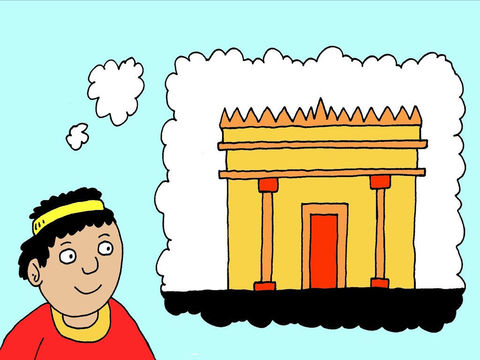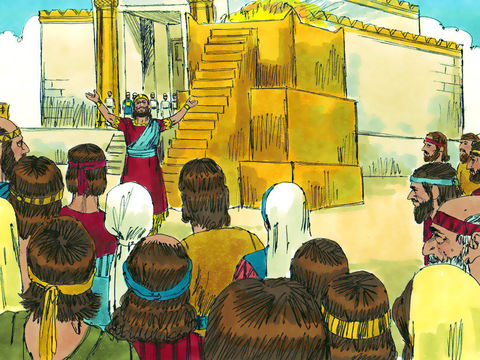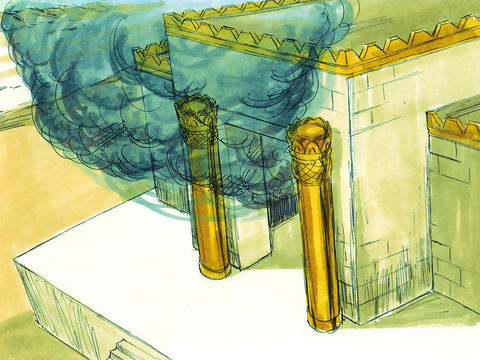
King David had a special desire: He wanted to build God a house. He felt bad that God still dwelt in the Tabernacle as He had with the Israelites in the wilderness while he lived in his own beautiful palace. However, God had other plans in mind for His house. He decided that King David was not the right man for the job, but rather He would let David’s son do the special project. Four years after Solomon began to reign over Israel, he started to build a house for God—the temple in Jerusalem. Solomon spared no expense to get materials of the finest quality with which to construct this marvelous dwelling place for the Most High. Even the stones were carefully shaped to fit perfectly together so that not a single hammer would need to be used when they assembled it. When it was finally completed, seven years later, it certainly must have been something wondrous to behold. The Ark of the Covenant was brought into the Most Holy place, and there awaited one more essential component—the presence of God Himself.
Discuss:
Sweet Publishing | FreeBibleImages.org
What didn’t God want David to build the temple even though it was something he desired? Why did He instead give the job to Solomon?
To whom did Solomon write asking for help in building the temple?
What were some of the key materials Solomon used to build the temple? What were some of the elements that were built or crafted for the temple?
Why do you think Solomon had the stones crafted perfectly before they were brought to the temple mount to be put together? What kind of connections can we make between this and us as a spiritual temple? (Read Ephesians 2:19-22 for some clues)
What were some of the colors used in the temple when it was furnished?
At the dedication of the temple, what were some of the things included in the ceremony? What happened when the priests brought the ark of the covenant into the Most Holy place? Try to describe what it would have been like to be there.
Memory Challenge:
1 Kings 8:30
And may You hear the supplication of Your servant and of Your people Israel, when they pray toward this place. Hear in heaven Your dwelling place; and when You hear, forgive.
The temple in Jerusalem had been rebuilt by the group of captives that had been allowed to return to the city. However, even though the temple was completed and rededicated, there was still trouble for the people. The walls of the city were broken and Jerusalem was not protected from the attacks of the surrounding enemies. At the time, a man named Nehemiah worked as the cupbearer for the Persian king Artaxerxes. Nehemiah heard that the people in Jerusalem were in distress and he became very sad, and cried out to God for help. God, hearing Nehemiah’s prayer, had a plan to help the people through the kindness of a king and the leadership of a cupbearer.
Discuss:
Richard Gunther (www.richardgunther.org) | FreeBibleImages.org
What was Nehemiah’s first reaction when he heard about the situation in Jerusalem? What can we learn from his actions?
What are the responsibilities of a cupbearer? How did the king notice something was wrong when Nehemiah came before him? What does this tell us about the kind of person Nehemiah was?
How did Nehemiah organize the building of the wall? Why do you think he did it this way?
What kind of difficulties did the people have as they were trying to build the walls? What was the response of the builders to the adversity they met? What should our response be when we have difficulties trying to accomplish our goals in life?
How long did it take the people to finish rebuilding the walls? What roles did Nehemiah play in helping the people finish the job so quickly?
Memory Challenge:
Nehemiah 2:17
Then I said to them, “You see the distress that we are in, how Jerusalem lies waste, and its gates are burned with fire. Come and let us build the wall of Jerusalem, that we may no longer be a reproach.”
After the days of King Solomon, the Kingdom of Judah and the city of Jerusalem were ruled by many different kings. Some were good kings who led the people to serve God and worship Him properly at His temple, and God was pleased with them. Sadly, not every king wanted to follow God’s laws, but rather they turned away from God to worship pagan idols and led the people to sin against God’s commandments. This made God very sad, and as time went by the problem seemed to get worse and worse. As God had told the Israelites many years before, if they turned away from Him to worship false gods, He would no longer protect them and He would have to leave the people and the house that was built for Him. After all, there was no longer room for Him in a house filled with idols. Just as the prophets of God had warned the people, if they didn’t repent of their sins God was going to leave His house and teach them a hard lesson.
Discuss:
Sweet Publishing | FreeBibleImages.org
Who was the last king of Judah? What kind of attitude did he have toward God?
The prophet Ezekiel was shown a vision of the glory of God leaving the temple in Jerusalem. Why did God remove His glory from the temple?
Why did God send prophets to warn the people? What did the people of Jerusalem do when the prophets of God warned them what would happen if they didn’t listen to God?
Who were the enemies who surrounded and conquered the city of Jerusalem? What happened to the temple and the things in it?
Even though God removed His glory from the temple, did that mean that God would leave His people forever? What are some of God’s promises to the people of Judah and Israel?
After the first temple was destroyed, who was the person God worked with to proclaim that the temple could be rebuilt?
Memory Challenge:
2 Chronicles 36:23
Thus says Cyrus king of Persia: “All the kingdoms of the earth the Lord God of heaven has given me. And He has commanded me to build Him a house at Jerusalem which is in Judah. Who is among you of all His people? May the Lord his God be with him, and let him go up!”
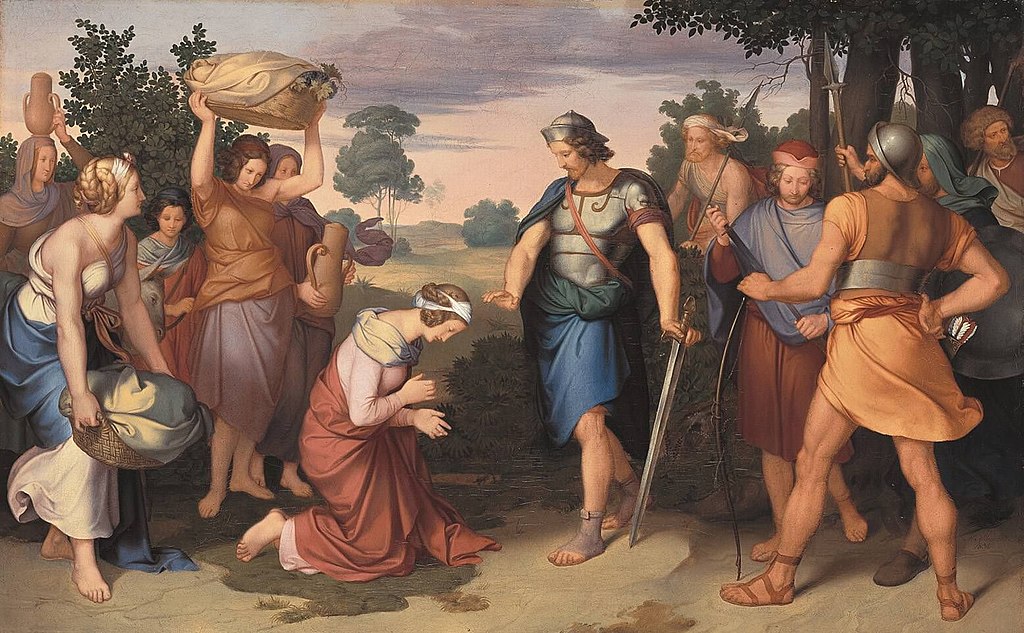
Jonathan, the son of Saul and David’s closest friend, had a son named Mephibosheth who was only five years old when his father died in a terrible battle. The nurse who was taking care of little Mephibosheth panicked when she heard the news of the battle. She was scared of what might happen, so she picked him up to leave quickly, but in her hurry, she dropped the young boy in such a way that his feet were badly hurt and he was lame for the rest of his life. The years went by, and one day, King David sat thinking about his friend Jonathan and wondered whether anyone in his family was still alive. That was when one of Saul’s old servants told David about the son of Jonathan. David was eager to meet him and to honor the covenant he made with his friend many years before.
Discuss:
Moody Publishers | FreeBibleImages.org
Why did David want to find out if anyone in Saul’s family was still alive?
Who was the person who told David about Jonathan’s son?
What did Mephibosheth do when he was first brought before King David? What are some ways that we can show respect to people who are in authority?
The Bible tells us that Mephibosheth was lame in both of his feet. What do you think it would be like to be lame in both feet? What kinds of things would you not be able to do if your feet didn’t work properly?
What did David do for Mephibosheth? Why did he show kindness to him?
Memory Challenge:
2 Samuel 9:7
So David said to him, “Do not fear, for I will surely show you kindness for Jonathan your father’s sake, and will restore to you all the land of Saul your grandfather; and you shall eat bread at my table continually.”
After the declaration of Cyrus the Great many of the Jews who had been carried away as captives by the Babylonians, returned from captivity to Jerusalem. Under the new Medo-Persian empire some Jews, like the man named Mordecai, chose to stay in the land. Mordecai was raising Hadassah (Esther), a very beautiful young woman who had been orphaned. During this time, Queen Vashti had refused the king’s command to come to him, and King Ahasuerus was searching the kingdom for a queen to replace her.
Why was King Ahasuerus angry with Queen Vashti? What did his advisors tell him to do about it?
Why do you think Esther was chosen to join the other young women in the palace? What special treatment was Esther given by Hegai, the custodian of the women?
How did the King honor Esther as his chosen queen?
Why do you think Mordecai told Esther not to reveal her Jewish identity?
What did Mordecai do to save the king’s life?
Memory Challenge:
Esther 2:17
The king loved Esther more than all the other women, and she obtained grace and favor in his sight more than all the virgins; so he set the royal crown upon her head and made her queen instead of Vashti.
The nation of Judah refused to repent of their sins, so God allowed the Jews to be carried away as captives to Babylon. Some of the first to be taken to Babylon were noblemen and their families; Daniel was most likely taken captive with this group. When they arrived in Babylon, Daniel was selected to be among the young men who would be taught the language, literature, and culture of the Babylonians. Even though he was a captive, Daniel was determined to live according to God’s laws which were certainly not practiced by the Babylonians. The first test came when Daniel’s first plate of food was set before him.
Rebekah Ross | Living Education
Discuss:
Who was the king of Babylon when Daniel was taken captive?
Why do you think Daniel did not want to eat the king’s delicacies? What did Daniel propose that he eat instead? Has there ever been a time when you have had to courageously stand up for your desire to follow God?
What position did King Nebuchadnezzar give to Daniel? How did he get the position? What can we learn from this in relation to Proverbs 22:29?
When the astrologers and magicians could not reveal to the king his dream, what did the king command be done to all the wise men? What did Daniel do when he heard about the proclamation?
Who revealed to Daniel the dream and its meaning? What is important about Nebuchadnezzar’s dream?
Memory Challenge:
Daniel 2:20-22
Daniel answered and said:
“Blessed be the name of God forever and ever, For wisdom and might are His.
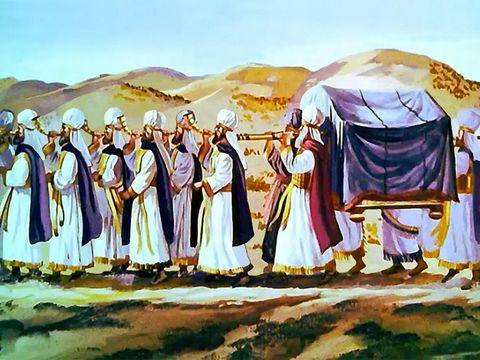
King David had built a house for himself in the City of David which is in Jerusalem. Though he had a beautiful place to live, he was sad because the ark of the covenant, the special box which represented God’s promises to Israel, was being kept in a man’s home at a place called Kirjath Jearim. He wanted the ark to be put in its own special house. He knew that the ark represented God’s dwelling place, so he wanted to build a house for God in Jerusalem to help show the people that God was with them. Before the house – the temple – could be built, David set up a special tabernacle in Jerusalem where the ark could be placed. He was very excited that the ark would finally come into the City of David, so he prepared a special celebration.
Discuss:
Sweeting Publishing | FreeBibleImages.org
Who were the only ones who were allowed to carry the ark of the covenant? What was the special way the ark was to be carried?
What kind of instruments did David want to accompany the ark being brought into the city? What do you think the music sounded like?
What was David doing to worship God when the ark was brought into the city of David? What are some ways that we can worship God?
What did David give all the people so they could join in the celebration? (1 Chronicles 16:3)
What is a psalm? How do we use psalms and music in church today?
What was the covenant God made with David about the temple that he wanted to build?
Memory Challenge:
2 Chronicles 15:3
And David gathered all Israel together at Jerusalem, to bring up the ark of the Lord to its place, which he had prepared for it.
Author: Mr. Kenneth Frank | Faculty, Living Education
Estimated Reading Time: 5 min.
Did you know that an Old Testament prophet of God made a mistake in judgment when advising King David about building the Temple?
Nathan was a prophet during the reigns of both David and Solomon. He is first mentioned in the account of David’s arrangements for building the Temple. David had built himself a fabulous palace and thought it showed a lack of respect and sanctity that God’s worship center was merely a tent. Even though Nathan wanted to encourage David in his heart-felt desire to build God a permanent structure (a temple) for worship, he gave David advice he had to later retract. There are two passages of this account in the Old Testament: 2 Samuel 7 and 1 Chronicles 17.
Nathan’s mistake is a common one: not consulting God before acting on our decision or before advising someone else on their decision. Another example of this was in the time of Joshua when the Israelites made a league with the Gibeonites without first consulting God (Joshua 9:14). They were tricked into a long-term covenant they later regretted. When we fail to seek God before making major decisions, we are asking for trouble. Nathan’s advice to David was premature. An annotation on 2 Samuel 7:3 in Dake’s Annotated Reference Bible explains: “What Nathan said here was partially wrong. God was with David and approved of his desire to build a temple. He let David collect materials for the temple, but He had reasons for not letting David build it himself (1 Chronicles 22:1-16). Nathan later told David who would build it (1 Chronicles 17:4-15).”
The Temple would be built instead by David’s son, Solomon, because David had made great wars and had shed blood (1 Chronicles 22:8; 1 Chronicles 28:3). Solomon’s name means peaceful or peaceable. Adam Clarke’s Commentary on the Bible explains: “Heathens, Jews, and Christians, have all agreed that soldiers of any kind should have nothing to do with Divine offices.” The Jamieson Fausset and Brown Commentary adds further, “An innate feeling of propriety dictates the purification of the worshipper from all defilement when about to engage in the solemn rites of religion. Above all, persons polluted with blood were prohibited even among the pagan, of which many instances are found in the works of classical writers, (see Homer, ‘Iliad,’ 6:, 335; Euripides, ‘Iphigesia, in Tauris,’ 5:, 380; Vigil, ‘AEneid,’ 6:).”
The Jamieson Fausset and Brown Commentary explains what went wrong with Nathan’s counsel: “The prophets, when following the impulse of their own feelings, or forming conjectural opinions, fell into frequent mistakes (see the notes at 1 Samuel 16:6; 2 Kings 4:27).” What was missing in Nathan’s advice? Robert Hawker’s comment in The Poor Man’s Commentary on 2 Samuel 7:3 explains: “Had the prophet first made it a subject of prayer, his directions would have been better. The Lord being with his people, as indeed he always is, doth not supersede the necessity of asking continually his wisdom to guide us.” God expects us to consult Him. Nathan meant well and David’s desire was honorable (2 Chronicles 6:8) – but we learn from them that we must always consult the LORD in our plans. In our New Testament, the Apostle Paul provides us wise counsel of a similar nature in Philippians 4:6-7 (KJV throughout): “Be careful for nothing; but in every thing by prayer and supplication with thanksgiving let your requests be made known unto God. (7) And the peace of God, which passeth all understanding, shall keep your hearts and minds through Christ Jesus.”
Even though Nathan made a mistake in judgment, God did not cast him aside. He went on to have a successful and lengthy career advising David and Solomon, two of the greatest kings during the heyday of Israel’s United Kingdom. He later reproved David for his adulterous affair with Bathsheba (2 Samuel 12:1-14), was charged with Solomon’s education (2 Samuel 12:25), and took a prominent role in Solomon’s accession to the throne (1 Kings 1:8-11, 1 Kings 1:22-45). His two sons, Zabad and Azariah, held high places in the king’s court (1 Chronicles 2:36; 1 Kings 4:5). He seems to have written a life of David (1 Chronicles 29:29) and another of Solomon (2 Chronicles 9:29).
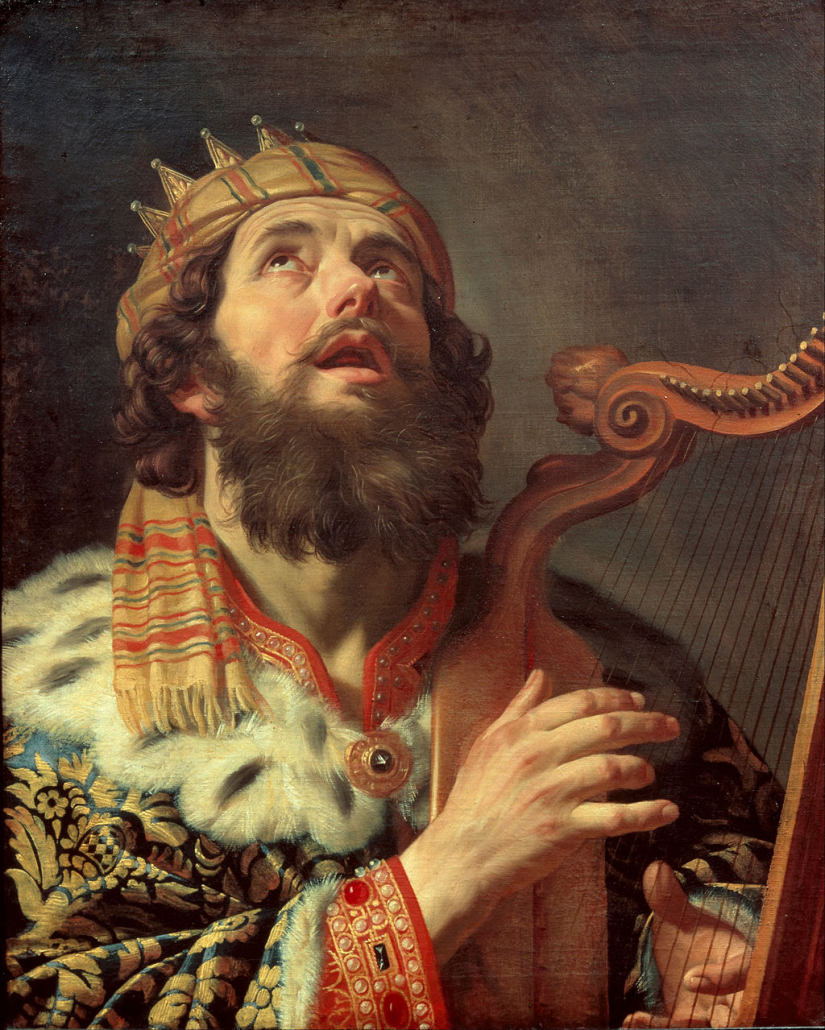
No doubt, sometime in your life you realized you had not consulted God before making a major decision. It may have not turned out well. We may even wonder why God would allow that decision to go astray. The Almighty is trying to teach us that He alone knows the end from the beginning. “Seek the LORD” appears 27 times in our Bible revealing an important lesson for us since it is so frequent. Isaiah 55:6instructs us, “Seek ye the LORD while he may be found, call ye upon him while he is near.” This seeking has a condition attached: “But if from thence thou shalt seek the LORD thy God, thou shalt find him, if thou seek him with all thy heart and with all thy soul (Deuteronomy 4:29).” Our seeking God must be genuine and with pure hearts. King David composed under inspiration many of our psalms. Here is one that is especially fitting for this lesson in life: “Delight thyself also in the LORD; and he shall give thee the desires of thine heart. Commit thy way unto the LORD; trust also in him; and he shall bring it to pass (Psalm 37:4-5).”
Kenneth Frank was born and raised in New Jersey, USA, and attended Ambassador College, graduating in 1973. He served in the Canadian ministry from 1973-1999, after which he returned to the USA to pastor churches in Maryland, Virginia, and North Carolina for 15 years. Having earned a BA degree from Ambassador College he later earned a MA degree from Grand Canyon University before being assigned to the Charlotte office to teach at Living University, now Living Education. Currently, he teaches the Survey of the Bible course to the on-campus students and writes the Digging Deeper column for our online Bible study program. He is married, has four children, and seven grandchildren.