
Second Thoughts: Blaming Gravity for the Ground
Author: Thomas White | Student at LivingEd-Charlotte
“Gravity operates the same way, all the time. … Sometimes, when we’re falling, we wish it didn’t work that way, but we pay the consequence when we hit the ground. …and there are others laws that are absolutely just as sure as gravity. …and those laws are found right here, in the Bible.” ~ Mr. Sheldon Monson
April 4, 2019 | Student Assembly: LivingEd-Charlotte

I’m pretty sure that at some point or another, we’ve all wished that we, personally, could fly. It’s a natural, human thing to fantasize over. Even King David envied the birds at least once (Psalm 55:6). That fantasy, though, always seems to include the ability to stop flying when you’re so inclined, because otherwise the flight becomes a lot less awesome, and also a lot more terrifying. As Mr. Sheldon Monson made the point in this week’s assembly, gravity is a great thing to have around, and we all recognize that. Even after a particularly nasty fall, no one is all that tempted to sincerely say, “Ugh, gravity. I wish it would go away.” We know that would be ridiculous…but when we, in our heart of hearts, wish that certain parts of God’s law weren’t there, aren’t we being just as foolish?
“The world around us is filled with strife, it’s filled with poverty, ignorance, suffering, pain…those are all results of living a way of life that’s opposite to what God says we ought to live.”
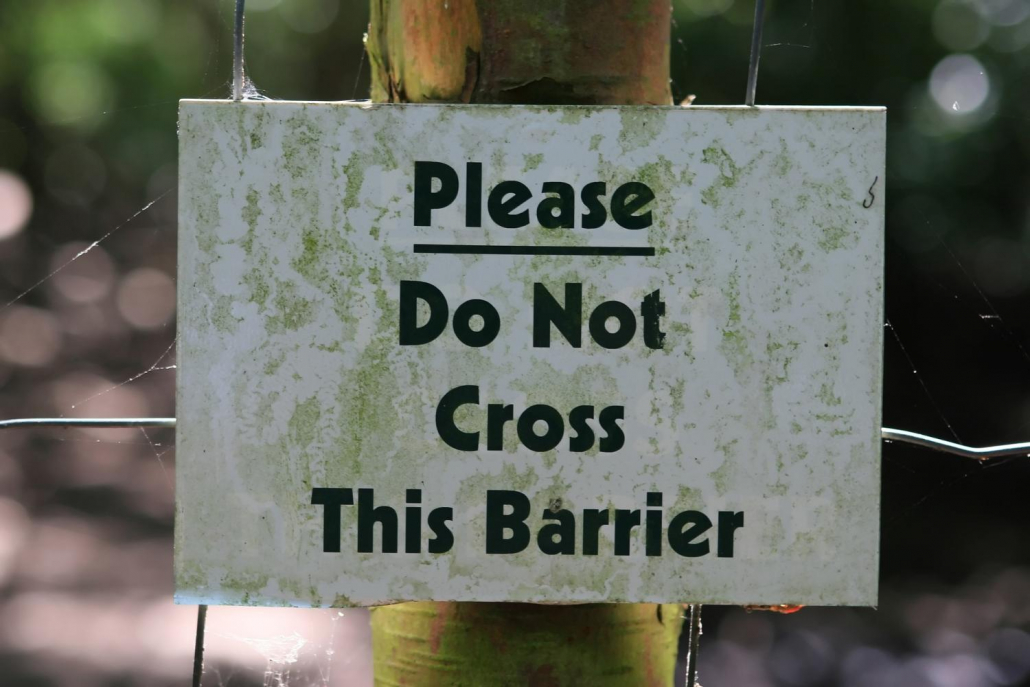
One of my absolute favorite non-biblical quotes comes from Cecil B. DeMille, who said, “We cannot break the Ten Commandments. We can only break ourselves against them…” We all recognize that sin will always have consequences, but if we’re not careful, we can start thinking that God put those consequences there. In reality, He created His law to keep us from sin’s consequences, not consequences to keep us out of sin. If I hop the fence at the edge of the Grand Canyon and perform a swan dive, the inevitable splat isn’t the fence’s fault, or the Grand Canyon’s fault, or gravity’s fault, rather it is every bit my own fault. And as Mr. Monson brought out, the vast majority of our world is taking Satan’s advice and swan-diving off the edge of the Grand Canyon, deceived into believing that God’s Church is foolish for not doing the same.
“The main thing is to remember to keep ‘The Main Thing’ the main thing.”
So I have to make sure that I don’t do the same, because Satan whispers in my ear, too, telling me that there is no splat at the end of the dive into sin, that I can level out and levitate away right before I hit the ground. That fits right into my flying fantasy, so how do I keep from believing him? As Mr. Monson reminded us, “The Main Thing”, what keeps us safe from our own gullibility, is to “Fear God and keep His commandments, for this is man’s all” (Ecclesiastes 12:13). To cut through life’s distractions and maintain that primary focus, we need to remind ourselves that those commandments are a shield, not a cage.

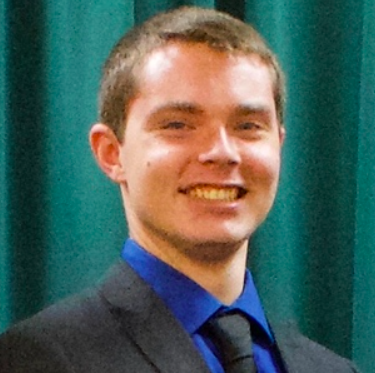
Thomas White was one of the onsite Living Education students for the 2018-2019 semesters. He also has a Bachelor’s Degree in English. Thomas currently works as an Editorial Assistant for the Living Church of God. According to his wife, he eats pizza in entirely the wrong way.









 “We’ve got to speak truth to our neighbor, and any employer is our neighbor, in the context that God uses. … You can be a false witness of yourself, if you don’t tell the truth.”

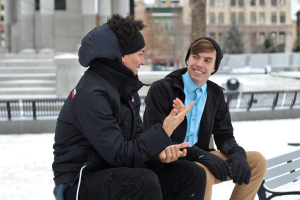 The more things we like to do, the more common ground we’ll find with others. And as Mr. Ames said, the more versatile we are, the more effective we can be as Christ’s Ambassadors. God made a lot of people, and almost all of them have passions they love talking about. Being able to talk to many different people, about many different things, can improve the light in which people see you, and improve the light in which they see “that Church you’re in.” It’s good to have a Thing, but as Mr. Ames showed, it’s even better to have many.
 “Anonymity has its perils. … There’s a huge amount of money associated with social media activity, and if you’re going to avoid being taken advantage of, it’s essential that you act with knowledgewhen engaging with such media.”
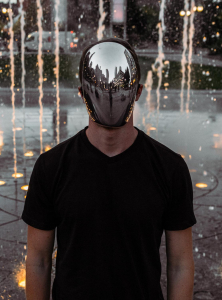 If a random person on the street walked up and said, “Hi! Let’s be friends”, I would naturally be a bit suspicious. If that person wore a ski mask, I would be more suspicious, and probably run. As Mr. Wakefield pointed out, social media makes it possible for people to try to gain your trust while wearing fabricated identities as their ski masks, so socializing with people you’ve never met offline is usually a bad idea. Acting with knowledge means being careful about who we believe online, as well as being careful about what we put there. “Set a guard, O LORD, over my mouth,” reads Psalm 141:3, and today, as Mr. Wakefield said, “mouth” could just as easily be “keyboard.” The internet is a mixture of good and evil, and if we act with knowledge, God can keep us from the latter.

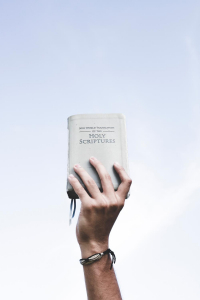

 Thankfully, God’s word tells us in advance of our ultimate destiny, so kingship hopefully won’t surprise us the way it surprised King Bhumibol. Even so, we probably will be surprised by how what we’re learning now, no matter how inconsequential it may seem, will end up being used by God to immense effect. Mr. McNair used the example of Joseph, who probably never thought for a second that his time as a slave and a prisoner would teach him skills he would later use to govern the nation of Egypt. But (spoilers!) that’s exactly what happened (Genesis 45:3-8). Mr. McNair advised us to look beyond what we see, to consider how what we’re learning right now might be used to unexpectedly shape our lives and the lives of others. As Mr. McNair said, “It’s always easy to think that the big, valuable stuff will be somewhere else, will be at another time, will be in another place…and to miss the goldmine in front of you.”