Children’s Bible Program – Level 3: Lesson 20 “Joshua Becomes the Leader of Israel”
Sweet Publishing | FreeBibleImages.org

By Janth English and LivingEd Staff

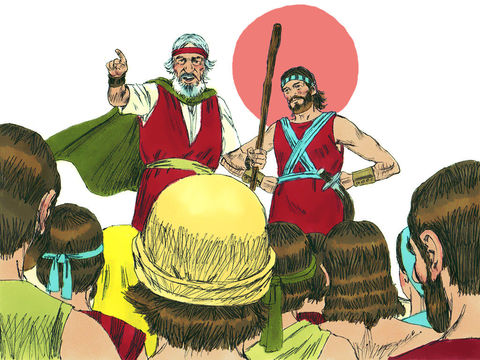
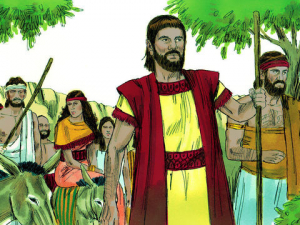
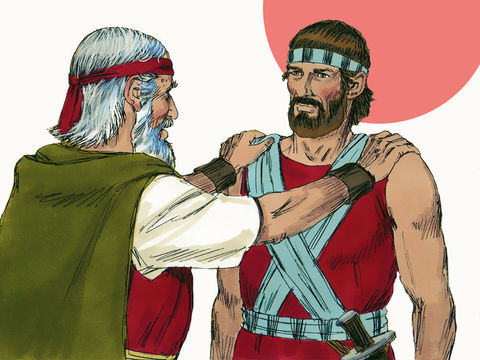
Read Together: Before his death, one of Moses’ final duties was to appoint Israel’s next leader. God had chosen Joshua, the son of Nun. Joshua had been at Moses’ side from the time the Israelites left Egypt. He was the first general who led Israel into war. He was also with the seventy elders who saw God and ate before Him. Joshua was with Moses on the mountain for forty days when he received the Ten Commandments from God. Joshua and Caleb were the only spies who brought back a good report of the promised land and tried to convince the others to go in and take it. He had been thoroughly trained, having served Moses for forty years, so God chose him to lead the nation after Moses. Joshua must have felt the burden of leading this nation with millions of people, but Moses encouraged him to be strong and courageous. Moses died on Mt. Nebo and was buried by God. After Moses’ death, God spoke to Joshua, letting him know that He was with him. God told Joshua to be strong and courageous. The rest of the story of Joshua – his leadership, exploits, bravery, and commitment —  is for another lesson.

Read Together:  Numbers 27:18–23; Exodus 17:9–10, 13; 24:9–13; 32:15–17; 33:11; Numbers 14:6–10; Deuteronomy 31:7–8; 34:1–12; Joshua 1:1–11

Discuss:

  • Ask your child what is their favorite story about Joshua. Why?
  • Talk about what might be some reasons that God did not reveal to us exactly where He buried Moses.
  • Discuss with your child how Joshua must have felt being personally encouraged by God. Remind your son or daughter that God speaks to us through His word, the Bible.
  • Express to your child that God wants each of us to be strong and courageous in our daily lives as we represent Him to the world. Why do we need to be strong and courageous?
  • Point out to your child that God trained Joshua from a young age to work in His service. Remind  your child that if they are willing to do God’s will, they too can be used mightily by God.

Review Memorization:Deuteronomy 30:15-16  “See, I have set before you today life and good, death and evil, in that I command you today to love the LORD your God, to walk in His ways, and to keep His commandments, His statutes, and His judgments, that you may live and multiply; and the LORD your God will bless you in the land which you go to possess.”


Second Thoughts: Internal Organs Are Important Too!

by Thomas White, student at LivingEd-Charlotte

“…I think of a body of believers, when I think about the Church. …the body of believers is made up of so many different kinds of people, from all different kinds of backgrounds, all different kinds of races, all different kinds of experiences, different cultural backgrounds, and different talents.” ~ Mr. Jerry Ruddlesden

Student Assembly, March 14, 2019.

A novel by Robert Heinlein includes a quote that ends with “Specialization is for insects,” claiming that every human being should be able to do basically everything under the sun. That’s all well and good if you’re a character in a novel with as many inexplicable talents and abilities as the author can write for you, but in real life, no human being can do everything. The Apostle Paul says as much in 1 Corinthians 12, where he informs us that God’s Church is a body, and that each member of it makes up a separate and unique, yet unified and integral, part of that body. For this week’s assembly, Mr. Jerry Ruddlesden informed us of the absolutely staggering amount of work that goes into maintaining and operating that body, from the ins and outs of making sure Sabbath Services across the world have halls to be held in, to the intricacies of creating a professional telecast and finding television stations on which to show it. All of this is done by an immense amount of people…and most of these people work almost entirely “behind the curtain.”

“…the body needs a head, the body needs a foot. The body needs an eye, the body needs an ear. We preach the gospel, we feed the flock, and all those little things that happen here, all of us together, we’re a part of that.”

All these unseen—yet hugely important—things, being done by all these unseen—yet absolutely invaluable—people, caused a thought to occur to me. Thanks to Paul’s inspired words, we understand that some members of Christ’s body are eyes, some are ears, some are hands, and some are feet. Obviously, all these parts are on the outside of the body – we don’t need to get X-rayed to see that we have eyes, ears, hands, and feet. But what if you’re none of the above? After all, a body is a lot more than just what the mirror shows. What if you’re a pancreas? A thyroid gland? A spleen? These parts aren’t visible—unless something really, really bad just happened to you—but…well, try spending a day without your thyroid. Actually, please don’t. It will not go well.

“…the members in the Church who are not in charge have their part to play. And it’s not just to ‘pay and pray.’ … It’s way more than that.”

You see where I’m going with this, and Mr. Ruddlesden went there first, as he explained that, for example, though each Tomorrow’s World telecast may only be presented by one man, there are perhaps dozens of people that are never shown, but without whom that telecast would never be produced. Those people aren’t parts of the body’s face; they’re internal organs, and you don’t need to be a doctor to know that a body needs internal organs. The telecast needs more than presenters. The magazine needs more than writers. The Church needs more than people in Charlotte. Preaching the gospel and feeding the flock takes every single one of us. Whether it’s Mr. Weston himself teaching doctrine to the members or the teenager in a tiny congregation being a light and example to everyone they meet, both contribute to the feeding and preaching in their own special ways using their own particular talents. We’ll always need faces, but internal organs are important, too.


Thomas White headshot

Thomas White was one of the onsite Living Education students for the 2018-2019 semesters. He also has a Bachelor’s Degree in English. Thomas currently works as an Editorial Assistant for the Living Church of God. According to his wife, he eats pizza in entirely the wrong way.

Children’s Bible Program – Level 2: Lesson 19 “Abraham and Isaac Are Tested”

www.Lambsongs.co.nz | FreeBibleImages.org

By Janth English

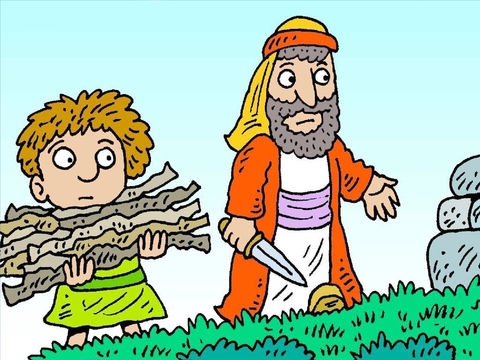
Read Together:  Abraham and Sarah watched and guided Isaac as he grew into a young man. Abraham taught Isaac about God and told him about the promises He had made. Then, when Isaac was still a young man, God told Abraham to take him to the land of Moriah and offer him as a sacrifice! After hearing God’s instruction, Abraham dutifully arose the next morning, prepared for the journey, and headed toward the mountain with Isaac and two of his servants. It took them three days to reach the place where Isaac was to be offered. One can only imagine how difficult this journey was for Abraham. Nevertheless, He was willing to obey God’s command. Remember, God had promised that He would give many descendants to Abraham, and Isaac was the son who was miraculously born to Abraham and Sarah to bring about that promise. He knew that God was able to raise Isaac from the dead, if necessary, to keep His promise. Abraham and Isaac went up to the top of the mountain where Isaac allowed himself to be bound. Then Abraham laid his son on the wood of the altar to become the offering. Abraham raised the knife to slay his son when God stopped him. God then knew without any doubt that Abraham feared Him, trusted Him and loved Him more than anything or anyone – even his own son. God blessed Abraham for his faith and obedience and gave him even greater promises than before! God told him that all the people on earth would be blessed because of Abraham’s obedience!

Read Together:  Genesis 18:17–19; 22:1–18; Hebrews 11:17–19

Discuss:

  • Point out some great examples in the Bible of young people seeking God’s will and obeying Him. Isaac is one of them. Who else can you remember?
  • Discuss with your child some examples in Abraham’s life that validate why he is called the father of the faithful (Romans 4:16).
  • Help your child think about how difficult it would be to sacrifice your child or to be the person who is sacrificed. Ask them to imagine what it would have been like to be Isaac. Isaac could have run away, but instead he followed his father’s instruction, just as Abraham was following God’s instruction. This would have taken great courage and faith on the part of Isaac toward his father!
  • Explain to your child how Abraham and Isaac pictured the Father and Jesus Christ during their test. Abraham was a type of the Father who offered His Son, and Isaac pictured Christ, who willingly laid down His life (John 10:17–18).

Review Memorization:

Hebrews 11:17–18 “By faith Abraham, when he was tested, offered up Isaac, and he who had received the promises offered up his only begotten son, of whom it was said, ‘In Isaac your seed shall be called,’ concluding that God was able to raise him up, even from the dead, from which he also received him in a figurative sense.”

Children’s Bible Program – Level 3: Lesson 19 “Moses Forewarns Israel”

Sweet Publishing | FreeBibleImages.org

By Janth English

Read Together: The events at Kadesh marked a crucial point in Moses’ life. First, Moses’ sister Miriam died there. Next came a day that would change Moses’ future. Once again, the people were complaining about their lack of water, forgetting how God had provided for their needs again and again. All they needed to do was to turn to God and ask Him for His help. Moses went to God and asked Him to provide the water they needed. God patiently gave Moses and Aaron instructions, telling them exactly how to provide for the people. He told Moses to speak to the rock and water would flow from it. Moses, however, lost his temper. He was so angry at the Israelites that he hit the rock with his rod. In fact, he hit it twice! God made water start miraculously pouring out of the rock, providing for the needs of the thirsty people. But He was very displeased with Moses. According to God, Moses and Aaron did not show honor and respect to Him. Moses had allowed his anger to guide his actions instead of trusting God’s hand and obeying Him as He had instructed .

God does not play favorites, and this act of disobedience on the part of Moses and Aaron in front of all the people was just as wrong as the disobedience shown by others. Because they disobeyed God, Moses and Aaron were not allowed to enter the Promised Land. However, before he died, Moses reminded the people of Israel to never forget the laws of their God. He encouraged them, saying that if they obeyed, God would bless their families, give rain in its season, increase their crops, increase their livestock, protect them from their enemies, and give them peace. However, if they disobeyed, they would be cursed. The weather would be harsh, the earth would not yield its crops, disease would cling to the people, their enemies would pursue them and overtake them, and they would eventually become slaves again. God gave Israel a clear choice between living the way that brings life and peace, or the way that brings curses and death. He gives us the same choice.

Read Together:  Numbers 20:1–13, 23–29; 27:12–14; Deuteronomy 28:1–37; 30:1–3, 15–20.

Discuss:

  • Discuss with your child Moses’ and Aaron’s punishment for disobeying God. Was this an unfair punishment?
  • Even though God punished Moses and Aaron for their disobedience, God forgave them. We know that Moses will have a high position in the Kingdom. Explain the fact that even though God forgives us, sin still has consequences.
  • Explain to your child that there are only two ways to live, God’s way and man’s way. God’s way is the only way that brings true joy, peace, and happiness. This may be a good opportunity to discuss the difference between the world today (governed by man) and the Kingdom of God (governed by God).
  • Point out to your child that even when we sin, God offers us forgiveness when we repent and turn to Him.

Review Memorization.

Deuteronomy 30:15–16 “See, I have set before you today life and good, death and evil, in that I command you today to love the LORD your God, to walk in His ways, and to keep His commandments, His statutes, and His judgments, that you may live and multiply; and the LORD your God will bless you in the land which you go to possess.”

Children’s Bible Program – Level 2: Lesson 18 “God’s Promises to Abraham”

Sweet Publishing | FreeBibleImages.org

Read Together: God promised to make Abram a great nation, saying that all the nations of the earth would be blessed through him. God showed Abram all the land of Canaan and promised it to his descendants. Abram had traveled throughout the land of Canaan for 24 years, and now he was 99 years old. God had promised that his descendants would be as numerous as the sand on the seashore, but he still did not have a son. It was at this time that God appeared to Abram and expanded the promises. He told Abram that he was going to make him a father of many nations and that some of his descendants would be kings. God changed Abram’s name to Abraham and his wife’s name, Sarai, to Sarah, to reflect the promise that many nations would come from them. God told Abraham that he and Sarah would have a son the next year, and they were to call him Isaac, which means laughter. Perhaps Isaac was given that name because both Abraham and Sarah laughed when they first heard they would have a son. The next year Isaac was born, just as God had said. Isaac was the beginning of the fulfillment of God’s promises to Abraham.

Read Together:  Genesis 13:14–18; 15:1–6, 18–21; 17:1–24; 18:1–15; 21:1–6

Discuss:

  • Discuss with your child how Abraham remained faithful to God year after year, believing that God’s promises would be fulfilled through his descendants. Include Hebrews 11:1 in the discussion. Remind your son or daughter that if God says something, it is as good as done!
  • Ask your child if they can remember some of the promises God gave to Abraham. Discuss with them how these promises have been fulfilled (e.g. through Jesus Christ, European kingdoms, Great Britain, and the United States).
  • Remind your child that the promises were also made to Sarah. She was an important part of the covenant God made with Abraham. God loves both men and women.  All human beings are created in His image (Genesis 1:27).
  • God names things what they are. From the Bible, we learn that in the Kingdom we will all to be given a new name. Ask your child what name he or she would choose for themselves to reflect their character and personality.

Review Memorization:  Hebrews 11:17–18  “By faith Abraham, when he was tested, offered up Isaac, and he who had received the promises offered up his only begotten son, of whom it was said, ‘In Isaac your seed shall be called,’ concluding that God was able to raise him up, even from the dead, from which he also received him in a figurative sense.”

Printable PDF – L2.18

Second Thoughts: When Humility Becomes Dishonesty

By Thomas White, Student at LivingEd-Charlotte

“You don’t want to step on other people trying to get a job, but the reality is…if you’re going to be hired…you need to look better than the other guy or other gal. That’s just the reality, because there’s competition for jobs.” ~ Dr. Scott Winnail

Dr. Scott Winnail focused this week’s assembly on strategies for building a strong resume, delivering a practical and beneficial presentation that was particularly pertinent in the lives of the eighteen-to-twenty-four-year-olds sitting in the room. The ability to write an effective resume is critical to those of us who would like to buy food on at least a semi-consistent basis, and two of the helpful resources Dr. Winnail provided are linked at the end of this post. But what struck me the most about this assembly was when Dr. Winnail spoke of the balance we all must use in showing humility and honesty at the same time. As he brought out, we’re all representatives of God’s Church, so if we make ourselves look worse than we really are, aren’t we not only lying, but making the very body of Christ look bad?

“People just lie. That’s what society is like, and lying becomes part of the character of the end-time Israelite society. And certainly, that’s something we don’t want to be part of.”

This topic certainly applies well to resumes, as Dr. Winnail proved. I had difficulty writing my first resume, largely because I felt like I was bragging. But I wasn’t lying on my resume; like Dr. Winnail said, I was simply putting my best foot forward. Do we ever view humility as thinking or speaking poorly of ourselves? I’ve thought of it that way, but that’s a pretty shallow idea of what humility is, and it leaves more room for dishonesty than true humility ever would. How often do we find ourselves being dishonest in the name of humility? “Hey, you did a good job on those spreadsheets,” someone might say. “Nah, it wasn’t much,” I might reply. Did I just lie? If I know I worked hard on those spreadsheets and delivered a quality result, then yes, I have indeed just lied. I might be well-intentioned, trying to obey the First Commandment by not making an idol of myself, but now I’ve turned around and broken the Ninth Commandment. How is that any better?

“We’ve got to speak truth to our neighbor, and any employer is our neighbor, in the context that God uses. … You can be a false witness of yourself, if you don’t tell the truth.”

Compared to God, not one of us humans is anywhere near a big deal, so obviously, we shouldn’t parade around acting like one. We’d all hopefully agree that we should never lie about our accomplishments, but do we think about how short-changing ourselves is, essentially, doing just that? For example, if you’re a great singer, wouldn’t true humility be to recognize that God made you that way, that you owe your talent to Him, and then to sincerely thank Him for it? (Probably best not to do this on a resume, by the way. That might not go over well.) To deny that you’re a great singer, if indeed you are, isn’t that to insult the gift God’s freely granted you? When we dismiss the abilities and accomplishments God’s given us as “not much,” we’re not only lying, but failing to be thankful. With prayerful effort and God’s constant help, we can strike that balance of humility and honesty, recognizing that we’re nothing without God, and acknowledging that He’s given us something valuable.


Resume Resources Given:

Indeed.com’s “10 Resume Writing Tips to Help You Land a Job”

The sample resume of one Sparty Spartan.


Thomas White headshot

Thomas White was one of the onsite Living Education students for the 2018-2019 semesters. He also has a Bachelor’s Degree in English. Thomas currently works as an Editorial Assistant for the Living Church of God. According to his wife, he eats pizza in entirely the wrong way.

Children’s Bible Program – Level 3: Lesson 17 “Israel Rebels in the Wilderness”

  Sweet Publishing | FreeBibleImages.org

By Janth English

Read Together:  As God delivered Israel from Egypt, they witnessed miracle after miracle! The children of Israel walked through the Red Sea on dry land with walls of water on both sides. They watched the Egyptian army get swallowed up by the Red Sea as God allowed the water to crash down on them. But they still complained to God!  When they had no water, they complained. When they had no food, they complained again. It’s understandable that they were hungry and thirsty, but instead of asking God for help, they accused Him of bringing them out into the wilderness to die. Again and again, they said “Let’s go back to Egypt”. When Moses went up to the top of Mt. Sinai to receive the Ten Commandments from God, the Israelites made a golden calf to worship. They bowed down to it and called it their god, even though they had just promised to obey the real God who had brought them out of slavery! When Moses sent the spies to scout the land of Canaan, they came back with a bad report even though the land was full of delicious fruit. All the spies, except Joshua and Caleb, said they should not enter the promised land because they saw the giants who lived there. They had no faith that God would deliver them, so the people refused to go in and inherit the land God had promised.  For this, and for all their constant complaining and faithlessness, God sentenced them to wander in the wilderness for forty years. This was one year for each day the spies were in Canaan, until everyone of that generation had died.

Read Together:  Ex. 15:19-24, 16:2-4; Num. 11:1-10; Ex. 32:1-8; Num. 13:17-33, 14:1-4, 26-35

Discuss:

  • Point out to your child that three days after Israel came through the Red Sea they were complaining about water.  Israel had forgotten God’s power very quickly.  Discuss why this would happen.
  • Have a discussion with your child about faith. The Israelites knew God was real, but they lacked faith.  Israel proved that witnessing miracles does not guarantee faith. Include James 2:18 in the discussion.
  • Talk with your son or daughter about the Israelites’ tendency to complain.  Do we have the same characteristic?  How does God feel about complaining?  What is the antidote for complaining?

Review Memorization:

Deut. 30:15-16  “See, I have set before you today life and good, death and evil, in that I command you today to love the Lord your God, to walk in His ways, and to keep His commandments, His statutes, and His judgments, that you may live and multiply; and the Lord your God will bless you in the land which you go to possess.”

Printable PDF – L3.17

Children’s Bible Program – Level 2: Lesson 17 “Abram Leaves for Canaan”

Sweet Publishing | FreeBibleImages.org

By Janth English

Read Together:  Abram was born 292 years after the flood. His family lived in a city called “Ur”, which was in the area of modern-day Iraq.  He was the youngest son of his father Terah whose ancestor was Shem. Abram married his half-sister Sarai, but they did not have any children. Terah left Ur for Canaan and took Abram, Sarai, and Lot, his grandson, with him.  The family stopped for a while in Haran where Terah died. Abram had become very wealthy in Haran. By the time he was 75 years old, he owned livestock, and had silver, gold, and many servants. This would surely have made it hard to leave Haran. But God commanded Abram to leave his home and go to a distant land that He would show him. In return for his obedience, God promised to make Abram’s descendants a great nation. Amazingly, Abram immediately obeyed God. He simply took his wife, his nephew Lot, and all their possessions and left his home for good.

Read Together: Gen. 11:24-32; 12:1-10; 13:2-4

Discuss:

  • Explain to your child that it was not uncommon for people to marry close relatives in Abraham’s days.  Remind him/her that everyone was closely related after the flood because only one family survived. God later commanded the Israelites not to marry close relatives (Lev. 18:6-17).
  • Discuss with your son or daughter how difficult it must have been for Abram and Sarai to pack up and move to a place that they did not know.  There were no trucks or vans to move them and no hotels along the way. Ask your student what might have been some of the hardships Abram and Sarai could anticipate on their journey.
  • Abram must have known how hard his journey would be. Still, he did not argue with God. He just obeyed what God told him to do. Talk with your child about Abram’s character. Highlight the good example that Abram showed when he obeyed God immediately.
  • God promised Abram that he would become a great nation, but that promise was not fulfilled right away.  Explain to your student that obedience to God must come first before we receive any rewards.

 Review Memorization:

Heb 11:8 NKJV “By faith Abraham obeyed when he was called to go out to the place which he would receive as an inheritance. And he went out, not knowing where he was going.”

Printable PDF – L2.17

Second Thoughts: Don’t Be Chained to Your Thing

An essay on Mr. Richard Ames’ Student Assembly titled, “Expand Your Horizons”

by Thomas White, LivingEd-Charlotte

“There are times for meditation, and of course, for recreation, but…have discipline and…broaden your horizons.” ~ Mr. Richard Ames

Most of us have a Thing. You know the one. That Thing that checks all the boxes – you’re good at it, it’s good for you, and you love doing it. It’s good to have a Thing. After all, without anything to make our individual lives exciting and fulfilling in unique ways, we might as well be automatons. But God made an awful lot of Things, and He made each human being versatile enough to fit a lot more than one. In the assembly this week, Mr. Ames spoke about the importance of expanding our horizons, disciplining ourselves to continuously grow into more multifaceted Ambassadors for Christ.


“How do you expand your horizons? … One of the ways is through various hobbies and various interests.”

Another amazing aspect to us humans is that we can get excited about almost anything, given time and exposure. Now, this has a ton of downsides we have to be aware of, so as to avoid joining those who trick themselves into caring about what a random celebrity wears to a random place. But a major positive aspect to this is that if you think you could never possibly be interested in a potential new hobby, learning more about it will probably fix that. Nothing has to replace your Thing. Just don’t trap yourself into making your Thing your only Thing. Love reading? Maybe you can give mountain climbing a shot, too. Really into sports? You could try learning to draw after you’ve hit the showers. You never know what will give you a sense of unexpected fulfillment, and contrary to popular belief, you’re totally allowed to love doing something that you’re not actually all that naturally talented in. God might not intend for you to have a career in it, but that’s no reason not to do it for fun.

“Why do you [expand your horizons]? To make you a more effective ambassador for Christ, [who] can relate to people.

The more things we like to do, the more common ground we’ll find with others. And as Mr. Ames said, the more versatile we are, the more effective we can be as Christ’s Ambassadors. God made a lot of people, and almost all of them have passions they love talking about. Being able to talk to many different people, about many different things, can improve the light in which people see you, and improve the light in which they see “that Church you’re in.” It’s good to have a Thing, but as Mr. Ames showed, it’s even better to have many.
Children’s Bible Program – Level 3: Lesson 16 “God Explains the Statues”


Moody Publishing | FreeBibleImages.org

By Janth English

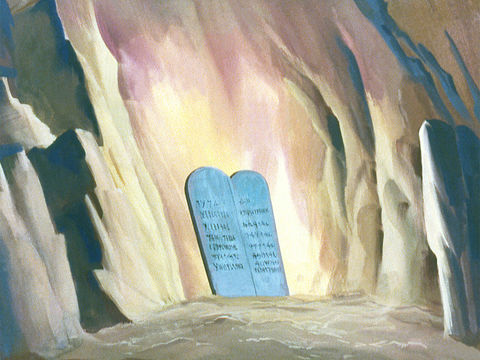
Read Together: Israel was so afraid when they heard God speak the Ten Commandments that they asked for Moses to relay God’s words to them. God agreed. In addition to the Ten Commandments, God gave Moses “statutes.” Statutes are laws that apply to more specific situations. They help us understand how to apply the Ten Commandments in everyday life. God’s laws and statutes were designed to provide Israel a fair and just legal system that would protect people and property. When Jesus came to earth, He supported the laws of God, including the statutes, and taught His disciples about how to keep them in our heart and mind.

Read Together: Deuteronomy 4:1–10; Exodus 22:5, 14, 28; Exodus 23:1–17; Leviticus 23:1–3; Deuteronomy 4:1–10; 22:8.


Discuss:

  • Explain to your student that the statutes are finer points to God’s Ten Commandments. For example, the Ten Commandments command us to keep the Sabbath, but the statutes explain there are “annual” Sabbaths as well (Leviticus 23:1–3).
  • Read, with your child, Exodus 22:28. Ask your child if he or she ever hears people “cursing” or making fun of leaders today. How would this statute guide a child to behave toward his or her parent or teacher?
  • Ask your child what the following statute means: “You shall not follow a crowd to do evil” (Exodus 23:2). Can he or she think of a time when they’ve had to resist following others to do something they knew was wrong?
  • With your child, read the statute in Exodus 23:4. Ask him or her, “Why would God want a person to bring back the animal of their enemy? Would that kind act possibly help them to be friends again?”
  • Ask your child what the statute in Deuteronomy 22:5 means. Ask if they can see how that could apply in our world today (when some are confused about gender).
  • Ask your child why God would make the statute in Deuteronomy 22:8. Would it not protect people from accidents?


Review Memorization.

Exodus 20:1–17 – The Ten Commandments (long form)

Printable PDF – L3.16

Printable PDF – L3.13-L3.16