Posts

Children’s Bible Program – Level 2: Lesson 21 “The Holy Days Picture God’s Plan”

Read Together: Before God created the universe, He planned to create human beings and make them a part of His family. He determined to give mankind the gift of free moral agency. In other words, He would give mankind the ability to make choices. The most important decision is choosing whether to obey God or not. But God recognized that under the influence of Satan, man would choose to follow his own heart and disobey His commands. And just as Satan had done, Adam and Eve rebelled against Him. Since then, all humanity has followed their example. But God is holy and wants nothing to do with sin. So, how could sinful mankind ever become a part of God’s holy family? The answer is amazing! Remember, God had an astonishing plan for the human race to be part of His spirit family, and He wants us to know about it. To help us understand each step in His master plan, He gave us the Holy Days. This is why we observe these days every year, beginning with the Passover. Learning about the Passover helps us to understand the first step in God’s plan for us – and all people who have ever lived.

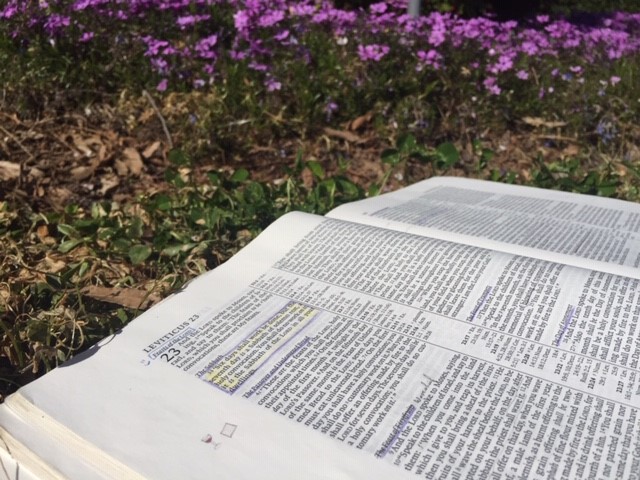
Read Together:  1 Peter 1:1820; 1 Corinthians 15:2122; Romans 3:23; Psalm 5:4; Isaiah 59:2; Leviticus 23:137

Discuss:

  • Remind your child that it was God’s plan from the beginning to create a family. We are made in His image (Genesis 1:2627), and we should grow in character to become like Christ (Ephesians 4:1315).
  • Discuss with your child what it means to have free moral agency. Mankind has not been given the right to decide what is right and wrong. Only God has the wisdom to make that determination. We  choose whether or not we will do what is right as God defines it.
  • Help your child identify each of the Festivals and Holy Days mentioned in Leviticus 23. Briefly discuss how each Holy Day fits into God’s plan. Be sure to emphasize Leviticus 23:2 where God says, “… these are My feasts.”
  • Help your child understand that they are a part of God’s plan and that God is looking forward to them being born into His family.

Review Memorization:

1 Corinthians 5:7 “Therefore purge out the old leaven, that you may be a new lump, since you truly are unleavened.   For indeed Christ, our Passover, was sacrificed for us.”

Children’s Bible Program – Level 2: Lesson 22 “Passover and the Sacrificial Lamb”

Photo by Daniel Sandvik on Unsplash

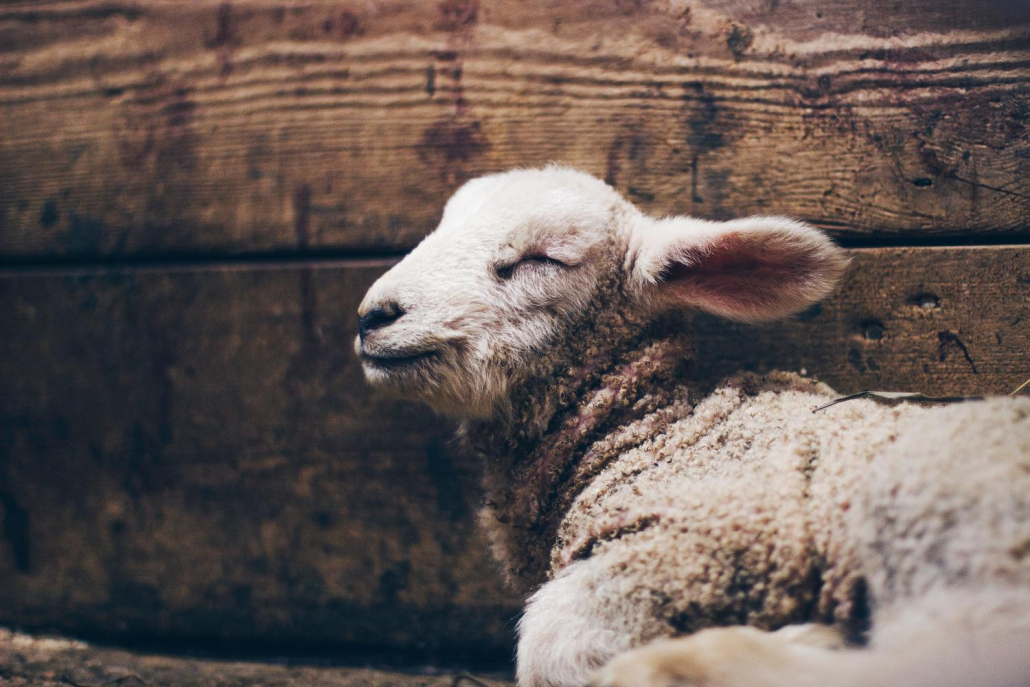
Read Together: God gave ancient Israel instructions concerning Passover observance. On the tenth day in the first month of the year, each family was told to select a special, Passover lamb. This lamb was to be perfect, without any blemishes at all. Four days later, as the 14th day of the first month was just beginning at sunset, they were required to kill the lamb, cook it, and eat it as part of a special Passover meal, putting some of the blood of the lamb on their doorway. Those who did this would be protected from the death angel, who would kill all the firstborn in the land, except those in houses with the blood of the lamb on their doorway. Every year after that, the Israelites were commanded to eat a Passover meal on this same night and remember how God had spared them from the death of the firstborn in their home.  

But this Passover lamb also symbolized something more. All humans are under the threat of death because we all have sinned, and death is the penalty for sinning against God. We may not have the death angel passing over us, but we still are subject to death for our sins. Instead of a Passover lamb, however, we have Jesus Christ. Christ was the perfect sacrifice who was willing to become a human being and then die for our sins, protecting us from death, just as the blood of the lamb on the doorway protected the Israelites.

Read Together:  Exodus 12:3–8, 43–47; Leviticus 23:4–5; Romans 3:23; 6:23; Hebrews 10:4; John 1:1–3; Luke 1:35; Matthew 1:23; Philippians 2:5–8; John 10:17–18; 3:16; 1:29.

Discuss:

  • Ask your child why they think the lamb selected for Passover had to be without any blemishes. How does this relate to Jesus Christ?
  • People often question why Christ had to die. Discuss this with your child. Be sure to relate that God will not compromise with sin and that there could be no pardon of sins without shedding blood (Hebrews 9:22). Christ had to die to atone for mankind’s sins, giving you, your child, and every human being who has ever lived a chance for salvation and eternal life in God’s family.
  • Discuss with your child how awful sin is and why God hates it. Choose one of the Ten Commandments and talk about how breaking it causes misery, pain, and suffering. How different would the world be if that commandment was kept? Remind your student that it is because of sin that Christ had to die.

Review Memorization:

1 Corinthians 5:7  “Therefore purge out the old leaven, that you may be a new lump, since you truly are unleavened. For indeed Christ, our Passover, was sacrificed for us.”

Children’s Bible Program – Level 2: Lesson 23 “Putting Sin Out”

Read Together: When God delivered ancient Israel from Egypt, they left in a hurry. They left so quickly that they were unable to let their dough rise, so their bread was unleavened. God told Israel they were to remember the day that He brought them out of Egypt by observing the Feast of Unleavened Bread for seven days. The first and last days of the feast were to be Holy Days or annual Sabbaths. As they prepared for these days they were to remove all the leavening from their homes. God commanded the Israelites to do this and instruct their children to pass on this command to the next generation. But we understand that the command applies to us as members of the church of God also. You have probably helped your parents clean the leavening from your home before the Days of Unleavened Bread each year. It can take a lot of time and hard work! But, why is it important? Here’s the answer.

Remember, God brought ancient Israel out of slavery in Egypt. For the Israelites, Egypt represented the years of slavery they had endured. Today, God calls each member of His church and frees them from slavery also. But our slavery is not to the kingdom of Egypt. Our slavery is to sin. Even though we don’t want to, we sometimes break God’s law out of rebelliousness and selfishness. That is like being a slave of sin. For us, God uses leaven to represent our slavery.  What is leaven? Leaven is the yeast that is added to bread to make it rise, which makes it more enjoyable to eat. Without that leaven, bread is hard and flat. Just like the yeast that makes bread rise, sin causes us to grow in pride, vanity and selfishness. And as we remove leavening or any bread that has been made with leavening from our homes, we are practicing an exercise that reminds us of removing sin from our life!

Read Together:  Exodus 12:15–17, 33–34, 39; 13:3–10; Leviticus 23:6–8; John 6:44; Matthew 16:6; 1 Corinthians 13:4; 5:6–8; Romans 6:12–14

Discuss:

  • Help your child name some leavened products that you are to throw out and avoid during the Days of Unleavened Bread.
  • Discuss with your child what sin is and have them read 1 John 3:4 (KJV). Help your child recognize that just as we are to carefully stay away from leavening during the Days of Unleavened Bread, we are to be especially diligent to keep sin out of our lives.
  • Try to think of a humorous event that happened to your family during the Days of Unleavened Bread. What was the oddest place that you found leavening? Were you ever in a situation where you temporarily forgot it was the Days of Unleavened Bread? What do you do when these things happen? Help your child to understand that when we repent of sin, God is quick to forgive us. This is how we remain unleavened.

Review Memorization:

1 Corinthians 5:7  “Therefore purge out the old leaven, that you may be a new lump, since you truly are unleavened. For indeed Christ, our Passover, was sacrificed for us.”

Children’s Bible Program – Level 2: Lesson 24 “Eating Unleavened Bread—Putting on Righteousness”

Read Together: God told ancient Israel that they were to put out all leavening from their homes, and He also instructed them to eat unleavened bread for seven days. The first and seventh days were to be holy convocations.God’s people continue to observe the Feast of Unleavened Bread by eating unleavened bread for seven days and celebrating the first and seventh days as Holy Days. These days have important meanings in God’s plan for mankind. Passover commemorates Christ’s sacrifice in payment of our sins. The Days of Unleavened Bread picture our effort to put sin out of our lives and replace it with living according to God’s ways. We don’t just avoid doing bad things. We must fill our lives wit good actions, just like our elder brother Jesus Christ.

Read Together:  Exodus 12:14–17; Leviticus 23:6–8; Ephesians 4:22–24; John 6:47–51; Galatians 2:20; 2 Timothy 3:16–17; Philippians 1:6; Hebrews 12:2

  • Discuss with your child the biblical meaning of righteousness. Read and discuss Psalm 119:172 together.
  • Remind your child that the Feast of Unleavened Bread is the only one that has two Holy Days and that Passover is a separate feast but it is not a Sabbath.
  • Ask your child to summarize the meaning of the Passover and Days of Unleavened Bread, the first two steps in God’s plan of salvation.

Discuss:

Review Memorization.

1 Corinthians 5:7  “Therefore purge out the old leaven, that you may be a new lump, since you truly are unleavened. For indeed Christ, our Passover, was sacrificed for us.”

Children’s Bible Program – Level 2: Lesson 25 “Jacob and Esau”

By Janth English

Read Together:  Isaac and Rebekah lived many years before they had children, but God finally blessed them with twin sons, Jacob and Esau. They were twins, but never were two people more different. Esau was hairy, but Jacob had smooth skin. Esau was a skillful hunter, but Jacob was a mild-mannered shepherd. One day Jacob was cooking lentil stew when Esau came from the fields. He had been hunting and was very hungry. Jacob offered his brother some stew in return for his “birthright blessing”. Esau agreed. Jacob seems quite devious, talking his brother out of his birthright. Remember this, however; Esau cared more about his hunger than his birthright. Many years later, an elderly Isaac decided it was time to bestow a final blessing upon each of his sons. His plan was to give the greater blessing to Esau and a lesser blessing on Jacob, because Esau was his favorite son. Since Rebekah’s favorite son was Jacob, she hatched a plot that would have the greater blessing go to him! This lesson’s reading reveals what happened when their plan unfolded. Though the Bible reveals how weak and deceitful people can be, God’s purpose to establish a nation is still revealed. We’ll learn more about that later.

Sweet Publishing | FreeBibleImages.org

Read Together:  Genesis 25:19-34; 27:1-41

Discuss:

  • Discuss with your child the ethics of this situation. Since God had chosen Jacob to inherit the promises He made to Abraham and Isaac, was it wrong for Jacob and his mother to use trickery in getting them?
  • Discuss with your child the fact that Isaac intended to give the blessings to Esau. Think of a few ways that God could have prevented Isaac from giving the blessings to Esau. Can any human cause God’s plans to fail (Isaiah 46:9-10)?
  • Jacob was his mother’s favorite son and Esau his father’s. Ask your child what happens in a family when individual members are shown favoritism.
  • Help your child understand that God chooses individuals for His purpose at His time. Explain that God did not choose Jacob because he was somehow “better” than Esau. This principle applies to those who are called now as well.

Review Memorization Genesis 27:29 “Let peoples serve you, and nations bow down to you. Be master over your brethren and let your mother’s sons bow down to you. Cursed be everyone who curses you, and blessed be those who bless you.”


Children’s Bible Program – Level 2: Lesson 26 “Jacob Flees to Padan Aram”

Sweet Publishing | FreeBibleImages.org

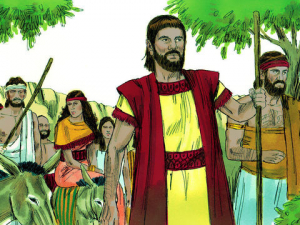
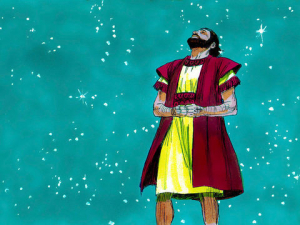
Read Together:  Esau despised Jacob for tricking him, and Rebekah, their mother, discovered his plot to kill him. Rebekah advised Jacob to go to her brother Laban’s home and stay there until Esau had calmed down. Now Isaac and Rebekah were not pleased that Esau had taken Hittite women as wives, so Isaac told Jacob to take a wife from his uncle’s daughters in Padan Aram. Jacob set out from Canaan to the land of Haran with nothing but his staff. On his way, Jacob stopped for the night, and he had a very strange dream while sleeping under the stars. He dreamed there was a ladder that reached from heaven to the earth with angels going up and down. God spoke to him in the dream and gave Jacob the same promises that He had made to Abraham and Isaac. God promised to give him the land of Canaan and to multiply his descendants.  God promised to be with him and to bring him back safely to the land. Jacob was filled with awe! He anointed the stone where he slept and called the place Bethel, which means house of God. For his part of the covenant, Jacob promised to obey God and to tithe to Him. Jacob completed his journey, arriving at his uncle Laban’s home in Padan Aram.

Read Together:  Genesis 27:41-46; 28:1-22; 29:1-13

Discuss:

  • Esau was very angry with Jacob and thought to kill him.  Discuss with your child how thoughts become actions, and we must learn to control our thoughts.  One strategy is to replace bad thoughts with good ones; we can also pray for anyone we may have bad thoughts about. How could Esau apply this?
  • Explain to your child that most dreams do not have any meaning; they are just dreams. Jacob’s dream was special and God caused him to understand that.
  • Discuss with your child what a tithe is.
  • Remind your child that Haran is the place where Abraham and Sarah lived before their sojourn in Canaan; it is near modern day Syria. Laban was Rebekah’s brother, but he was also the son of Abraham’s nephew Bethuel.
  • Point out to your child that Bethel is an important place in biblical history and that we will hear more of it in future Bible studies.

Review Memorization:

Genesis 27:29 “Let peoples serve you, and nations bow down to you. Be master over your brethren and let your mother’s sons bow down to you. Cursed be everyone who curses you, and blessed be those who bless you.”

Children’s Bible Program – Level 2: Lesson 27 “Jacob’s Wives and Sons”

Read Together: Jacob arrived in Padan Aram, and began looking for his uncle Laban. Instead, he met Laban’s beautiful daughter, Rachel. Jacob fell in love with Rachel and desperately wanted her as his wife. Laban agreed to give her in marriage to Jacob. But, in return, he demanded that Jacob work for him for seven years. Jacob agreed and served Laban, tending his flocks. When the time for the wedding came, Laban prepared a feast. At the end of the feast, when it was finally time for Jacob to be with beautiful Rachel, Laban tricked him! Instead of Rachel, Laban presented Leah, the older sister, to Jacob. Jacob was furious! He had married the wrong woman! Devious Laban suggested a solution. If only Jacob would work for another seven years for him, he would let him marry Rachel too! Reluctantly, Jacob agreed. But having two wives caused lots of problems for years to come. Jacob continued working for Laban for many years. He eventually became father to eleven sons and one daughter. As he grew older, he finally decided it was time to take his growing family and move back to Canaan.

Richard Gunther (www.lambsongs.con.nz) | FreeBibleImages.org

Read Together:  Genesis 29; 30:1–27

Discuss:

  • Ask your child how they think Jacob felt to be tricked by his uncle. What lessons do you think he might have learned?
  • Help your child to recall the names of Jacob’s sons.
  • Names have meanings. Discuss with your child the meaning of the names given Jacob’s sons. Give a hint of how some of the names portray their future roles. Explain how your child was named and its meaning.
  • Remind your child that God’s intent is for marriage to be between one man and one woman. Jacob’s example shows that anything else causes problems.

Review Memorization:

Genesis 27:29 “Let peoples serve you, and nations bow down to you. Be master over your brethren and let your mother’s sons bow down to you. Cursed be everyone who curses you, and blessed be those who bless you.”

Bonus Memory Verse! Genesis 29:20 “So Jacob served seven years for Rachel, and they seemed only a few days to him because of the love he had for her.”


Children’s Bible Program – Level 2: Lesson 28 “Israel Returns Home”

Richard Gunther (www.lambsongs.con.nz) | FreeBibleImages.org

Read Together: For many years, Jacob worked for his Uncle Laban, but he was not happy. Sensing his discontent, Laban agreed to give some of his sheep to Jacob in payment for his labor. Before long, Jacob’s flocks thrived, and he began to become very wealthy.

Now it was Laban’s turn to be unhappy. As his jealousy and envy deepened, Jacob knew it was time for his family to escape. While Laban was gone, Jacob and all his family made their getaway. Ten days later, Laban and his relatives caught up. What happened? You’ll have to read the story! Don’t worry…they parted ways and no-one was harmed.

But just when Jacob thought things were going better, he found out that his brother Esau was headed his way…with four hundred men! Remember Esau? He was Jacob’s brother. The last thing we heard from him was a promise that he would kill the brother who took his blessing. Things did not look good for Jacob and his family!

Thankfully, things did eventually take a turn for the better for Jacob. He survived yet another hostile encounter, and lived a long and prosperous life, as he passed on God’s promise to Abraham to his twelve sons.

To find out how Jacob survived these adventures, and also wrestled with God, read the chapters below! Oh, and did I mention, he also wrestled with God!

Read Together:  Genesis 30-35

Discuss:

  • Ask your child why they think Jacob left Padan Aram in secret. How does Proverbs 22:3 apply to what Jacob did? How does this principle apply today?
  • Remind your child that Jacob left Canaan with next to nothing, but he returned a wealthy man. Explain that Jacob’s wealth was a result of God’s blessings.
  • Help your child see that God names things what they are. Jacob was no longer the schemer he had been, and his new name, Israel, better reflected his new character. Note the humility Jacob expressed when he met his brother Esau.
  • Explain to your child that the promise of national prominence and great riches were passed down from Abraham to Isaac, and from Isaac to Jacob who became Israel. The nation of Israel is named for this patriarch.

Review Memorization:

Genesis 32:28  “And He said, ‘Your name shall no longer be called Jacob, but Israel, for you have struggled with God and with men, and have prevailed.’”

Children’s Bible Program – Level 2: Lesson 29 “Pentecost and the Firstfruits”

Read Together: Through the annual Festivals, God has revealed to the Church His plan to offer salvation to every human being who has ever lived. The first steps in God’s plan are revealed with Passover and the Days of Unleavened Bread which picture Christ’s sacrifice for our sins and our response to His sacrifice by repenting of our sins. The next Holy Day is the Feast of Pentecost or “The Feast of Weeks”. Once a person is called to God’s way of life and repents of breaking His law they are baptized into the body of Christ, His church. After being baptized, the person has hands laid on them to ask God to give them His Holy Spirit.Once a person receives God’s Spirit, they are then sanctified—set apart for good works, and become one of God’s firstfruits. The Day of Pentecost pictures the harvest of firstfruits, the beginning of God’s spiritual harvest of all people into His family

Photo by Farsai Chaikulngamdee on Unsplash

Read Together: Leviticus 23:15–22; John 6:44; Acts 2:38–39; Romans 6:3–4; Acts 8:14–17; Galatians 2:20; Titus 3:8; James 1:18

Discuss:

  • Ask your child to explain in their own words the meaning of the feast of Pentecost in God’s plan of salvation.
  • Discuss with your child the meaning of repentance. When we repent, we stop breaking God’s laws and start to obey them.
  • Explain to your child that even though they are too young to be baptized, they can begin to follow God’s laws now and reap the blessings from doing so. Children of those with God’s spirit are still set apart for a special purpose.

Review Memorization.

Acts 2:38 “Then Peter said to them, ‘Repent, and let every one of you be baptized in the name of Jesus Christ for the remission of sins; and you shall receive the gift of the Holy Spirit.’”

Children’s Bible Program – Level 2: Lesson 30 “Joseph the Dreamer”

Featured Passage: Genesis 37

Joseph was the first son of his mother Rachel, but he had ten older brothers. He was his father’s favorite son, and to make matters worse, Jacob gave Joseph a very special coat, with many different colors. Jacob often sent Joseph to check on his brothers to see how things were going with the flocks of animals, creating animosity between him and them. Then, Joseph began to have dreams he would one day rule over his brothers. He told his father and his brothers about the dreams. Over time, they came to resent and hate him, to the point that they were willing to kill him. 

Discuss:

Moody Publishers | FreeBibleImages.org
  • Jacob grew up in a home where his parents had a favorite child. What might be a problem with a parent showing favoritism to one of their children? Does God show favoritism?. 
  • Why do you think Joseph told his brothers about his dreams? 
  • What action did his brothers take to get rid of Joseph?
  • The older brothers did not seem to think about the great harm that their family would suffer as a result of their actions.What were some of the consequences of their decision? Why is it important to control your emotions and think before acting?
  • It is often difficult to be a younger brother or sister. What can older brothers and sisters do to help younger brothers and sisters feel a part of the family?

Memorization Challenge:

Genesis 37:3-4  

Now Israel loved Joseph more than all his children, because he was the son of his old age. Also he made him a tunic of many colors. But when his brothers saw that their father loved him more than all his brothers, they hated him and could not speak peaceably to him.