
Mrs. Christy McNair: Note-Taking
Author: Mary Wissinger | Living Education
These posts summarize the forums that our Living Education-Charlotte students attend each week.
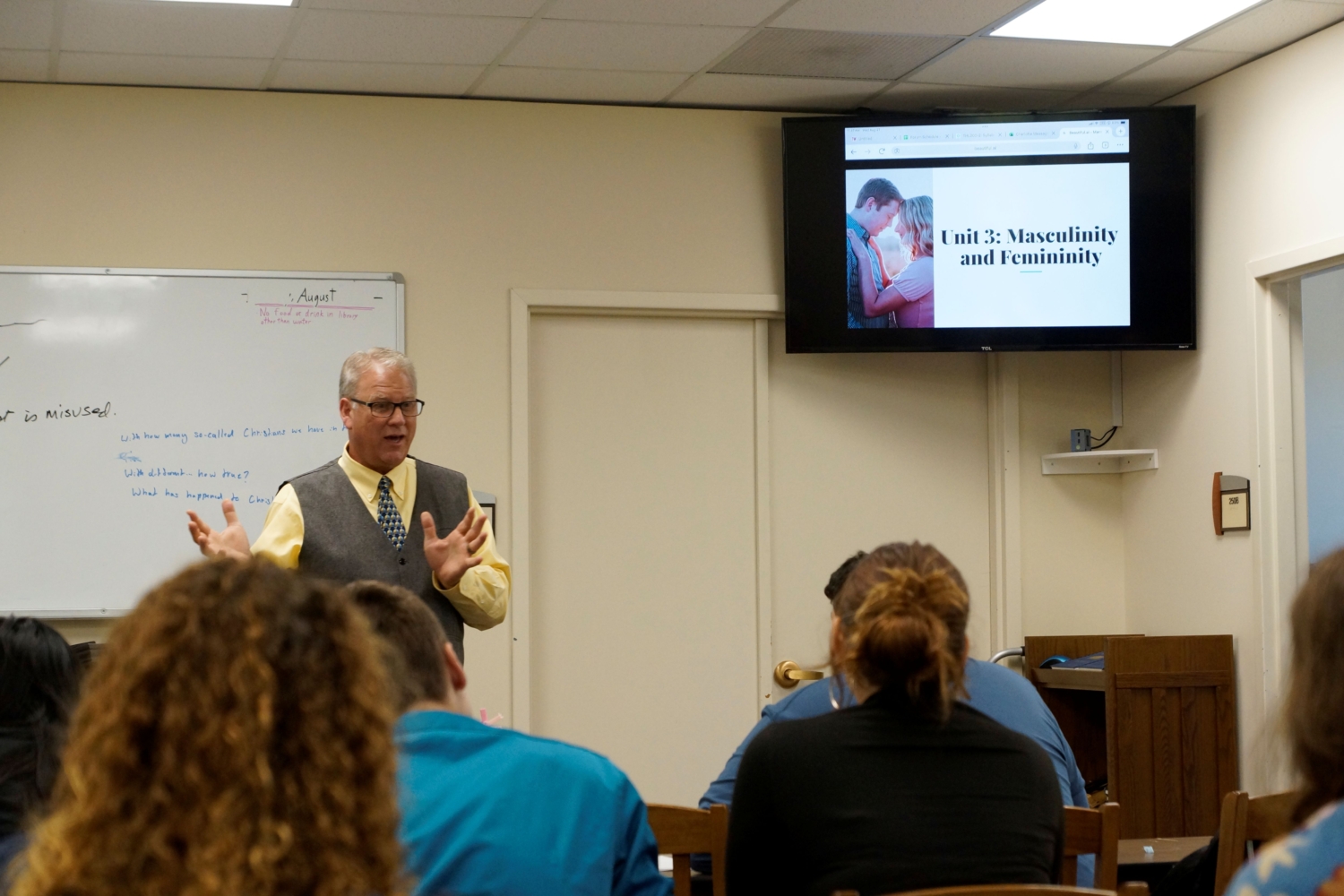
Taking notes is a crucial element of learning, academic success, and overall growth. Yet, many do not understand how to do it effectively. In her forum, former middle school administrator and middle school teacher, Mrs. Christy McNair, delved into the topic. She brought in her experience working with students, discussing how to, and how not to, take notes. She then introduced a note-taking system proven to be highly successful, and she finished by having students practice it with material from a TW Whiteboard.
A Game of Efficiency
The first point Mrs. McNair gave was that note-taking is a matter of efficiency. When we are sitting in any setting before a speaker, we only have so much time before they move on to the next point. Thus, instead of writing word-for-word what we see on a PowerPoint or hear, it is much more practical and effective to sum up information in our own words.
When we take notes, as well, it’s more efficient to hand-write, though the idea is seemingly counterintuitive. That is because, while using an electronic device may appear to be the better approach, it creates no resistance for the brain and does not force it to process what is being written. The information we are given is stored perfectly, yet our minds have not analyzed any of it deeply. Our retention is inhibited, distraction levels rise, and the very purpose of note-taking backfires. Handwriting, in contrast, actually helps us remember and understand what we take in much better.
The Cornell Method
One note-taking system Mrs. McNair introduced was the Cornell method. This system involves splitting a page in two, leaving a thicker column on the right and a smaller one on the left. The right column is where main points and subpoints are written, with a cue word attached to each on the left. The cues can include keywords, phrases, questions, quotes–anything that helps remember a point. Below it all, a summary links everything learned together.
The method, though certainly far from the only one, is proven to be highly effective, with many advantages over simply bullet-pointing. For example, it combines material into more organized, manageable blocks. So, when we scan back through our notes, we can easily find the points we are looking for. Even more, though, the Cornell method forces us to phrase information in a cue-response format. This lets us study from our notes later by covering the right column and using the cues alone to recall what is associated with them. This format is commonly found in assessments, too, and utilizing it in our notes will more effectively prepare us for any we may encounter. This is as opposed to reading and re-reading dozens of bulleted tidbits, which often proves time-consuming. We try to memorize every slice of information, yet it easily gets jumbled in our brains without an umbrella to relate it to.
There are, indeed, many ways to take notes, though, each with its own benefit. Scientific studies have supported the Cornell method; yet, Mrs. McNair emphasized that if our current system works better for us, we should keep using it. She advised students to try it at least, however, adapting it and investigating other methods as well. We may very well find one that serves us better.
Using Our Head and Hands
At the end of the day, Mrs. McNair highlighted that we should avoid copying material. Doing that only gives us a shallow understanding of what we’re taking in. Instead, we should put what we hear into our own words, taking a minute to first listen and reflect before extracting underlying points and organizing them into subtopics.
A crucial point she wanted students to remember, regardless, is that note-taking on an electronic device is far less beneficial to us. While it is necessary for some, we should focus on writing by hand if we can, embracing the resistance between mind, hand, and paper. This will help us actually retain and conceptualize what we learn in the future.