Dios le prometió a Abraham que él sería el padre de muchas naciones. Dios dijo que los descendientes de Abraham serían tantos ¡como la arena a la orilla del mar! Sin embargo, Abraham y Sara se estaban haciendo viejos y no tenían hijos. A pesar de su avanzada edad, Abraham y Sara creyeron que Dios cumpliría sus promesas, y Él lo hizo. Isaac nació cuando Sara tenía 90 años y Abraham tenía 100 años. Abraham había esperado 25 años desde la primera vez que Dios hizo la promesa de que él tendría un hijo. Ismael, el hijo que Abraham tuvo que su sierva, fue enviado lejos con su madre, pero Dios también prometió hacer naciones de sus descendientes. Cuando Isaac era un joven, Dios le dijo a Abraham que lo sacrificara en el monte Moriah. Abraham partió temprano en la mañana siguiente para hacer lo que Dios le dijo. ¡No es de extrañar que Abraham sea llamado el padre de los fieles! Abraham comenzó a llevar a cabo las instrucciones de Dios e Isaac, en obediencia a su padre, se dejó amarrar. Cuando Abraham estaba a punto de sacrificar a Isaac, Dios lo detuvo y proporcionó en su lugar un carnero para la ofrenda. Por este acto de fe de Abraham, Dios supo que Abraham siempre lo obedecería sin importar lo que fuera. Debido a la fe de Abraham, Dios hizo incondicionales promesas a Abraham. Eso significa que sucederían sin importar lo que pasara.
Discusión:
Señale a sus hijos que Ismael es el antepasado del pueblo árabe de la actualidad.
Pregunte cuánto tiempo les tomó a Abraham e Isaac llegar al monte Moriah ¿Qué iba pensando Abraham durante ese tiempo? ¿Renunció a su fe? Explique.
Discuta con sus hijos el papel de Isaac en esta historia. ¿Qué dice su actitud sobre él?
Pregunte cómo es que Abraham se hizo amigo de Dios. Hablen sobre cómo podemos convertirnos en amigos de Dios (Juan 15:14), y lo que significa ser un amigo de Dios.
La fe funciona. Abraham creyó a Dios, así que hizo lo que Dios dijo. Pida a sus hijos que piensen en un ejemplo en el que la fe fue demostrada por las acciones.
Memorizar y revisar:
Génesis 18:19
“Porque yo sé que mandará a sus hijos y a su casa después de sí, que guarden el camino del Eterno, haciendo justicia y juicio, para que haga venir el Eterno sobre Abraham lo que ha hablado acerca de él”.
Author: Mr. Kenneth Frank | Faculty in Theology, Living Education
Estimated Reading Time: 7 min., 27 sec.
Did you know that the Bible refers to thanksgiving as a sacrifice?
This week, Americans will once again observe their national Thanksgiving Day. Canadians observed a similar day in October. This year, due to the COVID-19 pandemic, many people are restricting the size of their gatherings. Nonetheless, despite the hardships we have faced this year, we all have much for which to thank God. Non-believers may discuss during the meal what they are thankful for. By contrast, not only should Christians itemize things for which we are grateful, but more importantly, they need to thank the One who has provided such blessings. This Digging Deeper explores one biblical aspect of this timely topic for the holiday.
Our highlight verse is: “I will offer to thee the sacrifice of thanksgiving, and will call upon the name of the LORD” (Psalm 116:17 KJV). Here the psalmist resolves future worship of God. Dake’s Annotated Reference Bible notes that this verse is one of:
Seven Vows Of David In Psalm 116
1. I will love the Lord (Psalm 116:1).
2. I will call upon Him as long as I live (Psalm 116:2).
3. I will walk before the Lord in the land of the living (Psalm 116:9).
4. I will take the cup of salvation and call upon the name of the Lord (Psalm 116:13).
5. I will pay my vows to the Lord in public (Psalm 116:14; 116:18).
6. I will offer to the Lord the sacrifice of thanksgiving (Psalm 116:17).
7. I will call upon the name of the Lord (Psalm 116:17). (Bible Analyzer 5.4.1.22)
Parallel verses to Psalm 116:17 are:
“And let them sacrifice the sacrifices of thanksgiving, and declare his works with rejoicing” (Psalm 107:22 KJV);
“But I will sacrifice unto thee with the voice of thanksgiving; I will pay that that I have vowed. Salvation is of the LORD” (John 2:9 KJV).
Others verses describe the associated sacrifice of praise during God’s promised restoration of His nation and amplified by the New Testament:
“Thus saith the LORD; Again there shall be heard in this place, which ye say shall be desolate without man and without beast, even in the cities of Judah, and in the streets of Jerusalem, that are desolate, without man, and without inhabitant, and without beast, (11) The voice of joy, and the voice of gladness, the voice of the bridegroom, and the voice of the bride, the voice of them that shall say, Praise the LORD of hosts: for the LORD is good; for his mercy endureth for ever: and of them that shall bring the sacrifice of praise into the house of the LORD. For I will cause to return the captivity of the land, as at the first, saith the LORD” Jeremiah 33:10-11 KJV;
“By him therefore let us offer the sacrifice of praise to God continually, that is, the fruit of our lips giving thanks to his name. (16) But to do good and to communicate forget not: for with such sacrifices God is well pleased” Hebrews 13:15-16 KJV.
These verses declare thanksgiving and praise as sacrifices. However, animal sacrifices are not always intended in these descriptions. First, let us discover its historical background and then search for principles we can apply as Christians. Concerning ceremonial sacrifices offered at the Tabernacle and Temple, The Cambridge Bible for Schools and Colleges in its note on Leviticus 7:11-12explains that thanksgiving offerings were one of three kinds of peace offerings: “For thanksgiving (Leviticus 7:12), to commemorate deliverance from sickness or danger. In Psalms 107, after mentioning perils out of which the Lord delivers man, the Psalmist says ‘let them offer the sacrifices of thanksgiving’ (Leviticus 7:22)” (e-Sword 12.2).
Sacrifices don’t have to be physical
Dake’s Annotated Reference Bible note on Psalm 116:17 explains how the term sacrifices is used in the Old Testament:
Sacrifices are often distinguished from burnt offerings, though burnt offerings were also sacrifices (Exodus 20:24; Leviticus 1:3-17). Sacrifices were not all burnt offerings; some were poured out and others eaten. Anything offered to God is a sacrifice: firstborn sons (Exodus 13:15); praise (Psalm 107:22; Psalm 116:17; Hebrews 13:15); a broken and contrite heart and spirit (Psalm 51:17); the offering of Christ on the cross (1 Corinthians 5:7); and many other kinds as well. (Bible Analyzer 5.4.1.22)
The sacrifice of thanksgiving was not always a physical offering on the altar. Some sources note that it was a public acknowledgment denoting worship or adoration of the Great God. The Pulpit Commentary, edited by H. D. M. Spence and Joseph S. Exell, for Psalm 116:17 notes that the psalmist’s reference here is scarcely “…an actual sacrifice. Rather, simple thanksgiving, which, from a sincere heart, is the best sacrifice (see Psalm 50:14 and Hosea 14:2)” (e-Sword 12.2). It then offers this explanation: “Religion is not acts, but it can express itself in acts. Religion is heart-feeling. It is the devotion of a man’s self to God. Formal sacrifices are but the representation of the spiritual sacrifices for which God calls; and their value depends on the spiritual sacrifice being offered through them. ‘They that worship the Father must worship him in spirit and in truth'” (Ibid.).
“Worship Him in spirit…”
From this, we learn there are spiritual sacrifices. The Bible describes several spiritual sacrifices that Christians should offer, as itemized by R.A. Torrey’s New Topical Textbook:
The Thompson Chain Reference Bible lists verses showing that God would rather have sincere praise and thanks from obedient lives than thousands of animal sacrifices: “1 Samuel 15:22; Psalm 40:6; 51:16, 17; Isaiah 1:11; Hosea 6:6; Matthews 9:13;12:7; Hebrews 9:9” (e-Sword 12.2).
Hymns of Thanksgiving
Believers do publicly praise God on Thanksgiving Day when someone leads in prayer as a family gathers around the table before they begin to eat. Our American tradition has biblical roots to the ancient Israelites. Some feasters add Bible reading before the prayer. There are numerous thanksgiving psalms in our Bible, including several in Psalms 107-150, considered Book 5 of the 5 books of the Psalms. Bob Utley’s You Can Understand the Bible offers this set of “…hymns of thanksgiving, 9-10; 11; 16; 30; 32; 34; 92; 116; 138…” (e-Sword 12.2). Some people read one of these psalms before their Thanksgiving prayer. Psalm 100 is one this writer has customarily read for several years.
The Bridgeway Bible Dictionary in its article on Thanksgiving explains the occasions when God’s people should give thanks to our Great God:
The lives of God’s people are to be characterized by the offering of thanksgiving to God always, for everything, and in all circumstances (Eph 5:19-20; Phi 4:6; 1Th 5:18). They are to give thanks for blessings, spiritual and physical (Col 1:12; 1Ti 4:3-4), in their own lives and in the lives of others (Act 28:15; 2Th 1:3; 2:13). Thanksgiving is part of praise, prayer and worship (Psa 95:1-7; 116:17; Col 4:2; Rev 7:12; 11:17). (Bible Analyzer 5.4.1.22)
Through this brief study, we have learned that there are several ways to offer sacrifice to God. No longer do Christians travel to the Tabernacle or Temple to offer physical thanksgiving or praise sacrifices to God. However, the Scriptures provided in this study declare there are spiritual sacrifices even more important to God. God desires such praise and thanksgiving. The King James Bible Commentary provides a fitting summation of the lesson from Psalm 116:17: “This is not an actual sacrifice, but rather a heart filled with grateful praise to which is given voice” (Thomas Nelson Publishers, 2005, p. 642).
Despite the difficult year the world has endured, Christians have much for which to be thankful. Count Your Blessings has been a popular hymn over the decades. It encourages us to “name them one by one.” If we begin to do so, we would soon realize how large a list of blessings we can thank God for this Thanksgiving Day. Let us offer Him the “sacrifice of thanksgiving” that is well-pleasing.
Kenneth Frank was born and raised in New Jersey, USA, and attended Ambassador College, graduating in 1973. He served in the Canadian ministry from 1973-1999, after which he returned to the USA to pastor churches in Maryland, Virginia, and North Carolina for 15 years. Having earned a BA degree from Ambassador College he later earned a MA degree from Grand Canyon University before being assigned to the Charlotte office to teach at Living University, now Living Education. Currently, he teaches the Survey of the Bible course to the on-campus students and writes the Digging Deeper column for our online Bible study program. He is married, has four children, and seven grandchildren.
https://www.lcgeducation.org/wp-content/uploads/2020/11/priscilla-du-preez-bJPn27RFg0Y-unsplash.jpg10001500lcgadminhttps://www.lcgeducation.org/wp-content/uploads/2021/02/logo_basic-website-300x94.pnglcgadmin2020-11-25 19:23:302021-08-12 17:15:09Digging Deeper: The Sacrifice of Thanksgiving
Abram salió de Harán y se dirigió a Canaán a los 75 años de edad. La vida a la que Dios lo había llamado estuvo llena de aventuras. Sarai era la esposa de Abram. Debido a su belleza, Abram se encontró en problemas con el faraón de Egipto y luego con Abimelec rey de Gerar. Mas tarde, Dios intervino para salvarlos Cuando el sobrino de Abram, Lot, fue secuestrado en una guerra, Abram armó un ejército de sus propios sirvientes y rescató a Lot. A lo largo de las aventuras de la vida, Abram nunca perdió de vista lo que era importante. Abram obedeció a Dios y caminó con él. Dios prometió que los hijos de Abram serían muy bendecidos, pero Abram preguntó a Dios que cómo se podían cumplir las promesas cuando no tenía herederos. A la edad de 99 años, Dios nuevamente se le apareció a Abram y le prometió que sería padre de muchas naciones. Dios cambió el nombre de Abram a Abraham para reflejar su promesa. También cambió el nombre de Sarai a Sara. Dios le hizo saber a Abraham que Ismael, un hijo que tuvo con su sierva Agar, no era el heredero prometido y que él y Sara tendrían un hijo cuyo nombre sería Isaac. Isaac sería el hijo de la promesa, porque Dios prometió que nacería.
Discusión:
Hable con sus hijos sobre algunas de las aventuras de Abraham. Enfatice en que Dios lo libró en todas. ¡Recuérdeles que nada es demasiado difícil para Dios!
Explique que Dios siempre cumple sus promesas, aunque a veces tenemos que esperar largo tiempo. Él nos enseña paciencia. Explique que Abraham y Sara desarrollaron la paciencia al esperar mucho tiempo para tener a su hijo, Isaac.
Explique a sus hijos que los verdaderos cristianos, sin importar de qué raza sean, son considerados por Dios como los hijos espirituales de Abraham porque obedecen a Dios tal como él obedeció a Dios.
Memorizar y revisar:
Gálatas 3:29
“Y si vosotros sois de Cristo, ciertamente linaje de Abraham sois, y herederos según la promesa”.
https://www.lcgeducation.org/wp-content/uploads/2019/05/011-abraham-promise.jpg360480lcgadminhttps://www.lcgeducation.org/wp-content/uploads/2021/02/logo_basic-website-300x94.pnglcgadmin2020-11-20 11:15:142020-11-20 11:15:16Programa Bíblico para Niños – Nivel 3: Lección 10 “De Abram a Abraham: promesas de bendiciones “
Pasaje Destacado:Génesis 7:1–16; Hebreos 11:7; 2 Pedro 2:5,9
Noé fue un hombre que obedeció a Dios y le fue fiel. Noé tenía fe en que Dios haría lo que Él prometió. Dios le dijo a Noé cómo construir un barco muy grande, llamado “arca”. Noé lo construyó tal como Dios le dijo que lo hiciera. Noé y sus tres hijos, Sem, Cam y Jafet, trabajaron construyendo el arca por unos cien años. Mientras que la gente se burlaba de Noé por construir un arca, Noé decía a la gente que Dios no estaba complacido con su desobediencia a Él. Les advirtió que se arrepintieran y obedecieran a Dios. Pero la gente no escuchaba. Dios le dijo a Noé que trajera siete parejas (macho y hembra) de animales y pájaros limpios al arca. Y también dijo que trajeran una pareja (macho y hembra) de animales impuros para repoblar la Tierra después del diluvio. Los animales llegaron al arca de dos en dos, y Dios los salvó por medio de Noé. Cuando llegaron las lluvias, solo Noé, Sem, Cam, Jafet y sus esposas (ocho personas) creyeron a Dios y fueron salvadas.
Discusión:
Explique a sus hijos que las personas vivían más tiempo antes del diluvio que hoy en día; entonces, tardar cien años en construir un arca era algo posible. (Ver Génesis 5)
Algunos grupos cristianos creen erróneamente que los dinosaurios estaban a bordo del arca porque piensan que la tierra fue creada hace solo 6,000 años. Ayude a sus hijos a ver que hay una brecha de tiempo muy grande entre Génesis 1:1 y Génesis 1:2. Dios creó la Tierra en perfección, no en caos (Isaías 45:18). La rebelión de Satanás causó devastación y lo que se describe en Génesis 1 es una restauración de la Tierra.
Muchas personas piensan que las leyes sobre alimentos limpios e impuros eran solo parte del Antiguo Pacto. Señale a sus hijos que Génesis 7 muestra que Noé sabía que había animales limpios y animales impuros, lo cual fue mucho tiempo antes del Antiguo Pacto con Abraham y del tiempo de Moisés.
Explique que Noé fue un “predicador de justicia” (2 Pedro 2:5). Justicia simplemente significa obedecer a Dios y guardar Sus mandamientos (ver Salmos 119:172). Pregunte: ¿También la Iglesia del Dios Viviente está enseñando a las personas a ser justas hoy?
Memorizar y revisar:
2 Pedro 3:8
“Mas, oh amados, no ignoréis esto: que para con el Señor un día es como mil años, y mil años como un día”.
https://www.lcgeducation.org/wp-content/uploads/2019/01/wolfgang-hasselmann-531766-unsplash.jpg1500997lcgadminhttps://www.lcgeducation.org/wp-content/uploads/2021/02/logo_basic-website-300x94.pnglcgadmin2020-11-20 11:15:082020-11-20 11:15:10Programa Bíblico para Niños – Nivel 2: Lección 10 “Noé y su familia son salvados”
Caín y Abel eran hijos de Adán y Eva. A medida que los hermanos crecieron, Dios habló con ellos y les enseñó el camino del bien, tal como hizo con sus padres. Caín y Abel fueron aprendiendo que debían obedecer y amar a Dios. En esta lección, veremos cómo debemos poner a Dios primero en todo lo que hacemos. Nosotros debemos tener una buena actitud hacia Dios y demostrarlo haciendo lo que Él nos dice que hagamos.
Discusión:
Ayude a sus hijos a comprender que Caín y Abel iban a presentarse ante el Creador para ofrecerle ofrendas y que sólo lo mejor es adecuado para ofrecerlo a Dios.
Explique cómo la actitud justa de Abel se reflejó en su ofrenda a Dios; Abel dio lo mejor que tenía.
Explique que Dios amaba a Caín, pero que su ofrenda no le agradó.
Pregunte a sus hijos cuál era la actitud de Caín hacia Dios y hacia su hermano cuando estaba siendo corregido
Pregunte a sus hijos cuál podría ser una acción que provenga de una mala actitud.
Memorizar y revisar:
Génesis 4:4-5
“…Y miró el Eterno con agrado a Abel y a su ofrenda; pero no miró con agrado a Caín y a la ofrenda suya. Y se ensañó Caín en gran manera, y decayó su semblante”.
https://www.lcgeducation.org/wp-content/uploads/2019/01/03_Cain_Abel_1024.jpg7681024lcgadminhttps://www.lcgeducation.org/wp-content/uploads/2021/02/logo_basic-website-300x94.pnglcgadmin2020-11-20 11:15:002020-11-20 11:15:03Programa Bíblico para Niños – Nivel 1: Lección 10 “Caín y Abel ofrecen sacrificios a Dios”
Author: Juliette McNair | Student, Living Education Charlotte 2020
Estimated reading time: 2 minutes, 15 seconds.
The Attack on Modern Education and the Implications for the Living Church of God
Mr. Stuart Wachowicz, evangelist and regional director of the Canadian office, spoke about the degenerating educational system of the Western world. For 200 years, the Anglo-Saxon countries led the world in education. Now, Israelitish nations exhibit increasing illiteracy, poor grasp of geography, math, and other basic subjects, and are trailing behind China and India. Also, more police are being stationed in schools, mental health workers are required, and there is an increase in drug-related disabilities.
Mr. Wachowicz described the origin of our educational philosophy and why it’s a problem for our country and a concern for the Church.
In her book, So Little for the Mind, Dr. Hilda Neatby explained that a man named John Dewey introduced progressivism into the educational system in the early 20th century. Dewey taught against direct teacher instruction and held that students should not have to be subjected to testing. He deeply resented God and religion in the classroom and believed that permanent truths should not be taught. According to Dewey, Mr. Wachowicz explained, “society is always changing, and morals must change with it.” This ungodly philosophy has since been adopted by schools across America and Canada.
“Whenever you run into an idea that seems to defy common sense or logic and yet is growing, I would suggest it is a spiritual issue.”
Today, in Canadian schools’ curriculum, there are only 20% of the knowledge objectives of 1970. Standardized assessment is reduced or non-existent, and “discovery learning,” where children construct their own learning, rules the schools.
Why is this important?
In the 17th century, the King James Bible was translated and made available to the English people. Mr. Wachowicz said, “England became the only place on earth that had a Bible in almost every home.” This brought literacy and a “huge, cultural advantage in education.” Then, the principles of the Bible were present in every home. “Israel has squandered the blessing—exactly what Esau did when he sold his birthright for a bowl of soup,” Mr. Wachowicz said.
The first implication for the Church is that our declining educational system is evidence of a curse.
“When you turn away from God and reject truth, one of the first casualties is wisdom.”
Second, we need to understand that we are preaching to a Biblically-illiterate population. “Fifty percent of youth in Canada may not have seen a Bible.”
Mr. Wachowicz expressed his belief that Israel is “past the tipping point.” He concluded in Ezekiel 2:3-6, “…whether they hear or whether they refuse—for they are a rebellious house—yet they will know that a prophet has been among them.” Yet our speaker encouraged us, “We need to do our part in helping them understand right and wrong.”
This post is part of our new series of student-written content for LivingEd-Charlotte. These summaries cover topics originally presented by our faculty and guest speakers in our weekly Forum and Assembly. For more Assembly-related content check out our Second Thoughts posts.
https://www.lcgeducation.org/wp-content/uploads/2020/11/My-Post-2-1.png374551Jonathan McNairhttps://www.lcgeducation.org/wp-content/uploads/2021/02/logo_basic-website-300x94.pngJonathan McNair2020-11-19 16:00:272021-02-16 17:21:13Forum Summary: So Little for the Mind
https://www.lcgeducation.org/wp-content/uploads/2020/11/robert-bye-HuGhOh38aCA-unsplash.jpg10001500Jonathan McNairhttps://www.lcgeducation.org/wp-content/uploads/2021/02/logo_basic-website-300x94.pngJonathan McNair2020-11-18 13:30:002021-02-17 15:12:39Course Spotlight: Religion in Jesus’ Day
Author: Juliette McNair | Student, Living Education Charlotte 2020
Estimated reading time: 1 minute, 37 seconds.
Seven years ago, Mr. Jake Hall came to Charlotte to attend Living University. Mr. Hall now works in the TV and Media department as Camera and Video Editor. In his assembly, he asked us, “What is the most important assignment for you to complete here at Living Education?” The answer is: building our personal relationship with God.
Mr. Hall used the story of Jacob as a parallel for the stage of life we students are in. In Genesis 28, Jacob leaves home and begins the adventure of a lifetime. Before this, he had known God, as the “God of Abraham your father and the God of Isaac” (v. 13). Now, he begins his journey to come to know God for himself. Living Ed students are at that point right now. Mr. Hall gave us two points to know God personally.
First, know that there are blessings and curses for obeying and disobeying.“Observe these consequences in your life.” Mr. Hall encouraged us to learn from these consequences and come to know God in our lives.
Second, know that God is your helper. “I remember how challenging LU was… I was challenged in ways I hadn’t been before in life.” He advised us to go to God for help, because, when we ask God for help, we build our relationship with Him.
Just like Jacob, we are embarking on our quest to know God as our God, not the God of our parents or anyone else. Mr. Hall concluded with Genesis 33:18-20. Jacob—or Israel by now—bought some land and built an altar, calling it, “El Elohe Israel.” This means, literally, God, the God of Israel.
“God was no longer the God he knew of, but the God he knew personally.”
Living Ed students are at the same stage in life as Jacob was when he left home on his quest. Over the next few months, Mr. Hall exhorted us to allow our Creator to become God, the God of _____ (insert your name).
This post is part of our new series of student-written content for LivingEd-Charlotte. These summaries cover topics originally presented by our faculty and guest speakers in our weekly Forum and Assembly. For more Assembly-related content check out our Second Thoughts posts.
https://www.lcgeducation.org/wp-content/uploads/2020/11/Assembly-Summary-Jake-Hall.png600900Jonathan McNairhttps://www.lcgeducation.org/wp-content/uploads/2021/02/logo_basic-website-300x94.pngJonathan McNair2020-11-17 13:30:222021-02-16 17:23:12Assembly Summary: God, the God of ______ (Your Name)
Author: Juliette McNair | Student, Living Education Charlotte 2020
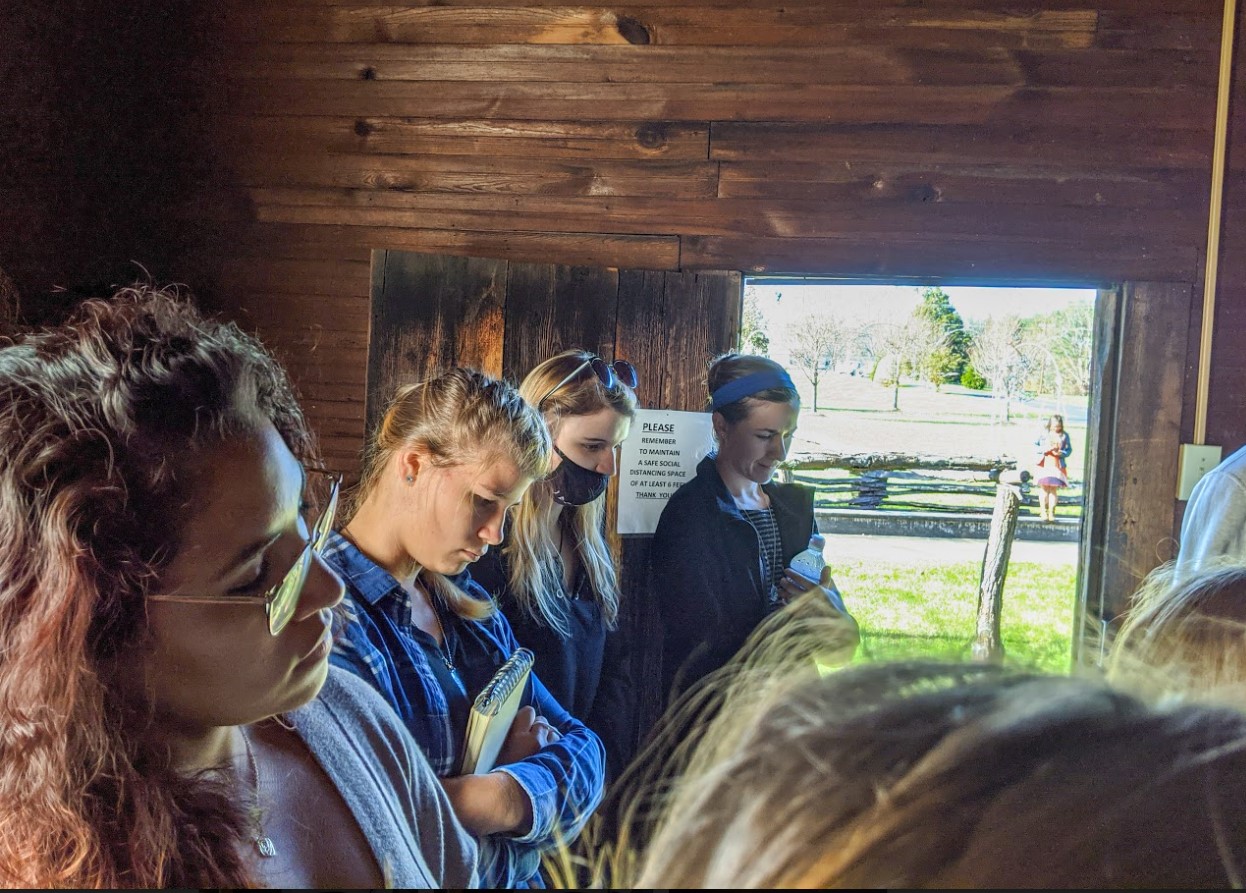
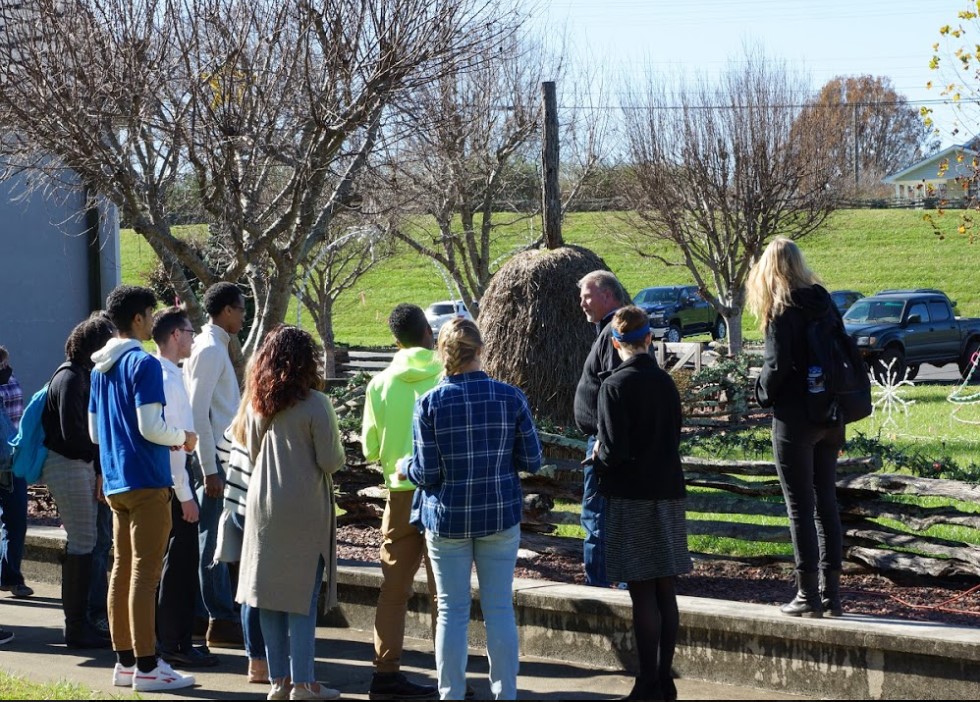
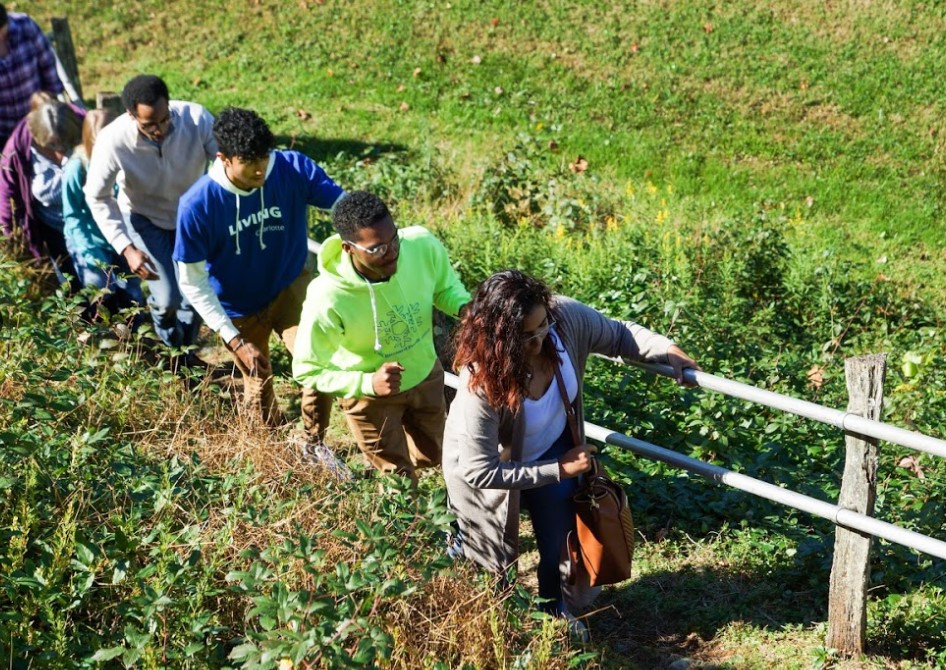
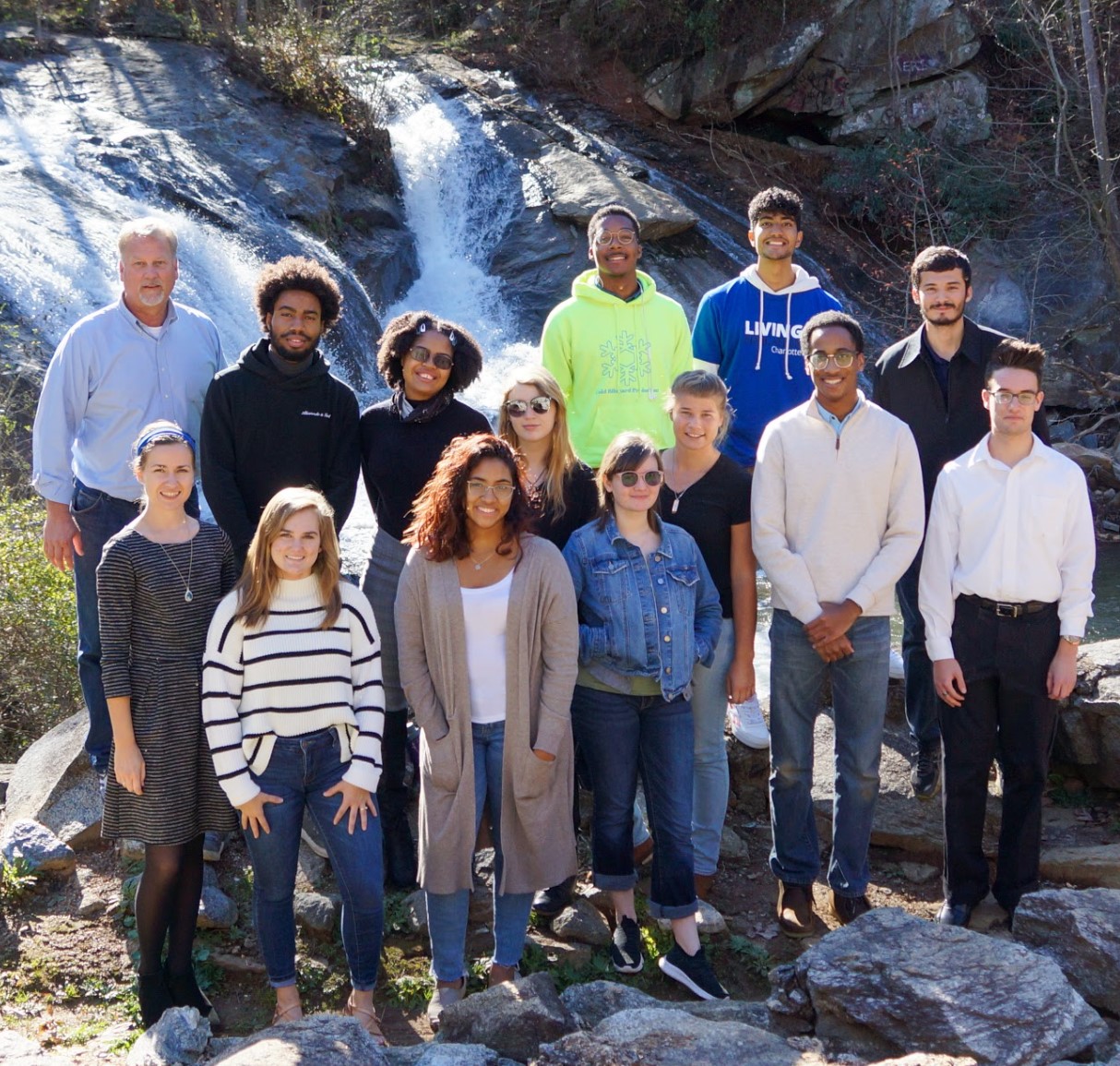
This week, Living Ed students took a trip 800 years into the past. At 9:00 a.m., on Monday morning, twelve students stood in the dorm driveway waiting for Ms. Rebekah Ross and Mr. Jonathan McNair, their taxi-drivers for the trip.
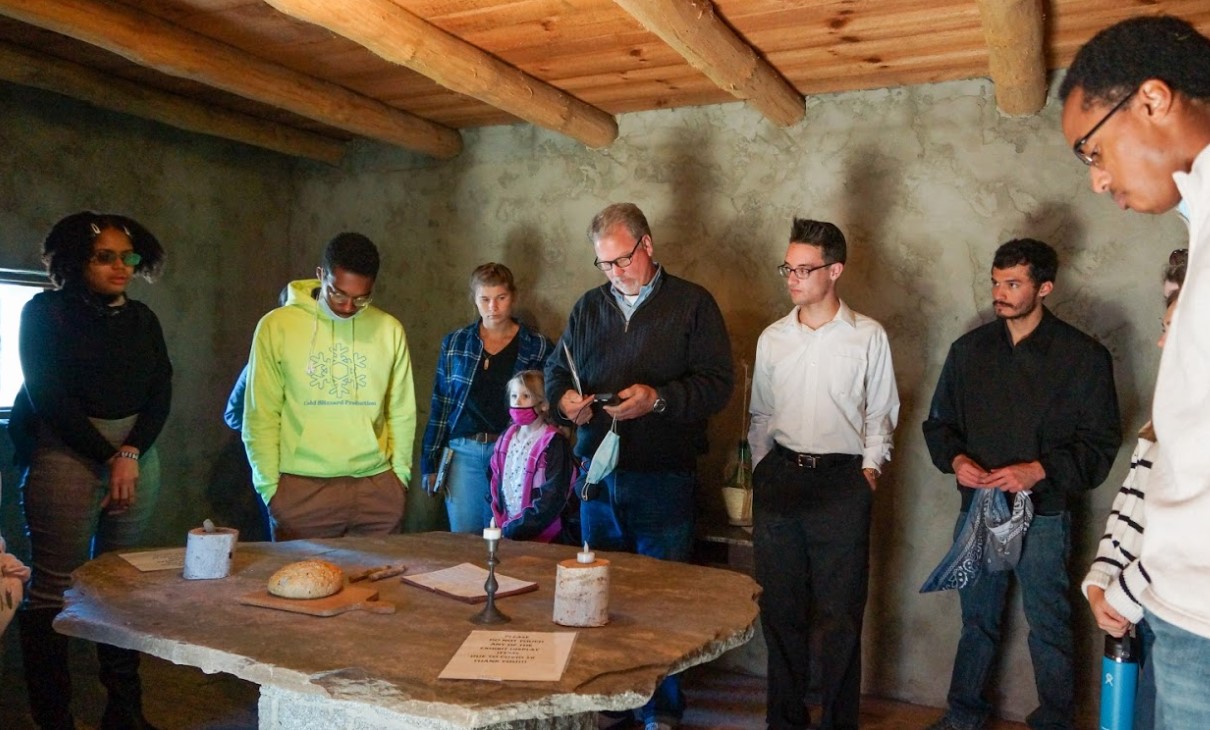
A couple hours later, they pulled into the Cottian Alps in the border-region of France and Italy—actually, they arrived at Waldensian Trail of Faith located in Valdese, NC. But, for just half a day, they journeyed into the Era of Thyatira.
At this outdoor museum, they stepped into an exact imitation of the old ‘Barbi’ college where young Waldensians memorized large tracts of Scripture in secret. Several intrepid Living Ed students crawled on hands and knees into the cave where dozens of Waldensians congregated in secret, studying and singing hymns. Only a sliver of light illuminated the back of the cave. The guide explained that, one terrible day, French-Catholic soldiers used that tiny crack in the rock to smoke the gatherers out. As they crawled out, they were killed one by one.
Mr. McNair explained to the group that much of the history exhibited here was not the history of true Christians. Early on, the majority of the Waldenses were absorbed into Protestantism and the true Church faded into Eastern Europe. Driving this point home, the students passed a replica of the Monument of Chanforan, dedicated to the Waldensians official entry into the Reformation in 1532.
Mr. McNair encouraged the students to appreciate the sacrifices of these people, even while recognizing their false beliefs. He challenged them, “Would you be willing to die for what you believe in as they did?”
After driving back to Charlotte, the students jumped out of the cars and back into their modern lives at Living Education 2020. For just a day, they visited the Era of Thyatira and stepped into the shoes of the Waldensians—but just as the Church has carried on in time, so do they.
Juliette McNair is a student at Living Education Charlotte. She works in the Editorial Department transcribing sermons and proofreading transcripts. She also assists Living Education by writing Second Thoughts essays and Forum/Assembly Summaries for the website. Juliette recently graduated from SUNY Cobleskill in Upstate New York with an A.A.S in Horticulture, a B.T in Plant Science, and a minor in English with a writing focus. She loves playing soccer on the beach, getting up early to watch the sunrise, and playing piano with the lights out.
https://www.lcgeducation.org/wp-content/uploads/2020/12/bruno-van-der-kraan-v2HgNzRDfII-unsplash.jpg9961500Jonathan McNairhttps://www.lcgeducation.org/wp-content/uploads/2021/02/logo_basic-website-300x94.pngJonathan McNair2020-11-17 13:30:002021-09-03 12:36:47Student Life: A Trip in Time