Second Thoughts: Leaving Stephen Behind

Author: Thomas White | Living Church of God, Editorial Department


“And the witnesses laid down their clothes at the feet of a young man named Saul. And they stoned Stephen as he was calling on God and saying, ‘Lord Jesus, receive my spirit.’ Then he knelt down and cried out with a loud voice, ‘Lord, do not charge them with this sin.’ And when he had said this, he fell asleep. Now Saul was consenting to his death” (Acts 7:58-8:1).

Dr. Douglas Winnail’s recent assembly addressed the uncomfortable truth that what you do when you’re young will affect the rest of your life. People in many walks of life need that warning, and like most warnings, we need it when we haven’t done anything yet.

But what if you’ve already consented to Stephen’s death?

Wonderings

I wonder how many times Saul saw Stephen’s face in his dreams. I wonder if he ever woke up in a cold sweat while being taught by Christ Himself in the wilderness, hearing “Lord, do not charge them with this sin” reverberate through his mind. I wonder how much he felt as though he were haunted by Stephen’s death.

I wonder if he ever knelt before Christ during those years of training and said, “Depart from me, for I am a sinful man, O Lord! I let them kill him, I wanted them to, and I don’t know how to make up for it. I’ll never be able to forget what I’ve done, and I don’t know how You can, either. I’m tainted, Lord—Your work deserves better. Your people deserve better.”

And I wonder if he heard something like, “I did not come to call the righteous, but sinners, to repentance. I do not condemn you—go and sin no more.”

Going

When we read in John 8:11 of Christ saying that to the woman caught in adultery, we pay needed attention to the first part, “Neither do I condemn you,” and the third part, “sin no more.” But it was only very recently that I even noticed the second part: “go.”

Only a writer inspired by God could pack so much into a single word. “Sin no more,” our Savior says, but also, “Go. Move forward. Don’t stay here in your mind, wallowing in this time and place, letting the memories of your sin hold you captive. Leave Stephen behind.”

Saul had to, and we have to. Whatever we’ve done, however grievously we’ve disobeyed our Savior, the response he expects of us is to ask His forgiveness, believe Him when He says He does not condemn us, go, and sin no more. And it has to be in that order: If we’re going to leave Stephen behind, we have to first believe and accept that Christ does not condemn us, and if we’re going to “sin no more,” we have to first leave Stephen behind—because we’re almost never more vulnerable to future sin than when our minds are enveloped in past sin.

I doubt Saul ever truly forgot about what he did to Stephen, but I don’t believe he remained haunted by it. In fact, we know he didn’t, because the same man who consented to Stephen’s death—but also, in a very real way, an entirely different man—said, “one thing I do, forgetting those things which are behind and reaching forward to those things which are ahead, I press toward the goal for the prize of the upward call of God in Christ Jesus” (Philippians 3:13-14).

It’s true—what you do when you’re young affects the rest of your life. But it doesn’t have to rule it.


Thomas White headshot

Thomas White was one of the onsite Living Education students for the 2018-2019 semesters. He also has a Bachelor’s Degree in English. Thomas currently works as an Editorial Assistant for the Living Church of God. According to his wife, he eats pizza in entirely the wrong way.

Children’s Bible Program – Level 3: Lesson 52 “Ezra”

Featured Passage: Ezra 7-8


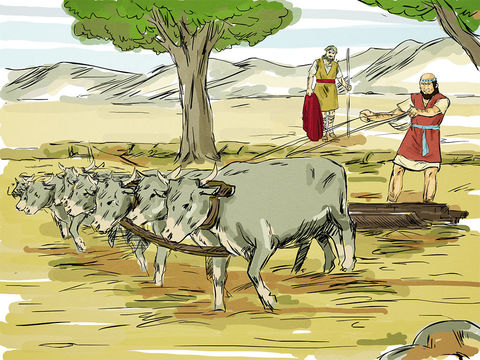
A group of Jews had returned from exile to rebuild Jerusalem and to restore the temple. They had met with some adversity, but ultimately they completed what they had set out to accomplish. Another group of Jews was planning to come back to Jerusalem to help with the job and to help restore the true worship of God in Jerusalem. Among this group was a scribe named Ezra. He was very skilled in knowing the scriptures and teaching the law, but more than that he possessed a heart prepared to seek God’s Law and to do it with all his might. As it turned out, he is just what the people in Jerusalem needed. 

Discuss: 

Richard Gunther (www.richardgunther.org) | FreeBibleImages.org
  • Who was the king of Persia who gave support to Ezra and the others with him returning to Jerusalem? What did he do to show his support? 
  • When the King of Persia promised Ezra his help and support, to whom did Ezra give the credit? 
  • When Ezra returned with the group of people to Jerusalem, he wrote that he was ashamed of something. What was it? What does this say about the kind of person Ezra was? 
  • How did God protect the people on their return to Jerusalem? (Ezra 8:31)
  • When the Bible says that Ezra “had prepared his heart to seek the Law of the Lord” what does that mean? How can we follow this example? 

Memory Challenge: 

Ezra 7:10 

For Ezra had prepared his heart to seek the Law of the Lord, and to do it, and to teach statutes and ordinances in Israel.


Children’s Bible Program – Level 2: Lesson 52 “Solomon’s Temple”

Featured Passage: 1 Kings 5-8


King David had a special desire: He wanted to build God a house. He felt bad that God still dwelt in the Tabernacle as He had with the Israelites in the wilderness while he lived in his own beautiful palace. However, God had other plans in mind for His house. He decided that King David was not the right man for the job, but rather He would let David’s son do the special project. Four years after Solomon began to reign over Israel, he started to build a house for God—the temple in Jerusalem. Solomon spared no expense to get materials of the finest quality with which to construct this marvelous dwelling place for the Most High. Even the stones were carefully shaped to fit perfectly together so that not a single hammer would need to be used when they assembled it. When it was finally completed, seven years later, it certainly must have been something wondrous to behold. The Ark of the Covenant was brought into the Most Holy place, and there awaited one more essential component—the presence of God Himself. 

Discuss: 

Sweet Publishing | FreeBibleImages.org
  • What didn’t God want David to build the temple even though it was something he desired? Why did He instead give the job to Solomon? 
  • To whom did Solomon write asking for help in building the temple? 
  • What were some of the key materials Solomon used to build the temple? What were some of the elements that were built or crafted for the temple? 
  • Why do you think Solomon had the stones crafted perfectly before they were brought to the temple mount to be put together? What kind of connections can we make between this and us as a spiritual temple? (Read Ephesians 2:19-22 for some clues)
  • What were some of the colors used in the temple when it was furnished?
  • At the dedication of the temple, what were some of the things included in the ceremony? What happened when the priests brought the ark of the covenant into the Most Holy place? Try to describe what it would have been like to be there. 

Memory Challenge: 

1 Kings 8:30

And may You hear the supplication of Your servant and of Your people Israel, when they pray toward this place. Hear in heaven Your dwelling place; and when You hear, forgive.


Second Thoughts: Stronger Than Fear

Author: Thomas White | Living Church of God, Editorial Staff


“It breaks God’s heart when you sin,” the minister said from the podium.

That’s been popping in and out of my memory since I was about fourteen, and I thought of it during Mr. Hernandez’s stirring assembly describing the distinctly emotional attachment we need to have to the God Family if we’re to be added to it.

At first glance, it seems slightly ridiculous that God wouldn’t be “above” feeling emotional pain from our actions. But then you remember how He reacted to sin while He was human, and breaking His heart seems a lot more plausible: “Now as He drew near, He saw [Jerusalem] and wept over it” (Luke 19:41).

God is unchanging, so our human Big Brother wasn’t any more emotional than He and our Father are now. The emotion becomes almost relatable when you shrink it down to our level: Imagine finding out your son, or daughter, or little sibling, just rammed their car into a tree while driving intoxicated. They’re badly hurt, and it’s entirely their fault. Are you going to fly into a rage? Are you going to shake your head in disappointment?

Or are you going to weep?

Him Above All

King David understood the very real pain God feels when we break His law, acknowledging that “Against you—you above all—I have sinned” (Psalm 51:4, New English Translation). Since He loves us more than any human being ever could, it hurts Him when we step anywhere outside His safety net. When you really love someone, almost nothing hurts more than when they reject your sincere efforts to help them not hurt themselves.

Having awe and reverence for God’s power is crucial, but if the main reason we try to remove ourselves from sin is “I don’t want my life to get difficult,” or even “I don’t want to end up in the lake of fire,” we’re really missing the point, which is that sin hurts others. It almost always hurts the people around us, and even if it happens not to do that, it definitely hurts the One who loves us most.

This can help us understand why we need to bring our thoughts under subjection to Christ, too; when you care about someone deeply, you immediately feel guilty if you think something against them. Why? Not because you’re afraid of their reaction—they have no idea what you thought. It’s because you hate to see that person hurt, and you know how hurt they would be if they knew what just went through your mind. How much more does it hurt God when we think contrary to His law, knowing that He does see those thoughts?

No Fear in Love

As much as it hurts God when we sin, His forgiveness is relentless, and He will always accept a sincere apology from His child. He knows that we aren’t, in this life, going to love Him as much as He loves us—but if we appreciate Him at all, we’ll try. If all we have is a fear of consequences, it won’t be long before the temptation to sin overpowers that. But a love for our Dad and Brother that makes us never, ever want to break Their hearts, will protect us from sin more than any fear could.

“There is no fear in love, but perfect love drives out fear, because fear has to do with punishment. The one who fears punishment has not been perfected in love” (1 John 4:18, New English Translation).


Thomas White headshot

Thomas White was one of the onsite Living Education students for the 2018-2019 semesters. He also has a Bachelor’s Degree in English. Thomas currently works as an Editorial Assistant for the Living Church of God. According to his wife, he eats pizza in entirely the wrong way.

Children’s Bible Program – Level 3: Lesson 51 “Zerubbabel”

Featured Passage: Ezra 1-7


The people of Judah had been in captivity for nearly 50 years. Some had longed to return to Jerusalem to rebuild the temple of God and worship there once again, but they were not allowed until a man named Cyrus, King of Persia came to power. This Cyrus wrote a decree that told the people of Judah they could return to Jerusalem to rebuild God’s house – the temple. The returning captives followed a man named Zerubbabel who led them back to their homeland. The people were excited to return and get started on their rebuilding projects, but they didn’t know they were about to face some very challenging obstacles. Their faith was about to be tested, but through it all one man wasn’t about to give up on what they had set out to accomplish.

Richard Gunther (www.lambsongs.co.nz) | FreeBibleImages.org

Discuss: 

  • Why did Cyrus, the king of Persia, decide to make his proclamation? What does this teach us about how God works with people and leaders in the world? 
  • What was one of the first things Zerubbabel did when they arrived in Jerusalem? What does this show us about his priorities? What can we learn from his example?
  • What was the first big obstacle the people faced when they began working on the temple? 
  • After the work on the temple discontinued for a while, how did it start back up again? 
  • Who gave the people the official decree that they could finish their work on the temple? What did the people do when the temple was finally finished? 

Memory Challenge: 

Ezra 1:3 

Who is among you of all His people? May his God be with him, and let him go up to Jerusalem which is in Judah, and build the house of the Lord God of Israel (He is God), which is in Jerusalem.


Children’s Bible Program – Level 2: Lesson 51 “Moving the Ark”

Featured Passage: 1 Samuel 4-6


When Israel finally came into the land God promised them, under Joshua’s leadership each of the tribes were given different territories where they could build their homes and families. During their wanderings in the wilderness, God had led them with the ark of the covenant and the tabernacle to represent his presence. Upon entering the new land, Joshua and the people set up the tabernacle in Shiloh where the ark would stay for many years, long after Joshua was gone. For a long while the ark was undisturbed and kept by the Levites in the tabernacle, but the people were forgetting why it was important. One day, when the Israelites were desperately preparing to go out to battle against their enemies, they made a rash decision. If they were to bring the ark of the covenant into battle with them like in the days of Joshua, surely God would protect them, right? 

Moody Publishers | FreeBibleImages.org

Discuss: 

  • Why was the ark of the covenant so important? What did it represent? 
  • Why do you think the Israelites decided to bring the ark into battle with them? Why didn’t their plan work? 
  • What did the Philistines do with the ark when they first captured it? What happened to their idol when the ark was put in their pagan temple? What message do you think God was trying to send?
  • Why did the Philistines decide to give the ark back to the Israelites? How did they do it? 
  • Where was the ark kept after the Philistines sent it back? 
  • The next person to move the ark of the covenant was King David (2 Samuel 6). Why did David move it? What happened when he tried?

Memory Challenge:

1 Samuel 4:22

And she said, “The glory has departed from Israel, for the ark of God has been captured.”


Second Thoughts: Be Yourself (No, Really)

Author: Thomas White | Living Church of God, Editorial Department


“Be honest. Don’t hide who you are. Be genuine. Don’t pretend to be someone you’re not. Be yourself.”

We’ve heard all of that before. Even Mr. Richard Ames’ recent assembly, a powerful message of improving one’s interpersonal communication, addressed the importance of openness and honesty—in essence, being yourself.

But it’s understandable if we think, “Wait a minute, be myself? That’s the last thing I want to be. Doesn’t God say that the heart is deceitful and wicked? Yeah, no, I’m way too aware of the terrible thoughts I’m constantly battling to be myself with anybody. Myself is awful, so to the best of my ability, I’m going to not be it, thanks.”

Actually, though, that perspective has it backwards. When you get down to it, all of the ungodly thoughts we have, words we say, and actions we take are the result of us not being ourselves—and instead, imitating someone truly awful.

Mr. Nathan Weighs In

To explain, I’ll turn to a quote from Mr. Peter Nathan. In the September-October 2019 Living Church News article “A Tale of Two Goats,” he wrote this:

Scripture describes Satan as having deceived the whole world (Revelation 12:9) and as having played a role in mankind’s sin from the very beginning (Genesis 3:1–5). It is on Satan’s head that the ultimate responsibility for sin rests. Jesus Christ, our High Priest, has already paid the penalty of sin for mankind. Satan, as the deceiver of all humanity, is to carry his responsibility for that sin, confessed over his head, from the presence of God.

– Mr. Peter Nathan, “A Tale of Two Goats”, LCN: Sep-Oct 2019

Now, obviously (because sometimes the obvious needs to be made super obvious at the risk of it not being obvious), Mr. Nathan isn’t saying that any of us are off the hook for our sins. I’m responsible for my sin. You’re responsible for your sin. But also, Satan is responsible for all sin—mine, yours, everyone’s. He doesn’t force anyone into anything, but each and every time we sin in any way, we’re hearing his suggestion and replying, “… Yeah, sure, okay. Seems like a good idea.”

Being Yourself is Resisting the Devil

The heart is deceitful and wicked (Jeremiah 17:9) because it’s so willing to listen to Satan’s deceitful and wicked influence, not because it’s conjuring up that influence all by itself. Our original ancestors, for example: It’s not like Adam and Eve were side-eyeing the tree of the knowledge of good and evil for months, and when a snake started talking, they thought, “Oh good, now I finally have an excuse.” No—they heard the devil’s suggestion and they took it, just like we do when we sin.

Before Satan shows up, we don’t read anything about Eve or Adam being tempted in the slightest by the forbidden fruit. They knew it was there, they knew God didn’t want them near it, and they were on board with that. Were they just “not themselves” before Satan’s deception? Of course they were themselves—God creates children, not clones. If anything, they were more themselves than they ever would be again in their physical lives, because they weren’t yet affected by Satan’s suggestions.

We’re all affected by those suggestions, but it’s when we refuse them that we’re who God made us to be. When we take those suggestions and thereby sin, we’re not ourselves at all—we’re Satan imitators. He’s the one who wants clones. God, though, wants us to exercise the free will He gave us and be nothing less than ourselves.


Thomas White headshot

Thomas White was one of the onsite Living Education students for the 2018-2019 semesters. He also has a Bachelor’s Degree in English. Thomas currently works as an Editorial Assistant for the Living Church of God. According to his wife, he eats pizza in entirely the wrong way.

Children’s Bible Program – Level 3: Lesson 50 “Ezekiel the Watchman”

Featured Passage: Ezekiel 1-11, 33, 40-48


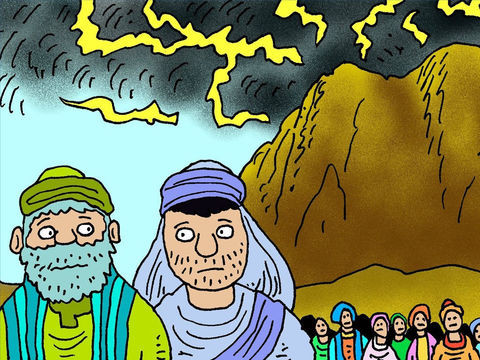
After the Kingdom of Israel was taken into captivity, you’d think it would have been too late for a prophet to warn the people. After all, what is the point of warning someone of something that has already happened? Well, God had a very special message of warning for Israel through His prophet Ezekiel. Ezekiel was told to be a “watchman” for the house of Israel.  At the time, Ezekiel was living among the captives of the Babylonians. God gave him some very unique instructions, signs that he should perform to reinforce the warning message he proclaimed. So who was the message for? It was for the house of Israel in the future, at the Time of the End—today. 

Discuss: 

Richard Gunther (www.richardgunther.org) | FreeBibleImages.org
  • What is the role of a watchman? Why did God give him this job? 
  • Why did God tell Ezekiel to build a clay model of Jerusalem? What do you think the people thought of Ezekiel for setting up the model? 
  • Even though God was warning of punishment for Israel, what did God tell Ezekiel He would do in the end? What does it mean when God says He will give the people a “Heart of flesh”? 
  • The final chapters of Ezekiel describe the temple complex in the Millennium. What parts of what he describes stand out to you the most? What are you most looking forward to seeing? 
  • According to Ezekiel 47, what will happen to the Dead Sea in Israel during the Millennium? 
  • What will be the name of the city during the Millennium period?  Why do you think God will choose that name for it? 

Memory Challenge: 

Ezekiel 11:19-20

Then I will give them one heart, and I will put a new spirit within them, and take the stony heart out of their flesh, and give them a heart of flesh, that they may walk in My statutes and keep My judgments and do them; and they shall be My people, and I will be their God.


Children’s Bible Program – Level 2: Lesson 50 “Joshua and the Battle of Jericho”

Featured Passage: Joshua 6


After the Israelites made it across the Jordan River, they prepared to meet the next obstacle – the great walled city of Jericho. The men who Joshua sent to spy out the city had come back with important information, but now Joshua needed a plan. Joshua knew that God was the one who would give Israel the victory, but he needed some directions. And, guess what? The Commander of the Army of the Lord Himself came to deliver them. On top of that, the directions He gave were not ordinary battle plans. These plans required a little bit of patience and a whole lot of faith! 

Discuss:

Moody Publishing | FreeBibleImages.org
  • All the people of the land had heard of the children of Israel. How do you think the people of Jereicho felt when they heard that the Israelites had crossed over the Jordan into their territory? Do you think the people of Jericho felt safe inside the city walls?  
  • What were the directions that God gave to Joshua? What was unusual about them? What do you think the people of Jericho were thinking when they saw the Israelites following the directions they were given?
  • How was the instruction for the army different on the seventh day than on the other days? Who did God protect in the city?
  • Why do you think God planned the Battle of Jericho the way He did? 

Memory Challenge:

Joshua 6:2 

And the Lord said to Joshua: “See! I have given Jericho into your hand, its king, and the mighty men of valor.


Second Thoughts: Sonder and You (and Everyone Else)

Author: Thomas White | Editorial Department, Living Church of God


There’s debate on whether or not it can be called a real word, but if you type “sonder” into Wiktionary, you’ll get this definition:

“The profound feeling of realizing that everyone, including strangers passed in the street, has a life as complex as one’s own, which they are constantly living despite one’s personal lack of awareness of it.”

After this week’s assembly, I felt oddly compelled to immerse myself in a bit of sonder. Mr. Dexter Wakefield took us on a journey through the demographical statistics of the Church, and we learned, among many other things, that some of our youngest attending members are two years old, that our oldest attending member is one hundred and two years old, and that the Church’s database keeps track of them and everyone in between.

Thanks for Noticing

It’s always nice to know that someone is keeping track of you. We all feel a certain level of peace in the knowledge that we’re accounted for, that we’re considered. That might be why you get a tiny little thrill whenever someone uses your name. I don’t think it’s egotistical—it may be, in some cases, but for many people, the feeling seems more akin to gratitude. “Thank you for saying my name,” the feeling says, too fast to even be processed. “Thank you for acknowledging and keeping track of me.”

Maybe feeling sonder is just acknowledging everyone as worth keeping track of, when we usually only keep track of ourselves and the people closest to us. Most of us don’t feel sonder perpetually. It takes a surprising amount of effort to meaningfully recognize that other people are as multifaceted as we, ourselves, are. It might even be a little scary to do that, because as soon as you do, you have to recognize, in turn, that you don’t really know anyone. Most of the struggles that define someone else’s life are hidden from you. And once you’re aware of that, the excuses you drum up for judging other people seem… well, about as pathetic as they are, really.

Acknowledge the Battle

God keeps track of everyone, and that’s so easy to say, but hard to completely wrap your brain around. “I’d better be nice, because God wants me to be nice,” you might think when you’re tempted to not be nice. And that’s true, but it’s deeper than that, isn’t it? You might be better off thinking, “I’d better be nice, because God wants this person in front of me to experience kindness.” He’s keeping track of you, yes, absolutely, but he’s keeping just as much track of everyone you interact with, and He knows how much they need your empathy.

“Be kind,” goes an oft-quoted saying of dubious origin, “because everyone you meet is fighting a hard battle.” In all of His dealings with each and every one of us, God always, always acknowledges the battle. He’s never unaware of the struggles we each have every day, as we fight past the monsters in our own minds. We might not be able to know what the people around us are fighting, as He does, but if we want to be like Him, we should strive to treat other people like they’re fighting something painful, going through something hard—because most of the people around us probably are.

So, say peoples’ names when you talk to them. If someone looks sad, ask if they’re okay—and be prepared to listen if they’re not. Smile when you (even accidentally) make eye contact with someone you know. Even a little sonder might go a long way.


Thomas White headshot

Thomas White was one of the onsite Living Education students for the 2018-2019 semesters. He also has a Bachelor’s Degree in English. Thomas currently works as an Editorial Assistant for the Living Church of God. According to his wife, he eats pizza in entirely the wrong way.