Posts

Children’s Bible Program – Level 3: Lesson 11 “The Promises Made Unconditional”

Sweeting Publishing | FreeBibleimages.org

Author: Janth English

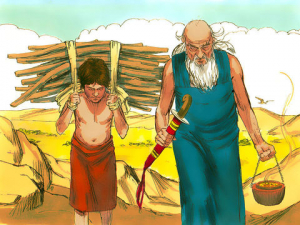
Read Together: God promised Abraham that he would be the father of many nations. God said that Abraham’s descendants would be as many as the sand on the seashore!  Yet Abraham and Sarah were getting old with no heir. In spite of their old age, Abraham and Sarah believed God would fulfill His promises, and He did. Isaac was born when Sarah was 90 and Abraham was 100 years of age. Abraham had waited 25 years from the time God first made the promise that he’d have a son. Ishmael and his mother were sent away, but God promised to make his descendants grow into nations as well. Just as Isaac began to mature as a young man, God told Abraham to sacrifice him on Mt. Moriah. Abraham set out early the next morning to do what God said. No wonder Abraham is called the father of the faithful! Abraham began to carry out God’s instructions, and Isaac, in obedience to his father, allowed himself to be tied up. When Abraham was about to sacrifice Isaac, God stopped him and provided a ram for an offering instead. By Abraham’s act of faith, God knew that Abraham would always obey Him no matter what. Because of Abraham’s faith, God made His promises to Abraham unconditional. That means they would happen no matter what.

Read Together: Genesis 18:115; 21:121; 22:119; Romans 4:3; Hebrews 11:1112, 1719.

Discuss:

  • Point out to your child that Ishmael is the forefather of Arab people today.
  • Ask how long did it take for Abraham and Isaac to reach Mt. Moriah. What was Abraham thinking during that time? Did his faith waiver? Explain.
  • Discuss with your child Isaac’s role in this story. What does his attitude say about him?
  • Ask how Abraham became a friend of God. Discuss how we can become God’s friend (John 15:14), and what it means to be a friend of God.
  • Faith works. Abraham believed God so he did what God said. Ask your child to think of an example in which faith was demonstrated by actions.

Review memorization:  

Genesis 18:19 “For I have known him, in order that he may command his children and his household after him, that they keep the way of the LORD, to do righteousness and justice, that the LORD may bring to Abraham what He has spoken to him.”

Printable PDF – L3.11

Children’s Bible Program – Level 3: Lesson 12 “Inheriting the Promises”

Author: Janth English

Read Together: After Abraham showed God that he would obey Him no matter what, God made His promises to Abraham unconditional. These promises included rulership, military power, and ownership of the most productive land on earth. Yet, Abraham died without having received them. Did God lie? No! God passed the promises on to Abraham’s son Isaac, and from Isaac to Jacob. Jacob, whose name was changed to Israel, had twelve sons, who next received the promises. Through Jacob, God gave the “scepter” promise, which includes kingship and the promise of the future Messiah, to Judah. A scepter is a staff that a king holds, which represents his rulership and authority. The promise of the Messiah was fulfilled in Jesus Christ, who was born of the tribe of Judah and who will rule over all nations. The “birthright” promise of national wealth and greatness was given to Joseph. The English-speaking nations of today, who are descendants of Joseph’s sons, Ephraim and Manasseh, have inherited the birthright promises. Many of the blessings we enjoy today are a direct result of Abraham’s obedience to God, and God’s faithfulness in fulfilling His promises to Abraham.

Read Together: Genesis 35:9–15; 48:8–20; 49:1–2, 8–12, 22–26; Hebrews 7:14

Discuss:

  • Ask your child how they think Abraham felt about not receiving all the promises during his physical life.  What was Abraham’s focus (Hebrews 11:13–16)?
  • Encourage your child to think about the millennium. Will Jesus Christ be the Messiah and King of kings? Will the descendants of Jacob possess national wealth and greatness?
  • Remind your child that the identity of the English-speaking peoples can be proven. Refer to the booklet The United States and Britain in Prophecy by Mr. John Ogwyn.

Review memorization:

Genesis 18:19 “For I have known him, in order that he may command his children and his household after him, that they keep the way of the LORD, to do righteousness and justice, that the LORD may bring to Abraham what He has spoken to him.”

Printable PDF – L3.12

Printable PDF – L3.9-L3.12

Children’s Bible Program – Level 3: Lesson 13 “Israel Prepares to Meet God”

Author: Janth English

Read Together: God changed Jacob’s name to Israel. Israel’s descendants lived in Egypt and grew into a great nation. But the Egyptians enslaved them and put them to hard labor. God worked many miracles to free Israel from slavery. After the death of all the firstborn in Egypt, God led Israel out from Egypt under the leadership of Moses. They miraculously walked on dry land through the Red Sea, and God protected His people from the Egyptian army. God told Moses to bring the children of Israel to Him at Mt. Sinai after they left Egypt (Exodus 3:12). A few weeks after leaving Egypt, the children of Israel were encamped near Mt. Sinai, the mountain of God. God called Moses and told him to offer the people of Israel a special agreement, called a covenant. Israel would obey Him, and in return, He would make them His special people. The people agreed. God instructed the Israelites to clean up and wash their clothes, and “consecrate” themselves (which means to prepare themselves to meet with God). They were getting ready to meet their Creator!

Read Together: Exodus 1:1–14; 14:5–31; 19:1–11

Discuss:

  • Explain that even though they had witnessed God’s miraculous interventions, Israel had not been obedient since leaving Egypt. They complained about the water and food (Exodus 15:22–25; 16:2–3). They broke the Sabbath (Exodus 16:26–29). And they complained against Moses (Exodus 17:2–3). Explain that experiencing miracles does not make it automatic that a person will respond by having faith in God.  We still have to choose to obey and respond to Him.
  • Ask your child why he or she thinks God told Israel to bathe and wash their clothes. What preparation would one make to visit the Queen of England? Use this as an opportunity to emphasize why we dress up for Sabbath services.
  • Discuss what it means to be “consecrated,” which means “set apart for holy use.” Explain that the Church is the Israel of God and that we are set apart by God’s Holy Spirit. Help your child understand that if our parents (or parent) is baptized and in the Church, that means that we have a chance to have a relationship with God that we otherwise wouldn’t have (Acts 2:38–39, 1 Corinthians 7:14)

Review Memorization:

Exodus 20:1–17 The Ten Commandments (long form)


Printable PDF – L3.13

Children’s Bible Program – Level 3: Lesson 14 “God and Israel: A Marriage Covenant”

By Janth English

Read Together: Have you ever been to a wedding? Think back to the ceremony and the wedding vows. You may remember that the minister asks the groom if he is willing to be a faithful husband. That means, is he willing to provide for, protect, and cherish his soon-to-be wife. In the same ceremony, the bride is asked if she is willing to love, honor, and obey her soon-to-be husband. They both must answer “I do” or else they don’t get married! And when they say “I do,” they have entered a covenant, which is a solemn promise to do what they said they would do. When you read Exodus 19:3–8, you can see that God proposed to take care of Israel in response to her obedience. If Israel would obey, God promised prosperity, peace, and safety. When all Israel said, “I do,” they promised to obey God. But sadly, they did not keep that promise. However, that is not the end of the story! Today, the Church is the “Bride of Christ,” which is preparing to marry Jesus at the resurrection. That means that each person, when baptized, agrees to enter into a marriage covenant with Christ (meaning, to honor and obey Him). In return, Jesus Christ, as the Church’s Husband, promises to love and faithfully care for each member of His Church. The marriage between Jesus Christ and the Church will take place at the resurrection, just before the Millennium begins. As all brides do, we look forward to that glorious event!

Read Together: Exodus 19:5, 8; Leviticus 26:1–6; Jeremiah 3:14, 20; Ephesians 5:31–32; Revelation 19:7–9

Discuss:

  • Discuss with your child the relationship between Jesus Christ, who was the God of the Old Testament (1 Corinthians 10:4), and ancient Israel. Did God perform His duties? How did ancient Israel respond?
  • Discuss the relationship with Jesus Christ and the Church. Show how it is an intimate family relationship. Use this as an opportunity to discuss the roles of fathers, mothers, and children in the family.
  • Explain that if your child is old enough to be baptized before Christ returns, he or she will have the opportunity to be part of the bride of Christ, too.

Review Memorization: Exodus 20:1–17, The Ten Commandments (long form)

Printable PDF – L3.14

Children’s Bible Program – Level 3: Lesson 15 “God Speaks the Ten Commandments”

Sweet Publishing | FreeBibleImages.org

By Janth English

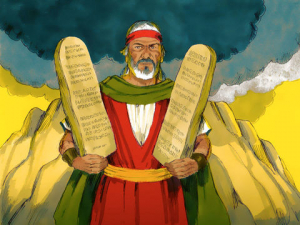
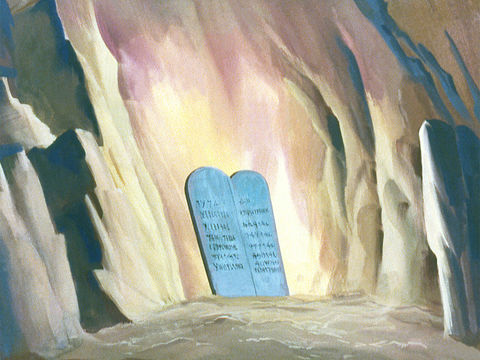
Read Together: The children of Israel had been busy preparing to come before God for three days. As God approached the mountain, there were thunder and lightning strikes; the mountain quaked and the ground where they stood shook. There was an awesome display of God’s power as He descended to the mountain! Even Moses, who had been in God’s presence before, was so afraid that he too trembled! The top of the mountain looked to be on fire as God thundered the Ten Commandments from its midst. The display was to show the Israelites how mighty and powerful God is, so that they would remember and obey Him. Sadly, the Israelites were so overwhelmed by the power of God that they pleaded with Moses to ask Him not to speak to them directly anymore, because they feared they would die. God asked the Israelites to keep the Ten Commandments so He could bless them, and they agreed.

Read Together: Exodus 19:12–25; 20:1–26

Discuss:

  • Explain that the Ten Commandments are still in effect today (Matthew 5:17–18).
  • Why is the Sabbath Commandment important?
  • Explain that the Ten Commandments were given by God for our good; they are not a burden (1 John 5:3).
  • Discuss the beneficial effects of the Ten Commandments. What would the world be like if no one told lies, or if no one took what didn’t belong to him or her? How would the world be transformed if everyone put God first and loved Him?
  • Discuss the relationship between obedience to the Ten Commandments and the peace humanity desires. Help your child understand that it is breaking God’s laws that leads to the unhappiness mankind experiences. Use an example like stealing or lying to demonstrate this.

Review Memorization.

Exodus 20:1–17 – The Ten Commandments (long form)

Printable PDF – L3.15

Children’s Bible Program – Level 3: Lesson 16 “God Explains the Statues”


Moody Publishing | FreeBibleImages.org

By Janth English

Read Together: Israel was so afraid when they heard God speak the Ten Commandments that they asked for Moses to relay God’s words to them. God agreed. In addition to the Ten Commandments, God gave Moses “statutes.” Statutes are laws that apply to more specific situations. They help us understand how to apply the Ten Commandments in everyday life. God’s laws and statutes were designed to provide Israel a fair and just legal system that would protect people and property. When Jesus came to earth, He supported the laws of God, including the statutes, and taught His disciples about how to keep them in our heart and mind.

Read Together: Deuteronomy 4:1–10; Exodus 22:5, 14, 28; Exodus 23:1–17; Leviticus 23:1–3; Deuteronomy 4:1–10; 22:8.


Discuss:

  • Explain to your student that the statutes are finer points to God’s Ten Commandments. For example, the Ten Commandments command us to keep the Sabbath, but the statutes explain there are “annual” Sabbaths as well (Leviticus 23:1–3).
  • Read, with your child, Exodus 22:28. Ask your child if he or she ever hears people “cursing” or making fun of leaders today. How would this statute guide a child to behave toward his or her parent or teacher?
  • Ask your child what the following statute means: “You shall not follow a crowd to do evil” (Exodus 23:2). Can he or she think of a time when they’ve had to resist following others to do something they knew was wrong?
  • With your child, read the statute in Exodus 23:4. Ask him or her, “Why would God want a person to bring back the animal of their enemy? Would that kind act possibly help them to be friends again?”
  • Ask your child what the statute in Deuteronomy 22:5 means. Ask if they can see how that could apply in our world today (when some are confused about gender).
  • Ask your child why God would make the statute in Deuteronomy 22:8. Would it not protect people from accidents?


Review Memorization.

Exodus 20:1–17 – The Ten Commandments (long form)

Printable PDF – L3.16

Printable PDF – L3.13-L3.16

Children’s Bible Program – Level 3: Lesson 17 “Israel Rebels in the Wilderness”

  Sweet Publishing | FreeBibleImages.org

By Janth English

Read Together:  As God delivered Israel from Egypt, they witnessed miracle after miracle! The children of Israel walked through the Red Sea on dry land with walls of water on both sides. They watched the Egyptian army get swallowed up by the Red Sea as God allowed the water to crash down on them. But they still complained to God!  When they had no water, they complained. When they had no food, they complained again. It’s understandable that they were hungry and thirsty, but instead of asking God for help, they accused Him of bringing them out into the wilderness to die. Again and again, they said “Let’s go back to Egypt”. When Moses went up to the top of Mt. Sinai to receive the Ten Commandments from God, the Israelites made a golden calf to worship. They bowed down to it and called it their god, even though they had just promised to obey the real God who had brought them out of slavery! When Moses sent the spies to scout the land of Canaan, they came back with a bad report even though the land was full of delicious fruit. All the spies, except Joshua and Caleb, said they should not enter the promised land because they saw the giants who lived there. They had no faith that God would deliver them, so the people refused to go in and inherit the land God had promised.  For this, and for all their constant complaining and faithlessness, God sentenced them to wander in the wilderness for forty years. This was one year for each day the spies were in Canaan, until everyone of that generation had died.

Read Together:  Ex. 15:19-24, 16:2-4; Num. 11:1-10; Ex. 32:1-8; Num. 13:17-33, 14:1-4, 26-35

Discuss:

  • Point out to your child that three days after Israel came through the Red Sea they were complaining about water.  Israel had forgotten God’s power very quickly.  Discuss why this would happen.
  • Have a discussion with your child about faith. The Israelites knew God was real, but they lacked faith.  Israel proved that witnessing miracles does not guarantee faith. Include James 2:18 in the discussion.
  • Talk with your son or daughter about the Israelites’ tendency to complain.  Do we have the same characteristic?  How does God feel about complaining?  What is the antidote for complaining?

Review Memorization:

Deut. 30:15-16  “See, I have set before you today life and good, death and evil, in that I command you today to love the Lord your God, to walk in His ways, and to keep His commandments, His statutes, and His judgments, that you may live and multiply; and the Lord your God will bless you in the land which you go to possess.”

Printable PDF – L3.17

Children’s Bible Program – Level 3: Lesson 18 “Forty Years in the Wilderness”

Sweet Publishing | FreeBibleImages.org

Read Together: Israel did not bring a good report during their wandering in the wilderness. During this time, Korah, Dathan, Abiram, and On stirred up the people in rebellion, saying Moses and Aaron should no longer be the leaders of Israel. God had something to say about that! He caused the earth to open up and swallow these rebellious men, their families, and all their possessions. After the rebellion was put down, the Israelites complained that Moses had killed the people of God. They gathered against Moses and Aaron, but again God saved them and sent a plague that killed 14,700 more people. After a victory over the king of Arad, the people started complaining again, calling the manna worthless. This time God sent fiery serpents through the camp which killed many of the people. After Israel wandered for forty years, the time finally came for them to inherit the Promised Land. God lead Israel to defeat and take the lands of Sihon King of the Amorites, and Og King of Bashan. The Moabites heard of Israel’s conquests and were afraid. Balak, king of Moab, sent for Balaam to curse Israel, but God would not allow it, but allowed Balaam to bless them instead. However, the Israelites started worshipping idols and marrying foreign women. The Lord became angry and sent a plague that killed 24,000 people. Time and again Israel tested God. Israel failed to keep the covenant they had made with God, but their deeds were recorded for our benefit so that we can learn from their mistakes.

Read Together:  Numbers 16:1–32, 41–50; 21:1–6, 21–26, 31–35; 22:1–35; 24:10–13; 25:1–9

Discuss:

  • Remind your child that God promised Israel the land of the Canaanites, Amorites, Hittites, Perizzites, Jebusites, and the Hivites (Exodus 3:7–8). Their conquests were in partial fulfillment of God’s promise.
  • Ask your child what lessons they think we can learn from Korah’s rebellion. Use this as an opportunity to talk about God’s government and how we are to respect those God has put in leadership positions.
  • Read 1 Corinthians 10:6–11 with your child. Discuss how we can get caught up in the same sins that Israel committed. Help them come up with some examples.

Review Memorization.

Deuteronomy 30:15–16  “See, I have set before you today life and good, death and evil, in that I command you today to love the LORD your God, to walk in His ways, and to keep His commandments, His statutes, and His judgments, that you may live and multiply; and the LORD your God will bless you in the land which you go to possess.”

Printable PDF – L3.18

Children’s Bible Program – Level 3: Lesson 19 “Moses Forewarns Israel”

Sweet Publishing | FreeBibleImages.org

By Janth English

Read Together: The events at Kadesh marked a crucial point in Moses’ life. First, Moses’ sister Miriam died there. Next came a day that would change Moses’ future. Once again, the people were complaining about their lack of water, forgetting how God had provided for their needs again and again. All they needed to do was to turn to God and ask Him for His help. Moses went to God and asked Him to provide the water they needed. God patiently gave Moses and Aaron instructions, telling them exactly how to provide for the people. He told Moses to speak to the rock and water would flow from it. Moses, however, lost his temper. He was so angry at the Israelites that he hit the rock with his rod. In fact, he hit it twice! God made water start miraculously pouring out of the rock, providing for the needs of the thirsty people. But He was very displeased with Moses. According to God, Moses and Aaron did not show honor and respect to Him. Moses had allowed his anger to guide his actions instead of trusting God’s hand and obeying Him as He had instructed .

God does not play favorites, and this act of disobedience on the part of Moses and Aaron in front of all the people was just as wrong as the disobedience shown by others. Because they disobeyed God, Moses and Aaron were not allowed to enter the Promised Land. However, before he died, Moses reminded the people of Israel to never forget the laws of their God. He encouraged them, saying that if they obeyed, God would bless their families, give rain in its season, increase their crops, increase their livestock, protect them from their enemies, and give them peace. However, if they disobeyed, they would be cursed. The weather would be harsh, the earth would not yield its crops, disease would cling to the people, their enemies would pursue them and overtake them, and they would eventually become slaves again. God gave Israel a clear choice between living the way that brings life and peace, or the way that brings curses and death. He gives us the same choice.

Read Together:  Numbers 20:1–13, 23–29; 27:12–14; Deuteronomy 28:1–37; 30:1–3, 15–20.

Discuss:

  • Discuss with your child Moses’ and Aaron’s punishment for disobeying God. Was this an unfair punishment?
  • Even though God punished Moses and Aaron for their disobedience, God forgave them. We know that Moses will have a high position in the Kingdom. Explain the fact that even though God forgives us, sin still has consequences.
  • Explain to your child that there are only two ways to live, God’s way and man’s way. God’s way is the only way that brings true joy, peace, and happiness. This may be a good opportunity to discuss the difference between the world today (governed by man) and the Kingdom of God (governed by God).
  • Point out to your child that even when we sin, God offers us forgiveness when we repent and turn to Him.

Review Memorization.

Deuteronomy 30:15–16 “See, I have set before you today life and good, death and evil, in that I command you today to love the LORD your God, to walk in His ways, and to keep His commandments, His statutes, and His judgments, that you may live and multiply; and the LORD your God will bless you in the land which you go to possess.”

Children’s Bible Program – Level 3: Lesson 20 “Joshua Becomes the Leader of Israel”

Sweet Publishing | FreeBibleImages.org

By Janth English and LivingEd Staff

Read Together: Before his death, one of Moses’ final duties was to appoint Israel’s next leader. God had chosen Joshua, the son of Nun. Joshua had been at Moses’ side from the time the Israelites left Egypt. He was the first general who led Israel into war. He was also with the seventy elders who saw God and ate before Him. Joshua was with Moses on the mountain for forty days when he received the Ten Commandments from God. Joshua and Caleb were the only spies who brought back a good report of the promised land and tried to convince the others to go in and take it. He had been thoroughly trained, having served Moses for forty years, so God chose him to lead the nation after Moses. Joshua must have felt the burden of leading this nation with millions of people, but Moses encouraged him to be strong and courageous. Moses died on Mt. Nebo and was buried by God. After Moses’ death, God spoke to Joshua, letting him know that He was with him. God told Joshua to be strong and courageous. The rest of the story of Joshua – his leadership, exploits, bravery, and commitment —  is for another lesson.

Read Together:  Numbers 27:18–23; Exodus 17:9–10, 13; 24:9–13; 32:15–17; 33:11; Numbers 14:6–10; Deuteronomy 31:7–8; 34:1–12; Joshua 1:1–11

Discuss:

  • Ask your child what is their favorite story about Joshua. Why?
  • Talk about what might be some reasons that God did not reveal to us exactly where He buried Moses.
  • Discuss with your child how Joshua must have felt being personally encouraged by God. Remind your son or daughter that God speaks to us through His word, the Bible.
  • Express to your child that God wants each of us to be strong and courageous in our daily lives as we represent Him to the world. Why do we need to be strong and courageous?
  • Point out to your child that God trained Joshua from a young age to work in His service. Remind  your child that if they are willing to do God’s will, they too can be used mightily by God.

Review Memorization:Deuteronomy 30:15-16  “See, I have set before you today life and good, death and evil, in that I command you today to love the LORD your God, to walk in His ways, and to keep His commandments, His statutes, and His judgments, that you may live and multiply; and the LORD your God will bless you in the land which you go to possess.”