
Digging Deeper: The Prophetess Anna
Author: Mr. Kenneth Frank | Faculty, Living Education
Estimated Reading Time: 3 min.
Did you know that one of the people who welcomed Jesus and his adoptive father and mother in the temple on the day of Jesus’ presentation was an old prophetess who spent her time there in fastings and prayers?
Luke 2:36-38 informs us that her name was Anna and that her father was Phanuel of the tribe of Asher. The gift of prophecy was given at times to devout women as well as men. Several prophetesses are listed in both Testaments of our Bible such as Miriam, Deborah, Isaiah’s wife, Huldah, and the four virgin daughters of Philip. Some suggest her deceased husband may have been a prophet. Concerning her office as prophetess, Matthew Henry’s Commentary wrote, “Perhaps no more is meant than that she was one who had understanding in the scriptures above other women, and made it her business to instruct the younger women in the things of God.”
There is a difference of opinion about her age based on the text. Some claim she had been a widow for 84 years after a short marriage of seven years. This would make her well over 100 years old! Others suggest she was then 84 having been widowed many years after a brief marriage of only seven years. The statement that she departed not from the temple likely means either that she had been provided a living space in the temple complex or out-buildings or that she continually spent her time there in worship.
The name Anna in our Greek New Testament is a transliteration of the Hebrew name Channah, meaning “grace.” It is the same name as the Old Testament heroine, Hannah, the mother of Samuel. Being of the tribe of Asher would probably have made Anna a Galilean, as were 11 of Jesus’ 12 apostles. The tribe of Asher in the Old Testament was originally part of the House of Israel that was later carried into captivity hundreds of miles east and north by the mighty empire of Assyria. The bulk of the House of Israel never returned to the Promised Land. Nonetheless, small numbers found their way back to their ancestral home through the many centuries following captivity. The International Bible Encyclopedia article about Anna reports that “Tradition says that the tribe of Asher was noted for the beauty and talent of its women, who for these gifts, were qualified for royal and high-priestly marriage.”
The centuries since the captivities of the Houses of Israel and Judah made them long for the redemption and consolation of Israel through a coming Messiah prophesied by several of God’s spokesmen in the Hebrew Bible. This hope sustained Anna in her temple devotions for decades. She, and a just and devout man named Simeon (Luke 2:25-35), were delighted witnesses in the temple to Jesus’ birth. They were rewarded for their faithfulness by personally viewing the One who would provide spiritual deliverance to Israel and all humanity. Learning the news that the Messiah had arrived, Anna as a prophetess understood its significance and shared it with others who also looked for redemption in Jerusalem and Israel. Her brief account attests to the covenant loyalty of God’s devout people through the centuries. Their example should encourage us to trust Jesus’ promise to return!
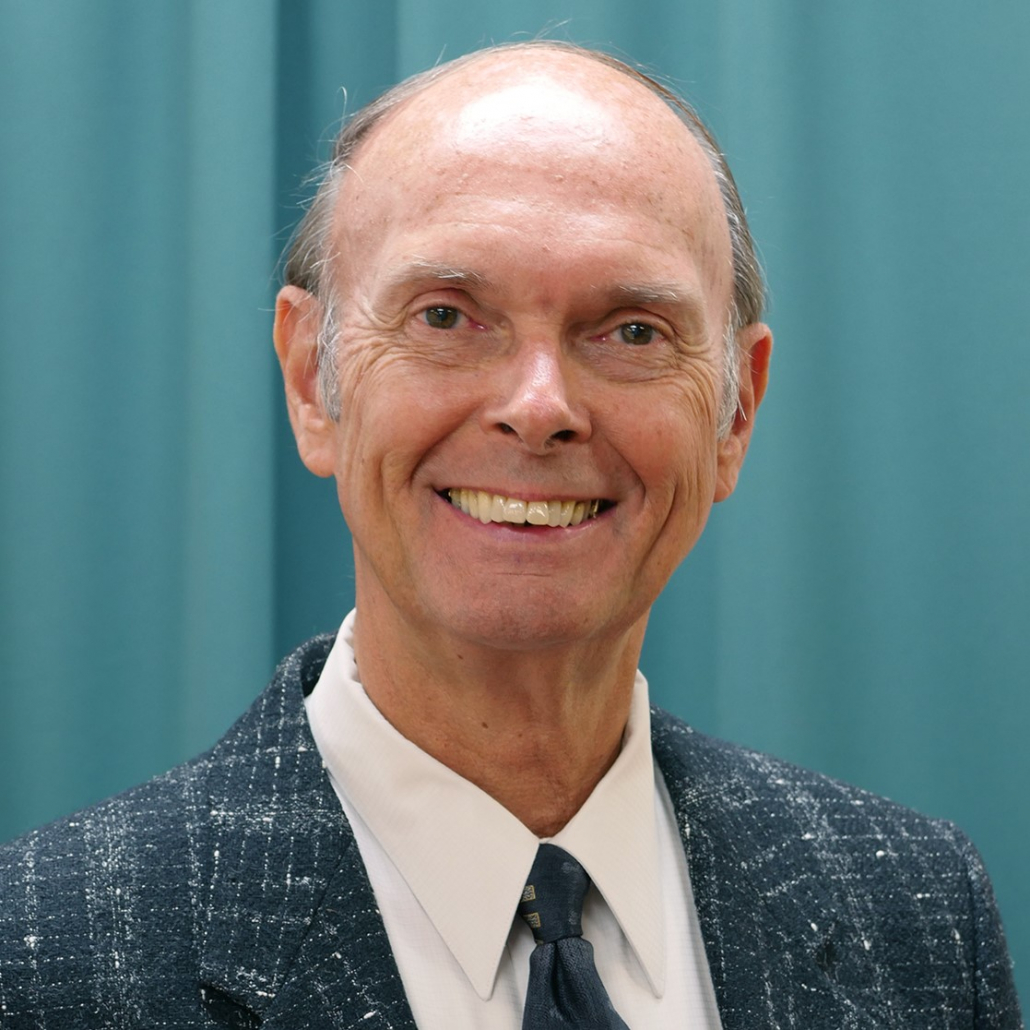
Kenneth Frank was born and raised in New Jersey, USA, and attended Ambassador College, graduating in 1973. He served in the Canadian ministry from 1973-1999, after which he returned to the USA to pastor churches in Maryland, Virginia, and North Carolina for 15 years. Having earned a BA degree from Ambassador College he later earned a MA degree from Grand Canyon University before being assigned to the Charlotte office to teach at Living University, now Living Education. Currently, he teaches the Survey of the Bible course to the on-campus students and writes the Digging Deeper column for our online Bible study program. He is married, has four children, and seven grandchildren.
Digging Deeper: A Cause to Pause
Author: Mr. Kenneth Frank | Faculty, Living Education
Estimated Reading Time: 2 min.
Did you know that one of the greatest nations of antiquity suffered not just one pestilence but a series of ten plagues in succession?
That nation was Egypt. This harrowing account is recorded in chapters 1-12 of the Book of Exodus in the Holy Bible. Jews and Christians alike reflect on the meaning of the original Exodus and Passover stories in springtime. For Christians, this reflection includes meditation on the significance of Jesus’ death on the cross as our Passover Lamb (1 Cor 5:7; John 1:29) to provide us an exodus from sin, Satan’s society, and self.
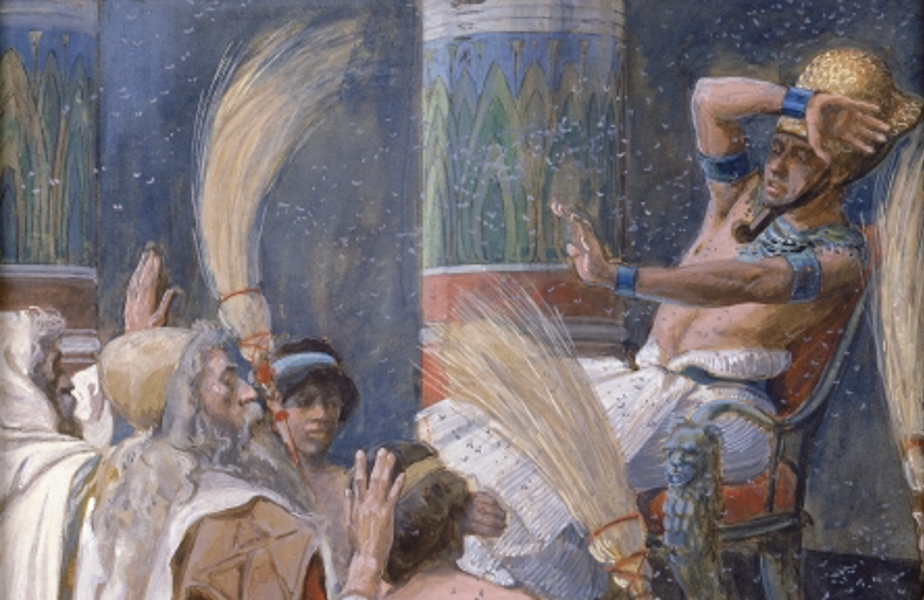
The coronavirus COVID-19 pandemic is motivating people around the earth to consider the meaning of this frightening and deadly experience. Perhaps over several months, Egypt suffered plagues of blood, frogs, lice or gnats, flies, murrain, boils, hail, locusts, darkness, and the death of its firstborn. The plague of murrain on the animals was a pestilence (Ex 9:3, 14). Amos 4:10 referred to Egypt’s plagues as a pestilence. A working definition of pestilence is a contagious and destructive disease that is a calamity, a scourge, and an epidemic or pandemic. Today the world is reeling from one pestilence but imagine if it had to respond to ten in a row!
This story is one of the greatest epics of biblical history and literature.
The plagues on Egypt were God’s judgment upon a God-defying pharaoh and his people who had confined, enslaved and mistreated the Israelites for hundreds of years. God had given fair warning, through the preaching of his servant, Moses, to the proud Egyptians about the onset of these plagues if they refused to set His people free. By these afflictions, God released, rescued and redeemed His people from servitude to be His very own special people led by Moses, whose own birth narrative relates to the suffering of his people. God accomplished His will through this historic tragedy. It marked the beginning of the Israelites’ long journey to the Promised Land.
The desolating plague of our own time will accomplish God’s purpose in something we may not yet understand. The key to understanding this experience is humbling ourselves in repentance to receive God’s reprieve when He deems we are genuinely establishing godly standards (2 Ch 7:13-14). In the meantime, Christians need to consider and follow the apostle Paul’s example while under arrest in Rome: “… so now also Christ shall be magnified in my body, whether it be by life, or by death” (Phil 1:20). May God have mercy on us as we sincerely turn to Him in our time of need (Heb 4:16).
Kenneth Frank was born and raised in New Jersey, USA, and attended Ambassador College, graduating in 1973. He served in the Canadian ministry from 1973-1999, after which he returned to the USA to pastor churches in Maryland, Virginia, and North Carolina for 15 years. Having earned a BA degree from Ambassador College he later earned a MA degree from Grand Canyon University before being assigned to the Charlotte office to teach at Living University, now Living Education. Currently, he teaches the Survey of the Bible course to the on-campus students and writes the Digging Deeper column for our online Bible study program. He is married, has four children, and seven grandchildren.
Digging Deeper: The Legacy of a King
Author: Mr. Kenneth Frank | Faculty, Living Education
Estimated Reading Time: 3 min.
Did you know that the captivity of the House of Judah was largely blamed on the actions of one of its kings?
For hundreds of years, God had sent prophet after prophet to warn his people to repent of their evil but to no avail. The entire nation was apostate from God. However, it was the regime of one of its kings that was the final straw. 2 Kings 21:4 and Jeremiah 15:4 describe Judah’s removal from its homeland into captivity for the “sins of Manasseh…for the innocent blood that he shed…which the LORD would not pardon.” Not only was there an entire tribe of the northern House of Israel named Manasseh, but the thirteenth king of the House of Judah bore this name as well.
King Manasseh was the son of one of the House of Judah’s most righteous kings, Hezekiah. Hezekiah had cleansed the southern tribes of idolatry and repaired and reopened the Temple with proper sacrifices before restoring the festivals of Passover and the Days of Unleavened Bread that had been neglected many years. Later in life, Hezekiah was told by the prophet Isaiah to get his house in order for he would soon die after contracting a disease. Hezekiah appealed to God who extended his life 15 years. During that time he begat a son who became his successor: Manasseh.
Hezekiah was not a perfect king, but Manasseh seemed to go to all lengths to undo his father’s reforms and go well beyond what any other king had committed in evil. Manasseh reigned the longest of Old Testament Israelite kings – 55 years. His evil reign is declared worse than that of the heathen who occupied the Holy Land before Israel conquered it (2 Kings 21:9). Manasseh even made some of his children “pass through the fire” (burning them alive) in sacrifice to a heathen god.
Manasseh’s wickedness is detailed in 2 Kings 21 and 2 Chronicles 33. But only the account in 2 Chronicles tells the “rest of the story.” He was eventually hauled away in shackles into captivity by the Assyrians, perhaps even with a hook in his nose or lip as he walked hundreds of miles to the city of Babylon. Remarkably, while in captivity he came to himself, like the Prodigal Son, in this far-off land and appealed to God’s mercy who not only arranged for his release from captivity but even returned him to his throne in Jerusalem (2 Chronicles 33:12-13). After his resuming power, he implemented a massive reform program to turn the nation back to God; however, the consequences of his earlier wickedness could never be fully reversed before the final captivity of the nation.
This story declares the graciousness of our God that even as wicked a person as Manasseh could be forgiven and restored! This account should encourage all of us to appreciate and draw closer to the God who is merciful and gracious, slow to anger and who will abundantly pardon through the sacrifice of His own Son, Jesus Christ. We must never take His grace for granted but we can continue to count on it if we genuinely repent of our sin and change our ways.
Kenneth Frank was born and raised in New Jersey, USA, and attended Ambassador College, graduating in 1973. He served in the Canadian ministry from 1973-1999, after which he returned to the USA to pastor churches in Maryland, Virginia, and North Carolina for 15 years. Having earned a BA degree from Ambassador College he later earned a MA degree from Grand Canyon University before being assigned to the Charlotte office to teach at Living University, now Living Education. Currently, he teaches the Survey of the Bible course to the on-campus students and writes the Digging Deeper column for our online Bible study program. He is married, has four children, and seven grandchildren.
Digging Deeper: Paul and Rome
Author: Mr. Kenneth Frank | Faculty, Living Education
Estimated Reading Time: 2 min.
Did you know that, unlike most of his epistles, Paul wrote the Epistle to the Romans during his third evangelistic journey before he ever visited the city of Rome?
House churches had developed in the Roman Empire’s capital city possibly beginning with observant Jews who had traveled to Jerusalem for Pentecost and had returned as Christians (Acts 2:10). During the persecution of Acts 8:1, some Christians may have fled to Rome. Other Christians may have migrated there for business or personal reasons. Somehow congregations had formed among believers. Paul had wanted to visit them even before he wrote them but was prevented doing so more than once (Romans 1:11-15). One reason he wrote this letter was to introduce himself and prepare them for his coming after he delivered a gift from churches in Greece to Judean Christians enduring drought and famine. However, he did not arrive in Rome until about three years after writing them due to his arrest in Jerusalem. While there, Jesus informed him he would indeed stand before Caesar in Rome just as he had testified in Jerusalem (Acts 23:11; 27:24).
Paul believed his work on the eastern side of the Roman Mediterranean world had been accomplished sufficiently (Rom 15:22-23). He wanted to preach in the capital city as he had in scores of other cities and towns during his various evangelistic journeys. Long before Horace Greeley made his proverbial admonition to “Go west young man,” Paul wanted to travel west to visit the brethren and churches in Rome to solidify them in the faith as well as to disseminate the faith to other parts of the empire from its capital. Rome was a city of one to four million people, about half of whom were slaves. The conclusion of his Epistle to the Romans greets many people Paul knew there including relatives (Romans 16:13), but there were many more yet-unknown brethren Paul intended to meet and serve.
Paul did indeed travel to Rome but not in the way he had planned. He arrived as a prisoner who of necessity had appealed to Caesar, employing the right of every Roman citizen to a fair trial. He spent about two years in Rome under a form of house arrest but afterward evidently was released and traveled further to spread the gospel, perhaps even to Spain as he had planned (Rom 15:24, 28). Finally, tradition states he was rearrested, returned to Rome for retrial and was beheaded. Paul’s testimony in Rome was sealed in his blood.
Kenneth Frank was born and raised in New Jersey, USA, and attended Ambassador College, graduating in 1973. He served in the Canadian ministry from 1973-1999, after which he returned to the USA to pastor churches in Maryland, Virginia, and North Carolina for 15 years. Having earned a BA degree from Ambassador College he later earned a MA degree from Grand Canyon University before being assigned to the Charlotte office to teach at Living University, now Living Education. Currently, he teaches the Survey of the Bible course to the on-campus students and writes the Digging Deeper column for our online Bible study program. He is married, has four children, and seven grandchildren.
Second Thoughts: Leaving Stephen Behind
Author: Thomas White | Living Church of God, Editorial Department
“And the witnesses laid down their clothes at the feet of a young man named Saul. And they stoned Stephen as he was calling on God and saying, ‘Lord Jesus, receive my spirit.’ Then he knelt down and cried out with a loud voice, ‘Lord, do not charge them with this sin.’ And when he had said this, he fell asleep. Now Saul was consenting to his death” (Acts 7:58-8:1).

Dr. Douglas Winnail’s recent assembly addressed the uncomfortable truth that what you do when you’re young will affect the rest of your life. People in many walks of life need that warning, and like most warnings, we need it when we haven’t done anything yet.
But what if you’ve already consented to Stephen’s death?
Wonderings
I wonder how many times Saul saw Stephen’s face in his dreams. I wonder if he ever woke up in a cold sweat while being taught by Christ Himself in the wilderness, hearing “Lord, do not charge them with this sin” reverberate through his mind. I wonder how much he felt as though he were haunted by Stephen’s death.
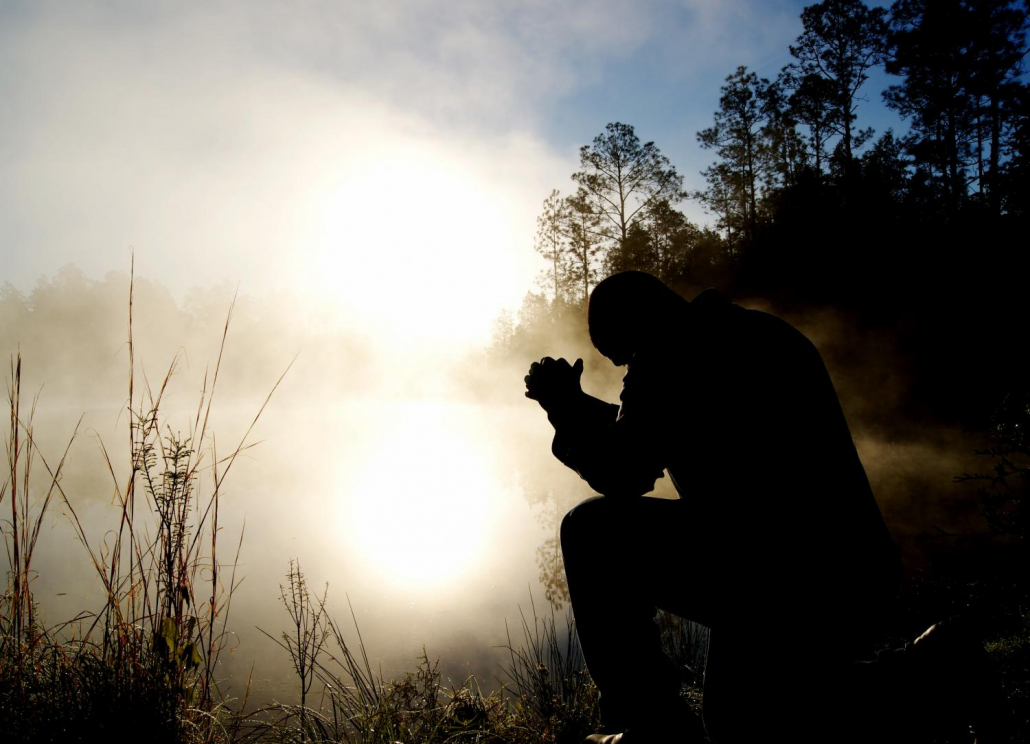
I wonder if he ever knelt before Christ during those years of training and said, “Depart from me, for I am a sinful man, O Lord! I let them kill him, I wanted them to, and I don’t know how to make up for it. I’ll never be able to forget what I’ve done, and I don’t know how You can, either. I’m tainted, Lord—Your work deserves better. Your people deserve better.”
And I wonder if he heard something like, “I did not come to call the righteous, but sinners, to repentance. I do not condemn you—go and sin no more.”

Going
When we read in John 8:11 of Christ saying that to the woman caught in adultery, we pay needed attention to the first part, “Neither do I condemn you,” and the third part, “sin no more.” But it was only very recently that I even noticed the second part: “go.”
Only a writer inspired by God could pack so much into a single word. “Sin no more,” our Savior says, but also, “Go. Move forward. Don’t stay here in your mind, wallowing in this time and place, letting the memories of your sin hold you captive. Leave Stephen behind.”
Saul had to, and we have to. Whatever we’ve done, however grievously we’ve disobeyed our Savior, the response he expects of us is to ask His forgiveness, believe Him when He says He does not condemn us, go, and sin no more. And it has to be in that order: If we’re going to leave Stephen behind, we have to first believe and accept that Christ does not condemn us, and if we’re going to “sin no more,” we have to first leave Stephen behind—because we’re almost never more vulnerable to future sin than when our minds are enveloped in past sin.
I doubt Saul ever truly forgot about what he did to Stephen, but I don’t believe he remained haunted by it. In fact, we know he didn’t, because the same man who consented to Stephen’s death—but also, in a very real way, an entirely different man—said, “one thing I do, forgetting those things which are behind and reaching forward to those things which are ahead, I press toward the goal for the prize of the upward call of God in Christ Jesus” (Philippians 3:13-14).
It’s true—what you do when you’re young affects the rest of your life. But it doesn’t have to rule it.

Thomas White was one of the onsite Living Education students for the 2018-2019 semesters. He also has a Bachelor’s Degree in English. Thomas currently works as an Editorial Assistant for the Living Church of God. According to his wife, he eats pizza in entirely the wrong way.
Sea of Galilee
KEY FEATURES
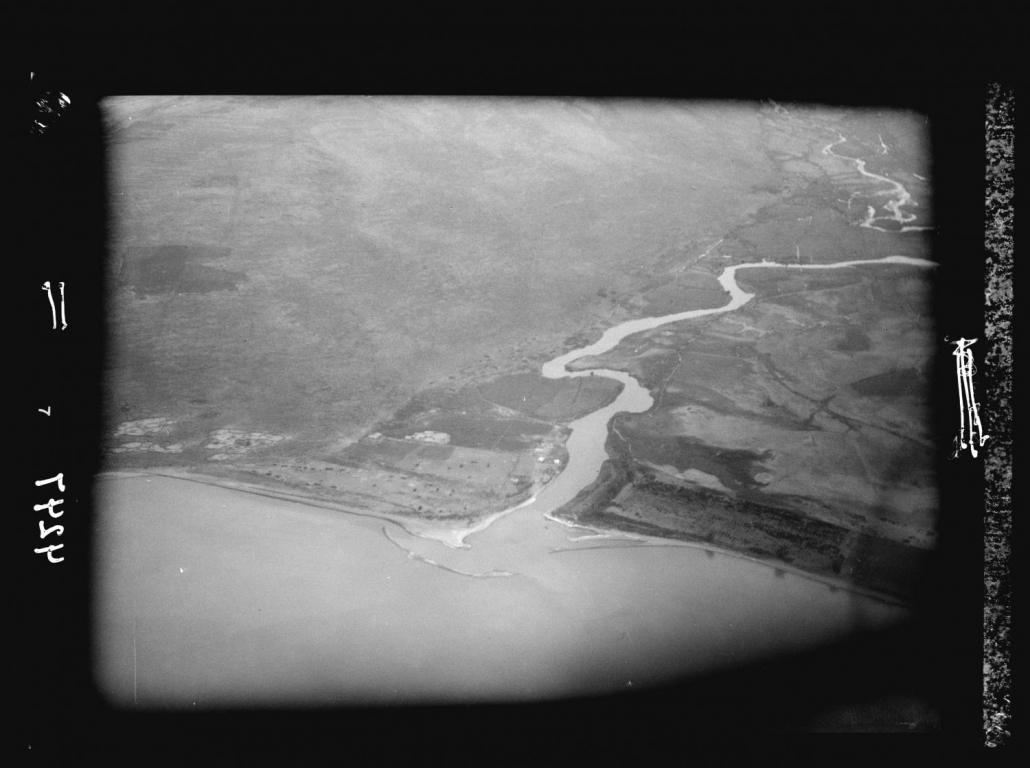
The Sea of Galilee is also called the Sea of Tiberias or Lake of Gennesaret. It was commonly known in the Old Testament as the Sea of Kinnereth. Nearly 700 feet below sea level, “the lake” is the largest freshwater bank in the region.
Geographically, the sea is 8 miles wide and about 12 miles long, north to south. Located near the Golan Heights, it is Israel’s primary source of drinking water. The heart-shaped feature forms a circular arc which connects the flow of the Jordan River and provides much of the water supply and a well-stocked variety of fish.
Some major towns at its shores include Bethsaida, Capernaum, and Tiberias.
THE TIME OF CHRIST
During the first century, Christ spent much of His time around the Sea of Galilee. He healed the sick and cast out demons near the Sea of Galilee. He also ate breakfast with His disciples on the shore of the Sea of Galilee after His resurrection. The Sea of Galilee played a pivotal role in the 3 1/2 year ministry of Jesus Christ.
Sabbath Day’s Journey
From Acts of the Apostles: The Church Begins (Unit 1) – Learn More
jur’-ni (sabbatou hodos):
Used only in Acts 1:12, where it designates the distance from Jerusalem to the Mount of Olives, to which Jesus led His disciples on the day of His ascension. The expression comes from rabbinical usage to indicate the distance a Jew might travel on the Sabbath without transgressing the Law, the command against working on that day being interpreted as including travel (see Exodus 16:27-30). The limit set by the rabbis to the Sabbath day’s journey was 2,000 cubits from one’s house or domicile, which was derived from the statement found in Joshua 3:4 that this was the distance between the ark and the people on their march, this being assumed to be the distance between the tents of the people and the tabernacle during the sojourn in the wilderness. Hence, it must have been allowable to travel thus far to attend the worship of the tabernacle. We do not know when this assumption in regard to the Sabbath day’s journey was made, but it seems to have been in force in the time of Christ. The distance of the Mount of Olives from Jerusalem is stated in Josephus (Ant., XX, viii, 6) to have been five stadia or furlongs and in BJ, V, ii, 3, six stadia, the discrepancy being explained by supposing a different point of departure. This would make the distance of the Sabbath day’s journey from 1,000 to 1,200 yards, the first agreeing very closely with the 2,000 cubits. The rabbis, however, invented a way of increasing this distance without technically infringing the Law, by depositing some food at the 2,000-cubit limit, before the Sabbath, and declaring that spot a temporary domicile. They might then proceed 2,000 cubits from this point without transgressing the Law.
And in some cases even this intricacy of preparation was unnecessary. If, for instance, the approach of the Sabbath found one on his journey, the traveler might select some tree or some stone wall at a distance of 2,000 paces and mentally declare this to be his residence for the Sabbath, in which case he was permitted to go the 2,000 paces to the selected tree or wall and also 2,000 paces beyond, but in such a case he must do the work thoroughly and must say:
“Let my Sabbath residence be at the trunk of that tree,” for if he merely said: “Let my Sabbath residence be under that tree,” this would not be sufficient, because the, expression would be too general and indefinite (Tractate `Erubhin 4:7).
Other schemes for extending the distance have been devised, such as regarding the quarter of the town in which one dwells, or the whole town itself, as the domicile, thus allowing one to proceed from any part of the town to a point 2,000 cubits beyond its utmost limits. This was most probably the case with walled towns, at least, and boundary stones have been found in the vicinity of Gaza with inscriptions supposed to mark these limits. The 2,000-cubit limits around the Levitical cities (Numbers 35:5) may have suggested the limit of the Sabbath day’s journey also. The term came to be used as a designation of distance which must have been more or less definite.
H. Porter
Copyright Statement
These files are public domain.Bibliography Information
Orr, James, M.A., D.D. General Editor. “Entry for ‘SABBATH DAY’S JOURNEY'”. “International Standard Bible Encyclopedia”. 1915.