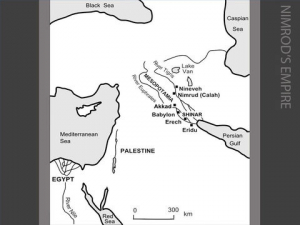
Children’s Bible Program – Level 2: Lesson 16 “Nimrod’s Legacy”
Sweet Publishing | FreeBibleImages.org
By Janth English
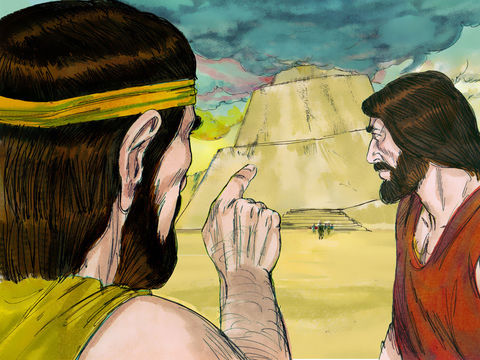
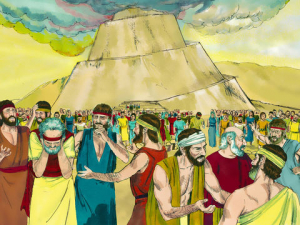
Read Together: The Bible portrays Nimrod as an evil man, and we still see the effect of his evil influence today. Nimrod is the first recorded leader to organize people into city-states so that he could rule over them. He was a proud tyrant who was openly rebellious toward God. Nimrod built the city of Babel, and led the effort to undermine God’s plan for people to spread throughout the earth, building a tower that reached to the sky. Many historians trace the pagan traditions that are part of all of the world’s religions today back to this very city. People who are really following God avoid these traditions, even if they are mixed with a worship of Christ. Instead, God’s people keep His Sabbath, Holy Days and other commands.
Read Together: Genesis 10:8–12; 11:5–9; Revelation 17:5; 18:1–2.
Discuss:
- Ask your child what are some wrong traditions that people in the world’s churches observe?
- Explain that many modern church traditions of the world started a long time ago. (You may wish to refer to the booklet, “Satan’s Counterfeit Christianity,” pp. 8–10, https://www.tomorrowsworld.org/booklets/satans-counterfeit-christianity).
- Ask your child, who is really behind the false traditions and religious deception of the world? (Reference Revelation 12:9)
- Explain to your child that the Bible shows that end-time religious deception (“Babylon”) is just a modern version of traditions started long ago (the city of “Babel”). (Reference Genesis 11:9 and Revelation 17:5; 18:1–2)
- Explain to your child that we can only understand God’s truth because He opens our mind and helps us not be deceived (John 6:44, Matthew 13:11).
- Ask your child what about God’s way of life are they most thankful for?
Review Memorization.
Genesis 11:9 “Therefore its name is called Babel, because there the LORD confused the language of all the earth; and from there the LORD scattered them abroad over the face of all the earth.”

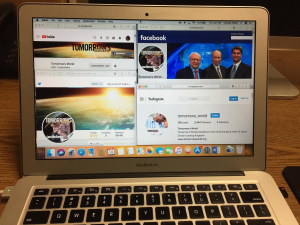
 “Anonymity has its perils. … There’s a huge amount of money associated with social media activity, and if you’re going to avoid being taken advantage of, it’s essential that you act with knowledgewhen engaging with such media.”
 If a random person on the street walked up and said, “Hi! Let’s be friends”, I would naturally be a bit suspicious. If that person wore a ski mask, I would be more suspicious, and probably run. As Mr. Wakefield pointed out, social media makes it possible for people to try to gain your trust while wearing fabricated identities as their ski masks, so socializing with people you’ve never met offline is usually a bad idea. Acting with knowledge means being careful about who we believe online, as well as being careful about what we put there. “Set a guard, O LORD, over my mouth,” reads Psalm 141:3, and today, as Mr. Wakefield said, “mouth” could just as easily be “keyboard.” The internet is a mixture of good and evil, and if we act with knowledge, God can keep us from the latter.