Children’s Bible Program – Level 3: Lesson 23 “The Days of Unleavened Bread”

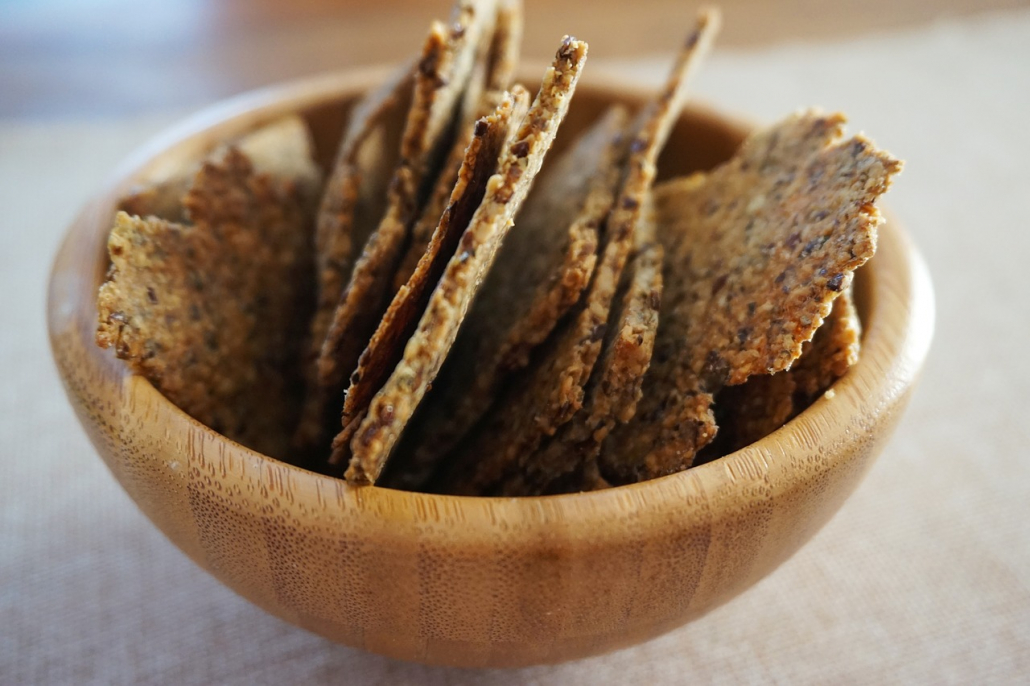
Read Together: The Days of Unleavened Bread begin immediately after the Passover, on the fifteenth day of the first month. For seven days, all of Israel was to have no leaven in their homes and to eat unleavened bread. The first and last Days of Unleavened Bread are Holy Days to the Eternal. During the Days of Unleavened Bread, leavening agents picture sin which causes people to be puffed up with pride and vanity. Putting leavening out of our homes reminds us that we are to put sin out of our lives. When Peter told the Jews that they had crucified the Son of God, they asked what they should do. Because every person has sinned, each of us is responsible for the death of Christ. He had to die to pay the penalty for our sins. When we acknowledge this fact, we face the same question of what to do. Peter’s replied that they must “repent”. We repent of sinning, which is the transgression of God’s law. Repentance means to turn from the way of life that leads to death and to follow God’s way leading to eternal life. Eating unleavened bread for seven days pictures feeding on Christ, the true unleavened bread, in whom dwelt no sin. We feed on Christ by studying His word which transforms our minds. As we do, we begin to be more like Christ. As Dr. Roderick C. Meredith often said, we will begin to think like God thinks, want what God wants, and do what God would do. If we feed on Christ, God will give us eternal life, because He is the “bread of life.”
Read Together:  Exodus 23:14–17; Leviticus 23:4, 6–8; Acts 2:36–38; I John 3:4; 1 Corinthians 15:3; John 6:35, 47–51; Romans 12:2; Ephesians 4:11–16; John 6:57–58.

Discuss:

  • Talk with your child about sin. Explain that the Ten Commandments are the foundation for all of God’s laws. We are to obey all of the Commandments, even those we may feel are the least important (Matthew 5:19).
  • Talk with your child about repentance. Explain that repentance is more than being sorry. It means that with God’s help, we stop committing the offense.
  • Ask your student what is his/her favorite thing about the Days of Unleavened Bread. Is it getting together with friends on the Holy Days or perhaps a special treat that is only baked at that time? Share what you enjoy about that time.

Review Memorization:

Romans 5:10 “For if when we were enemies we were reconciled to God through the death of His son, much more, having been reconciled, we shall be saved by His life.”


Children’s Bible Program – Level 2: Lesson 23 “Putting Sin Out”

Read Together: When God delivered ancient Israel from Egypt, they left in a hurry. They left so quickly that they were unable to let their dough rise, so their bread was unleavened. God told Israel they were to remember the day that He brought them out of Egypt by observing the Feast of Unleavened Bread for seven days. The first and last days of the feast were to be Holy Days or annual Sabbaths. As they prepared for these days they were to remove all the leavening from their homes. God commanded the Israelites to do this and instruct their children to pass on this command to the next generation. But we understand that the command applies to us as members of the church of God also. You have probably helped your parents clean the leavening from your home before the Days of Unleavened Bread each year. It can take a lot of time and hard work! But, why is it important? Here’s the answer.

Remember, God brought ancient Israel out of slavery in Egypt. For the Israelites, Egypt represented the years of slavery they had endured. Today, God calls each member of His church and frees them from slavery also. But our slavery is not to the kingdom of Egypt. Our slavery is to sin. Even though we don’t want to, we sometimes break God’s law out of rebelliousness and selfishness. That is like being a slave of sin. For us, God uses leaven to represent our slavery.  What is leaven? Leaven is the yeast that is added to bread to make it rise, which makes it more enjoyable to eat. Without that leaven, bread is hard and flat. Just like the yeast that makes bread rise, sin causes us to grow in pride, vanity and selfishness. And as we remove leavening or any bread that has been made with leavening from our homes, we are practicing an exercise that reminds us of removing sin from our life!

Read Together:  Exodus 12:15–17, 33–34, 39; 13:3–10; Leviticus 23:6–8; John 6:44; Matthew 16:6; 1 Corinthians 13:4; 5:6–8; Romans 6:12–14

Discuss:

  • Help your child name some leavened products that you are to throw out and avoid during the Days of Unleavened Bread.
  • Discuss with your child what sin is and have them read 1 John 3:4 (KJV). Help your child recognize that just as we are to carefully stay away from leavening during the Days of Unleavened Bread, we are to be especially diligent to keep sin out of our lives.
  • Try to think of a humorous event that happened to your family during the Days of Unleavened Bread. What was the oddest place that you found leavening? Were you ever in a situation where you temporarily forgot it was the Days of Unleavened Bread? What do you do when these things happen? Help your child to understand that when we repent of sin, God is quick to forgive us. This is how we remain unleavened.

Review Memorization:

1 Corinthians 5:7  “Therefore purge out the old leaven, that you may be a new lump, since you truly are unleavened. For indeed Christ, our Passover, was sacrificed for us.”

Second Thoughts: Blaming Gravity for the Ground

Author: Thomas White | Student at LivingEd-Charlotte

“Gravity operates the same way, all the time. … Sometimes, when we’re falling, we wish it didn’t work that way, but we pay the consequence when we hit the ground. …and there are others laws that are absolutely just as sure as gravity. …and those laws are found right here, in the Bible.” ~ Mr. Sheldon Monson

April 4, 2019 | Student Assembly: LivingEd-Charlotte

I’m pretty sure that at some point or another, we’ve all wished that we, personally, could fly. It’s a natural, human thing to fantasize over. Even King David envied the birds at least once (Psalm 55:6). That fantasy, though, always seems to include the ability to stop flying when you’re so inclined, because otherwise the flight becomes a lot less awesome, and also a lot more terrifying. As Mr. Sheldon Monson made the point in this week’s assembly, gravity is a great thing to have around, and we all recognize that. Even after a particularly nasty fall, no one is all that tempted to sincerely say, “Ugh, gravity. I wish it would go away.” We know that would be ridiculous…but when we, in our heart of hearts, wish that certain parts of God’s law weren’t there, aren’t we being just as foolish?

“The world around us is filled with strife, it’s filled with poverty, ignorance, suffering, pain…those are all results of living a way of life that’s opposite to what God says we ought to live.”

One of my absolute favorite non-biblical quotes comes from Cecil B. DeMille, who said, “We cannot break the Ten Commandments. We can only break ourselves against them…” We all recognize that sin will always have consequences, but if we’re not careful, we can start thinking that God put those consequences there. In reality, He created His law to keep us from sin’s consequences, not consequences to keep us out of sin. If I hop the fence at the edge of the Grand Canyon and perform a swan dive, the inevitable splat isn’t the fence’s fault, or the Grand Canyon’s fault, or gravity’s fault, rather it is every bit my own fault. And as Mr. Monson brought out, the vast majority of our world is taking Satan’s advice and swan-diving off the edge of the Grand Canyon, deceived into believing that God’s Church is foolish for not doing the same.

“The main thing is to remember to keep ‘The Main Thing’ the main thing.”

So I have to make sure that I don’t do the same, because Satan whispers in my ear, too, telling me that there is no splat at the end of the dive into sin, that I can level out and levitate away right before I hit the ground. That fits right into my flying fantasy, so how do I keep from believing him? As Mr. Monson reminded us, “The Main Thing”, what keeps us safe from our own gullibility, is to “Fear God and keep His commandments, for this is man’s all” (Ecclesiastes 12:13). To cut through life’s distractions and maintain that primary focus, we need to remind ourselves that those commandments are a shield, not a cage.


Thomas White headshot

Thomas White was one of the onsite Living Education students for the 2018-2019 semesters. He also has a Bachelor’s Degree in English. Thomas currently works as an Editorial Assistant for the Living Church of God. According to his wife, he eats pizza in entirely the wrong way.

Children’s Bible Program – Level 3: Lesson 22 “The Passover – Justified by His Blood”

Sweet Publishing | FreeBibleImages.org

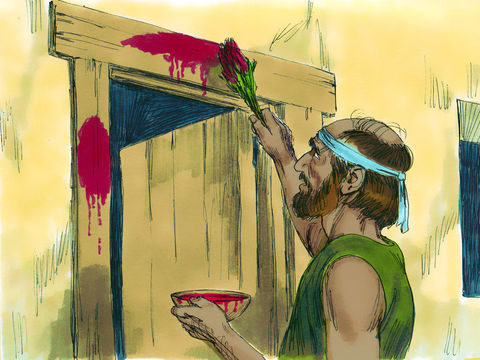
Read Together: God gave ancient Israel instructions concerning Passover observance. On the tenth day in the first month of the year, each family was told to select a special,  Passover lamb. This lamb was to be perfect, without any blemishes at all. Four days later, as the 14th day of the first month was just beginning at sunset, they were required to kill the lamb, cook it, and eat it as part of a special Passover meal, putting some of the blood of the lamb on their doorway. Those who did this would be protected from the death angel, who would kill all the firstborn in the land, except those in houses with the blood of the lamb on their doorway. Every year after that, the Israelites were commanded to eat a Passover meal on this same night and remember how God had spared them from the death of the firstborn in their home. But this Passover lamb also symbolized something more. All humans are under the threat of death because we all have sinned, and death is the penalty for sinning against God. We may not have the death angel passing over us, but we still are subject to death for our sins. Instead of a Passover lamb, however, we have Jesus Christ. Christ was the perfect sacrifice who was willing to become a human being and then die for our sins, protecting us from death, just as the blood of the lamb on the doorway protected the Israelites. Before Christ died, He taught His disciples that they should think of the Passover as a yearly reminder of His sacrifice for them, and to drink a small cup of wine and eat a small piece of unleavened bread instead of cooking a lamb. These new symbols were taught to the church by the disciples. Since that time, the faithful people of God through history have continued to remember Christ’s sacrifice every year at the Passover, just as the Israelites remembered the Passover every year. They were released from their Egyptian taskmasters, while we are released from the grasp of Satan and sin.

Read Together:  Exodus 12:3–8, 43–47; Leviticus 23:4–5; Romans 3:23; 6:23; Hebrews 10:4; John 1:1–3; Luke 1:35; Matthew 1:23; Philippians 2:5–8; John 10:17–18; 3:16; 1:29.

Discuss:

  • Ask your child why they think the lamb selected for Passover had to be without any blemishes. How does this relate to Jesus Christ?
  • People often question why Christ had to die. Discuss this with your child. Be sure to relate that God will not compromise with sin and that there could be no pardon of sins without shedding blood (Hebrews 9:22). Christ had to die to atone for mankind’s sins, giving you, your child, and every human being who has ever lived a chance for salvation and eternal life in God’s family.
  • Discuss with your child how awful sin is and why God hates it. Choose one of the Ten Commandments and talk about how breaking it causes misery, pain, and suffering. How different would the world be if that commandment were kept? Remind your student that it is because of sin that Christ had to die.
  • Explain to your child that the blood of Christ is represented by the wine, and the bread represents His body that was beaten for us.  

Review Memorization:

1 Corinthians 5:7  “Therefore purge out the old leaven, that you may be a new lump, since you truly are unleavened. For indeed Christ, our Passover, was sacrificed for us.”

Children’s Bible Program – Level 2: Lesson 22 “Passover and the Sacrificial Lamb”

Photo by Daniel Sandvik on Unsplash

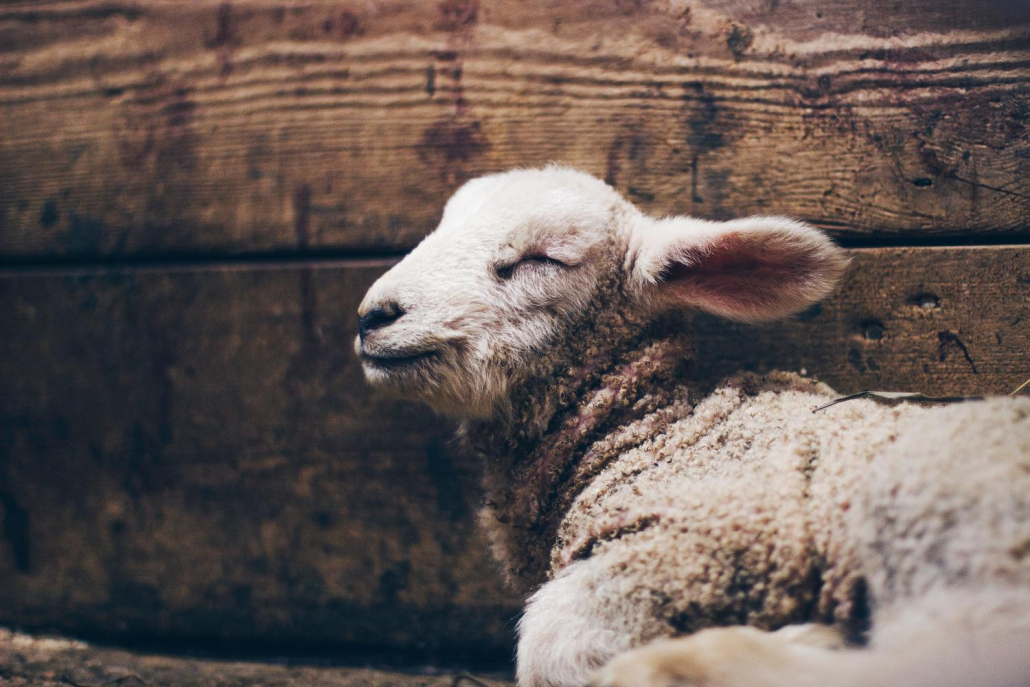
Read Together: God gave ancient Israel instructions concerning Passover observance. On the tenth day in the first month of the year, each family was told to select a special, Passover lamb. This lamb was to be perfect, without any blemishes at all. Four days later, as the 14th day of the first month was just beginning at sunset, they were required to kill the lamb, cook it, and eat it as part of a special Passover meal, putting some of the blood of the lamb on their doorway. Those who did this would be protected from the death angel, who would kill all the firstborn in the land, except those in houses with the blood of the lamb on their doorway. Every year after that, the Israelites were commanded to eat a Passover meal on this same night and remember how God had spared them from the death of the firstborn in their home.  

But this Passover lamb also symbolized something more. All humans are under the threat of death because we all have sinned, and death is the penalty for sinning against God. We may not have the death angel passing over us, but we still are subject to death for our sins. Instead of a Passover lamb, however, we have Jesus Christ. Christ was the perfect sacrifice who was willing to become a human being and then die for our sins, protecting us from death, just as the blood of the lamb on the doorway protected the Israelites.

Read Together:  Exodus 12:3–8, 43–47; Leviticus 23:4–5; Romans 3:23; 6:23; Hebrews 10:4; John 1:1–3; Luke 1:35; Matthew 1:23; Philippians 2:5–8; John 10:17–18; 3:16; 1:29.

Discuss:

  • Ask your child why they think the lamb selected for Passover had to be without any blemishes. How does this relate to Jesus Christ?
  • People often question why Christ had to die. Discuss this with your child. Be sure to relate that God will not compromise with sin and that there could be no pardon of sins without shedding blood (Hebrews 9:22). Christ had to die to atone for mankind’s sins, giving you, your child, and every human being who has ever lived a chance for salvation and eternal life in God’s family.
  • Discuss with your child how awful sin is and why God hates it. Choose one of the Ten Commandments and talk about how breaking it causes misery, pain, and suffering. How different would the world be if that commandment was kept? Remind your student that it is because of sin that Christ had to die.

Review Memorization:

1 Corinthians 5:7  “Therefore purge out the old leaven, that you may be a new lump, since you truly are unleavened. For indeed Christ, our Passover, was sacrificed for us.”

Second Thoughts: The Setup, Not the Game

Author: Thomas White | Student at LivingEd-Charlotte

“Life is tough, and as life gets tough, with bills, and health problems, and problems with children, and neighbors, and bosses, [some] get distracted.” ~ Mr. Kenneth Frank

LivingEd-Charlotte: Student Assembly | March 28, 2019

Mr. Ken Frank packed a lot into his assembly, this week. We heard of how we’ll be leading God’s Church before we know it (no pressure or anything), how crucial it is that we don’t divide our lives into the sacred and the secular, how we might retain a biblical worldview in an era fundamentally opposed to it, and each of those points had something like a half-dozen equally profound sub-points. All of that insight is available in the assembly recording (no cost, no obligation), but one sub-point in particular struck me harder than the others. Mr. Frank alluded to the fact that it can be really tempting to give up sometimes, because living a godly life is hard. It’s hard for everyone, and knowing that suffering is a prerequisite for righteous character can feel like a mean joke. When we know we’ll never be perfect as humans, and that this physical life is never going to get any easier, but is in fact probably only going to get worse as the Great Tribulation creeps closer…yeah, it’s tempting to just go, “You know what, all is vanity,” and stay in bed indefinitely.

“People who start off with a biblical worldview can lose it if they get their eyes off Christ. They’ve got to stay focused on Him.”

As Mr. Frank implied, it’s the temporary nature of this physical life that we need to focus on, and that’s pretty difficult, because this life is all we know. Of course, for those with God’s Spirit, this life is only a womb as we wait to be born into His eternal family. But that metaphor can be a tough sell when you think about how a baby in a womb is warm, comfortable, and completely peaceful, and this life is…not those things. So though it sounds childish, I like to think of this life as the setup process to an incredibly amazing board game. No one likes setting up a board game. You have to find the pieces, you have to shuffle the cards, you have to root around in the box for all the fake money you have to organize… It’s not fun, and it feels like it takes forever. But you need to do it, and you need to do it right, in order to actually play the game. Once you start playing, you’re glad you put in the time and effort to set everything up, because the game is great, and a lot longer than the set up.

“We have to think of the bigger question: Where are we going eternally?”

That’s what I tend to forget, and what Mr. Frank reminded me – that this physical life is the setup, not the game. Suffering might very well feel endless, but the amazing reward for it will literally be endless. Even eternal life can sound like an iffy reward when you’re used to life being something you wouldn’t actually want going on eternally, but what about eternal peace? Eternal joy? Eternally giving others peace and joy? Those are in the reward, too. God promises everlasting happiness and fulfillment at the end of this ever-so-tiny period of setup. If we can keep our focus on what we’re setting up for, nothing will be able to keep us from it.


Thomas White headshot

Thomas White was one of the onsite Living Education students for the 2018-2019 semesters. He also has a Bachelor’s Degree in English. Thomas currently works as an Editorial Assistant for the Living Church of God. According to his wife, he eats pizza in entirely the wrong way.

Children’s Bible Program – Level 2: Lesson 21 “The Holy Days Picture God’s Plan”

Read Together: Before God created the universe, He planned to create human beings and make them a part of His family. He determined to give mankind the gift of free moral agency. In other words, He would give mankind the ability to make choices. The most important decision is choosing whether to obey God or not. But God recognized that under the influence of Satan, man would choose to follow his own heart and disobey His commands. And just as Satan had done, Adam and Eve rebelled against Him. Since then, all humanity has followed their example. But God is holy and wants nothing to do with sin. So, how could sinful mankind ever become a part of God’s holy family? The answer is amazing! Remember, God had an astonishing plan for the human race to be part of His spirit family, and He wants us to know about it. To help us understand each step in His master plan, He gave us the Holy Days. This is why we observe these days every year, beginning with the Passover. Learning about the Passover helps us to understand the first step in God’s plan for us – and all people who have ever lived.

Read Together:  1 Peter 1:1820; 1 Corinthians 15:2122; Romans 3:23; Psalm 5:4; Isaiah 59:2; Leviticus 23:137

Discuss:

  • Remind your child that it was God’s plan from the beginning to create a family. We are made in His image (Genesis 1:2627), and we should grow in character to become like Christ (Ephesians 4:1315).
  • Discuss with your child what it means to have free moral agency. Mankind has not been given the right to decide what is right and wrong. Only God has the wisdom to make that determination. We  choose whether or not we will do what is right as God defines it.
  • Help your child identify each of the Festivals and Holy Days mentioned in Leviticus 23. Briefly discuss how each Holy Day fits into God’s plan. Be sure to emphasize Leviticus 23:2 where God says, “… these are My feasts.”
  • Help your child understand that they are a part of God’s plan and that God is looking forward to them being born into His family.

Review Memorization:

1 Corinthians 5:7 “Therefore purge out the old leaven, that you may be a new lump, since you truly are unleavened.   For indeed Christ, our Passover, was sacrificed for us.”

Children’s Bible Program – Level 3: Lesson 21 “God’s Plan of Salvation”

Read Together: God designed a plan whereby He would have a family with whom He would share eternity. So He planned to create mankind in His image, place them in a beautiful environment, and create circumstances in which they would have to choose to do right or wrong. God knew that giving mankind free moral agency was the only way they could develop the godly character needed to live in peace and harmony forever. He also knew that it could result in sometimes choosing the wrong way, which would cause misery and lead to death. God did not want a family who was in turmoil and misery for all eternity, so before He created mankind He also designed a plan to save them from eternal death and bring them into His family. He gave us His Holy Days to teach us about His plan of salvation. God designed the Holy Days around the harvest seasons in Palestine, which include the spring, early summer, and fall. In the next few lessons, we will discuss the spring Holy Days, Passover and Days of Unleavened Bread, and what they picture in God’s plan of salvation. We have the privilege to understand and be a part of this truly awesome plan.

Read Together: 1 Peter 1:1920; Genesis 2:79, 1517; Deuteronomy 16:16; Leviticus 23:14.

Discuss:

  • Discuss with your child what it means to have free moral agency. Mankind has not been given the right to determine what is right and wrong. We choose whether or not we will do what is right as God defines it.
  • Explain to your child that God made humans physical and not with spirit as He did the angels, so that if they refused to learn to obey Him, they would not have to live in unhappiness for all eternity. They would simply die a physical death like all humans do.  (Romans 6:23; Revelation 21:8).
  • Help your child understand that their ultimate destiny is to be born into the family of God as one of His children(Romans 8:1416; Hebrews 2:68; Psalm 82:6).
  • Ask your child what they would like to do when they become a spirit being in God’s family. Share what you look forward to doing.

Review Memorization:

Romans 5:10  “For if when we were enemies we were reconciled to God through the death of His Son, much more, having been reconciled, we shall be saved by His life.”

Second Thoughts: Irremovable From His Truth

by Thomas White, Student at LivingEd-Charlotte

Assembly by Dr. Douglas Winnail

Ambassador College Envoy, 1969

“Some people have estimated that over 200,000 people have gone through the Church of God over the years. … We had a lot of people that came into the Church, that went to Ambassador College, but they’re no longer around anywhere.” ~ Dr. Douglas Winnail

LivingEd-Charlotte Assembly: March 21, 2019

My mom used to tell me stories of Ambassador College. She would get excited as she did, her eyes coming alight with nostalgic reminiscence while she talked about the people she’d called her closest friends. But then she’d become a bit wistful, and wonder aloud where most of those friends were, because she didn’t know, not really. She would have, if they had stayed in God’s truth, but they didn’t. Most of them left, and of those, most never came back.

Dr. Douglas Winnail’s powerful assembly addressed that sobering fact, this week, as he asked us Living Education students where each of us will be in ten years. Of course, we all say we’ll still be here, carrying on the work, growing in Christ’s grace and knowledge. Everyone in Ambassador College probably said that too.

“Where will you be in five, or ten, or fifteen years? It’s exciting to be here together, but we need to think long-term.”

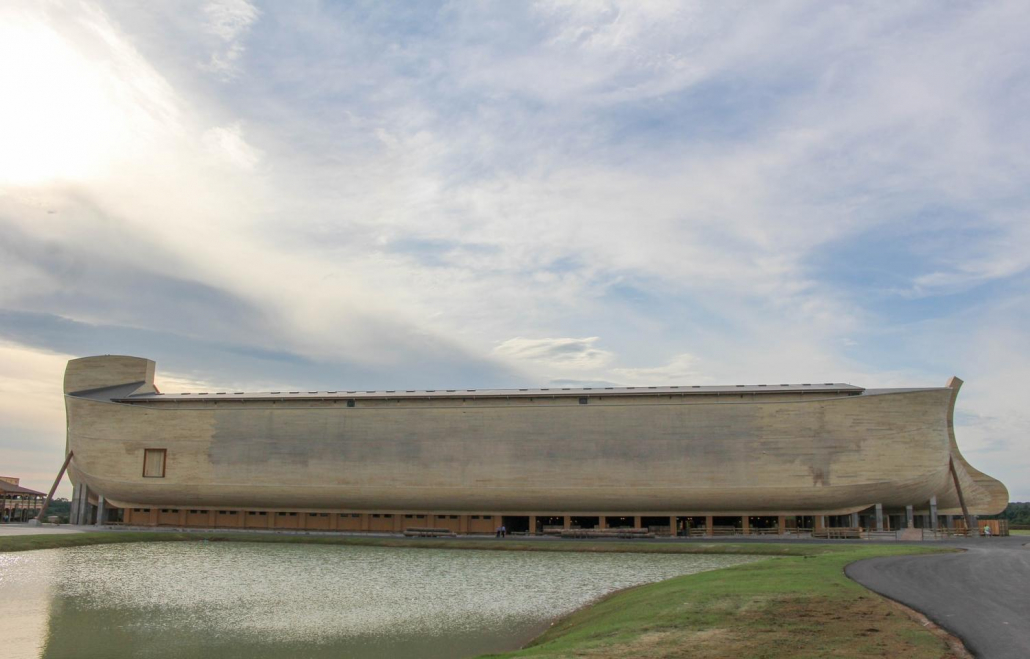
Dr. Winnail likened the not-quite-100 years since Mr. Herbert Armstrong founded the Worldwide Church of God to the 100 years Noah spent building the ark and warning people of the imminent flood. We’re used to cute illustrations of a wooden cruise ship boasting an onboard petting zoo, but in reality, that ark was enormous. One would need scores of uniquely skilled laborers to build it, especially without what we understand about technology. It had to have taken a great many people, but only eight boarded the Ark. Likewise, it took a lot of people to build the Church…but as Dr. Winnail posed, how many stayed with it? How many will?

“We need to be thinking beyond this world…and be prepared for what’s coming in the future. … Not everyone who comes to Church every Sabbath is going to be in the Kingdom of God. … Only those who do the will of God. ”

Dr. Winnail reminded us of the grim reality that according to Matthew 7:21-23, not everyone “in the Church” will be in the First Resurrection. There are those who are members of the Living Church of God, but not parts of Christ’s body. Members of a group can always cancel their membership, but body parts don’t just pop off of their own accord. We have to ask ourselves, “Am I a detachable member, or a permanent part?”, and we have to answer confidently in the direction of the latter, even knowing how hard Satan will try to tear us away. As Dr. Winnail addressed, we can’t take the cowardly option and disconnect ourselves from the world altogether; with God’s help, we have to brave it, while remaining irremovable from His truth. Staying the course, like building an ark, is a monumental task, but accepting that task leads to God’s protection from otherwise unbearable storms.

Books mentioned:

Evidence that Demands a Verdict by Josh McDowell

The Benedict Option by Rod Dreher


Thomas White headshot

Thomas White was one of the onsite Living Education students for the 2018-2019 semesters. He also has a Bachelor’s Degree in English. Thomas currently works as an Editorial Assistant for the Living Church of God. According to his wife, he eats pizza in entirely the wrong way.

Children’s Bible Program – Level 2: Lesson 20 “Isaac Inherits the Promises”

 Featured Passage: Genesis 23-26


Sarah died in Hebron at the age of 127 years old. God had allowed her to watch her son grow into a man. Shortly after Sarah died, Abraham sent his servant back to his own country to find a wife for Isaac. When the servant arrived at the well outside the city of Nahor, a young woman named Rebekah came to draw water. The servant had prayed asking that the young woman who gave him water to drink and offered to water his camels would be the one chosen to be Isaac’s wife. Rebekah did exactly that. The servant found out that Rebekah was the granddaughter of Abraham’s brother Nahor. Rebekah agreed to leave her family, go to Canaan, and marry a man she had never met. Isaac was forty years old when he and Rebekah were married. Abraham died at 175 years of age and lived to see the birth of Isaac’s sons. This was further evidence that God’s promise of giving Abraham many descendants would be fulfilled. After Abraham died, God spoke to Isaac and made the same promises to him that He had made to Abraham. God said that He would give all the land of Canaan to Isaac’s descendants, and that they would be as numerous as the stars in heaven. God promised that in Isaac’s seed, all the nations would be blessed.

Discuss:

  • Point out to your child that Abraham had seven other sons who are named in the Scriptures – Ishmael (from Hagar), and Zimran, Jokshan, Medan, Midian, Ishbak, and Shuah (from Keturah).  However, Isaac was the son of promise.
  • Discuss with your son or daughter the qualities the servant was looking for in a wife for Isaac by seeing if she would give him water and offer to water his camels.
  • Talk to your child about the blessing Rebekah’s family gave her. How does her blessing relate to the promises God gave to Abraham and his descendants?
  • Ask your child how they think Isaac may have felt when God appeared to him personally. Would that be very encouraging for Isaac?

Memory Challenge:

Hebrews 11:17–18  “By faith Abraham, when he was tested, offered up Isaac, and he who had received the promises offered up his only begotten son, of whom it was said, ‘In Isaac your seed shall be called,’ concluding that God was able to raise him up, even from the dead, from which he also received him in a figurative sense.”

Photo:Richard Gunther, Gunther.net.nz | FreeBibleImages.org