Children’s Bible Program – Level 3: Lesson 33 “Ruth Gets Married”

Featured Passage: Ruth 3-4

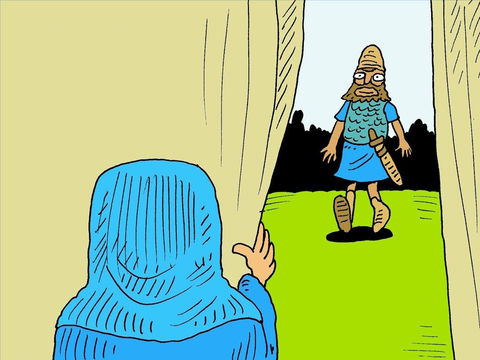
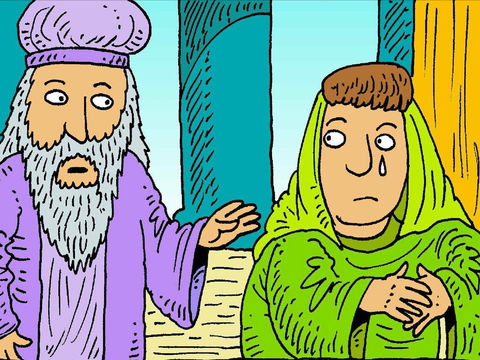
 Boaz was a prominent man in the community, having great wealth and many servants. He was also a close relative of Elimelech, Naomi’s deceased husband. Ruth had found favor with Boaz, and Naomi thought to secure Ruth’s future with him. The law of redemption allowed the nearest of kin to purchase the family land and to marry the widow of the one who owned it. Naomi instructed Ruth to secretly go to Boaz one night, with this statute in mind, and express her desire to put herself into his care. She said  to Boaz, “Take your maidservant under your wing, for you are a close relative.” She was basically asking Boaz to marry her! Boaz was glad that she came to him, and said he would be willing to take care of her, only there was a problem. There was another man who was more closely related to her than Boaz. This other man would have to decide not to redeem the land and marry Ruth if Boaz was to have a chance to do so himself. Not wanting to waste any time, Boaz got up early in the morning and went to the gate of the city to see what could be done. The decision made that day would determine what would happen to Ruth and Naomi. 

Discuss:

Richard Gunther (www.lambsongs.co.nz) | FreeBibleImages.org
  • The book of Ruth is one of  two books in the Bible that has a woman’s name in the title.
  • Consider the character and honor that Boaz displayed in the book of Ruth. What were some things that he did which reflected favorably on his character? 
  • True love always shows outgoing concern for others and does no harm. When Boaz showed concern for Ruth’s reputation and went to great lengths to protect her name. What are some other examples of true love from the book of Ruth?

Memory Challenge: 

Ruth 3:10-11

Then he said, “Blessed are you of the Lord, my daughter! For you have shown more kindness at the end than at the beginning, in that you did not go after young men, whether poor or rich. And now, my daughter, do not fear. I will do for you all that you request, for all the people of my town know that you are a virtuous woman.”


Concours Artistique pour les Jours Saints de cet automne!

Conditions et règlement officiel du concours

Avez-vous jamais rêvé d’illustrer un livre ? Vous aimez créer des bandes dessinées ? Est-ce que l’aquarelle est votre passion ? Avez-vous de l’expérience dans le domaine de la création d’images vectorielles sur tablette, ou est-ce que les bons vieux crayon de bois et papier sont plutôt votre style ?

Nous recherchons des artistes de tous âges dont les œuvres pourraient être mises en vedette dans notre édition spéciale des leçons pour les enfants des Jours saints d’automne.

Thème

Les Jours saints d’automne : Quand vous pensez aux Fêtes divines d’automne, quelle image vous vient à l’esprit ? Pensez-vous à un Israélite faisant sonner une scintillante trompette en argent devant le tabernacle ? Ou aux deux boucs le Jour des Expiations ? Ou bien imaginez-vous le lion et l’agneau pour représenter le Millénium ? Quoi qu’il en soit, préparez-vous à mettre votre créativité à profit !

Soumettez vos œuvres artistiques traitant de la Fête des Trompettes, du Jour des Expiations, de la Fête des Tabernacles et du Dernier Grand Jour. Ces œuvres peuvent représenter des symboles, des traditions religieuses, des personnages ou des scènes bibliques se rapportant aux Jours saints d’automne. Nous sommes particulièrement intéressés par tout travail de type « bande dessinée », bien que nous acceptions tout style pouvant être utilisé dans notre édition spéciale des leçons à l’attention des enfants : « Les fêtes divines automnales : Un guide d’étude pour les parents qui enseignent à leurs enfants la voie divine. »

Quel genre d’art recherchons-nous ?

alice-achterhof-85968-unsplash

Les œuvres artistiques soumises peuvent être soumises sur tout support 2D (ex. crayon à papier, encre, crayons de couleur, fusain, pastel, aquarelle, gouache ou acrylique) et réalisées sur tout support traditionnel ou électronique sont acceptées. N’oubliez pas que nous sommes à la recherche d’œuvres soignées et prêtes à être utilisées dans nos diverses publications.

Les œuvres doivent être de la plus haute qualité possible (c.-à-d. non froissées, exemptes de taches, de traces de gommage, etc.) Le cas échéant, définissez les paramètres du scanner, de l’exportation ou de l’appareil photo pour soumettre des images de haute qualité.

Qui peut y participer ?

Tous les artistes, quel que soit leur âge, sont invités à soumettre leur meilleure oeuvre qui sera répartie selon trois catégories en fonction des groupes d’âge  ci-dessous :

Groupe 1  | – de 12 ans 

Groupe 2  | 13 à 20 ans

Groupe 3  | 21 à 121 ans

Ouverture du concours & date limite

Ouverture du concours : 15 août 2019

Date limite de participation : 20 septembre 2019

Résultats affichés : 27 septembre 2019

Comment y participer

Toutes les inscriptions doivent être transmises via notre formulaire d’inscription en ligne pour le concours artistique des Jours saints de la saison automnale, qui sera tenu à la disposition des artistes à partir du 15 août. Chacun des participants doit communiquer son nom, son âge, une adresse courriel valide, sa congrégation, quelques phrases à son sujet ainsi qu’une courte description de son œuvre artistique au moment de l’inscription. Tous les artistes relevant du premier groupe doivent avoir l’approbation parentale pour y participer. Si vous n’avez pas accès à Internet ou si vous n’avez pas les moyens de créer des copies électroniques de vos œuvres d’art, n’hésitez pas à demander l’aide d’un membre dans votre congrégation locale.

Règlement officiel

1. Aucune œuvre artistique ne doit reproduire des images représentant Dieu, Jésus-Christ ou des créatures célestes.

2. Œuvre originale seulement – pas de plagiat ni de matériel protégé par des droits d’auteur.

3. Les réalisations doivent pouvoir être regardées par des enfants de moins de 12 ans.

4. L’Éducation Living se réserve le droit de rejeter les œuvres inappropriées.

5. Les artistes doivent soumettre leurs œuvres sous leur propre nom selon la catégorie d’âge appropriée.

6. Les artistes peuvent soumettre jusqu’à deux œuvres artistiques par personne. 

Avis de non-responsabilité :

La sélection d’une œuvre artistique pour le concours de l’Éducation Living sur les Fêtes divines automnales transfère à l’Éducation Living le droit d’utiliser et de modifier l’œuvre artistique à des fins éducatives et/ou de publication promotionnelle. L’Éducation Living s’engage à ce que les œuvres artistiques sélectionnées ne soient pas utilisées à des fins mercantiles.

Gagnants*

Les meilleures sélections de chacune des catégories seront insérées dans nos leçons hebdomadaires pour les enfants ou dans notre Édition spéciale – Fêtes d’automne de Dieu**. Elles seront affichées sur le blog « Actualisations » de notre site Web avec une courte biographie de l’artiste avec une description de l’œuvre artistique. Les artistes recevront un crédit de nom pour toute œuvre artistique utilisée dans nos publications. De plus, les gagnants de chaque groupe d’âge recevront un petit prix parmi nos souvenirs de l’Éducation Living.

Les œuvres artistiques recevant une mention honorable seront affichées sur le blog « Actualisations » de notre site Web ainsi qu’une courte biographie de l’artiste avec une description de l’œuvre artistique.

* Si votre œuvre artistique est sélectionnée, vous recevrez une notification par courriel. 

** Il pourrait y avoir des occasions spéciales pour des artistes exceptionnels de se joindre à notre équipe d’illustration pour le programme biblique des enfants de l’Éducation Living, pouvant impliquer de nombreux autres types de projets et d’initiatives en tout genre.


Pour de plus amples renseignements concernant les détails de ce concours, ou d’autres questions, veuillez contacter : Rebekah Ross | Living Education – Children’s Bible Program Staff [email protected] 704-708-2295 

Children’s Bible Program – Level 3: Lesson 32 “Ruth Finds Favor with Boaz”

 Featured Passage: Ruth 2

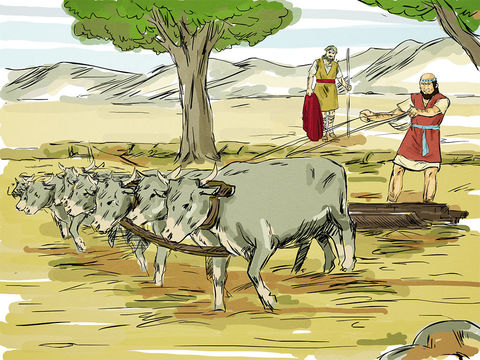
It was now up to Ruth to look after her mother-in-law. As the barley harvest began she went to a nearby grain field. Little did she know that was owned by Boaz, one of Naomi’s relatives. It was customary to let poor people pick up the leftover grain that was missed by the men who were harvesting. Ruth bent to the work, gleaning the barley, unaware that Boaz was watching. Kind-hearted Boaz asked his men who this diligent and hard-working woman was. When one of his servants explained who Ruth was, and how she had left her homeland to care for Naomi, he was deeply impressed. He spoke to Ruth, inviting her to eat and drink with his servants. He then instructed her to harvest  the barley sheaves alongside his servants. No longer would she have to pick up the leftover grain. Not only did this make her work easier, but she could collect a lot more grain in the same amount of time. Boaz took responsibility to protect her and help her, just as she had done for her aging mother-in-law. When Ruth returned home and told her about the kindness of the landowner, showing her the overflowing basket of barley, Naomi asked who the man was. When she learned that this generous, caring man was her close relative, Boaz, she understood how God’s hand had turned to favor her. 

Discuss:

Richard Gunther (www.lambsongs.co.nz) | FreeBibleImages.org
  • Ruth’s works demonstrate her character. Christ said we can know a person’s character by their fruits (Luke 6:44–45). The Bible also says that even a child is known by their deeds (Proverbs 20:11).
  • Ruth had stopped serving idols to serve the one true God. She had left everything she knew to be among the people of God. We, as Christians, must be willing to forsake everything to serve God. What does it mean for us to give up everything to serve God?  
  • The Bible says that God rewards those who diligently seek Him (Hebrews 11:6). God often does this by blessing our efforts. Ruth worked very hard, and as God promises, He blessed her efforts.

Memory Challenge:

Ruth 2:12

“The Lord repay your work, and a full reward be given you by the Lord God of Israel, under whose wings you have come for refuge.”

Fall Holy Days Art Contest!

Contest Guidelines and Official Rules

Have you ever dreamed of illustrating a book? Do you love drawing cartoons? Is watercolor your middle name? Do you have experience creating vector images on a tablet, or is good old graphite and paper more your style? 

We are looking for artists of all ages whose work could be featured in our Special Edition Children’s lessons for the Fall Holy Days. 

Français? Cliquez ici!

¿Español? ¡Haga clic aquí!

Subject

The Fall Holy Days: When you think of God’s Fall Festivals, what picture pops into your head? Do you think of an Israelite playing a shiny silver trumpet in front of the tabernacle? Or what about the two goats on the Day of Atonement? Or perhaps you imagine the lion and the lamb to represent the Millenium? Whatever it may be, get ready to put your creativity to good use! 

Submit your artwork relating to the Feast of Trumpets, the Day of Atonement, the Feast of Tabernacles, and the Last Great Day. Artwork can depict symbols, church traditions, characters, or Biblical scenes relating to these Fall holy days. We are especially interested in cartoon-style work, although we will accept any style acceptable to be used with our Special Edition Children’s lessons publication, “God’s Fall Festivals: A Study Guide for Parents Teaching their Children God’s Way”.

What kind of artwork are we looking for?

alice-achterhof-85968-unsplash

Submitted artwork can be prepared in any 2-D medium (e.g. graphite, ink, colored pencils, charcoal, pastels, watercolor, paint,). Artwork done in either traditional or electronic medium will be accepted. Keep in mind that we are looking for artwork that is neat, and ready to use in our various publications.

Submissions should be the highest quality you are able to provide (i.e. free of wrinkles, stains, eraser markings, etc.). If applicable, set scanner, export, or camera settings to submit high-quality images. .

Who is eligible?

Artists of any age are invited to submit their best work. Artwork will be evaluated in three categories based on three age groups.

Group 1  | 12 and under 

Group 2  | 13 – 20 yrs 

Group 3  | 21 – 121 yrs

Contest Dates/Deadlines

Contest Opens: August 15, 2019

Last day for entries: September 20, 2019

Results Posted: September 27, 2019

How to Enter

All entries must be submitted to our online Fall Holy Days Art Contest Entry Form which will be made available for artists on Aug 15. All artists must provide their name, age, a valid email address, congregation, a few sentences about themselves, and a short description of their artwork along with their submission. Artists submitting work for Group 1 will need their parents approval to enter. If you don’t have internet access or a means of creating electronic copies of your artwork, perhaps ask someone in your local congregation for assistance.

Official Rules

  1. No artwork with depicted images of God, Jesus Christ, or heavenly creatures
  2. Original work only – no plagiarism or copyrighted material 
  3. Images must be appropriate for viewing by children ages 12 and under
  4. Living Education reserves the right to reject submissions containing inappropriate content.
  5. Artists must submit their work under their own name in their appropriate age category
  6. Artists may submit up to two pieces of artwork each  

Disclaimer: 

Submitting artwork for the Living Education Fall Holy Days Art Contest transfers to Living Education the right to use and modify artwork for the purpose of education, and/or promotional publication.  Living Education agrees that any submitted artwork will not be used for any purposes of financial gain. 

Winners*

The top selections from each category will be used in our weekly Children’s Lessons or in our Special Edition – God’s Fall Festivals packet**. It will be displayed on our website’s “Updates” blog along with a short biography of the artist and a description of the artwork. Artists will receive name credit with any artwork used in our publications. Also, winners of each age group will receive a small prize from our Living Education memorabilia. 

Artwork which receives honorable mention will be displayed on our website’s “Updates” blog along with a short biography of the artist and a description of the artwork.

*If your artwork is selected, you will receive notification by email. 

** There may be special opportunities available for outstanding artists to join our illustration team for the Living Education Children’s Bible Program which may involve many different types of projects and initiatives.


For more information on the guidelines of this contest, or for other questions contact:

Rebekah Ross  | Living Education – Children’s Bible Program Staff

[email protected]

704-708-2295


Children’s Bible Program – Level 3: Lesson 31 “Ruth in the Land of Judah”

 Ruth 1-2

Ruth and Naomi arrived in Bethlehem of Judea during the spring at the beginning of the barley harvest. Naomi was well known in Bethlehem and when the people saw that Naomi had returned they were excited! Naomi told them that she was mourning. She no longer had a husband to take care of her. But, she had Ruth! God has a statute that allows the poor to gather produce that the reapers leave in the fields during harvest time. Ruth decided that she would glean in the fields to support her mother-in-law. Gleaning was very hard work  but each day Ruth walked to the fields where she toiled from sunrise to sunset gathering what the reapers had left. Ruth worked very hard to take care of Naomi, and people began to notice.

Discuss:

Richard Gunther (www.lambsongs.co.nz) | FreeBibleImages.org
  • Ruth and Naomi arrived in Bethlehem during the barley harvest. The wavesheaf offering during the Days of Unleavened Bread marked the beginning of the barley harvest which always occurs in the spring (Leviticus 23:10–14).
  • God’s law includes statutes to provide for the needs of the poor, yet the poor are still expected to work. How is this different than the way different governments take care of the poor people today? 
  • What are some of the ways Ruth displayed diligence?

Memory Challenge: 

Ruth 1:22  

So Naomi returned, and Ruth the Moabitess her daughter-in-law with her, who returned from the country of Moab. Now they came to Bethlehem at the beginning of barley harvest.

Children’s Bible Program – Level 3: Lesson 30 “Ruth the Moabitess”

Featured Passage: Ruth 1

The book of Ruth is a story of friendship, commitment, adversity, triumph and true love. The setting is in the time of the judges. Israel had turned her back on God, so He brought a famine upon the land to punish them for their rebellion. A man named Elimelech, along with his wife Naomi and sons Mahlon and Chilion, left their home in Bethlehem, and traveled to neighboring Moab in hopes of escaping the famine. But hard times followed them. First, Elimelech died, leaving Naomi a widow. Then after ten years of marriage, Naomi’s sons Mahlon and Chilion died, leaving both of their young wives without a husband. All three women face a hopeless situation, as widows without the  protection of a husband or father. One of Naomi’s daughter-in-laws, Ruth, rises to the occasion, and gives us an example of love and service that continues to inspire us today.  

Discuss:  

Richard Gunther (www.lambsongs.co.nz) | FreeBibleImages.org
  • The Moabites were descendants of Lot, Abraham’s nephew. Also, the Moabites opposed the children of Israel when they left Egypt, and there was a history of animosity between the two peoples (Deuteronomy 23:3–6).
  • During the time of Ruth, women depended on their husbands or sons to protect them. Ruth knew that Naomi had neither so she volunteered to take on that role.
  • Ruth showed great respect, love, and commitment to her mother-in-law  She also courageously made a huge sacrifice to leave everything familiar to her to go to a place where she might not be accepted because she was a Moabitess. What do you think it was like for Ruth to make that decision? 

Memory Challenge: 

Ruth 1:16  

But Ruth said: “Entreat me not to leave you, or to turn back from following after you; for wherever you go, I will go; and wherever you lodge, I will lodge; your people shall be my people, and your God, my God.”

Children’s Bible Program – Level 3: Lesson 29 “Pentecost and God’s Plan of Salvation”

Photo by rawpixel on Pixabay

Read Together: Before time began, God, who became the Father, and the Word, who became Jesus Christ, planned to have a family. The plan was to create human beings in God’s image and place them on the earth where they could learn to choose God’s way and develop godly character. God recognized that under the influence of Satan the devil, mankind would choose to sin, but He had a plan for that as well. Most of humanity, including those who profess Christianity, do not understand God’s plan, but we can. Through His Holy Days, God has revealed His plan to redeem mankind and offer every human being an opportunity for eternal life. The first step in God’s plan, Passover, has already been fulfilled. The Word was born as a human to pay for the sins of mankind by dying for His creation. Pentecost teaches us that God will begin to work with a small number of people through the power of His Holy Spirit. It pictures a harvest of the few that God is working with now who will one day assist Christ in the millennium. Jesus Christ was resurrected from the dead and is now our High Priest awaiting the time when He will return to the earth as King of kings. The firstfruits will be the kings who will rule with Christ in the future.

Read Together: Leviticus 23:15–21; 1 Peter 1:18–21; Revelation 13:8; John 1:29, 36; 1 Corinthians 5:7; Hebrews 4:14–15; Revelation 14:3–4; 17:14.

Discuss:

  • God’s plan to have a family is a central theme throughout the Holy Scriptures. Much of the Bible is a history of what God has done, is doing, and will do to bring about His plan.
  • Ask your child explain the meaning of the first three Festivals in God’s plan of salvation.
  • God gives understanding to those who do what He says (Psalm 111:10). Obedience comes before understanding. Use as an example Mr. Armstrong keeping the Holy Days before God revealed their meaning. Explain that we may not understand everything now (1 Corinthians 13:12).

Children’s Bible Program – Level 3: Lesson 28 “Samuel – The Last Judge”

Read Together: Samuel had an uncommonly fascinating beginning.  Hannah was childless. In her sorrow, she prayed to God for a child, vowing that she would dedicate him to God. God heard her prayer and Samuel was born. When Samuel was weaned, his mother took him to live and serve in the tabernacle with Eli the priest. God spoke to Samuel while he was yet a child, and it became clear that God had chosen Samuel to be a prophet. After Eli’s death, Samuel judged throughout the land of Israel. When Samuel grew old, he appointed his sons as judges to assist him. But his sons were evil, and did not follow in his footsteps. The people revolted against Samuel, and demanded a king. This was disconcerting to Samuel after all his years of faithful service, but God reassured him. The truth was that they had rejected God – not Samuel.  With God’s approval, Samuel anointed two kings of Israel—Saul and David. It was Samuel’s leadership that helped Israel transition from a theocracy that was managed by judges under God to one in which the people were subjects of a king. Samuel, the last judge of Israel, lived in very exciting times, and his story is recorded in the Scriptures, waiting to inspire you.

Richard Gunther (www.lambsongs.con.nz) | FreeBibleImages.org

Read Together: 1 Samuel 1–10;16:1–13; 25:1.

Discuss:

  • What might it have been like for Samuel to grow up serving in the tabernacle from the time he was about four years old? God can use people no matter their age if they are willing to serve. What are some ways you might be able to serve in the congregation?
  • The sons of Eli and Samuel had great opportunities because of their fathers, but they threw them away. Explain to your child that they also have great opportunities as a young person in God’s Church.
  • Even though Israel demanded a king, God chose who would be king. There was no voting. This may be a good opportunity to discuss different forms of human government and how they differ from God’s form of government.
  • Samuel lived in very exciting times. As you read through the entire book of 1 Samuel, have your child identify their favorite scene, character, and miracle in the book.

Review Memorization:

Judges 21:25  “In those days there was no king in Israel; everyone did what was right in his own eyes.”

Children’s Bible Program – Level 3: Lesson 27 “Gideon”

Read Together: When we read about Gideon in the book of Judges, we see that, once again, the children of Israel were in trouble. Year after year, the Midianites swarmed across the land of Israel. These nomadic people would set up their camps, allowing their camels and livestock to roam over the land, eating all the crops of the Israelites, leaving nothing. The children of Israel were left with no food for themselves. They hid in caves to escape the Midianites, with no food and no hope. Finally, they cried out to God to deliver them. The story of what happened next is one of the most amazing stories of bravery in the whole book of Judges. God used Gideon and 300 men to save Israel from the Midianite hordes. Read on to learn how!

Sweet Publishing | FreeBibleImages.org

Read Together:  Judges 6-8

Discuss:

  • Did Gideon blame God for Israel’s problems (Judges 6:13)? Explain that people often blame God, but it is usually because of sin that bad things happen. To help illustrate this point, you may want to select an appropriate news story and discuss how the calamity is a result of sin.
  • God does not leave people unaware of their sins and its consequences (Judges 6:8–10). Why did God allow the Midianites to terrorize Israel? Discuss the Church’s role in warning modern day Israel.
  • Why did God have Gideon send all but 300 warriors home?
  • Discuss with your child how Gideon tested God. God was very patient with Gideon by doing as he asked in order to help Gideon to trust Him.
  • The people wanted to make Gideon their king. What was Gideon’s response?

Review Memorization:

Judges 21:25  “In those days there was no king in Israel; everyone did what was right in his own eyes.”

Children’s Bible Program – Level 3: Lesson 26 “Deborah the Prophetess – Judge of Israel”

Read Together:  In Judges 4, we read that God chose a woman, Deborah, to judge Israel for a period of time. She was well prepared when God called her to be a prophetess and a judge because she knew God’s laws and was wise in their execution.  God told Deborah to send for Barak and tell him to fight against their oppressors – Jabin, king of Canaan and Sisera, the commander of his army. Barak responded that he would only go if Deborah went with him. Though Deborah knew women did not normally fight in war she agreed to go, but Barak would have to sacrifice the glory of the victory to a woman. God gave them the battle plan which they executed with precision. Barak along with ten thousand troops from Napthali and Zebulun soon had Sisera and his troops on the run. They killed them all, but Sisera escaped from the battle to the tent of Jael, a woman whom he thought was an ally. While Sisera slept, she drove a tent peg through his head, and Jael became the heroine of the battle instead of Barak just as Deborah had said. This marked the end of Jabin’s oppression, and Israel had peace for forty years. Yet after all this, Israel again turned to her evil ways.

John Paul Stanley/ YoMinistry.com | FreeBibleImages.org

Read Together:  Judges 4:1 – 6:1

Discuss:

  • Discuss with your child the role of a prophet(ess) and the role of a judge.  What is the role of women in the Church government structure? (See Ephesians 4:11.)
  • Speculate with your child why God might have called a woman to judge Israel at that time.  Perhaps she was the best qualified. Remember, God is not a respecter of persons (Romans 2:11).
  • Point out to your child that Deborah is not the only prophetess referred to in the scriptures(See Exodus 15:20; 2 Kings 22:14; Isaiah 8:3; Luke 2:36).
  • Ask your child why they feel Barak wanted Deborah to go with him to war. Was Barak’s bravery in question? Remember, Barak is listed in the faith chapter of Hebrews 11
  • Explain to your child that those born into the family of God are neither male nor female (Galatians 3:28).  Everyone will have equal opportunity to serve in the Kingdom of God and and be rewarded based on your works (Matthew 16:27).

Review Memorization:

Judges 21:25  “In those days there was no king in Israel; everyone did what was right in his own eyes.”