Children’s Bible Program – Level 1: Lesson 23 “The Passover and the Death of the Firstborn”

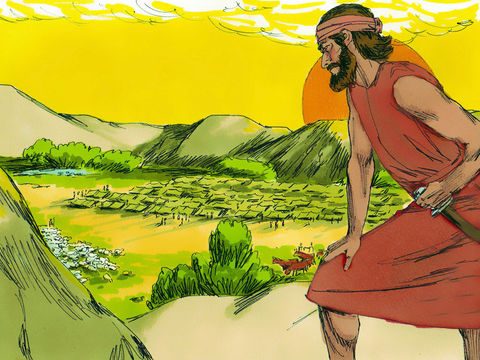
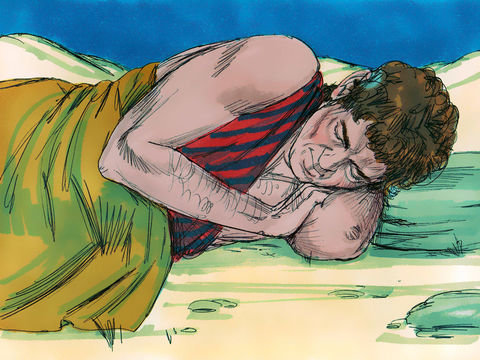
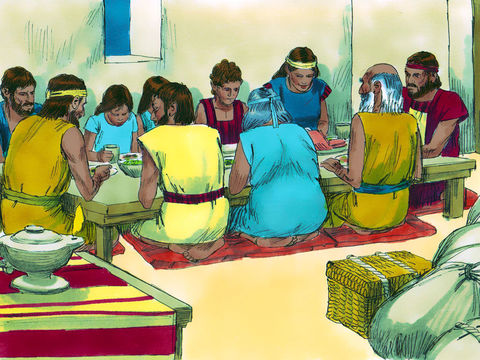
Read Together: After God sent the first nine plagues on the Egyptians, the crops had been destroyed, most of the livestock was dead, and Egypt was suffering. But Pharaoh would still not let the Israelites go free. God decided to bring one more plague on Egypt. This plague would be so great that Pharaoh would demand that Israel leave Egypt. God was going to put to death the firstborn of man and beast in all of the land of Egypt. However, God planned a way to save the Israelites. God told Moses to have each Israelite family select a perfect lamb from their herd. Four days later, just after sunset, they were commanded to kill the lamb, placing its blood on the doorposts of their home. Then, they were commanded to roast and eat it. Every home that had blood on the doorway of their home was protected from the last plague. The Egyptian homes, with no blood on their doorways, would suffer the death of their firstborn as the death angel passed over their house.
Sweet Publishing | FreeBibleImages.org

This was a dramatic and terrifying night. Throughout Egypt, many people died. But the Israelites were kept safe by the protection of God, and the blood of the lamb. And they were released from their Egyptian taskmasters, as the Pharaoh commanded the Israelites to leave Egypt.  

God commanded Israel to remember what had happened in Egypt, how He had protected the children of Israel, and to keep it as a memorial forever. That is why the name of this memorial is Passover. The Passover lamb pictured the sacrifice that Jesus Christ would make by shedding His blood for the salvation of all mankind. The Church of God still observes the Passover every year as God commanded, but with bread and wine instead of a Passover Lamb.

Read Together: Exodus 11:1; 12:1–14, 24–30; John 1:29; Mark 14:14, 22–24

Discuss:

  • Help your child to understand that every household in Egypt was affected by the tenth plague. Help them identify all the people in their family who are firstborn.
  • Ask what would happen if an Israelite family did not obey Moses’ instructions.
  • Ask your child to explain why this memorial is called Passover.
  • Discuss what it might be like to have a lamb living in in your house for four days. Explain that the sacrifice of the lamb was symbolic of Jesus Christ’s future sacrifice.
  • Explain to your child that the Church of God still keeps the Passover, but with different symbols which Christ taught. Help them understand what the new symbols(wine and bread) represent.

Review Memorization:

The Ten Plagues:  (1) Waters turned to blood, (2) Frogs, (3) Lice, (4) Flies, (5)Animals die, (6) Boils, (7) Hail, (8) Locusts, (9) Darkness, (10) Death of the Firstborn

Children’s Bible Program – Level 3: Lesson 24 “The Wave Sheaf—First of the Firstfruits”

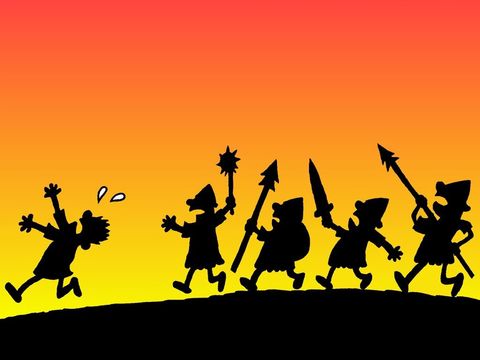
Read Together: Unleavened Bread always occurred during the barley harvest which was the first of the grain harvests in Israel. God told the Israelites to perform the “wave sheaf” offering each year during the Days of Unleavened Bread. The priests went to the fields as the Sabbath during Unleavened Bread was ending. As the sun was setting, they cut a sheaf of barley and saved it for the ceremony the next day. On the first day of the week, after the Sabbath at about 9:00 am, the priests waved the sheaf of barley as an offering before God. The day when the Wave Sheaf was offered is not a holy day, but it is a ceremony packed full of meaning for Christians. Our Savior, Jesus Christ, was crucified on Passover in 31CE, which was a Wednesday. He was resurrected from the dead exactly three days and three nights later, which was at the end of the Sabbath during the Days of Unleavened Bread, the same time that the grain was cut. The next day, as the priests waved the sheaf before God, Christ ascended to His Father in heaven to offer Himself as the true Wave Sheaf offering. Jesus Christ fulfilled the meaning pictured by the wave sheaf; He became the first of God’s spiritual harvest, the “First of the firstfruits”. He is the firstborn of many brethren. Christ has the preeminence in all things. He is proof that we too can be firstfruits and be born into God’s family as His very own children.

Read Together: Leviticus 23:9–14; Matthew 12:40; John 20:1, 9, 15–17; 1 Corinthians 15:20–23; Romans 8:29–30.

Discuss:

  • Discuss what the Bible says about the “wave sheaf” in Lev 23.
  • Help your child to create a time chart of the events during the Days of Unleavened Bread in 31 CE. Start with Jesus and the disciples keeping the Passover the Tuesday evening before the crucifixion and ending with His ascension to the Father on Sunday. Count three days and three nights. Christ was in the grave during this time. The chart will help show that He could not have been crucified on Friday and resurrected on Sunday at sunrise as most professing Christians believe. Note that Christ was not in the tomb when Mary Magdalene got there while it was still dark (the sun had not risen).
  • Explain to your child in words he/she can understand that a Christian’s hope is in the resurrection. Our destiny, his/her destiny, is to be born as a spirit being into God’s family.

Review Memorization.

Romans 5:10  “For if when we were enemies we were reconciled to God through the death of His son, much more, having been reconciled, we shall be saved by His life.”

Children’s Bible Program – Level 3: Lesson 25 “The Time of the Judges”

by Janth English

Read Together: God chose Moses to bring Israel out of Egyptian slavery and to the Promised Land. He then chose Joshua to lead the people into that land and divide their inheritance among the tribes. God chose judges, or leaders, to teach the people His laws and to judge matters that came up according to those laws. Israel was obedient to God for as long as Joshua and the elders that he trained lived. However, after the generation who saw God’s works in the wilderness died, the people began to turn away from God. They wanted to be like the peoples around them, copying their ways and customs. To punish the Israelites for their disobedience, God sent these nations against them. Time after time, Israel suffered under the cruel hand of their enemies. When they cried out to God for relief, he mercifully sent a judge to save them. After a few years of peace, Israel would forget the God who saved them and return to their foreign idols. Again, God would remove His protection and the neighboring nations would invade the land of Israel. For many generations, the people of Israel followed their own rebellious heart, doing what was right in their own eyes.  

Richard Gunther: gunther.net.nz | FreeBibleImages.org

Read Together:  Exodus 3:6-10; Deuteronomy 31:7; 1 Samuel 12:12; Judges 2:6-23, 21:25

Discuss:  

  • Discuss with your child God’s criteria for leadership positions (See Exodus 18:21 and Titus 1:7-8). God’s standards have not changed, and they will not change. Remind your child that they are training now for future leadership positions.
  • Discuss with your child Israel’s desire to be like the people around them.  Do we sometimes fall into the same trap? What was the result for Israel? What would be the result for us if we do the same thing?
  • Point out to your child how God showed mercy to Israel time and again.  Help them to see that God’s mercy is forever.
  • Discuss with your child the consequences of everyone doing what they think is right. What happens when my thoughts and your thoughts are not in agreement? What happens in society when there are no absolute standards?

Review Memorization.

Judges 21:25 “In those days there was no king in Israel; everyone did what was right in his own eyes.”


Children’s Bible Program – Level 1: Lesson 24 “The Exodus and the Days of Unleavened Bread”

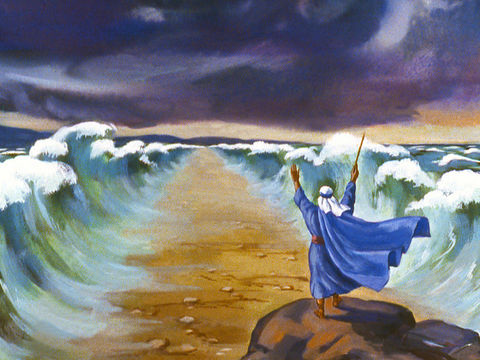
Read Together:  The Lord told Israel to be prepared to leave when they ate the Passover. He knew that Pharaoh would tell the Israelites to get out of Egypt after the death of their firstborn children. The Egyptians also wanted the Israelites to go away.  Before leaving, the Israelites asked the Egyptians for gold, clothing, and things of value, and the Egyptians gave it to them. To prepare for the journey, the people were organized according to their families and tribes, and their armies. Other non-Israelites who had believed Moses and escaped the tenth plague joined with Israel to leave and serve the true God. God also at this time established the Days of Unleavened Bread to commemorate His deliverance of the children of Israel from Egypt. For seven days, Israel was commanded to eat unleavened bread and not have any leavened food in their homes. The night they left Egypt was to be remembered forever as a night of solemn observance. They had to leave so quickly that they did not have time to let their bread rise, so they only had unleavened bread to eat which was in keeping with God’s command. God’s people continue to keep the Feast of Unleavened Bread and the Night to Be Observed as ordained by God. Israel left Egypt with their flocks and their herds, with their silver, gold, and clothing; they left with a high hand. However, God had one more judgment to pass on Egypt. Pharaoh’s heart was hardened  and he sent his army to capture Israel and bring them back. With the army coming, mountains on both sides, and the Red Sea at their backs, Israel thought they were trapped, but God opened a path on dry land through the sea for Israel to escape. When Pharaoh’s army attempted to follow the Israelites through the Red Sea, God caused the waters to come over them, and they drowned. God’s judgment was complete just as He had promised Abraham long ago.

Moody Publishing | FreeBibleImages.org

Read Together: Exodus 12–14

Discuss:

  • Ask your child how it would feel to walk on dry ground with walls of water as tall as skyscrapers on either side.
  • Help your child to understand that it was God who delivered Israel.
  • Help your child think about the miracles God worked to free Israel. God destroyed their economy, devastated their military, and reduced their status as a nation.  Egypt has never recovered to the status they had before God’s judgment on them.
  • Ask your child what he knows about keeping the Days of Unleavened Bread.

Review Memorization:

The Ten Plagues: (1) Waters turned to blood, (2) Frogs, (3) Lice, (4) Flies, (5) Pestilence on the Livestock, (6) Boils, (7) Hail, (8) Locusts, (9) Darkness in the land, (10) Death of the Firstborn

Children’s Bible Program – Level 2: Lesson 24 “Eating Unleavened Bread—Putting on Righteousness”

Read Together: God told ancient Israel that they were to put out all leavening from their homes, and He also instructed them to eat unleavened bread for seven days. The first and seventh days were to be holy convocations.God’s people continue to observe the Feast of Unleavened Bread by eating unleavened bread for seven days and celebrating the first and seventh days as Holy Days. These days have important meanings in God’s plan for mankind. Passover commemorates Christ’s sacrifice in payment of our sins. The Days of Unleavened Bread picture our effort to put sin out of our lives and replace it with living according to God’s ways. We don’t just avoid doing bad things. We must fill our lives wit good actions, just like our elder brother Jesus Christ.

Read Together:  Exodus 12:14–17; Leviticus 23:6–8; Ephesians 4:22–24; John 6:47–51; Galatians 2:20; 2 Timothy 3:16–17; Philippians 1:6; Hebrews 12:2

  • Discuss with your child the biblical meaning of righteousness. Read and discuss Psalm 119:172 together.
  • Remind your child that the Feast of Unleavened Bread is the only one that has two Holy Days and that Passover is a separate feast but it is not a Sabbath.
  • Ask your child to summarize the meaning of the Passover and Days of Unleavened Bread, the first two steps in God’s plan of salvation.

Discuss:

Review Memorization.

1 Corinthians 5:7  “Therefore purge out the old leaven, that you may be a new lump, since you truly are unleavened. For indeed Christ, our Passover, was sacrificed for us.”

Children’s Bible Program – Level 2: Lesson 25 “Jacob and Esau”

By Janth English

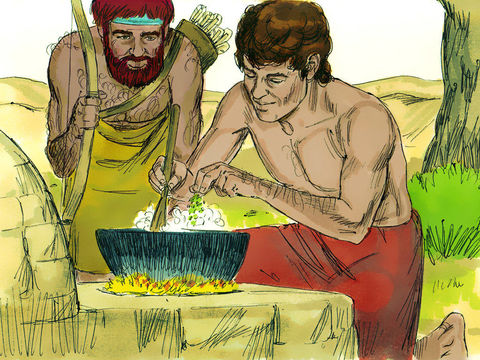
Read Together:  Isaac and Rebekah lived many years before they had children, but God finally blessed them with twin sons, Jacob and Esau. They were twins, but never were two people more different. Esau was hairy, but Jacob had smooth skin. Esau was a skillful hunter, but Jacob was a mild-mannered shepherd. One day Jacob was cooking lentil stew when Esau came from the fields. He had been hunting and was very hungry. Jacob offered his brother some stew in return for his “birthright blessing”. Esau agreed. Jacob seems quite devious, talking his brother out of his birthright. Remember this, however; Esau cared more about his hunger than his birthright. Many years later, an elderly Isaac decided it was time to bestow a final blessing upon each of his sons. His plan was to give the greater blessing to Esau and a lesser blessing on Jacob, because Esau was his favorite son. Since Rebekah’s favorite son was Jacob, she hatched a plot that would have the greater blessing go to him! This lesson’s reading reveals what happened when their plan unfolded. Though the Bible reveals how weak and deceitful people can be, God’s purpose to establish a nation is still revealed. We’ll learn more about that later.

Sweet Publishing | FreeBibleImages.org

Read Together:  Genesis 25:19-34; 27:1-41

Discuss:

  • Discuss with your child the ethics of this situation. Since God had chosen Jacob to inherit the promises He made to Abraham and Isaac, was it wrong for Jacob and his mother to use trickery in getting them?
  • Discuss with your child the fact that Isaac intended to give the blessings to Esau. Think of a few ways that God could have prevented Isaac from giving the blessings to Esau. Can any human cause God’s plans to fail (Isaiah 46:9-10)?
  • Jacob was his mother’s favorite son and Esau his father’s. Ask your child what happens in a family when individual members are shown favoritism.
  • Help your child understand that God chooses individuals for His purpose at His time. Explain that God did not choose Jacob because he was somehow “better” than Esau. This principle applies to those who are called now as well.

Review Memorization Genesis 27:29 “Let peoples serve you, and nations bow down to you. Be master over your brethren and let your mother’s sons bow down to you. Cursed be everyone who curses you, and blessed be those who bless you.”


Children’s Bible Program – Level 1: Lesson 25 “Abram Leaves for Canaan”

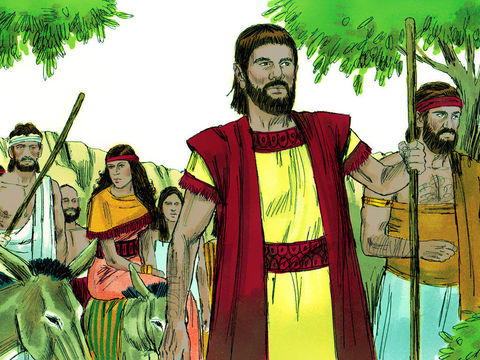
Sweet Publishing | FreeBibleImages.org

By Janth English

Read Together:  Abram was born in the city of Ur in Chaldea which was near the Middle Eastern country of modern day Iraq. He was the son of Terah, who was a descendant of Shem. Shem was one of the three sons of Noah, and lived through the Flood. Abram married his very beautiful half-sister Sarai, but they had no children. Terah left Ur for Canaan and took Abram, Sarai, and Lot, his grandson, with him. For a period of time, Terah and his family lived in Haran, where the Bible tells us that Abram became a very wealthy man. He had gold, silver, livestock and many servants. In time, Terah died, leaving Abram as the leader of the family. His life would change dramatically, however, when, God told Abram to take Sarai and leave Haran. Where was he supposed to go? God told Abram that He would guide him to the right place. In return for his obedience, God promised to make Abram a great nation and to bless all nations through him. At this point in his life, Abram was already 75 years old and had a home and great wealth in Haran. He made the right decision, however, and obeyed God. He took his wife, his nephew Lot, all their possessions and left Haran just as God commanded.

Read Together:   Genesis 11:26-32; 12:1-9.

Discuss:

  • Show your child where Abram lived and where he traveled   (There are many maps available over the Internet.) Talk about how different it would have been to travel over long distances in those days, in comparison to today. People walked and used animals like camels to travel instead of cars!
  • Help your child to understand what Abram was willing give up in order to obey God. For Abram and his family, Haran was home. Yet God asked them to leave everything they knew behind.
  • Explain to your child that it took faith for Abram to obey God.  All he had was God’s word to believe that things would work out.

Review Memorization.

Genesis 22:18. “In your seed all the nations of the earth shall be blessed, because you have obeyed My voice.”


Children’s Bible Program – Level 3: Lesson 26 “Deborah the Prophetess – Judge of Israel”

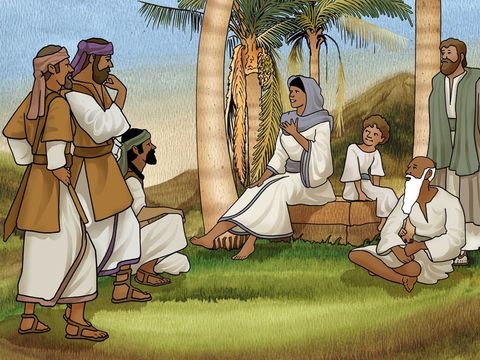
Read Together:  In Judges 4, we read that God chose a woman, Deborah, to judge Israel for a period of time. She was well prepared when God called her to be a prophetess and a judge because she knew God’s laws and was wise in their execution.  God told Deborah to send for Barak and tell him to fight against their oppressors – Jabin, king of Canaan and Sisera, the commander of his army. Barak responded that he would only go if Deborah went with him. Though Deborah knew women did not normally fight in war she agreed to go, but Barak would have to sacrifice the glory of the victory to a woman. God gave them the battle plan which they executed with precision. Barak along with ten thousand troops from Napthali and Zebulun soon had Sisera and his troops on the run. They killed them all, but Sisera escaped from the battle to the tent of Jael, a woman whom he thought was an ally. While Sisera slept, she drove a tent peg through his head, and Jael became the heroine of the battle instead of Barak just as Deborah had said. This marked the end of Jabin’s oppression, and Israel had peace for forty years. Yet after all this, Israel again turned to her evil ways.

John Paul Stanley/ YoMinistry.com | FreeBibleImages.org

Read Together:  Judges 4:1 – 6:1

Discuss:

  • Discuss with your child the role of a prophet(ess) and the role of a judge.  What is the role of women in the Church government structure? (See Ephesians 4:11.)
  • Speculate with your child why God might have called a woman to judge Israel at that time.  Perhaps she was the best qualified. Remember, God is not a respecter of persons (Romans 2:11).
  • Point out to your child that Deborah is not the only prophetess referred to in the scriptures(See Exodus 15:20; 2 Kings 22:14; Isaiah 8:3; Luke 2:36).
  • Ask your child why they feel Barak wanted Deborah to go with him to war. Was Barak’s bravery in question? Remember, Barak is listed in the faith chapter of Hebrews 11
  • Explain to your child that those born into the family of God are neither male nor female (Galatians 3:28).  Everyone will have equal opportunity to serve in the Kingdom of God and and be rewarded based on your works (Matthew 16:27).

Review Memorization:

Judges 21:25  “In those days there was no king in Israel; everyone did what was right in his own eyes.”

Children’s Bible Program – Level 3: Lesson 27 “Gideon”

Read Together: When we read about Gideon in the book of Judges, we see that, once again, the children of Israel were in trouble. Year after year, the Midianites swarmed across the land of Israel. These nomadic people would set up their camps, allowing their camels and livestock to roam over the land, eating all the crops of the Israelites, leaving nothing. The children of Israel were left with no food for themselves. They hid in caves to escape the Midianites, with no food and no hope. Finally, they cried out to God to deliver them. The story of what happened next is one of the most amazing stories of bravery in the whole book of Judges. God used Gideon and 300 men to save Israel from the Midianite hordes. Read on to learn how!

Sweet Publishing | FreeBibleImages.org

Read Together:  Judges 6-8

Discuss:

  • Did Gideon blame God for Israel’s problems (Judges 6:13)? Explain that people often blame God, but it is usually because of sin that bad things happen. To help illustrate this point, you may want to select an appropriate news story and discuss how the calamity is a result of sin.
  • God does not leave people unaware of their sins and its consequences (Judges 6:8–10). Why did God allow the Midianites to terrorize Israel? Discuss the Church’s role in warning modern day Israel.
  • Why did God have Gideon send all but 300 warriors home?
  • Discuss with your child how Gideon tested God. God was very patient with Gideon by doing as he asked in order to help Gideon to trust Him.
  • The people wanted to make Gideon their king. What was Gideon’s response?

Review Memorization:

Judges 21:25  “In those days there was no king in Israel; everyone did what was right in his own eyes.”

Children’s Bible Program – Level 2: Lesson 26 “Jacob Flees to Padan Aram”

Sweet Publishing | FreeBibleImages.org

Read Together:  Esau despised Jacob for tricking him, and Rebekah, their mother, discovered his plot to kill him. Rebekah advised Jacob to go to her brother Laban’s home and stay there until Esau had calmed down. Now Isaac and Rebekah were not pleased that Esau had taken Hittite women as wives, so Isaac told Jacob to take a wife from his uncle’s daughters in Padan Aram. Jacob set out from Canaan to the land of Haran with nothing but his staff. On his way, Jacob stopped for the night, and he had a very strange dream while sleeping under the stars. He dreamed there was a ladder that reached from heaven to the earth with angels going up and down. God spoke to him in the dream and gave Jacob the same promises that He had made to Abraham and Isaac. God promised to give him the land of Canaan and to multiply his descendants.  God promised to be with him and to bring him back safely to the land. Jacob was filled with awe! He anointed the stone where he slept and called the place Bethel, which means house of God. For his part of the covenant, Jacob promised to obey God and to tithe to Him. Jacob completed his journey, arriving at his uncle Laban’s home in Padan Aram.

Read Together:  Genesis 27:41-46; 28:1-22; 29:1-13

Discuss:

  • Esau was very angry with Jacob and thought to kill him.  Discuss with your child how thoughts become actions, and we must learn to control our thoughts.  One strategy is to replace bad thoughts with good ones; we can also pray for anyone we may have bad thoughts about. How could Esau apply this?
  • Explain to your child that most dreams do not have any meaning; they are just dreams. Jacob’s dream was special and God caused him to understand that.
  • Discuss with your child what a tithe is.
  • Remind your child that Haran is the place where Abraham and Sarah lived before their sojourn in Canaan; it is near modern day Syria. Laban was Rebekah’s brother, but he was also the son of Abraham’s nephew Bethuel.
  • Point out to your child that Bethel is an important place in biblical history and that we will hear more of it in future Bible studies.

Review Memorization:

Genesis 27:29 “Let peoples serve you, and nations bow down to you. Be master over your brethren and let your mother’s sons bow down to you. Cursed be everyone who curses you, and blessed be those who bless you.”