Children’s Bible Program- Level 1: Lessons 17-20 Packet: Nations and Babel
Includes the lessons:
- Lesson 17 “Families Grew into Nations”
- Lesson 18 “Nimrod”
- Lesson 19 “The Tower of Babel”
- Lesson 20 “God Confuses the Language”

Includes the lessons:
Includes the lessons:
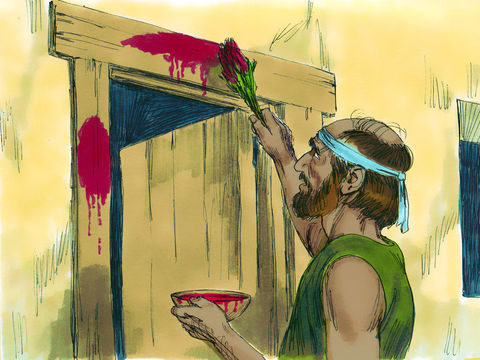
Read Together: God gave ancient Israel instructions concerning Passover observance. On the tenth day in the first month of the year, each family was told to select a special, Passover lamb. This lamb was to be perfect, without any blemishes at all. Four days later, as the 14th day of the first month was just beginning at sunset, they were required to kill the lamb, cook it, and eat it as part of a special Passover meal, putting some of the blood of the lamb on their doorway. Those who did this would be protected from the death angel, who would kill all the firstborn in the land, except those in houses with the blood of the lamb on their doorway. Every year after that, the Israelites were commanded to eat a Passover meal on this same night and remember how God had spared them from the death of the firstborn in their home. But this Passover lamb also symbolized something more. All humans are under the threat of death because we all have sinned, and death is the penalty for sinning against God. We may not have the death angel passing over us, but we still are subject to death for our sins. Instead of a Passover lamb, however, we have Jesus Christ. Christ was the perfect sacrifice who was willing to become a human being and then die for our sins, protecting us from death, just as the blood of the lamb on the doorway protected the Israelites. Before Christ died, He taught His disciples that they should think of the Passover as a yearly reminder of His sacrifice for them, and to drink a small cup of wine and eat a small piece of unleavened bread instead of cooking a lamb. These new symbols were taught to the church by the disciples. Since that time, the faithful people of God through history have continued to remember Christ’s sacrifice every year at the Passover, just as the Israelites remembered the Passover every year. They were released from their Egyptian taskmasters, while we are released from the grasp of Satan and sin.
Read Together: Exodus 12:3–8, 43–47; Leviticus 23:4–5; Romans 3:23; 6:23; Hebrews 10:4; John 1:1–3; Luke 1:35; Matthew 1:23; Philippians 2:5–8; John 10:17–18; 3:16; 1:29.
Discuss:
Review Memorization:
1 Corinthians 5:7 “Therefore purge out the old leaven, that you may be a new lump, since you truly are unleavened. For indeed Christ, our Passover, was sacrificed for us.”
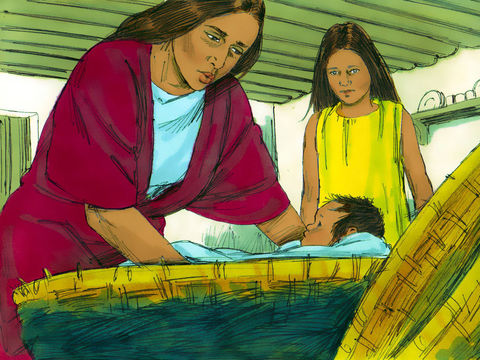
Read Together: The descendants of Abraham, now called the children of Israel, were living as slaves in the land of Egypt just as God had foretold. Pharaoh, the ruler of Egypt, commanded that all infant boys be killed, but Amram and Jochebed wanted to save their newborn son. Jochebed placed her son in a basket of reeds and put him in the river to be protected from the Pharaoh’s order. The Pharaoh’s daughter found the basket among the reeds in the river and was moved to rescue the baby inside. The thought came to her to raise him as her own son! She named him Moses, and brought him into Pharaoh’s palace. The name “Moses” was perfect since it means “to draw or bring out of the water”. He grew up in the palace, as if he were a prince of Egypt, but he knew that he was really an Israelite. Then one day, Moses went out to see how his brethren were doing. When he saw an Egyptian beating a fellow Israelite, he lost his temper and killed the Egyptian. When the Pharaoh found out he was very angry, so Moses decided to run away. He escaped to the land of Midian, and eventually married a woman named Zipporah. Meanwhile, the children of Israel continued to suffer in slavery. Little did they know that God was planning to use Moses, the prince of Egypt, to free them from the Pharaoh.
Read Together: Genesis 15:13–14; Exodus 1:8–17; 2:1–25
Discuss:
Review Memorization:
The Ten Plagues: (1) Waters turned to blood, (2) Frogs, (3) Lice, (4) Flies, (5) Animals die, (6) Boils, (7) Hail, (8) Locusts, (9) Darkness , (10) Death of the Firstborn
Read Together: Before God created the universe, He planned to create human beings and make them a part of His family. He determined to give mankind the gift of free moral agency. In other words, He would give mankind the ability to make choices. The most important decision is choosing whether to obey God or not. But God recognized that under the influence of Satan, man would choose to follow his own heart and disobey His commands. And just as Satan had done, Adam and Eve rebelled against Him. Since then, all humanity has followed their example. But God is holy and wants nothing to do with sin. So, how could sinful mankind ever become a part of God’s holy family? The answer is amazing! Remember, God had an astonishing plan for the human race to be part of His spirit family, and He wants us to know about it. To help us understand each step in His master plan, He gave us the Holy Days. This is why we observe these days every year, beginning with the Passover. Learning about the Passover helps us to understand the first step in God’s plan for us – and all people who have ever lived.
Read Together: 1 Peter 1:18–20; 1 Corinthians 15:21–22; Romans 3:23; Psalm 5:4; Isaiah 59:2; Leviticus 23:1–37
Discuss:
Review Memorization:
1 Corinthians 5:7 “Therefore purge out the old leaven, that you may be a new lump, since you truly are unleavened. For indeed Christ, our Passover, was sacrificed for us.”
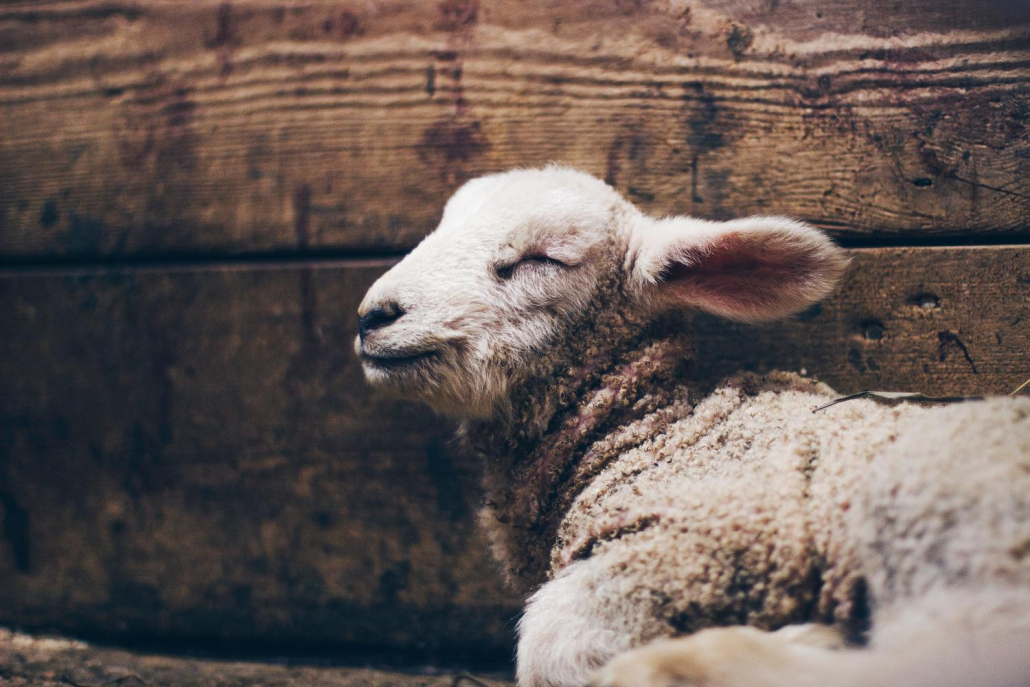
Read Together: God gave ancient Israel instructions concerning Passover observance. On the tenth day in the first month of the year, each family was told to select a special, Passover lamb. This lamb was to be perfect, without any blemishes at all. Four days later, as the 14th day of the first month was just beginning at sunset, they were required to kill the lamb, cook it, and eat it as part of a special Passover meal, putting some of the blood of the lamb on their doorway. Those who did this would be protected from the death angel, who would kill all the firstborn in the land, except those in houses with the blood of the lamb on their doorway. Every year after that, the Israelites were commanded to eat a Passover meal on this same night and remember how God had spared them from the death of the firstborn in their home.
But this Passover lamb also symbolized something more. All humans are under the threat of death because we all have sinned, and death is the penalty for sinning against God. We may not have the death angel passing over us, but we still are subject to death for our sins. Instead of a Passover lamb, however, we have Jesus Christ. Christ was the perfect sacrifice who was willing to become a human being and then die for our sins, protecting us from death, just as the blood of the lamb on the doorway protected the Israelites.
Read Together: Exodus 12:3–8, 43–47; Leviticus 23:4–5; Romans 3:23; 6:23; Hebrews 10:4; John 1:1–3; Luke 1:35; Matthew 1:23; Philippians 2:5–8; John 10:17–18; 3:16; 1:29.
Discuss:
Review Memorization:
1 Corinthians 5:7 “Therefore purge out the old leaven, that you may be a new lump, since you truly are unleavened. For indeed Christ, our Passover, was sacrificed for us.”
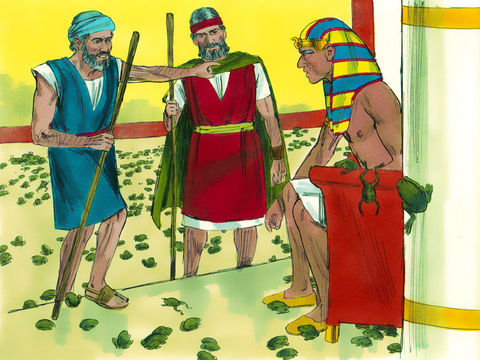
Read Together: As the Israelites suffered as slaves in Egypt, Moses spent 40 years tending his father-in-law’s sheep. But God was not finished with Moses. As Moses passed by Mount Horeb, he was amazed to see a bush furiously burning – but not being burned up! This was God’s way of getting Moses’ attention, and it worked. As Moses approached the bush, He heard God speak plainly to him. God told Moses that it was time for him to lead the children of Israel out of bondage. At first, Moses was not happy with God’s command. He gave one excuse after another about why he was not the man for the job. In the end, Moses humbled himself and obeyed God’s instructions, leaving for his old home in Egypt. Moses and his brother Aaron went to Pharaoh and announced to him that he must let the children of Israel go to worship God in the wilderness. What do you think Pharaoh said? He basically said, “No way!”
Here are his exact words. “Who [is] the LORD, that I should obey His voice to let Israel go? I do not know the LORD, nor will I let Israel go.” (Exodus 5:2)
But Pharaoh would come to regret his disrespect and disregard of the true God. God sent one plague after another upon Egypt–each one attacking one of their gods. In the first plague, their sacred river was turned to blood. But Pharaoh would not let the people go. In the second plague, frogs appeared everywhere. Still, Pharaoh stubbornly refused to let the people go. Nine times, in plague after plague, Pharaoh started to soften, then hardened his heart toward Israel and the true God. Finally, after the 10th and last plague, Pharaoh let Israel go.
Read Together: Exodus 3-10
Discuss:
Review Memorization:
The Ten Plagues: (1) Waters turned to blood, (2) Frogs, (3) Lice, (4) Flies, (5)Animals die, (6) Boils, (7) Hail, (8) Locusts, (9) Darkness (10) Death of the Firstborn
Read Together: The Days of Unleavened Bread begin immediately after the Passover, on the fifteenth day of the first month. For seven days, all of Israel was to have no leaven in their homes and to eat unleavened bread. The first and last Days of Unleavened Bread are Holy Days to the Eternal. During the Days of Unleavened Bread, leavening agents picture sin which causes people to be puffed up with pride and vanity. Putting leavening out of our homes reminds us that we are to put sin out of our lives. When Peter told the Jews that they had crucified the Son of God, they asked what they should do. Because every person has sinned, each of us is responsible for the death of Christ. He had to die to pay the penalty for our sins. When we acknowledge this fact, we face the same question of what to do. Peter’s replied that they must “repent”. We repent of sinning, which is the transgression of God’s law. Repentance means to turn from the way of life that leads to death and to follow God’s way leading to eternal life. Eating unleavened bread for seven days pictures feeding on Christ, the true unleavened bread, in whom dwelt no sin. We feed on Christ by studying His word which transforms our minds. As we do, we begin to be more like Christ. As Dr. Roderick C. Meredith often said, we will begin to think like God thinks, want what God wants, and do what God would do. If we feed on Christ, God will give us eternal life, because He is the “bread of life.”
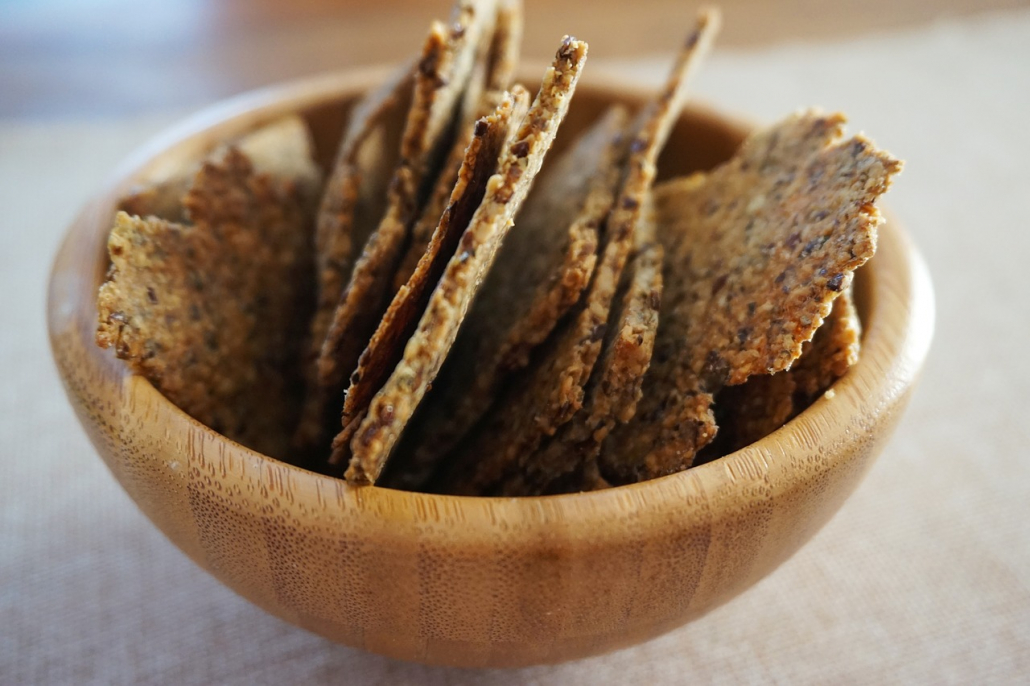
Read Together: Exodus 23:14–17; Leviticus 23:4, 6–8; Acts 2:36–38; I John 3:4; 1 Corinthians 15:3; John 6:35, 47–51; Romans 12:2; Ephesians 4:11–16; John 6:57–58.
Discuss:
Review Memorization:
Romans 5:10 “For if when we were enemies we were reconciled to God through the death of His son, much more, having been reconciled, we shall be saved by His life.”
Estimated Reading Time: 1 min. 20 sec.
Let’s say you’re about to read from the book of Judges, and you just finished going through the story of Samson with your son and daughter. Flipping ahead you see in chapter 19 the story of the Levite’s Concubine. You knew it was coming, but you were hoping it wasn’t so soon! But now you have to make a decision as you look at the earnest, expectant faces of your innocent children looking up at you. Is now the time to share this graphic account with them? Would they even understand it?

This is a simple example of the type of dilemma you might run into as you read the Scripture to your little ones. We want to be honest and accurate with our children as we teach them about the Bible, but here is where we have to exercise a little Godly wisdom. Are your children, who have very little exposure to the evils of the world, really ready to hear such disturbing material? Also, what about those long lists of genealogies? You might ask, “Well, since it’s the Bible, doesn’t that mean its age appropriate?”.
We must take care not to use the Bible (God’s Word) as an excuse to destroy innocence or to ignore the youthful perspective of our children. We are trying to instill in their minds a deep admiration and love for God and the Bible. We should also be mindful that “there is a time for everything” (Eccl. 3), and “not everything is beneficial” (1 Cor. 10:23).
There will be a time when our children should be introduced to every section of Scripture, but it may be best to save the reading of some parts of the Bible until they are able to appreciate and understand the purpose of those sections. Let’s be careful to remember and appreciate the season of innocence as we read to those impressionable minds from God’s word.
Read Together: When God delivered ancient Israel from Egypt, they left in a hurry. They left so quickly that they were unable to let their dough rise, so their bread was unleavened. God told Israel they were to remember the day that He brought them out of Egypt by observing the Feast of Unleavened Bread for seven days. The first and last days of the feast were to be Holy Days or annual Sabbaths. As they prepared for these days they were to remove all the leavening from their homes. God commanded the Israelites to do this and instruct their children to pass on this command to the next generation. But we understand that the command applies to us as members of the church of God also. You have probably helped your parents clean the leavening from your home before the Days of Unleavened Bread each year. It can take a lot of time and hard work! But, why is it important? Here’s the answer.
Remember, God brought ancient Israel out of slavery in Egypt. For the Israelites, Egypt represented the years of slavery they had endured. Today, God calls each member of His church and frees them from slavery also. But our slavery is not to the kingdom of Egypt. Our slavery is to sin. Even though we don’t want to, we sometimes break God’s law out of rebelliousness and selfishness. That is like being a slave of sin. For us, God uses leaven to represent our slavery. What is leaven? Leaven is the yeast that is added to bread to make it rise, which makes it more enjoyable to eat. Without that leaven, bread is hard and flat. Just like the yeast that makes bread rise, sin causes us to grow in pride, vanity and selfishness. And as we remove leavening or any bread that has been made with leavening from our homes, we are practicing an exercise that reminds us of removing sin from our life!
Read Together: Exodus 12:15–17, 33–34, 39; 13:3–10; Leviticus 23:6–8; John 6:44; Matthew 16:6; 1 Corinthians 13:4; 5:6–8; Romans 6:12–14
Discuss:
Review Memorization:
1 Corinthians 5:7 “Therefore purge out the old leaven, that you may be a new lump, since you truly are unleavened. For indeed Christ, our Passover, was sacrificed for us.”