Children’s Bible Program- Level 3: Lessons 46-49 Packet: Prophets in Judah
Includes the lessons:
- Lesson 46 “Isaiah and the King”
- Lesson 47 “Huldah”
- Lesson 48 “Jeremiah”
- Lesson 49 “Jeremiah and the Captivity”

Includes the lessons:
Featured Passage: Ezekiel 1-11, 33, 40-48
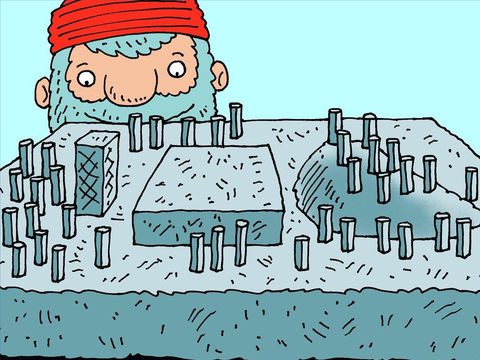
After the Kingdom of Israel was taken into captivity, you’d think it would have been too late for a prophet to warn the people. After all, what is the point of warning someone of something that has already happened? Well, God had a very special message of warning for Israel through His prophet Ezekiel. Ezekiel was told to be a “watchman” for the house of Israel. At the time, Ezekiel was living among the captives of the Babylonians. God gave him some very unique instructions, signs that he should perform to reinforce the warning message he proclaimed. So who was the message for? It was for the house of Israel in the future, at the Time of the End—today.
Discuss:
Memory Challenge:
Ezekiel 11:19-20
Then I will give them one heart, and I will put a new spirit within them, and take the stony heart out of their flesh, and give them a heart of flesh, that they may walk in My statutes and keep My judgments and do them; and they shall be My people, and I will be their God.
Featured Passage: Ezra 1-7
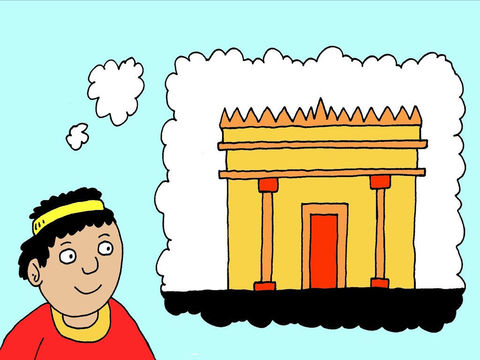
The people of Judah had been in captivity for nearly 50 years. Some had longed to return to Jerusalem to rebuild the temple of God and worship there once again, but they were not allowed until a man named Cyrus, King of Persia came to power. This Cyrus wrote a decree that told the people of Judah they could return to Jerusalem to rebuild God’s house – the temple. The returning captives followed a man named Zerubbabel who led them back to their homeland. The people were excited to return and get started on their rebuilding projects, but they didn’t know they were about to face some very challenging obstacles. Their faith was about to be tested, but through it all one man wasn’t about to give up on what they had set out to accomplish.
Discuss:
Memory Challenge:
Ezra 1:3
Who is among you of all His people? May his God be with him, and let him go up to Jerusalem which is in Judah, and build the house of the Lord God of Israel (He is God), which is in Jerusalem.
Featured Passage: Ezra 7-8
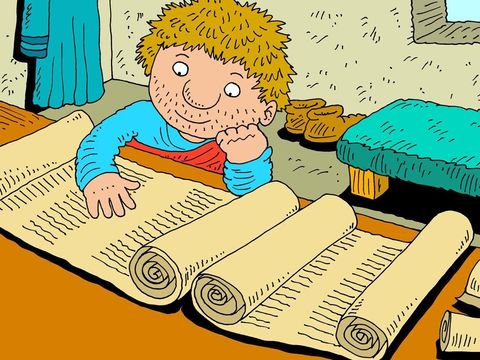
A group of Jews had returned from exile to rebuild Jerusalem and to restore the temple. They had met with some adversity, but ultimately they completed what they had set out to accomplish. Another group of Jews was planning to come back to Jerusalem to help with the job and to help restore the true worship of God in Jerusalem. Among this group was a scribe named Ezra. He was very skilled in knowing the scriptures and teaching the law, but more than that he possessed a heart prepared to seek God’s Law and to do it with all his might. As it turned out, he is just what the people in Jerusalem needed.
Discuss:
Memory Challenge:
Ezra 7:10
For Ezra had prepared his heart to seek the Law of the Lord, and to do it, and to teach statutes and ordinances in Israel.
Featured Passage: Nehemiah 1-6
The temple in Jerusalem had been rebuilt by the group of captives that had been allowed to return to the city. However, even though the temple was completed and rededicated, there was still trouble for the people. The walls of the city were broken and Jerusalem was not protected from the attacks of the surrounding enemies. At the time, a man named Nehemiah worked as the cupbearer for the Persian king Artaxerxes. Nehemiah heard that the people in Jerusalem were in distress and he became very sad, and cried out to God for help. God, hearing Nehemiah’s prayer, had a plan to help the people through the kindness of a king and the leadership of a cupbearer.
Discuss:
Memory Challenge:
Nehemiah 2:17
Then I said to them, “You see the distress that we are in, how Jerusalem lies waste, and its gates are burned with fire. Come and let us build the wall of Jerusalem, that we may no longer be a reproach.”
Includes the lessons:
Featured Passage: Esther 1-2
After the declaration of Cyrus the Great many of the Jews who had been carried away as captives by the Babylonians, returned from captivity to Jerusalem. Under the new Medo-Persian empire some Jews, like the man named Mordecai, chose to stay in the land. Mordecai was raising Hadassah (Esther), a very beautiful young woman who had been orphaned. During this time, Queen Vashti had refused the king’s command to come to him, and King Ahasuerus was searching the kingdom for a queen to replace her.
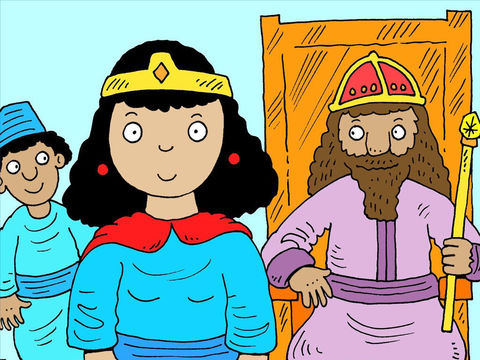
Esther 2:17
The king loved Esther more than all the other women, and she obtained grace and favor in his sight more than all the virgins; so he set the royal crown upon her head and made her queen instead of Vashti.
Featured Passage: Esther 3-4
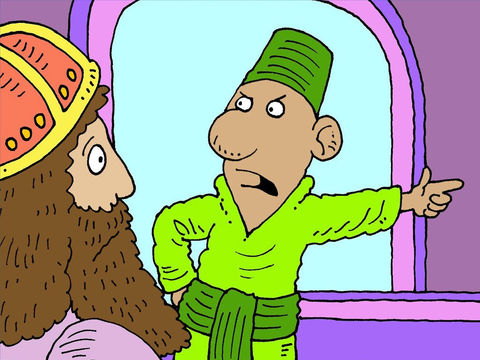
There was a man named Haman who was part of the king’s court. Haman was an Agagite which means he was an Amalekite; the Amalekites were enemies of the Jews. Haman hated all Jews, but he especially hated Mordecai. Haman came up with a plot to kill all the Jews. He told King Ahasuerus that the Jews had different laws and that they did not obey the king’s laws. Haman said the Jews did not deserve to live, and the king agreed. What they both didn’t realize was that the new queen of Persia was also a Jew.
Discuss:
Memory Challenge:
Esther 4:14
“For if you remain completely silent at this time, relief and deliverance will arise for the Jews from another place, but you and your father’s house will perish. Yet who knows whether you have come to the kingdom for such a time as this?”
Featured Passage: Esther 5-6
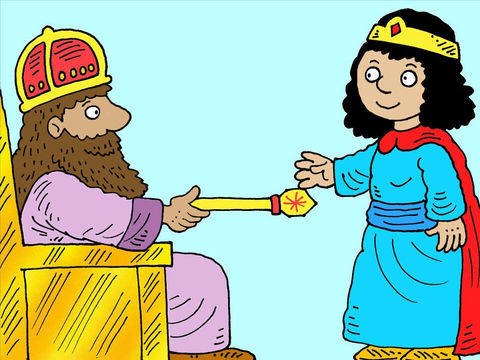
After three days of fasting, Esther prepared herself to go before the king. Even though she was the queen, it was still forbidden for anyone to stand in the king’s presence without permission. Even if the king made allowance for her to come into his court without being summoned, she had to be careful how to tell him that his chief of all the king’s princes was plotting to destroy her people. Esther was running out of time, for as she prepared banquets for the king, Haman was plotting his revenge against Mordecai. The king, unaware of Haman’s plans, had something very different in mind for Mordecai.
Discuss:
Memory Challenge:
Esther 5:7-8
Then Esther answered and said, “My petition and request is this: If I have found favor in the sight of the king, and if it pleases the king to grant my petition and fulfill my request, then let the king and Haman come to the banquet which I will prepare for them, and tomorrow I will do as the king has said.”
Featured Passage: Esther 7-10
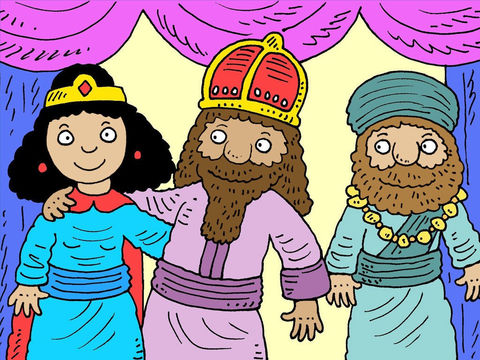
Haman had built a gallows for Mordecai, but his opportunity to tell the king about the plan to use them instead turned into a conversation about how to honor Mordecai for his good deeds. Haman, humiliated from having to lead a parade of honor for his enemy Mordecai, after sulking to his wife at home, arrived at Esther’s second banquet. At the banquet, King Ahaserus asked Esther what she desired, and he would give it to her — even up to half the kingdom! Haman and the king were both caught off guard by Esther’s request, and a lovely banquet quickly turned into the queen’s triumph and the end of a very bad day for Haman.
Discuss:
Memory Challenge:
Esther 7:3
Then Queen Esther answered and said, “If I have found favor in your sight, O king, and if it pleases the King, let my life be given me at my petition, and my people at my request.”