Children’s Bible Program- Level 1: Lessons 46-49 Packet: David and Saul
Includes the lessons:
- Lesson 46 “Saul and Jonathan”
- Lesson 47 “God Chooses a New King”
- Lesson 48 “David and Goliath”
- Lesson 49 “David and King Saul”

Includes the lessons:
Pasaje Destacado: Salmos 19:1; Isaías 40:12, 18, 21–22, 25-26; Mateo 21:22; Romanos 1:20; 1 Tesalonicenses 5:21, 16–17; Hebreos 11:1–3; Santiago 1:5-6; 1 Juan 5:14-15
Dios quiere que tengamos fe, pero nuestra fe no debe ser ciega. La Palabra de Dios nos exhorta a que comprobemos todas las cosas y a encontrar la evidencia que demuestra la existencia de Dios. Explicaremos aquí solo unas pocas razones que nos permiten saber que Dios existe. En primer lugar, Dios dice que la creación declara Su gloria y que podemos conocerlo por medio de ella. La asombrosa complejidad de la una célula “simple”, demuestra la existencia de un Diseñador inteligente. La presencia de una creación exige que haya un Creador. Otra prueba de la existencia de Dios es la profecía cumplida. Solo Dios puede decir lo que sucederá miles de años antes de que suceda. La oración contestada es otra forma de descubrir que Dios es real. Dios quiere que sus hijos hablen con Él en oración. Ore a Dios con fe y obedeciendo Su voluntad, y su oración contestada le dará una prueba sólida de que Dios existe.
Discusión:
Memorizar y revisar:
Isaías 46:9-10
“Acordaos de las cosas pasadas desde los tiempos antiguos; porque yo soy Dios, y no hay otro Dios, y nada hay semejante a mí, que anuncio lo por venir desde el principio, y desde la antigüedad lo que aún no era hecho; que digo: Mi consejo permanecerá, y haré todo lo que quiero”.
Pasaje Destacado: Apocalipsis 1:8; Colosenses 1:15-16; Salmos 103:19; Hebreos 1:1–3; Josué 10:11–14; 2 Reyes 20:10–11; Mateo 14:25–33; Marcos 4:37–41; Apocalipsis 21:7; 2 Corintios 6:18; 1 Juan 3:1–3.
Los reinos vegetal, animal y humano son clasificaciones de seres vivos en nuestro mundo material. El mundo espiritual también tiene seres vivos, y el reino angélico tiene diferentes clasificaciones de ángeles. Sin embargo, hay un Reino por encima de todos los demás, sea material o espiritual: El Reino de Dios. Dios está en un nivel de existencia que es difícil de entender para los humanos. Dios tiene vida inherente y es eterno. Dios fue, es y siempre será. Dios es el Creador de todas las cosas, sean espirituales o materiales, por lo tanto, Dios está por encima de todas las cosas. Como Dios creó y controla todas las cosas, no está limitado ni por las leyes físicas, ni por el tiempo, ni por el espacio.
Es por eso que Dios pudo evitar que el Sol se ocultara para Josué, y pudo devolver el Sol diez grados para Ezequías. También, por eso fue que Jesucristo pudo caminar sobre el agua y calmar el mar rugiente. La buena noticia es que el Reino de Dios es una familia, y todo ser humano que haya existido, tiene el potencial de ser miembro la familia de Dios. ¡Naciste para ser parte de la familia de Dios!
Discusión:
Memorizar y revisar:
Colosenses 1:16-17
“Porque en él fueron creadas todas las cosas, las que hay en los cielos y las que hay en la tierra, visibles e invisibles; sean tronos, sean dominios, sean principados, sean potestades; todo fue creado por medio de él y para él. Y él es antes de todas las cosas, y todas las cosas en él subsisten”.
Pasaje Destacado: Génesis 1:1-8
La semana de la recreación ocurrió millones de años después de que Dios creara el universo al principio. Una tercera parte de los ángeles se rebelaron contra el gobierno de Dios, causaron el caos en todo el universo y dejaron la Tierra desordenada y vacía. Estando la Tierra en ese estado, Dios puso todo en orden. Reorganizó la Tierra para que fuera apta para la vida humana. Lo primero que Dios hizo fue restaurar la luz en la Tierra y, en el segundo día, restauró el firmamento.
Discusión:
Ayude a sus hijos a comprender que transcurrió mucho tiempo entre los sucesos descritos en los versículos 1 y 2 del capítulo 1 del Génesis.
Pregunte a su hijos cómo se imaginan la Tierra cuando todo estaba oscuro y cubierto por agua y nubes espesas.
Pregunte si ese ambiente era propicio para la vida humana.
Explique que Dios hace las cosas en etapas, y que cuando re-creó la Tierra, comenzó separando la luz de las tinieblas.
Ayude a sus hijos a comprender que Dios decretó el inicio de cada día a la puesta del Sol, al atardecer.
pregúntele a su hijo qué hizo Dios el segundo día de la recreación.
Explique que la atmósfera, el firmamento azul y las nubes fueron ordenados en ese día.
Memorizar y revisar:
Ayude a sus hijos a memorizar los días de la semana de la creación:
Día 1 – Dios separa la luz de las tinieblas.
Día 2 – El cielo y las nubes son separados de las aguas de abajo.
Dia 3 – La Tierra seca es separada de los mares. Las plantas son creadas.
Día 4 – El Sol, la Luna y las estrellas son designados para iluminar la Tierra, para separar el día de la noche y para señalar las estaciones.
Día 5 – Creación de las aves y los peces.
Día 6 – Creación de los animales terrestres y el hombre.
Día 7 – Dios creó el sábado descansando.
Featured Passage: Ezra 1-7
The people of Judah had been in captivity for nearly 50 years. Some had longed to return to Jerusalem to rebuild the temple of God and worship there once again, but they were not allowed until a man named Cyrus, King of Persia came to power. This Cyrus wrote a decree that told the people of Judah they could return to Jerusalem to rebuild God’s house – the temple. The returning captives followed a man named Zerubbabel who led them back to their homeland. The people were excited to return and get started on their rebuilding projects, but they didn’t know they were about to face some very challenging obstacles. Their faith was about to be tested, but through it all one man wasn’t about to give up on what they had set out to accomplish.
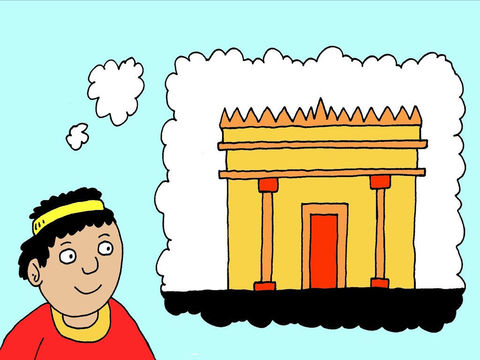
Discuss:
Memory Challenge:
Ezra 1:3
Who is among you of all His people? May his God be with him, and let him go up to Jerusalem which is in Judah, and build the house of the Lord God of Israel (He is God), which is in Jerusalem.
Featured Passage: 1 Samuel 4-6
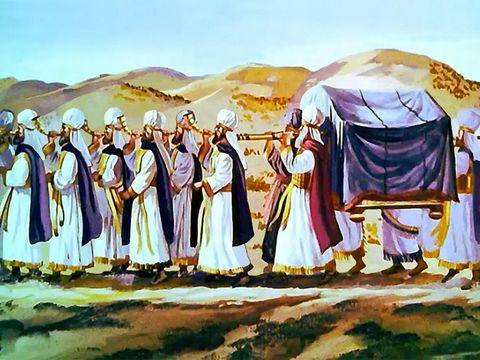
When Israel finally came into the land God promised them, under Joshua’s leadership each of the tribes were given different territories where they could build their homes and families. During their wanderings in the wilderness, God had led them with the ark of the covenant and the tabernacle to represent his presence. Upon entering the new land, Joshua and the people set up the tabernacle in Shiloh where the ark would stay for many years, long after Joshua was gone. For a long while the ark was undisturbed and kept by the Levites in the tabernacle, but the people were forgetting why it was important. One day, when the Israelites were desperately preparing to go out to battle against their enemies, they made a rash decision. If they were to bring the ark of the covenant into battle with them like in the days of Joshua, surely God would protect them, right?
Discuss:
Memory Challenge:
1 Samuel 4:22
And she said, “The glory has departed from Israel, for the ark of God has been captured.”
Featured Passage: 1 Samuel 25
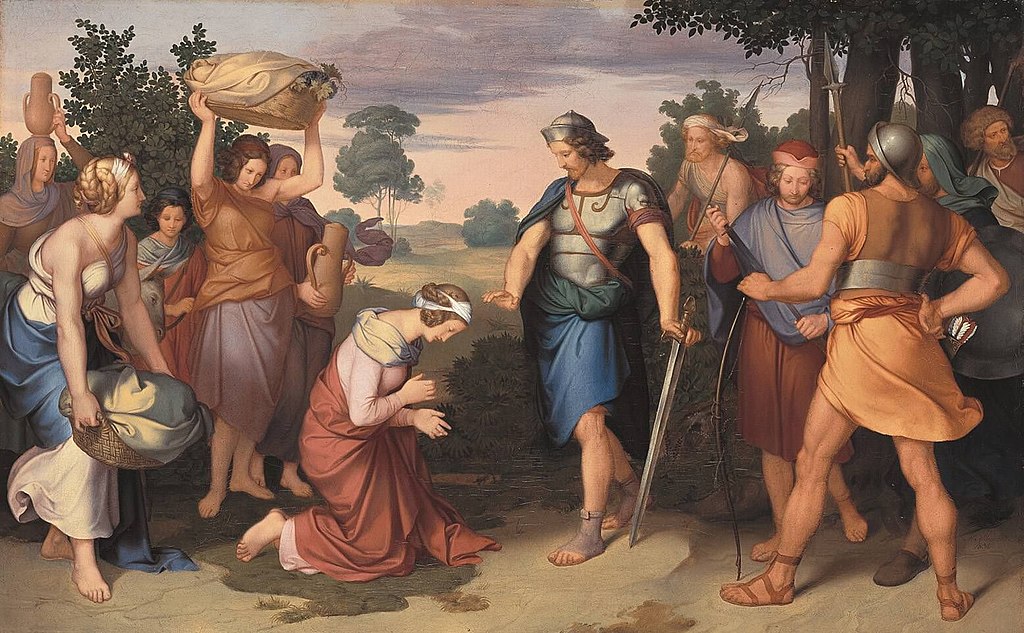
David was on the run from King Saul, and with God’s help he and his mighty men managed to stay at least one step ahead of the jealous king. They hid in caves, fought against the Philistines, and always stayed on the lookout for Saul and his men. Though King Saul did not like it, most people knew who David was and that he was in line to be the next king of Israel, so they would help David with whatever he needed. One day, David and his men were hungry, so they stopped at the home of a wealthy man named Nabal who they knew would have plenty of extra food to spare. But, instead of helping them out, Nabal turned the men away and refused to share anything. Angry at Nabal’s foolish decision, David told his men to get their swords ready. David and his men headed down to the household, swords in hand, when suddenly they were met by someone on the way who had an urgent request.
Discuss:
Memory Challenge:
1 Samuel 25:32
Then David said to Abigail: “Blessed is the Lord God of Israel, who sent you this day to meet me!”
Featured Passage: 2 Samuel 5-8
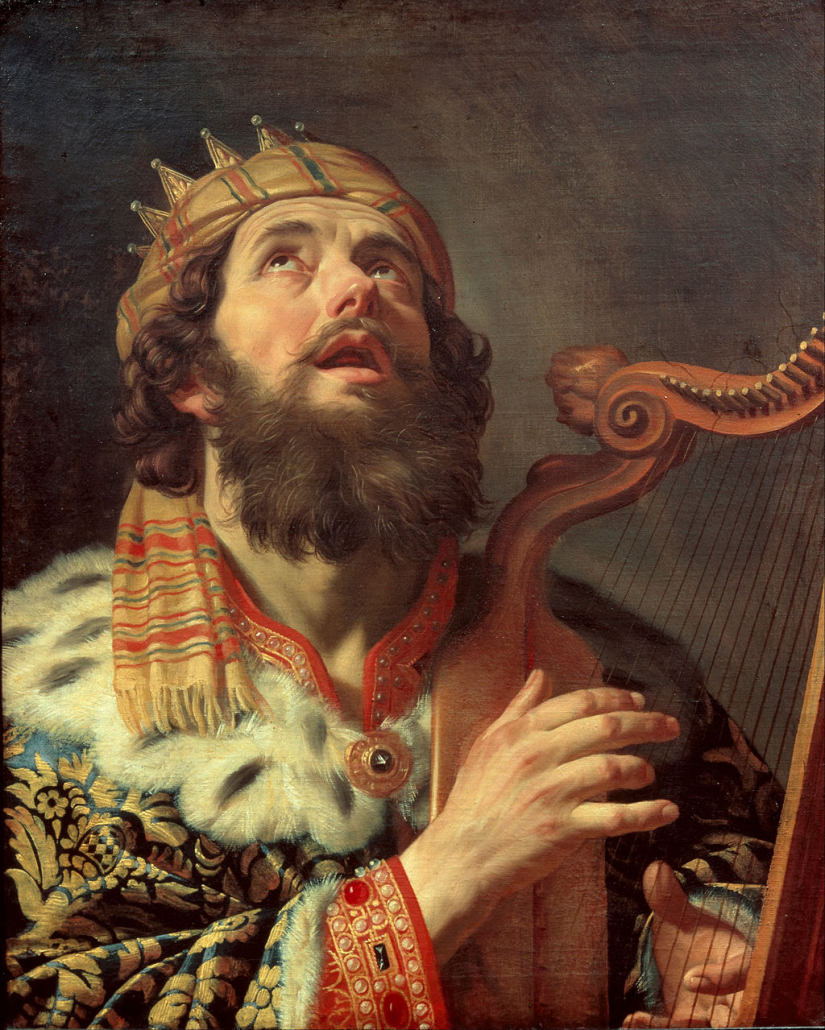
After many years of running from his enemy, David learned that King Saul and three of his sons, including David’s beloved friend Jonathan, had died in a battle. Instead of rejoicing at the death of his enemy, David was very sad and mourned for Saul and for Jonathan. Though David was sad, God’s promise finally came true and David became King of Israel. When David first became king, he ruled from a city called Hebron. David had his eye on another city where he wanted to set up his capital and build his palace. The name of it was Jerusalem which means “City of Peace”. Jerusalem sat on a small mountain called Zion where David would build his city and where the King of Kings will one day return and build His own city of peace.
Discuss:
Memory Challenge:
2 Samuel 7:26
So let Your name be magnified forever, saying, ‘The Lord of hosts is the God over Israel.’ And let the house of Your servant David be established before You.
Featured Passage: Ezra 7-8
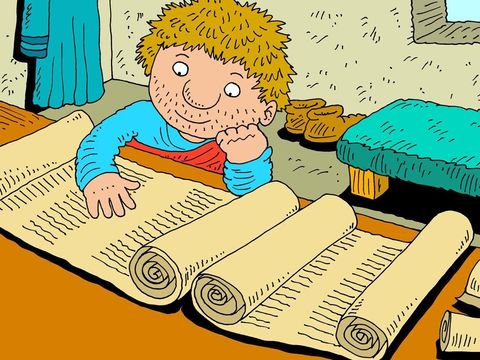
A group of Jews had returned from exile to rebuild Jerusalem and to restore the temple. They had met with some adversity, but ultimately they completed what they had set out to accomplish. Another group of Jews was planning to come back to Jerusalem to help with the job and to help restore the true worship of God in Jerusalem. Among this group was a scribe named Ezra. He was very skilled in knowing the scriptures and teaching the law, but more than that he possessed a heart prepared to seek God’s Law and to do it with all his might. As it turned out, he is just what the people in Jerusalem needed.
Discuss:
Memory Challenge:
Ezra 7:10
For Ezra had prepared his heart to seek the Law of the Lord, and to do it, and to teach statutes and ordinances in Israel.
Featured Passage: 1 Kings 5-8
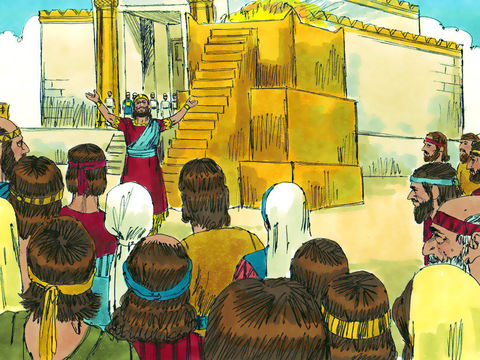
King David had a special desire: He wanted to build God a house. He felt bad that God still dwelt in the Tabernacle as He had with the Israelites in the wilderness while he lived in his own beautiful palace. However, God had other plans in mind for His house. He decided that King David was not the right man for the job, but rather He would let David’s son do the special project. Four years after Solomon began to reign over Israel, he started to build a house for God—the temple in Jerusalem. Solomon spared no expense to get materials of the finest quality with which to construct this marvelous dwelling place for the Most High. Even the stones were carefully shaped to fit perfectly together so that not a single hammer would need to be used when they assembled it. When it was finally completed, seven years later, it certainly must have been something wondrous to behold. The Ark of the Covenant was brought into the Most Holy place, and there awaited one more essential component—the presence of God Himself.
Discuss:
Memory Challenge:
1 Kings 8:30
And may You hear the supplication of Your servant and of Your people Israel, when they pray toward this place. Hear in heaven Your dwelling place; and when You hear, forgive.