
Archive for year: 2019
Second Thoughts: Satan’s Trap for the Insecure
Author: Thomas White | Editorial Staff, Living Church of God

Dr. Douglas Winnail’s recent assembly addressed that Satan uses worldly persecution to lure away those who aren’t unshakably grounded in the truth.
Scripture confirms this, and we all need to constantly guard against the anti-Christian nature of Satan’s world. But those of us who struggle with occasional or even frequent feelings of insecurity—who are just as harsh to ourselves as anyone in the world could ever be to us—may need to guard against something else, too.
While such individuals generally don’t like to talk about them, there are moments when being in the Church can make us uncomfortable. We don’t regret our calling—we’re grateful for it, truly. We know this is the right way, but we feel unworthy of walking it.
For those with frequent insecurity, this state of mind is too often the norm—pervasive and crushing. They look at their fellow firstfruits, and because most of our sins are committed in the dark quiet of our own private lives, everyone around them looks better at being good than they “know” they are.
What Tempts Us
Then comes a shock. You get out there—into college, the workforce, wherever—and you discover that people don’t hate you. Your beliefs that you feared would come across as insane to everyone are viewed as interesting by some. What you thought would be seen as self-righteousness is taken as respectability. People don’t think you’re bigoted or foolish, they think you’re fascinating. Intriguing. Good.

That’s truly hard to resist. Satan knows each of us better than we know ourselves, and in the case of those who feel they’ll never be as good as God wants them to be, the devil knows that they don’t particularly like themselves—but that they long to. He knows that, because they’re used to persecuting themselves, persecution from others may not so easily tempt them into leaving the Church.
But praise might.
Eventually, those with such insecurities eating at them may be offered an opportunity for something that will compromise God’s Way—perhaps by the very people who were praising them before. Assured by their human nature that it will make them into someone they, themselves, will finally be able to accept, the immediate, fascinating option is to bite into that fruit, because it looks and—temporarily—is delicious.
The other option doesn’t look quite so promising: resist, struggle, and go back to a Church filled with people they feel unworthy to be among. Pass the fruit up, and walk back into the daunting, lonely garden.
Our Father’s Promise
But if we allow ourselves to think deeply about our calling, God can lead us to a conclusion that becomes incredibly freeing.
As Mr. Richard Ames has often reminded us, Christ points out that none of us are truly good: “Why do you call Me good? No one is good but One, that is, God” (Matthew 19:17). In this life, we never will be fully “good.” We are on this earth to learn what “good” really means, because frankly, we haven’t a clue. If we did, we’d never consider anyone in the Church “better” than we are.

Those of us who tend to be insecure are in training to become what we most long to be: Worthwhile. Valuable. That’s the point of all this—to do our best, which isn’t much, and be rewarded with His best, His perfection. In his world, Satan offers us something that isn’t one billionth as rewarding, but is, as Yoda might say, “quicker, easier, more seductive.”
Our Father and His Son are the only Beings in existence who actually know what it is to be truly good, because it started with Them. Incredibly, they want to share it with us. The praise and esteem we must refuse now “are not worthy to be compared with the glory which shall be revealed in us” (Romans 8:18). We simply have to finish the race without keeling over. As long as we do, no matter what we place, our Father will carry our gasping, aching remains to the reward. He’s promised to make us good, one day. Right now, we have to show Him that we trust Him to complete the good work He’s started in us.
Dr. Winnail’s assembly message was absolutely true. Being grounded in the truth can protect us from faltering under persecution—even when that persecution comes from ourselves.

Thomas White was one of the onsite Living Education students for the 2018-2019 semesters. He also has a Bachelor’s Degree in English. Thomas currently works as an Editorial Assistant for the Living Church of God. According to his wife, he eats pizza in entirely the wrong way.
God’s Fall Festivals–Part 1: Feast of Trumpets
Artist: Diego Villafaña – Santiago, Chile
WHAT IS TRUE PEACE?
Where does it come from? This world is not peaceful, but will it ever be? God knew from the beginning that mankind would not be able to find peace without His help. He wants everyone to enjoy true peace, but He knows it will only work if people made the right choices, without Him forcing them. The people would have to want true peace. So God prepared a plan to help people make the right choice to experience the blessings of peace and harmony.
So, how do the Fall festivals fit into this plan? Let’s find out!
How it works:
This Study Guide is written for the purpose of helping parents teach their children vital Biblical topics in a focused, easy-to-follow format. Each section is not meant to be taught in one lesson, rather the topics are organized so parents can choose specific areas of focus and gear lessons toward the learning styles and ages of their children. Each topic is presented in a straightforward manner with accompanying verses for study. The main study should always come from the Scripture itself, while these lessons can act as a guide for reading passages from the Bible. Each lesson packet includes memory verses, questions for meaningful discussion, and activities (added at the end of the packet). Also, though some things may be labeled as Level 1, 2, or 3, the activities, questions, and scriptures for memorizing can be used to fit the needs and learning levels for children of all ages. Enjoy!
Helpful Links:
Make a Silver Trumpet – Craft link (outside source)
Make a Shofar – Craft Directions Link (outside source)
Shofar/Trumpet Demo Video – Dylan King (LivingEd-Online Course: The Feast of Trumpets)
Announcing! Fall Holy Days Art Contest Winners – 2019
Group 1 | Ages 12 & Under
WINNER: Jude Hunter – Albany, NY
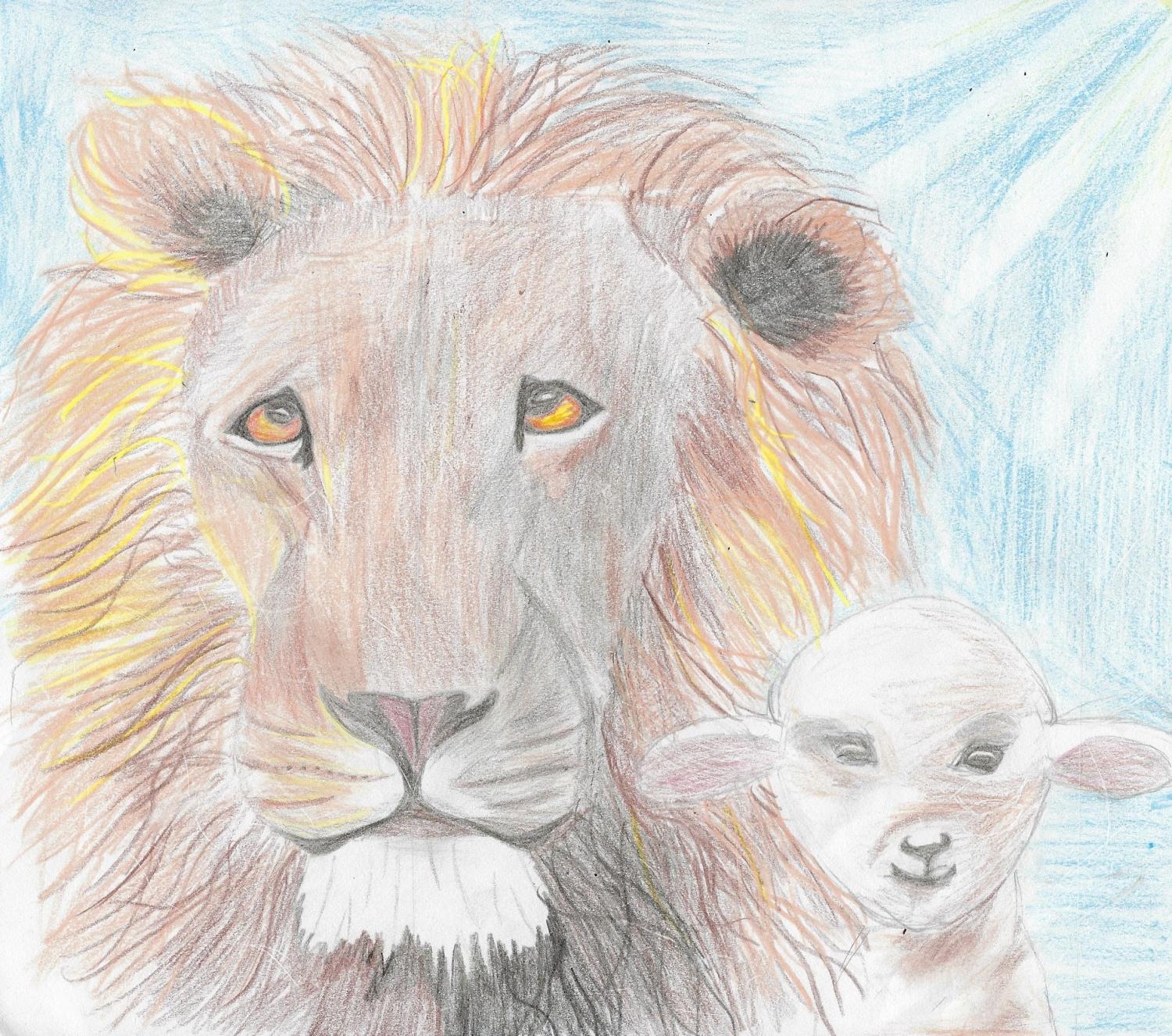
Artist’s Description: It is a free-hand rendition of a lion and a lamb. The picture was colored in colored pencil. I drew it with a 0.7 graphite pencil.
Artist Bio: I was born on August 9, 2008. I have seven siblings. I like to draw and play with Legos. I have brown hair and green-grey eyes.
Honorable Mention:
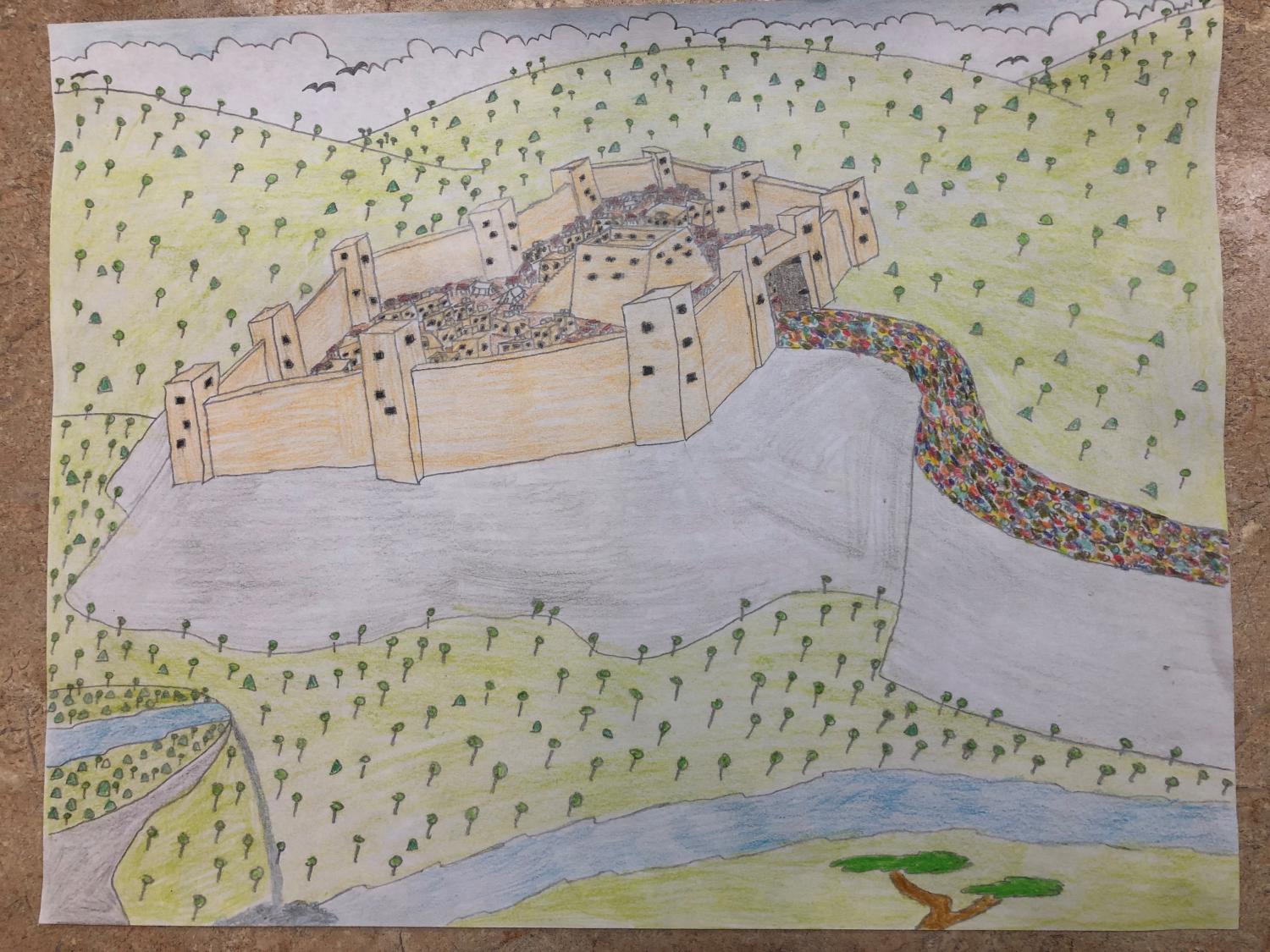
Jonathan Wilson – Indianapolis, IN
Artist’s Description: This shows the nations coming up to keep the Feast of Tabernacles in Jerusalem as described in Zechariah 14:16. There are many people coming up the road to the city.
Artist Bio: I was born in Zionsville, IN. I like Legos, cyclocross, and animals. My favorite Feast site was Costa Rica where I saw monkeys, parrots, and coatis.

Gabriella White – Lafayette, LA
Artist’s Description: The time of the millennial Feast of Trumpets. When I close my eyes this is what I see. Its the time after Christ returns when a trumpet (mom says Shofar) is blown, signifying the start of the Feast of Trumpets in the Kingdom. (Mom helped me choose my colors right for the sunset and water.)
Artist Bio: Gabriella (Ella) is 7 years old. She attends the congregation in Lafayette, LA. She is an artist at heart! Drawing and coloring are some of her favorite past times. Ella seemly edifies MOST of the fruits of the spirit at her young age. She wants to make all things beautiful. She brings flowers from nature in the home constantly. She is a blessing in her family.

Zhania Susi – Melbourne
Artist’s Description: This is an artwork of the millennium. I took inspiration from the bible hymn “It Won’t Be Long Now” as it describes how the world will be at peace.
Artist Bio: Hi, my name is Zhania. I am eleven years old and I am in grade six. My hobbies include, calligraphy, drawing and painting.
GROUP 2 | AGES 13 – 20
WINNER: Hannah Wolford – Bristol, VA

Artist’s Description: My submission depicts what the front page of a newspaper might look like in the Kingdom. The headlines describe some of the events taking place when the world tomorrow becomes the world today!
Artist Bio: I love being creative, and graduated this past spring with an Associates degree specializing in Art. I hope to one day become a professional artist.
Honorable Mention:
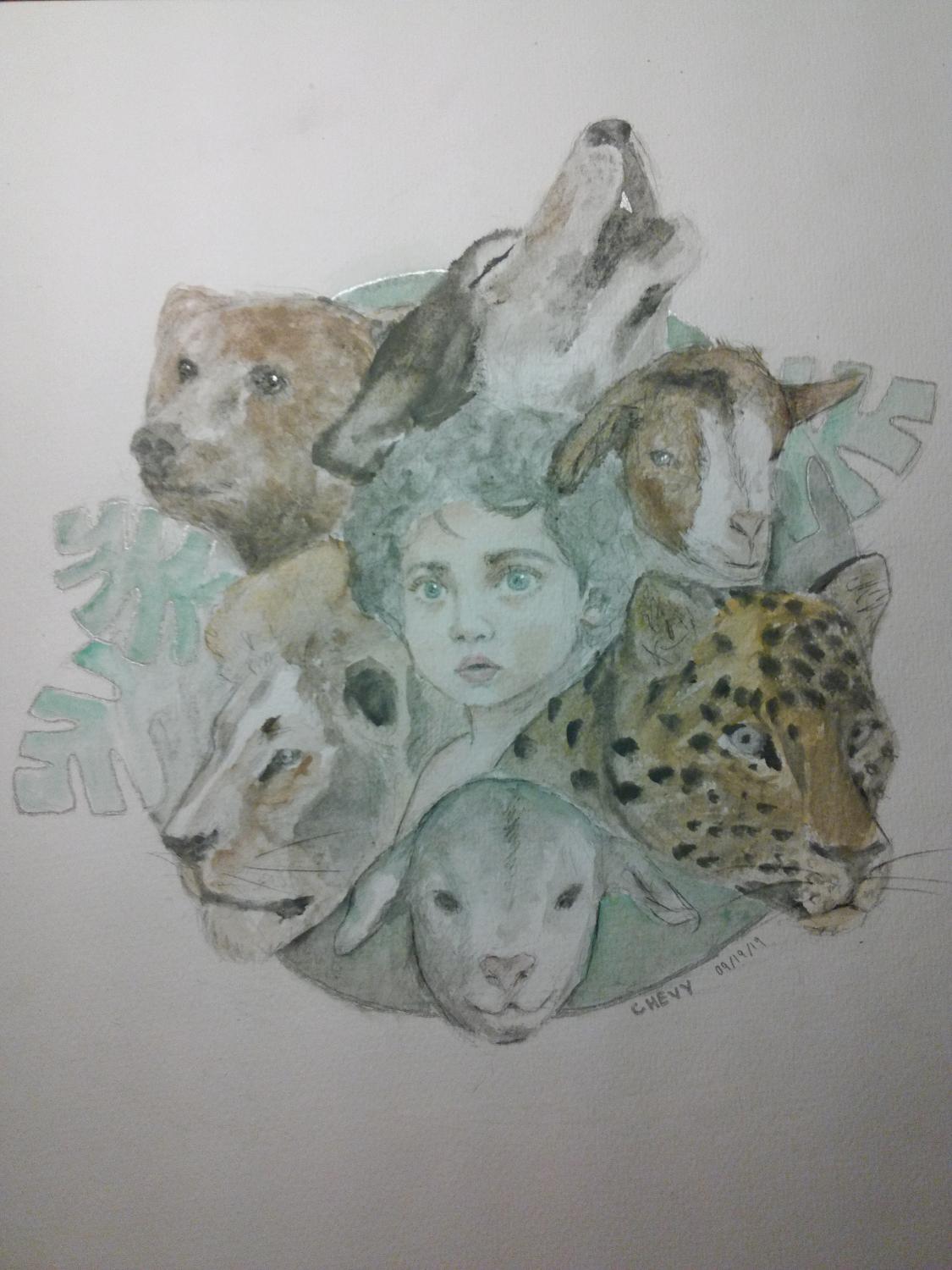
Chevy Dela Cruz – Quezon City
Artist’s Description: Inspired by the hymn “It won’t be long now” portraying the wolf, lamb, leopard, kid, lion, bear, and a child dwelling peacefully together.
Artist Bio: Watercolor and graphite are my usual mediums. I am a self-taught artist who does commissioned portrait artworks to earn money for school, savings and offerings. I love art of all kinds and I wish to improve myself with what I do to serve the brethren and to deliver God’s words with it.
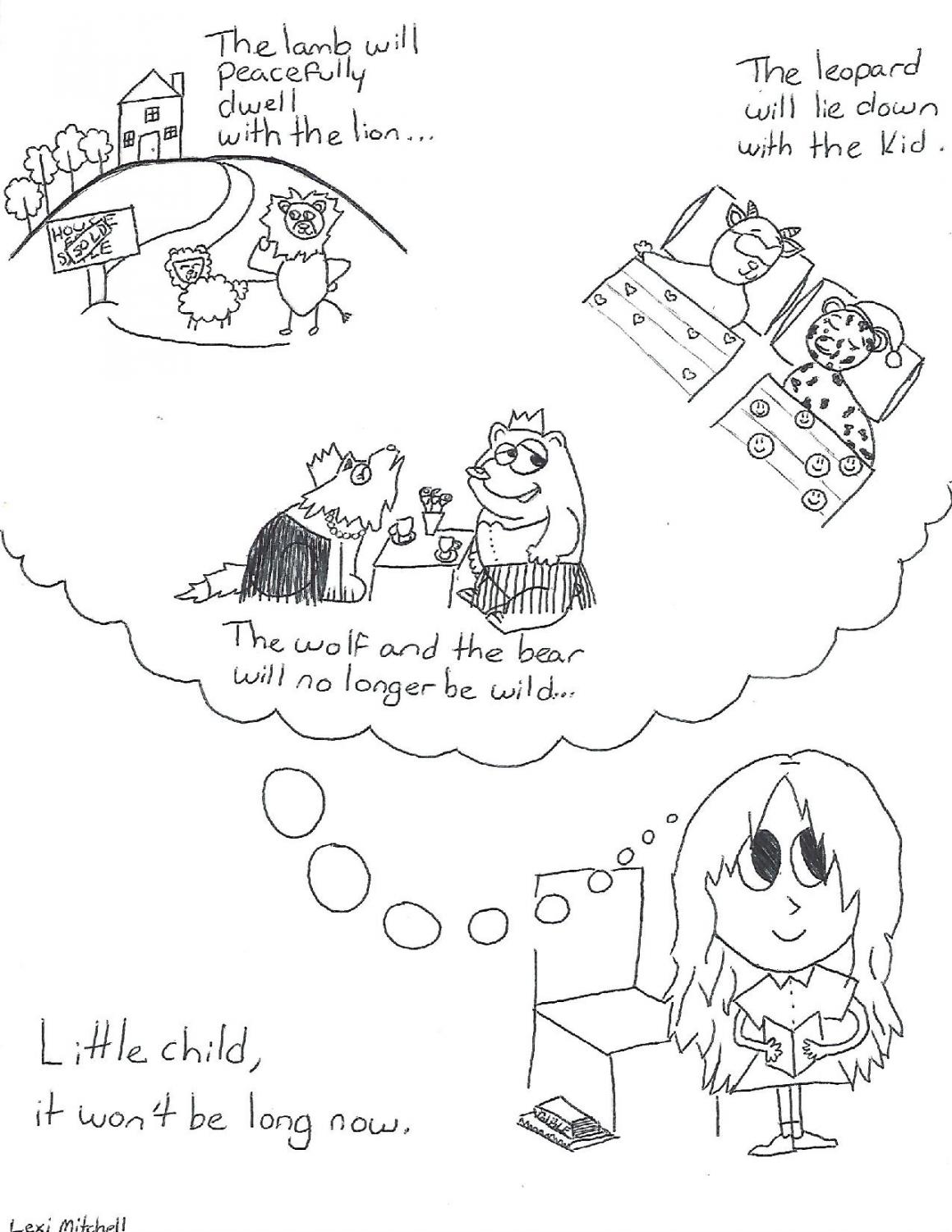
Lexi Mitchell – Plainview, NY
Artist’s Description: My picture shows a girl during services at the feast, listening to the song ‘It Wont Be Long Now’ being sung, and imagining the scenarios of the Kingdom mentioned in the chorus.
Artist Bio: My name is Lexi Mitchell and I’m 14 years old. If I had to choose an activity to do it probably would be reading a good book, but drawing is cool too.
GROUP 3 | AGES 21+
WINNER: Diego Villafaña – Santiago, Chile

Artist’s Description: Tiempos vendrán, en donde la maldad se apartará del mundo y el bienestar se apoderará de la tierra. Esta ilustración representa al Milenio, un período de tiempo en donde Cristo gobernará a la Tierra y la sumirá en paz, felicidad y gozo abundantes para cada ser viviente. TRANSLATION: The time will come when evil will depart from the world and justice will take over the earth. This illustration represents the Millennium, a period in which Christ will rule the earth and there will be an abundant peace, happiness, and joy for every living being.
Artist Bio: Nací en Viña del Mar, Chile, el 19 de Noviembre de 1997. Desde pequeño he disfrutado del dibujo y la pintura, y los he practicado en mis tiempos libres durante toda mi juventud hasta el día de hoy. El titularme como Técnico en Animación Digital me ha permitido aplicar estos conocimientos de una manera mucho más profesional y estilizada, principalmente desde el área digital. Hoy en día realizo ilustraciones personalizadas para los sermones locales de la congregación de Santiago, Chile, en la Iglesia del Dios Viviente. TRANSLATION: I was born on November 19, 1997 in Viña del Mar, Chile. I have enjoyed drawing and painting since I was a child, and have practiced it in my spare time throughout my youth until this day. Having a college degree on Digital Animation Technology has allowed me to apply this knowledge in a much more professional and stylized way, mainly from the digital area. I currently serve in the congregation of Santiago, Chile, making the illustrations for sermons CD and DVD covers.
Honorable Mention:
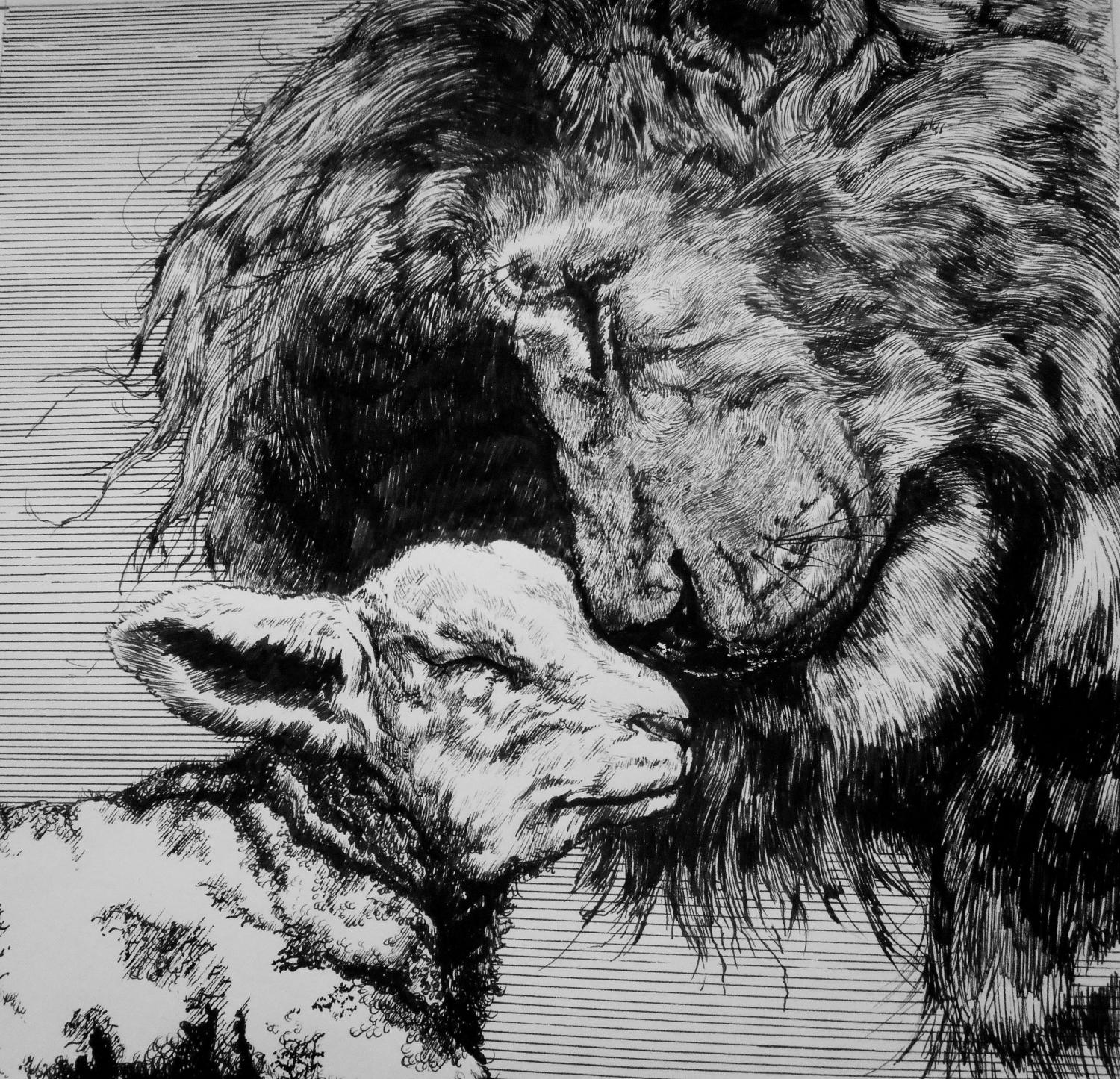
Jaclyn Stiffler – Little Rock, AR
Artist’s Description: Lion and Lamb Pen and Ink on Paper. A traditional scene of a lion sweetly nudging a little lamb, free from fear, totally at peace.
Artist Bio: As a child I always enjoyed drawing and creating art, so it only seemed natural I’d pursue this passion into adulthood. I graduated in 2001 with a degree in fine art and continue to freelance today. My family has always been a source of encouragement, support and now with the addition of two adorable nephews and a beautiful niece…inspiration! I’m so thankful to God for a world of color and beauty, and especially thankful for the gifts and abilities to take what I see and put it on paper!
Brandon Fall – SeaTac, WA

Artist’s Description: I had fun thinking of how a toddler might interact with a great big bear in the Millennium: pulling on the bears cheeks, jumping on the bears back and hanging onto his ear, and of course, snuggling. 🙂
Artist Bio: Brandon Fall serves as the pastor in the Pacific Northwest. Before coming into the ministry, he had the opportunity to work in the illustration and graphic design field. Occasionally he draws pictures for his four children.

Louis Crespo – Charlotte, NC
Artist’s Description: Pastoral setting during the Millennium. This is one in a series of 3 pastoral millennium settings that I completed digitally.
Artist Bio: I studied human anatomy and figure drawing at the Arts Student’s League in New York. I also studied Acrylic and watercolor Landscape Painting in Suffolk College, Long Island. Took a course in Graphic Design and have taken drawing courses at various levels of my life. My hobby is to create illustrations plus various other endeavors. Lately, I am drawn to do digital artwork in Samsung Galaxy Tab S4 10.5.
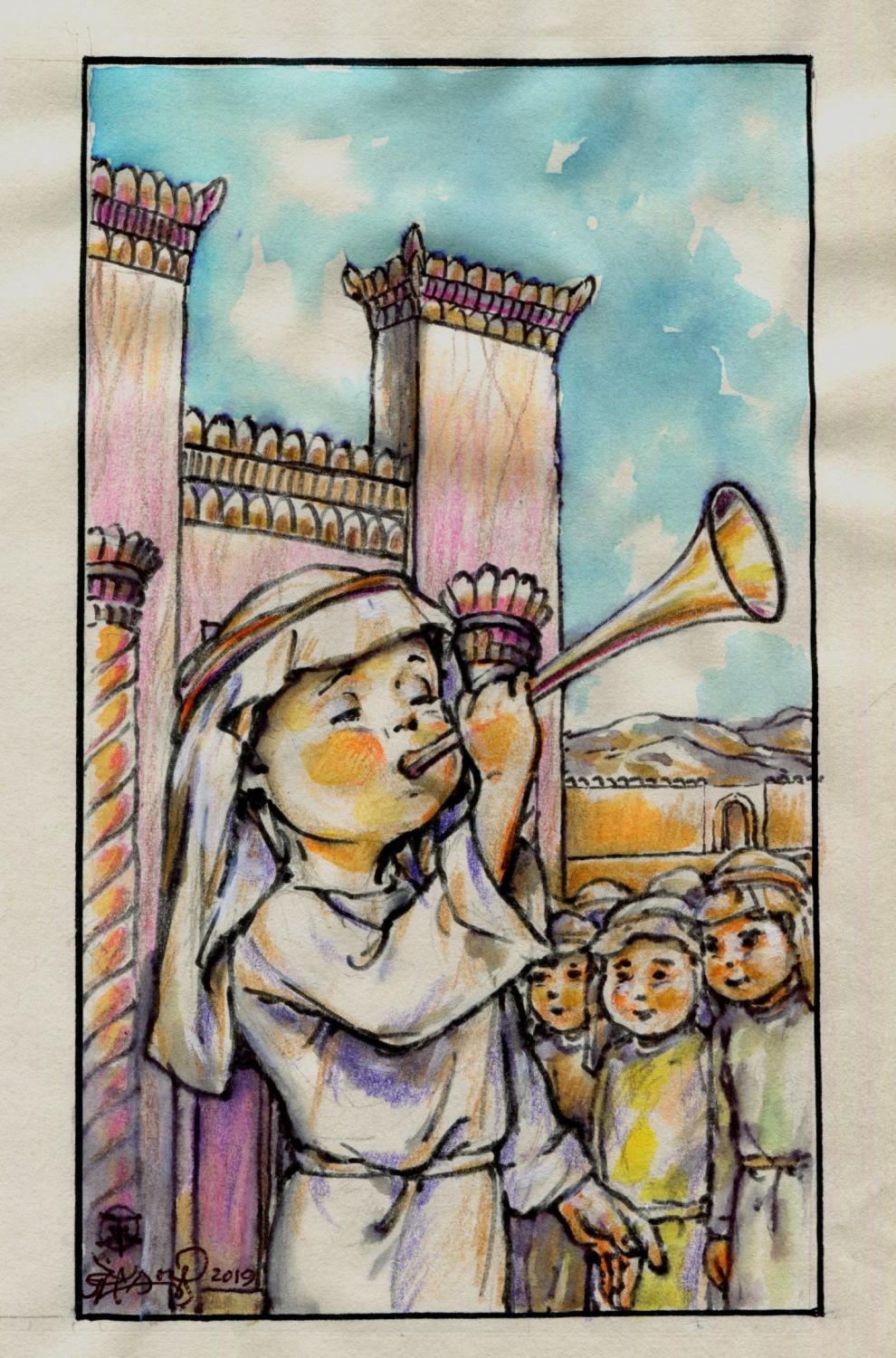
Jose Zamora – Mississauga, Ontario
Artist’s Description: Related to Feast of Trumpets: “It pictures the massive intervention of God in human affairs- climaxing in the Second Coming of Christ as King of kings.”
Artist Bio: I am a Filipino, self-taught artist who enjoys oil and acrylic paintings and sculptures. I am a former Architectural designer in my hometown.
A Special Thank You
to our panel of judges and all the artists who submitted their work! The beautiful pieces you see displayed here are a testament to their God-given talents, hard work, and dedication to God’s work.
Coloring pages now available with Part 4 of our Fall Festival’s Lessons!
Stay tuned for our upcoming artwork gallery, featuring the submissions from other artists.
Artwork from this contest will be featured in our upcoming Special Edition-Fall Holy Days Children’s Lessons Packet.
Want to participate? Be looking ahead for upcoming Living Education contests for artists on our Updates blog!
All images displayed in this post were submitted by private artists who have granted all rights and permissions of use to Living Education for the purpose of education, and/or promotional publication, in accordance with the Fall Holy Days Art Contest Rules and Guidelines. All rights reserved.
Second Thoughts: Respect His Image
Author: Thomas White | Editorial Staff, Living Church of God

We, a bunch of Freshman English majors, eyes already mostly glazed-over from forty minutes of syllabus reading, refocused ourselves as our professor firmly told us, “Every time we read a piece of literature in this class, you are not allowed to say it’s bad. You are allowed to say that you don’t like it, that you don’t understand it, even that you fundamentally disagree with it so much that you want to vomit. But you can’t say it’s bad, and you can’t say it’s stupid; respect the author enough to assume they knew what they were doing.”
In this week’s assembly on how politeness and protocol can—and should—be used to show love to our fellow human beings, Mr. Richard Ames touched on the fact that every single one of those human beings is valuable.
That’s so easy to say, isn’t it? “Every human being is valuable.” Short, simple, definitive—should be easy to remember. And we all probably forget it every single day, as if we fail to respect the Author enough to assume He knew what He was doing.

No One is Fair Game
We can probably all think of ways we dismiss people as being without value, even if we only do it in our minds. “Whatever. I don’t care what *name* thinks,” we might tell ourselves, forgetting that we really only stop caring about anything when it ceases to have value to us. “I consider you worthless,” may sound a lot more devastating than “I don’t care what you think,” but if we’re honest, don’t both essentially mean the same thing? In many ways, people are their thoughts and opinions—if we devalue those, we devalue the person.
Knowing that every human being is made in God’s image, we can sometimes be tempted to think that image is wasted on certain people whose value we really have a hard time seeing, especially those we don’t know personally. Satan sometimes uses people neck-deep in terrible lifestyles to trick us into thinking that it’s right to devalue those people. Is there anyone we subconsciously consider “fair game” for name-calling, insults, mockery, indifference—even if we don’t “say it to their face”? If so, that consideration definitely isn’t coming from God.
The Image of God
We know God made all of us, and we know He doesn’t make mistakes—but if we view anyone as being without value, we’re not really internalizing those facts. Now, in the familiar phrase (oft-repeated by Mr. Wallace Smith), “don’t get me wrong”—there’s only one right way to live, and the vast majority of people in the world don’t live it. Ungodly actions, beliefs, or lifestyles are, obviously, never to be valued. But even the people who completely stray from His path are still worth more than we can imagine—just as much as are those who have stayed on His path but just really, really bug us.

Before an artist starts creating anything, there’s often an image in their head of what they want the finished product to look like.
Our being made “in the image of God” means that we have the shape that He has, yes—but it could also mean that we’re each made according to a specific image He had in His perfect mind.
“Look,” He might say, “This person doesn’t have to be your favorite. You don’t have to agree with everything they do and say—you can even wholeheartedly disagree with a lot of it. But they’re not worthless. I made them. Respect Me, the Author of all, enough to assume I knew what I was doing when I did.”
Thomas White was one of the onsite Living Education students for the 2018-2019 semesters. He also has a Bachelor’s Degree in English. Thomas currently works as an Editorial Assistant for the Living Church of God. According to his wife, he eats pizza in entirely the wrong way.
Supporting, Building, and Maintaining: An Interview with Mr. Jonathan McNair
Editorial Staff | Living Church of God
This is the full, uncut version of the interview with Mr. McNair which appears in the September-October issue of the Living Church News, now available at LCG.org.

As the inaugural year of Living Education came to a successful close, we sat down with its director, Mr. Jonathan McNair, who gave us a glimpse behind the scenes of this exciting new initiative as it heads into its second academic year.
A nine-month program, Living Education offers the young adults of God’s Church a unique opportunity to immerse themselves in the study of His word without spending the time and money required for an undergraduate degree.
As one might expect, converting Living University into Living Education came with its fair share of obstacles. “Probably the most challenging thing is to be able to step back and make a fresh start while still respecting the great work that’s gone on before and appropriately using that work,” Mr. McNair said. “It was the same with Living University; there was a desire to do something that was new and different from, say, Ambassador College, while still respecting what Ambassador College was all about. I think we have to do the same now.”
It’s a fine line to walk, and one Mr. McNair takes seriously. “I feel a great desire to take what we can from the eleven years of effort in Living University, yet we do have to turn a corner,” he said. “There are some different demands and we have different scenarios, so we have to make changes that are appropriate—I think that’s challenging, to keep that balance right.”
A Desire Accomplished
The challenge of keeping that balance means learning through a bit of trial and error, and Mr. McNair looks forward to opportunities to fine-tune Living Education as the program continues. “I feel like there’s a lot that can be improved,” he says, “and that’s one of the things we’re going to be doing now: Whether it’s curriculum or whether it’s programming, we have to think, ‘How can we synchronize it better?’” Much of this involves incorporating the wealth of learning material developed by Living University. “To some degree, we’ve wanted to take the existing classwork and bring it forward, but that doesn’t always work perfectly, because again, much of the existing classwork was geared for our online audience,” Mr. McNair said. “I think that we can do better this year at making sure we synchronize the material.”
Experience, of course, inevitably teaches us all, and Living Education’s first year in operation has proved a valuable instructor. “There’s a lot that we’ve learned from our first year, and we’ve had some time to prepare things for this second year, so I think there’s much that we can improve on,” Mr. McNair said. “I learned a lot in particular from the first year of my involvement here, trying to switch gears from being a field pastor, so there are many different areas in which I hope we’re going to be able to step back and do better.”
When asked to talk about the most fulfilling result of directing Living Education, Mr. McNair chuckled and candidly replied, “To me, I think it’s just seeing that it actually happened. It’s easy to sit down, try to make plans, and say, ‘Well, here’s what should be done, and here’s what can be done,’ but to see it all actually come to fruition, and everyone work successfully toward an end—maybe that’s sort of too ‘big picture,’ but really, that’s rewarding—to see plans come to pass,” he said. “You know, Proverbs 13:19 says, ‘A desire accomplished is sweet to the soul’ and it really is.”
A Threefold Focus
Finally, we asked Mr. McNair to describe the goals of Living Education as it moves into its second year—and beyond. His response was threefold, beginning with an emphasis on supporting the larger Work of God’s Church. “The main mission of what we do, both online and in the classroom, is to support the leadership of the Church in teaching and maintaining the truths of God,” he said. “We have to ensure that we’re always keeping clearly in mind that we need to work in harmony with the leadership of the Church. We’re part of the Church, we’re not a separate entity that somehow works in tandem or is parallel. We are literally part of the Church, so that needs to drive what we do and how we do it. That’s the first big part of it.

“The second part is building,” Mr. McNair continued. “We cannot assume that everyone is completely, 100 percent ‘filled to the brim’ in every aspect of God’s way of life, knowing everything. None of us knows everything.” Noting that all of us as Christians are constantly in the process of building our lives on the truths of God, he explained, “Whether we’re brand-new to the Church, or we’ve grown up in the Church, or we’ve been in the Church for fifty years, it’s still a building process. That’s really important, and I think, especially, since we’re gearing this program toward younger people, we have to think about building a solid foundation for the future.” A second-generation Christian himself, Mr. McNair knows how important it is for those raised in God’s Church to deeply appreciate His truth. “When we’re growing up in the Church, we learn a lot by osmosis and even by our own effort,” he says, “but we have a chance, here, to sort of fill in the blanks, holes, and blind spots that sometimes we don’t even know we have, because we’ve just grown up with it all around us.

“So, I think building is a big part of it, and then, maintaining—whether it’s our on-site program or online,” Mr. McNair concluded. “If you just keep driving a vehicle and never change the oil, never do any maintenance on it, you’ll drive it into the ground—and it’s the same with us, spiritually and even educationally. We just assume that we know it all, but we forget, and we lose clarity, and we lose focus. That’s what we’re about with Living Education: doing our part to help the Church to maintain the truths solidly, clearly, with focus and renewed energy.”
We at the Living Church News are grateful to have had the opportunity to talk with Mr. Jonathan McNair, and look forward to seeing how God blesses Living Education in the years ahead.
Second Thoughts: He’s God Because He’s Right!
by Thomas White | Editorial Staff, Living Church of God
Assembly by Gerald Weston

Here’s a weird little question:
If you believe that I, Thomas White, exist, but you also think that I’m a 47-year-old albino pirate who lives in Saskatoon, do you really believe in me? Not really, no. You might believe someone named Thomas White exists, but that someone’s description is emphatically not of me. Honestly, I would probably rather you didn’t believe in my existence at all than believe I’m completely different from who I actually am. I’d venture to guess that God feels similarly.
“But without faith it is impossible to please Him, for he who comes to God must believe that He is, and that He is a rewarder of those who diligently seek Him.”
– Hebrews 11:6, New King James Version
When you define Truth
During this week’s assembly, one of the many topics Mr. Gerald Weston touched on was that of moral relativism—the increasingly widespread belief that what is morally right and true depends on what situation you’re in, how you feel about what you’re doing, how you’re feeling today overall, how your ancestors felt, etc. What strikes me as terrifying about this philosophy is that certain atheists aren’t the only ones who embrace it; many people who claim to believe in God also find it possible to believe that “My truth is my truth, yours is yours, theirs is theirs, and it’s all good.”
They may believe in God’s existence, but it’s not a belief that He’s perfect, or that He represents universal Truth… so is it really a belief in Him?
“But the cowardly, unbelieving, abominable, murderers, sexually immoral, sorcerers, idolaters, and all liars shall have their part in the lake which burns with fire and brimstone, which is the second death.”
– Revelation 21:8, New King James Version

Dangerous Unbelief
I’ve wondered about the “unbelieving” included among those who earn the second death. By that point, the Millennium will have come and gone—you would think not believing in God’s existence would be as impossible as not believing in the existence of fingernails! That’s what makes moral relativism so scary, though. The “unbelieving” probably won’t be denying that God exists, but they may well go down refusing to believe that He’s right. “Your truth is different from my truth, Mr. LORD, and if I have to die in a fire for my truth, so be it. You’re not right just because you’re God.”
That’s a horrifying attitude, but it’s still possible for us to be affected by it—maybe in ways we don’t even realize.

God is Right
Discussing His way of life, we can say things like, “God makes the rules” and “Because God says so,” and neither of those statements are incorrect, but they also apply a certain arbitrary, “might makes right” nature to God’s decrees, and that misses a fundamental point. He didn’t decide, “You know what, there are gonna be commandments, and there are gonna be ten, because ten’s a nice number, I like that number,” and then make a universe where ten commandments would fit. The Father and the Word knew, before making a single thing, that there would have to be ten specific commandments, that there would have to be a Bible, that every just decree in it would have to be there. Because all of that was right.
He’s not just right because He’s God—He’s God because He’s right. If we believe He’s ever anything besides right, we’d probably be better off not believing He exists at all.
“He loves whatever is just and good; the unfailing love of the Lord fills the earth.”
– Psalm 33:5, New Living Translation
Thomas White was one of the onsite Living Education students for the 2018-2019 semesters. He also has a Bachelor’s Degree in English. Thomas currently works as an Editorial Assistant for the Living Church of God. According to his wife, he eats pizza in entirely the wrong way.
Second Thoughts: Joy Takes Generosity
Author: Thomas White | Editorial Dept., Living Church of God
“But who am I, and who are my people, that we should be able to give as generously as this? For everything comes from You, and we have given You only what comes from Your own hand.”
– 1 Chronicles 29:14, Holman Christian Standard Bible
Assembly by Dexter Wakefield
Sometimes I wonder how Christ and the Father can always be happy.
We read throughout Scripture of Their various emotions—anger, sorrow, hatred for sin, even jealousy over those who give their lives to idols. I can sometimes forget that all of these emotions are secondary at best for members of the God Family, because joy, being a fruit of the Spirit, is always first and foremost. Why? What makes God consistently, wholeheartedly happy?

A lot of things, probably, but Mr. Dexter Wakefield wrapped up this week’s assembly by reminding me of one. Spending only a few minutes on it, he offered the quick, powerful analogy that God is running a family business we in His Church are training to inherit, and His business revolves around giving.
It’s God’s Pleasure
Some say you don’t need to enjoy your job, but apparently, God does. His job is giving, He’s never off the clock, and He loves it. Every millisecond of every day, He’s giving us something. He is not obligated to give anything, but He gives everything, and like the ultimate Chick-Fil-A employee, it’s His pleasure.
So, is it ours?
“Whatever you give is acceptable if you give it eagerly. And give according to what you have, not what you don’t have.”
– 2 Corinthians 8:12, New Living Translation

Non-stop Giving?
As Mr. Wakefield pointed out, if we don’t enjoy giving, we’d better, because as Kings and Priests in God’s Kingdom, we’ll be giving on a pretty much everlasting basis. And sure, you think, “But in the Kingdom it’ll be easy. We’ll be God—if we want to give something, we can just poof it into existence like a magician at a soup kitchen.”
And maybe that’s true, but we’ll be spending all of our time giving of ourselves—giving of our wisdom, energy, encouragement, help, and peace. As humans, we can’t give 24/7—we physically need our own sleep, food, mental rest, etc. But if we’re supposed to one day give non-stop for eternity, shouldn’t we be taking every feasible opportunity to give now?
I have to admit that too often, I don’t. A major weakness of mine is time-hoarding. I’ll give twenty bucks to a stranger with a sad face, but I get fidgety listening for twenty minutes to a sad story. That’s something I need to work on, because God endlessly gives time—all of the time we have. We need patience to truly give, and we need to truly give to have real joy.
“The generous will prosper; those who refresh others will themselves be refreshed.”
– Proverbs 11:25, New Living Translation
God’s Business is Giving
God promises that we’ll have abundance if we give to others, but I don’t think that means He’ll make us find replacement cash in our jean pockets after we give someone on the street ten dollars, or that He’ll find a way to give us two hours of free time after we spend an hour unexpectedly helping someone out. No, those who refresh others are refreshed just by having done so. Knowing you’ve been a good part of someone’s life, even for just a few minutes, can fill your entire day with a sense of prosperity.

If we’re having trouble with joy, we may need to grow in generosity—God is never unhappy, and in part, that’s because He’s never not giving.
He has a business to run, after all.
Thomas White was one of the onsite Living Education students for the 2018-2019 semesters. He also has a Bachelor’s Degree in English. Thomas currently works as an Editorial Assistant for the Living Church of God. According to his wife, he eats pizza in entirely the wrong way.