
Archive for month: August, 2019
Second Thoughts: Editing in Love
Author: Thomas White | Editorial Dept., Living Church of God
At the start of Living Education’s second academic year, Mr. Wallace Smith, the Living Church of God’s Executive Editor, spoke about… well, editing…
…and he probably could have spoken for far longer, because there’s a lot more to editing than most people think.
Only the good garbage
As he emphatically said, it’s more than fixing typos, just as getting ready for a formal event is more than slapping on deodorant. There’s copyediting, line editing, layout editing, editing for consistency, editing for style, editing for technical correctness—and all of this is done for written works that are already good. If they weren’t, they wouldn’t be getting published in the first place.
Working in the Editorial department I’ve noticed an encouraging thing—all the good stuff, even the great stuff, needed changes before it could be published. Quite a few changes, actually. Any experienced writer will tell you something along the lines of “The first draft of anything is garbage,” and while that’s not literally true, it’s certainly true in comparison to the final draft.
And spiritually speaking, that’s us, when you think about it.
God’s people are being edited
As God’s people, we’re all—hopefully—undergoing some seriously extensive edits, because we are not even close to publishable at this point. Carrying the analogy perhaps a bit too far, our spiritual commas are everywhere they shouldn’t be, we can’t keep our moral tenses straight, we’re capitalizing priorities that should never be capitalized, and we keep using passive voice where God demands active voice. God’s Holy Spirit is our editor, and it has a lot of work to do, because by Editorial standards, every one of us is a hot mess.
But that doesn’t mean we’re worthless.

Mr. Smith brought out that it’s the editors’ job to serve the writers, because the content of a publishable article is going to be, at its core, good. The goal is to help the articles be the best versions of themselves, not make them completely different. In essence, if an article is good, it gets edited. Sort of like how “whom the Lord loves He corrects, just as a father the son in whom he delights” (Proverbs 3:12). If we’re genuinely trying to follow Him, God’s not trying to completely erase our every semblance of individuality or uniqueness; He’s just trying to revise us, because He knows that with some rewrites, with some tweaking and fact-checking and improved consistency, we’re going to eventually be publishable into His Family. He knows that the content is solid, the potential is there.
…there’s no shame in being edited, since every created work needs editing
Taking correction like an edit
Personally, I need to remember this in moments of both taking and giving correction. When someone points out something about me that should probably be altered—of which there are so many—do I take it as a personal attack, or as an edit?

This sort of mindset removes pride from the equation; there’s no shame in being edited, since every created work needs editing. And when I give correction, do I give it in the form of an edit, or an insult? “This writing is bad and you should feel bad,” comes from a completely different source than “I think this could be worded more effectively,” and all too often, the correction we give one another can sound more like the former.
God thinks we’re publishable
In the end, God thinks you and I are publishable, and He thinks the people we really struggle to appreciate are publishable, too. He’s editing us in love, not to remove all we currently are, but to improve it. Who are we to try to edit each other, or ourselves, in any other way?
Image credit: unsplash-logo
Rachel
Thomas White was one of the onsite Living Education students for the 2018-2019 semesters. He also has a Bachelor’s Degree in English. Thomas currently works as an Editorial Assistant for the Living Church of God. According to his wife, he eats pizza in entirely the wrong way.
¡Concurso de Arte de los días santos de otoño!
Directrices del concurso y reglas oficiales:
¿Alguna vez has soñado con ilustrar un libro? ¿Te gusta dibujar caricaturas? ¿Te agrada dibujar con acuarelas? ¿Tienes experiencia creando imágenes vectoriales en una tableta, o tu estilo es más es lápiz y papel?
Buscamos artistas de todas las edades, cuyo trabajo podría aparecer en nuestra edición especial de lecciones infantiles para los Días Santos de Otoño.
Asunto
Cuando piensas en las Fiestas santas de otoño, ¿qué imagen se te viene a la cabeza? ¿piensas en un israelita tocando una trompeta de plata brillante frente al tabernáculo? ¿o en los carneros durante el Día de Expiación? ¿o tal vez te imaginas al león y al cordero representando el Milenio? Sea lo que sea, ¡prepárate para dar buen uso a tu creatividad!
Envíenos sus obras de arte relacionadas con la Fiesta de las Trompetas, el Día de Expiación, la Fiesta de los Tabernáculos y el Último Gran Día. Sus dibujos pueden representar símbolos, tradiciones o personajes y escenas bíblicas relacionadas con estas fiestas santas. Estamos especialmente interesados en dibujos estilo caricatura, pero también aceptaremos otros estilos de dibujo para ser utilizados en nuestra publicación de lecciones infantiles de edición especial, “Las Fiestas otoñales de Dios: Una guía de estudio para enseñar el camino de vida de Dios a sus hijos”.
¿Qué tipo de dibujos estamos buscando?

Las ilustraciones se pueden preparar en cualquier medio 2D (por ejemplo: lápiz, tinta, lápices de colores, carbón, pasteles, acuarela o pintura). También se aceptarán dibujos realizados por medios tradicionales o electrónicos. Tenga en cuenta que estamos buscando trabajos limpios y listos para usarse en nuestras diversas publicaciones.
Los dibujos deben ser de alta calidad (es decir, libre de arrugas, manchas, marcas de borrador, etc.). Si es necesario, configure su escáner, o su cámara para enviar imágenes de alta calidad.
¿Quién puede participar?
Se invita a artistas de cualquier edad a presentar sus mejores dibujos. Las ilustraciones se evaluarán en tres categorías basadas en tres grupos de edad.
Grupo 1 (12 años y menores)
Grupo 2 (13 – 20 años)
Grupo 3 (21 – 121 años)
Fechas límite del concurso
El concurso comienza el 15 de agosto de 2019
Último día para inscribirse: 20 de septiembre de 2019
Publicación de resultados: 27 de septiembre de 2019
Cómo participar
Los dibujos deben enviarse por medio del formulario de inscripción del concurso en línea, que estará disponible para los artistas a partir del 15 de agosto. Todos los artistas deben proporcionar su nombre, edad, una dirección de correo electrónico válida, congregación, algunas frases sobre sí mismos, y una breve descripción de su obra de arte junto con su presentación. Los artistas del Grupo 1 necesitarán la aprobación de sus padres para poder participar. Si no tiene acceso a Internet o un medio para crear copias electrónicas de su obra de arte, tal vez pueda pedir ayuda a alguien en su congregación local.
Formulario en línea: https://form.jotform.com/92453648593166
Reglas oficiales
- Dios, Jesucristo o criaturas celestiales no pueden ser representados en los dibujos.
- Sólo dibujos originales – no haga plagio o use material protegido por derechos de autor.
- Las imágenes deben ser apropiadas para niños menores de 12 años.
- Educación Viviente se reserva el derecho de rechazar dibujos que contengan contenido inapropiado.
- Los artistas deben presentar su trabajo usando su propio nombre y bajo la categoría de edad apropiada.
- Los artistas pueden enviar hasta dos dibujos.
Renuncia de responsabilidad:
Enviar obras de arte para el Concurso de Arte de Otoño transfiere el derecho al programa de Educación Viviente para usar y modificar obras de arte con fines educativos y/o promocionales. Los dibujos no se utilizarán para ningún propósito de ganancia financiera.
Ganadores*
Los mejores dibujos de cada categoría se utilizarán en nuestras lecciones semanales para niños o en nuestra edición especial de lecciones de las Fiestas Santas de otoño. Se mostrarán en el blog “Actualizaciones” en nuestro sitio web junto con una breve biografía del artista y una descripción de la obra de arte. Los artistas recibirán crédito por cualquier obra de arte utilizada en nuestras publicaciones. Además, los ganadores de cada grupo de edad recibirán un pequeño premio de Educación Viviente.
Las ilustraciones que reciban mención honorífica se mostrarán en el blog “Actualizaciones” en nuestro sitio web junto con una breve biografía del artista y una descripción de la obra de arte.
*Si se selecciona su dibujo, recibirá una notificación por correo electrónico.
** Puede haber oportunidades especiales disponibles para que artistas destacados se unan al equipo de ilustración del Programa Bíblico para Niños de Educación Viviente que puede involucrar diferentes proyectos e iniciativas.
Para obtener más información sobre las directrices de este concurso, o para preguntas, póngase en contacto con:
Rebekah Ross | Living Education – Children’s Bible Program Staff
704-708-2295
Orientation Week | 2019
The second year of Living Education is now underway!
This week was filled with activity as our new Living Education students arrived and began to learn more about where the next nine months will take them. Their three-day orientation program began on Monday with a trip to the Smoky Mountains, where they braved the icy waters of the Watauga River in a whitewater rafting adventure. On Tuesday, they spent the morning learning about the importance of education in the history of the Church of God, how to navigate the academic challenges for the coming year, and the principles that will guide them for the months ahead, before returning to Charlotte. On Wednesday they were welcomed by Dr. Douglas Winnail, Mr. Richard Ames, and Mr. Weston in a special forum, where they challenged to make the most of the opportunity.
For lunch, the headquarters staff gathered to meet and greet them, welcoming them to their new home. The balance of the day was spent learning more about their work-study program, becoming more familiar with the library, and taking a complete tour of the Headquarters facility. We’re so pleased to have these young people here to learn and also contribute their efforts to the Work. With our first day of classes drawing to a close, we can safely say that Living Education Charlotte 2019 has begun!
Click to check out the pictures from our Orientation Week!
Cities of the Book of Acts
Galilee
Acts 1:11 – Messengers after ascension: “Men of Galilee”
Acts 2:7 – During Pentecost, “Aren’t they Galileans?”
Acts 5:37 – Gamaliel mentions “Judas the Galilean” who rose up for a time, had some followers, who then scattered.
Jerusalem
Acts 1:1-8:3 – Starting point for the way. Events in chapters 1-7 occur in Jerusalem: Ascension, Pentecost, healings, Stephen’s ministry and death.
Acts 11:2-18 – Peter returns to Jerusalem and tells the brothers what happened in Caesarea.
Acts 12:1-19 – Herod kills James, imprisons Peter. Peter escapes and goes to Caesarea.
Acts 12:25 – After completing their mission (in Antioch), Barnabas and Saul return to Jerusalem with John Mark.
Acts 15:1-2 – Brothers from Judea came to Antioch teaching circumcision. Barnabas and Paul chosen to go to Jerusalem to discuss issue with them.
Acts 15:4-39 – Jerusalem council. Barnabas and Paul separate. Barnabas with Mark to Cyprus, Paul with Silas to Syria and Cilicia.
Acts 18:22 – Paul goes from Kenchreae to Ephesos to Caesarea (boat), then Jerusalem to Antioch (overland).
Acts 19:21-22 – Paul’s travel plans while in Ephesos: travel through Macedonia and Achaia, then back to Jerusalem, then on to Rome.
Acts 20:16 – Paul had decided to sail past Ephesos and meet the elders in Miletus because he didn’t want to spend time in Asia and was eager to get to Jerusalem for Pentecost.
Acts 20:22 – Paul tells the Ephesian elders in Miletus that he is on his way to Jerusalem.
Acts 21:15-23:22 – Paul in Jerusalem. Trials.
Acts 26:4-11 – In his defense in Caesarea, Paul tells of his persecution of Christians in Jerusalem.
Profile of Herod Agrippa II
Paul’s Encounter with King Agrippa
Apostle Paul On Trial by Nikolai Bodarevsky, 1875. Agrippa and Berenice are both seated on thrones.
“Agrippa said to Paul, ‘You may now speak for yourself.’ Paul lifted his hand and started to talk, ‘King Agrippa, the Jews have said many things against me. I am happy to be able to tell you my side of the story. You know all about the Jewish ways and problems. So I ask you to listen to me until I have finished. ‘All the Jews know about my life from the time I was a boy until now. I lived among my own people in Jerusalem. If they would tell what they know, they would say that I lived the life of a proud religious law-keeper. I was in the group of proud religious law-keepers who tried to obey every law (Acts 26:1-5).“
King Agrippa
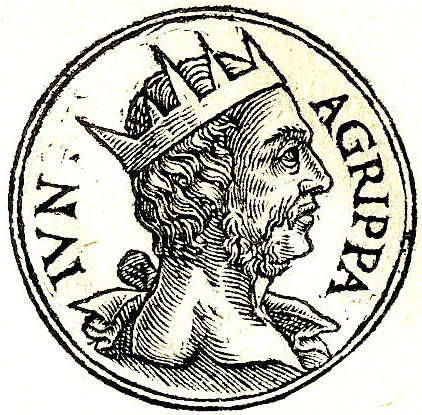
Born 27/28
Died c. 92 or 100AD
Full name
Marcus Julius Agrippa
Dynasty Herodian dynasty
Father Herod Agrippa I
Mother Cyprus
Herod Agrippa II was born in the year 28, and according to a statement that is not uncontradicted (Photius, “Bibliotheca,” cod. 33), it is said that he died in the year 100. He was educated in Rome, where he saw much of the court life that had been so harmful to his father. It proved just as detrimental to him, for he reached maturity just at the time that Messalina and Agrippina dared to flaunt the most fearful depths of profligacy in public. On the sudden death of his father, the emperor Claudius desired him to enter into the full inheritance of all his rights and titles, but upon the advice of court favorites he refrained from doing so. Once again Judea was handed over to the care of procurators, and for the time being the young man was detained at court. Here he had the opportunity of being helpful to his coreligionists from time to time (Josephus, “Ant.” xv. 11, § 4; xx. 1, § 2) and of acquiring proficiency in all the arts of courtly flattery.
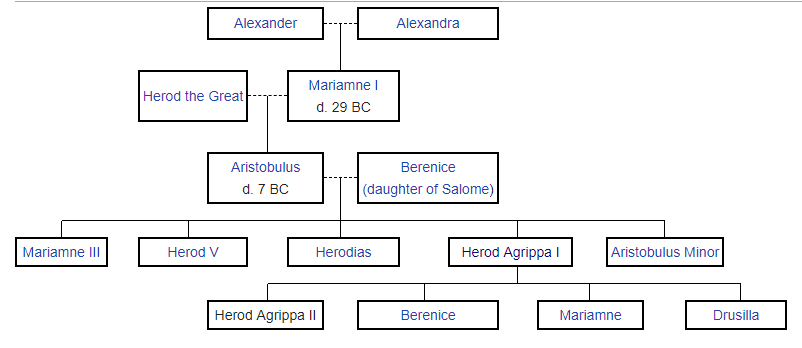
Succeeds Herod II. On the death of Herod II., Agrippa succeeded in having the former’s post promised him. In the year 50, without regard to the rights of the heir to the throne, he had himself appointed (“B. J.” ii. 12, § 1; “Ant.” xx. 5, § 2; 9, § 7) to the principality of Chalcis by the emperor, and also to the supervisorship of the Temple at Jerusalem, which carried with it the right of nominating the high priest. Within three years—possibly before he left Rome to assume the dignity of his office—the emperor presented him with larger territory in exchange for Chalcis, giving him the tetrarchy of his great-uncle Philip—over which Agrippa’s father had also ruled—together with that of Lysanias (Abilene), and the district of Varus (“Ant.” xx. 7, § 1; “B. J.” ii. 12, § 8). Nero, when he became emperor, added to this territory, giving him considerable tracts of Galilee and Perea.
Paul’s Travels
50 – Paul took Silas to Syria and Cilicia. Barnabas took his nephew John Mark to Cyprus and presumably on to Egypt (Acts 15:39).
50 – Paul came to Derbe and to Lystra (Acts 16:1).
50 – At Derbe Paul met Timothy (whose mother was a believing Jew and his father a Greek unbeliever) and circumcised him (Acts 16:1-3). Note: this matter is understood as one of expediency in order that Paul’s work among the Jews would not be hindered. It differs from the matter of Titus (Galatians 2:3) as some at Jerusalem had argued for the necessity of circumcision as a prerequisite to being a Christian.
The Nazarite Vow
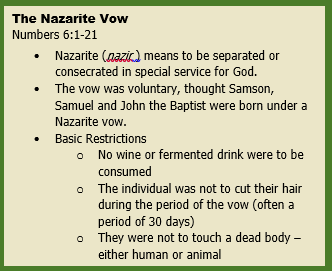
In Lectures 2,3, and 4, Dr. Meredith describes how Paul and his companions participated in a Nazarite vow.
In Numbers 6, Moses was inspired of God to lay out the requirements of a vow of special consecration to God, called a Nazarite Vow. Generally men took this vow for a specific period of time, after which, there was a ceremony marking its conclusion. During the time of their vow, the men were not to cut their hair or shave, nor were they to taste any grape product, including wine, fresh grapes, or raisins, nor were they to touch anything that would make them ceremonially defiled.” (Ogwyn, John. “A Tale of Two Nazarites”)
.jpg)
James propose to Paul to sponsor and pay the expenses of the Nazarite vow for some of the men in order to prove to Paul’s detractors that he is loyal to the Law (21:22-25).
As Mr. Meredith explains in Lecture 2, the book of Acts describes how Paul had apparently taken a Nazarite vow when he cut his hair off at Cenchreae. But there was another major character in the New Testament who lived under a Nazarite vow. That man was John the Baptist.
The two examples in the Old Testament of men who lived under a Nazarite vow were contemporaries, and they served God in leading Israel. But they were very different men.
To read the full story of these two men, just go to Mr. John Ogwyn’s article, “A Tale of Two Nazarites”.
If you’d like to do more research into how the Nazarite vow became woven into Jewish culture in history, a good place to start is the Jewish Encyclopedia. Follow this link for an article on this topic.
Diana of Ephesus
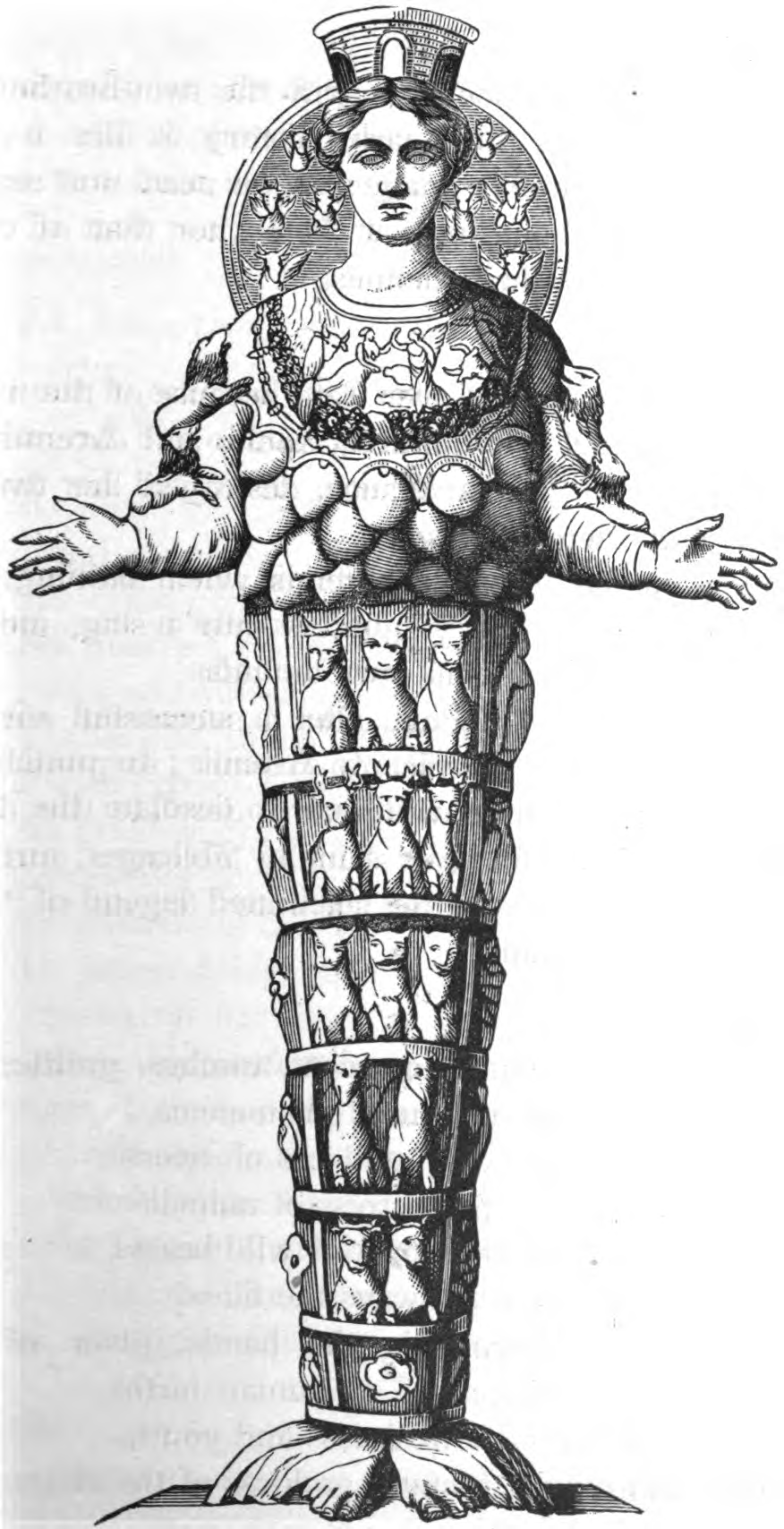 he Diana of Ephesus was a goddess “whom all Asia and the world worship” (Acts 19:27). Diana was the Roman name for the Greek deity Artemis, the “goddess of the moon and the chaste and sister of the sun-god, Apollo” (Colliers Encyclopedia). Artemis was also the “protectress of chastity and patroness of childbirth” and the goddess of seafarers, who brought good weather and profitable voyages (Encyclopaedia Britannica,11th edition). She is often portrayed as a virgin and mother goddess and the “Mistress of Animals.” Her statues depict a multi-breasted figure wearing a turreted crown. Artemis incorporates many features of the great mother goddess who was worshiped under a variety of names in the ancient world (see The Oxford Companion to the Bible).
We also learn that “Artemis is a deity of very ancient origins who survived and attracted great popularity in Asia Minor and Greece into Christian times when… much of her ethos [beliefs & practices] was transferred to the Virgin Mary. Both figures enjoyed major sanctuaries at Ephesus” (Encyclopedia of Gods, Jordan, p. 26).
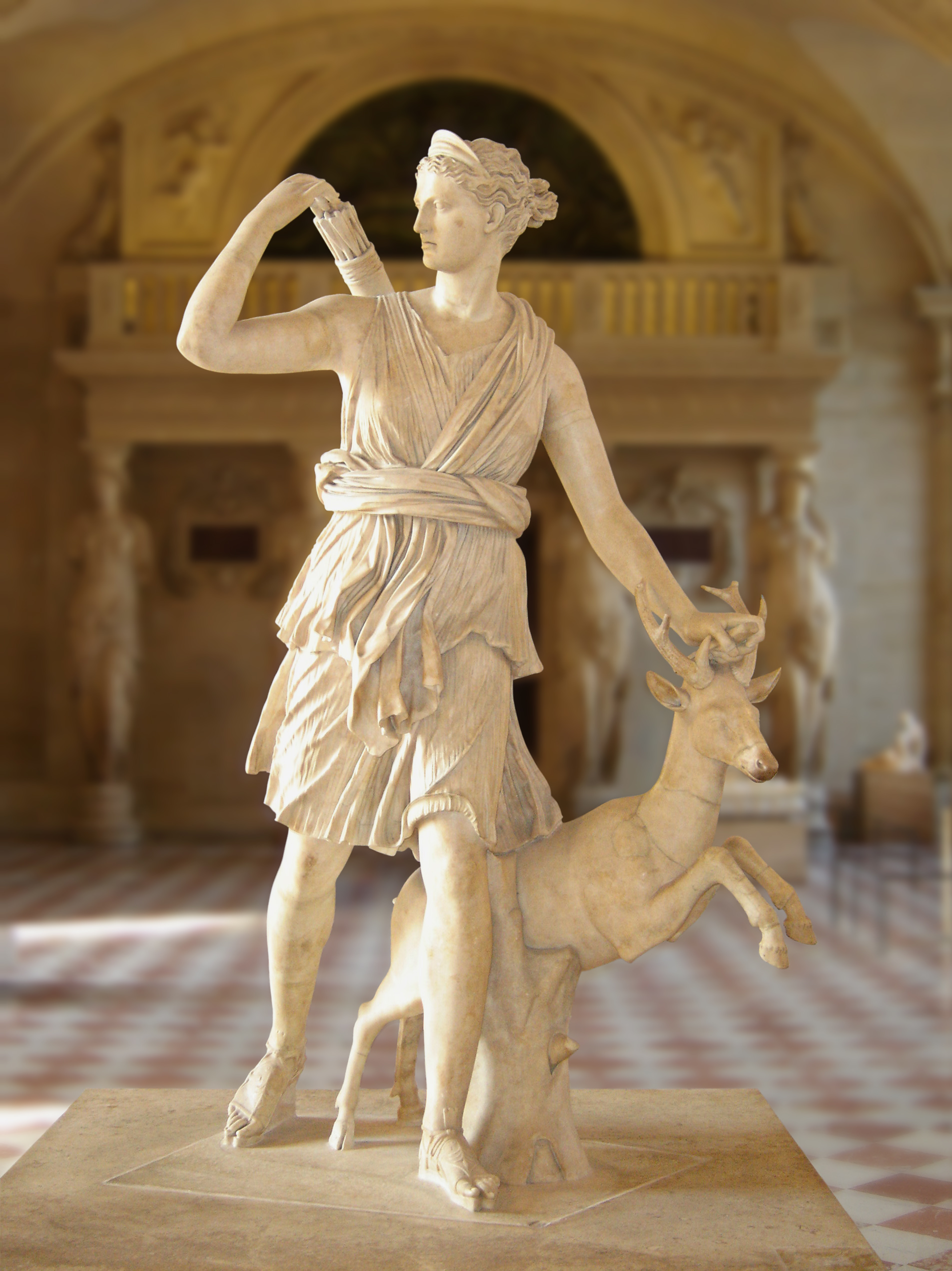 By building a church for Mary in Ephesus and declaring her “Mother of God” near the great temple of the mother goddess Diana, the Catholic church simply borrowed and adapted ancient traditions that allowed new converts to continue pagan practices in a “Christian” context!
…Excerpted from “The Lady of Nations,” Tomorrow’s World, 2003 November-December
To read the whole article, including Diana’s connection to modern-day worship of Mary, read “The Lady of Nations“
To learn more about “Diana”, a good resource is the International Standard Bible Encyclopedia, under the article “Diana; Artemis”.