
Second Thoughts: Paid in Character

Author: Thomas White | Editorial Department, Living Church of God


“My brethren, count it all joy when you fall into various trials, knowing that the testing of your faith produces patience. But let patience have its perfect work, that you may be perfect [mature] and complete, lacking nothing.” – James 1:2-4

We can memorize the verses. We can recite them to ourselves. We can thank God as we look back and recognize how past struggles and losses have benefitted our spiritual growth. But whatever we do, whatever we know, it’s still really, really hard to make ourselves feel truly okay with the fact that as long as we’re human, we’re vulnerable—we can, and will, be hurt.

Mr. Gaylyn Bonjour gave the most recent Living Education assembly, and one of the many biblical truths he addressed was that in order for us to develop the spiritual fruit of longsuffering, we have to suffer for a long time. That, in a nutshell, is what James is saying up there: We can’t achieve holy, righteous character without suffering.

Paid in Character

Dr. Jordan Peterson has talked about how when we work, we’re essentially “sacrificing the present for the future.” We might not feel like working at present, but we know that if we work, we’ll get paid, and if we keep working and keep getting paid, the future will be better, because we’ll be able to buy… you know, food, among other things. Work usually feels pretty tolerable, because we know it’s for something, we know it’s building a better future. As the modern proverb goes, “Ya’ don’t work, ya’ don’t eat.”

Suffering also works that way, in a sense. When we go through a difficult time, or suffer from a loss, God is actually paying us for it in the character He’s growing in us through it. Our hurt and our struggles are “sacrificing the present for the future,” because the character we’re building allows us to show compassion, our struggles make it possible for us to develop empathy. If we don’t work, we don’t eat, and if we don’t suffer, we don’t love.

Saving for a Sunny Day

Now, people sometimes corrupt that truth by saying, “We can only achieve righteous character through suffering,” and that’s on a level of sheer bogus akin to “You should feel guilty if your life is currently pleasant.” Nonsense—if we were paid for our work, but never stopped working long enough to do anything with what we were paid, our work would be pointless, right? Likewise, God knows that if we only suffer, the character we build during all those trials isn’t really going to benefit anybody, because we’ll be too busy dealing with the trials to share it.

So He sends good times our way, too, and during those times, when life actually seems to be going pretty well, He does something extraordinary—He pays us for spending our paycheck. The catch, though, is that we have to spend it on someone other than ourselves. If we use the character we’ve been building through our trials to help others make it through trials of their own, we, in turn, build even more character—and help them to build it, too.

We shouldn’t go looking for new and exciting ways to suffer so that we can build more character—James says that we fall into various trials, not jump into them. But as we struggle, as we go through times of hurt and continue making deposits into our character account, we can be encouraged by the knowledge that we’re sacrificing a tiny, forgettable present for an eternal, beautiful future. 


Thomas White headshot

Thomas White was one of the onsite Living Education students for the 2018-2019 semesters. He also has a Bachelor’s Degree in English. Thomas currently works as an Editorial Assistant for the Living Church of God. According to his wife, he eats pizza in entirely the wrong way.
Second Thoughts: Our Philip

Author: Thomas White | Editorial Department, Living Church of God


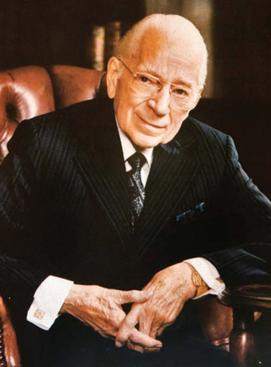
For the most recent Living Education assembly, we watched a video about Mr. Herbert W. Armstrong, and if you’ve been a part of the Church of God for any significant amount of time, you’ve heard his name.

He’s been talked about in sermons, sermonettes, publications, telecasts—he can seem more familiar than certain contributors to the Bible.

Because Someone Guided You

In Acts 8, when Philip asks the Ethiopian if he understands the scripture he’s reading, his candid reply is, “How can I, unless someone guides me?” That one sentence reveals that even if God is calling us, we can’t come to a deep understanding of His truth just by reading the Bible. We need help. We need teachers, like the Ethiopian needed Philip.

I’m sure that’s not a surprise to you. Everyone in the Church can think of someone who served as their mentor in the things of God. We’ll always feel a deep connection to those people—God used them to either shape our lives or change our lives. Whoever comes to your mind as the person who taught you how to obey God, that person is your Philip, and you’ll never forget your Philip.

But you don’t just have one Philip. Actually, there’s a Philip you and I share—one that every single member of God’s modern Church shares, in fact. In an attempt to make that resonate a little more profoundly, let’s quickly play a game I just made up, which I’m going to go ahead and call…

Six Degrees of Mr. Armstrong

Source:  https://en.wikipedia.org/wiki/File:HerbertWArmstrong.jpg
Mr. Herbert W. Armstrong

It’s like Six Degrees of Kevin Bacon, but hopefully a little more meaningful. Ready? I’ll go first.

Who taught me the truth of God? That would be my mom, in the most fundamental sense. Okay, so, who taught her? Her dad, my grandpa. Who taught him? Well, originally, Mr. Garner Ted Armstrong, who my grandpa heard preaching the Gospel on the radio when my mom was a tiny kid. And who taught Garner Ted Armstrong the things of God? His parents—one of whom was, of course, Mr. Herbert W. Armstrong. So, between me and Mr. Armstrong, there are really only four degrees of separation.

Your turn.

Maybe you didn’t grow up in the Church. Maybe you’re here because you saw a telecast, or read a magazine article, or befriended a Church member. But whoever introduced you to the truth of God, the right way of reading His word, I can almost guarantee you that there aren’t more than six degrees of separation between you and Mr. Armstrong—because many were his students.

So yeah—people still talk about him, and will continue to talk about him, because you never forget your Philip. And however any of us came into God’s Church, Mr. Herbert W. Armstrong is our Philip by no more than six degrees.


Thomas White headshot

Thomas White was one of the onsite Living Education students for the 2018-2019 semesters. He also has a Bachelor’s Degree in English. Thomas currently works as an Editorial Assistant for the Living Church of God. According to his wife, he eats pizza in entirely the wrong way.

Children’s Bible Program – Level 3: Lesson 48 “Jeremiah”

Featured Passage: Jeremiah 1, 34-38


King Josiah had worked hard to get Judah back on track to serve and worship the Eternal, but God knew that soon the people would be right back into their old ways of worshiping idols and practicing evil. He needed to send another messenger to warn the people that if they didn’t fully turn to Him they would soon go into captivity like the Kingdom of Israel did. God had picked out a particular young lad named Jeremiah. One day, God came to tell Jeremiah of the plans He had for his life. At first, Jeremiah was nervous and felt like he was too young for the job, but God assured him that He would help him – and He certainly did! 

Discuss: 

Sweet Publishing | FreeBibleImages.org
  1. What was Jeremiah’s biggest concern about being a prophet? What was God’s answer to Jeremiah’s concerns?
  2. Josiah and Jeremiah were both very young men when they began to serve God. What kinds of lessons can we learn from their examples? 
  3. Which of God’s commands did King Zedekiah disobey when he made a covenant with the people in Jerusalem? Why was God angry with Zedekiah? 
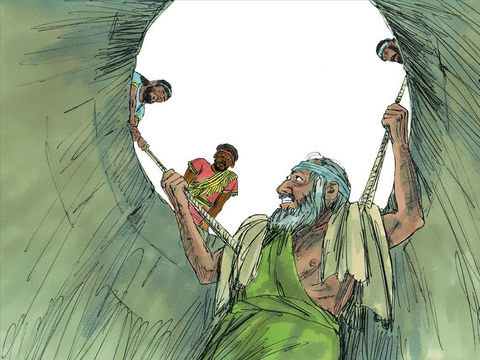
  4. What did the princes do to Jeremiah for warning the people that Jerusalem would be captured (Jeremiah 38)? Who rescued him?
  5. What compassionate act did Ebed-Melech do when he went to pull Jeremiah out of the pit? What can we learn from the story of Ebed-Melech?
  6. Where was Jeremiah when the city of Jerusalem was captured? 

Memory Challenge:

Jeremiah 1:7-8 

But the Lord said to me: “Do not say, ‘I am a youth,’ for you shall go to all to whom I send you, and whatever I command you, you will speak. Do not be afraid of their faces, For I am with you to deliver you,” says the Lord.


Children’s Bible Program – Level 2: Lesson 48 “Rahab”

Featured Passage: Joshua 2


Joshua was preparing to lead the Israelites into the land God promised them. He knew it wasn’t going to be an easy task, and there would be obstacles along the way. There were two big obstacles right from the beginning—the Jordan River and the great, walled city of Jericho. In order to cross over the river and take the city, Joshua would need a plan. So, he selected two men to be spies to go look around the city and bring important information about it back to him. The spies went into the city and found a place to stay in the house of a woman named Rahab. Unfortunately, someone had seen the spies and suspected what they were up to. The two men were in great danger, and Rahab had a risky decision to make.

Discuss: 

Richard Gunther (www.lambsongs.co.nz) | FreeBibleImages.org
  1. Why did Joshua send spies into the city of Jericho? Why was it important that they go secretly?
  2. What did Rahab tell the men who came to capture the two spies? 
  3. Where did Rahab hide the spies? Why was it dangerous for her to do this? 
  4. Why did Rahab want to help Joshua’s spies? What was her request to them? 
  5. It would have taken Rahab a lot of courage to do what she did in hiding the spies and requesting that they allow her and her family to be unharmed in the upcoming battle. What does it mean to have courage? As Christians, how can we gain courage? 

Memory Challenge: 

Joshua 2:11

“And as soon as we heard these things, our hearts melted; neither did there remain any more courage in anyone because of you, for the Lord your God, He is God in heaven above and on earth beneath.”