Charlotte Graduation Ceremony

Author: Thomas White | Editorial Dept./ LivingEd-Charlotte Alumni

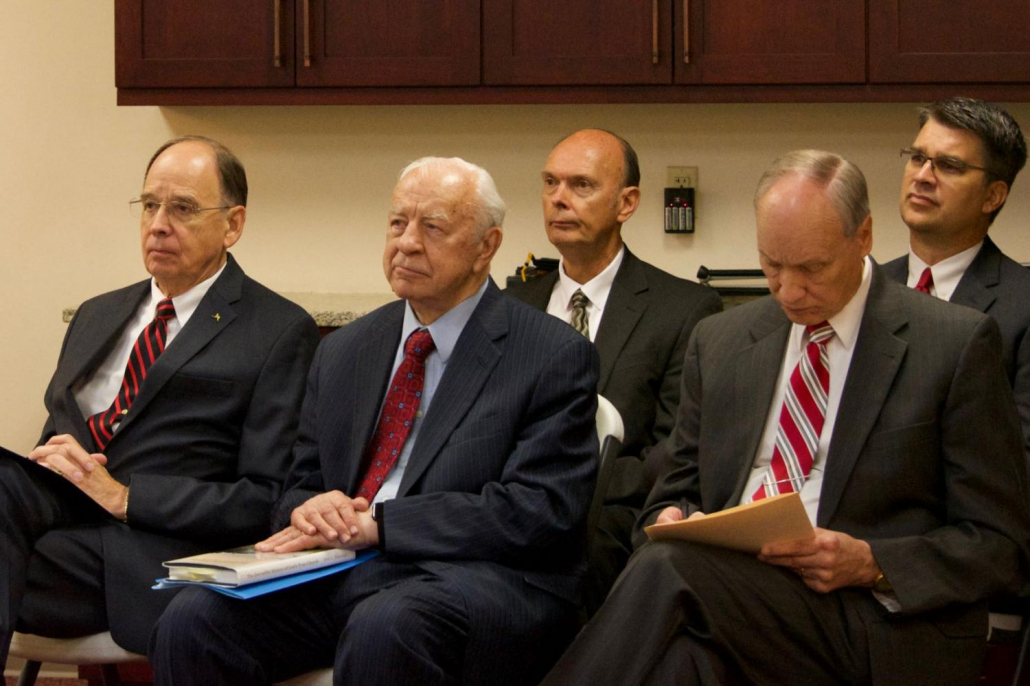
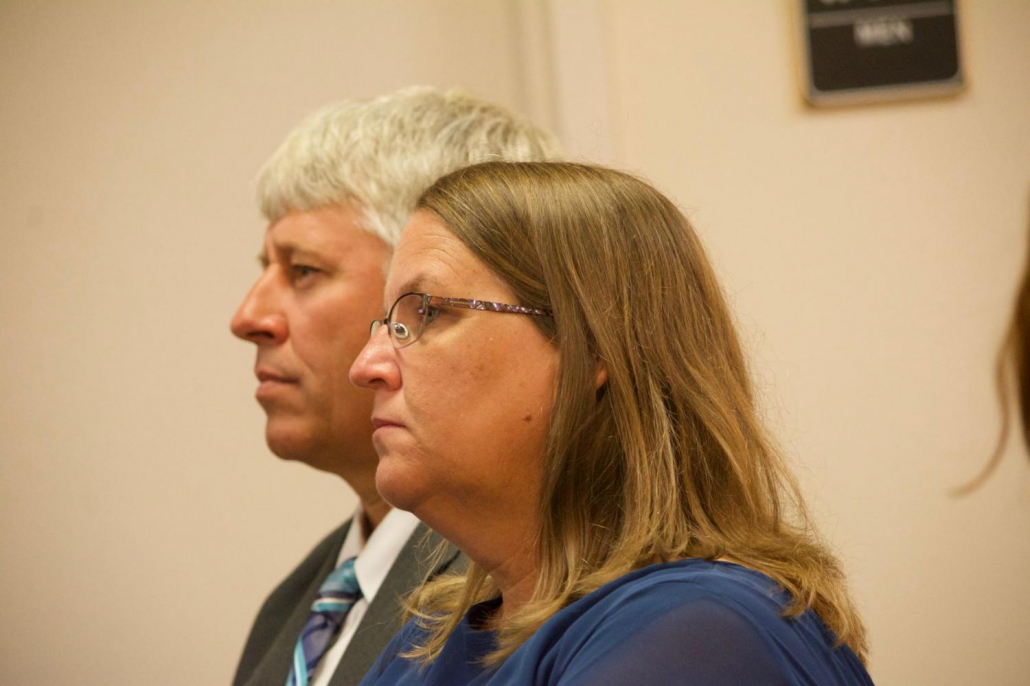
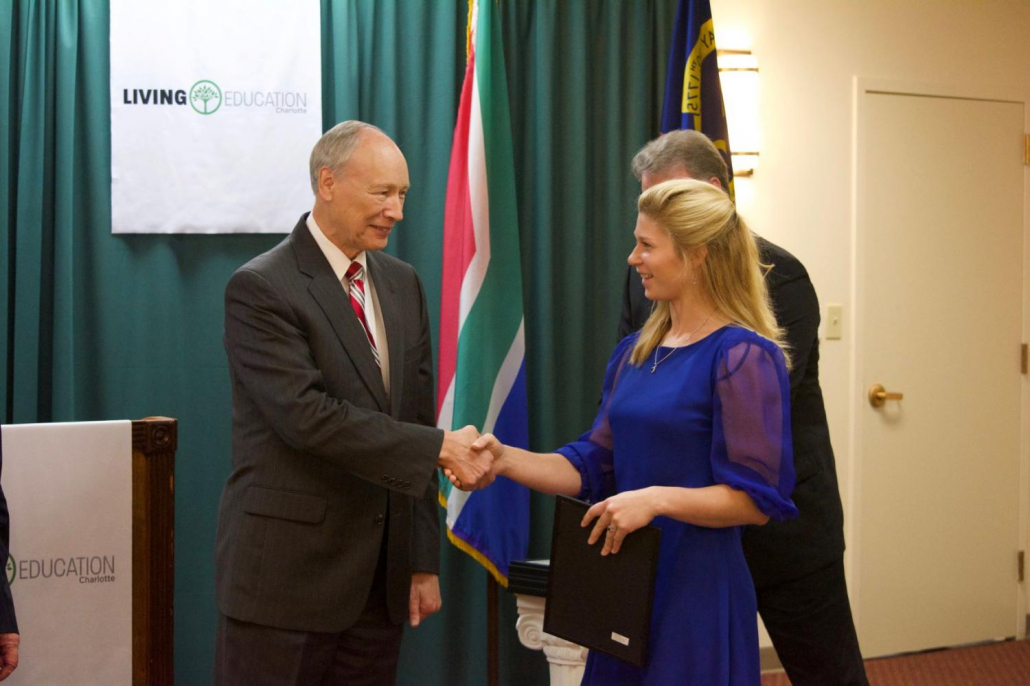
On Friday, May 17, 2019, the first Living Education-Charlotte Graduation Ceremony commenced. The staff meeting room of the Living Church of God’s international headquarters building was filled to the brim with family and friends, and the excitement of the graduates and those present to support them was palpable as the students awaited their certificates in assigned seats at the front of the room. Dr. Scott Winnail, the Living Education Assistant Director and the instructor of three of its courses, presided over the ceremony.

Mr. Richard Ames

As the proceedings began, Mr. Roderick McNair, the Assistant Director of Church Administration, asked God’s blessing upon them. Dr. Winnail then introduced Mr. Jonathan McNair, Living Education’s Director, as the first to speak. Mr. McNair plainly stated the focus of the Living Education-Charlotte program—to support the leadership of God’s Church in its efforts to spiritually feed the flock of people that comprises the Bride of Jesus Christ, and to ensure that the next generation of the Church’s leaders are educated in biblical foundations. Following Mr. McNair’s address, Dr. Winnail introduced the esteemed evangelist Mr. Richard Ames, the Director of Media Operations for the Living Church of God. Mr. Ames detailed the history and legacy of education in God’s Church, from the Ambassador College institutions and Imperial Schools of the Worldwide Church of God, to Living Education’s direct predecessor, Living University.

As Mr. Ames returned to his seat, Dr. Scott Winnail had the pleasure of introducing his father, evangelist Dr. Douglas Winnail, the Church Administration Director. The elder Dr. Winnail also addressed the purpose of Living Education, in a manner of speaking, as he gave reflections and thoughts for the graduates and clarified the ultimate purpose of the education that is human physical life on Earth—to “Serve God and serve other people.” This inspiring message served to invigorate the assembled students and motivate them to apply their knowledge of the true God toward lives of heartfelt service.

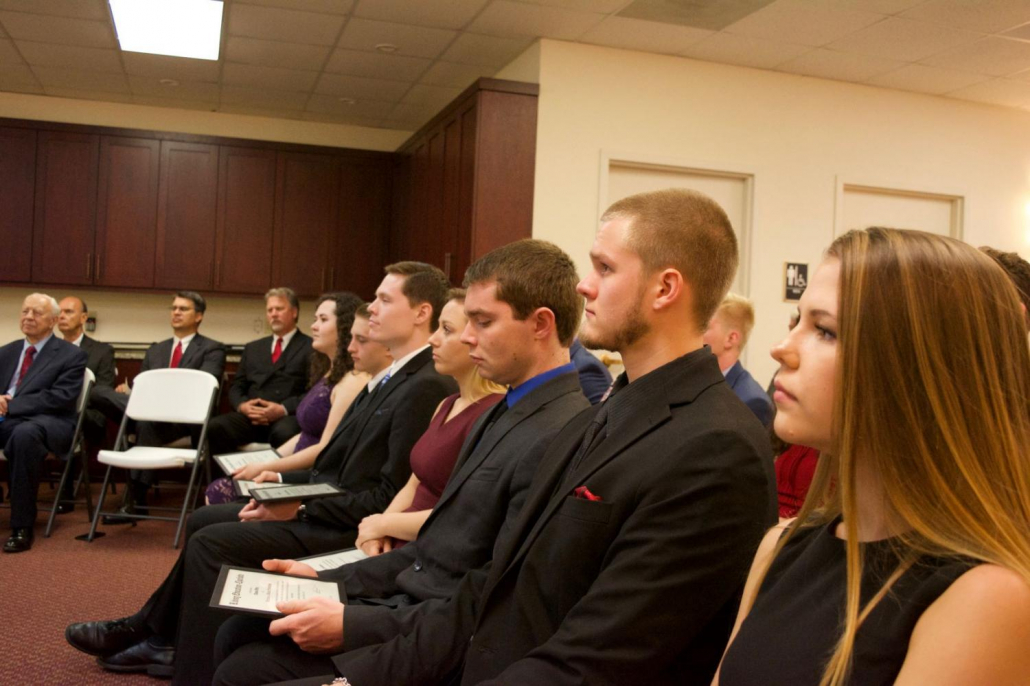
The students listen to Mr. Gerald Weston’s commencement address

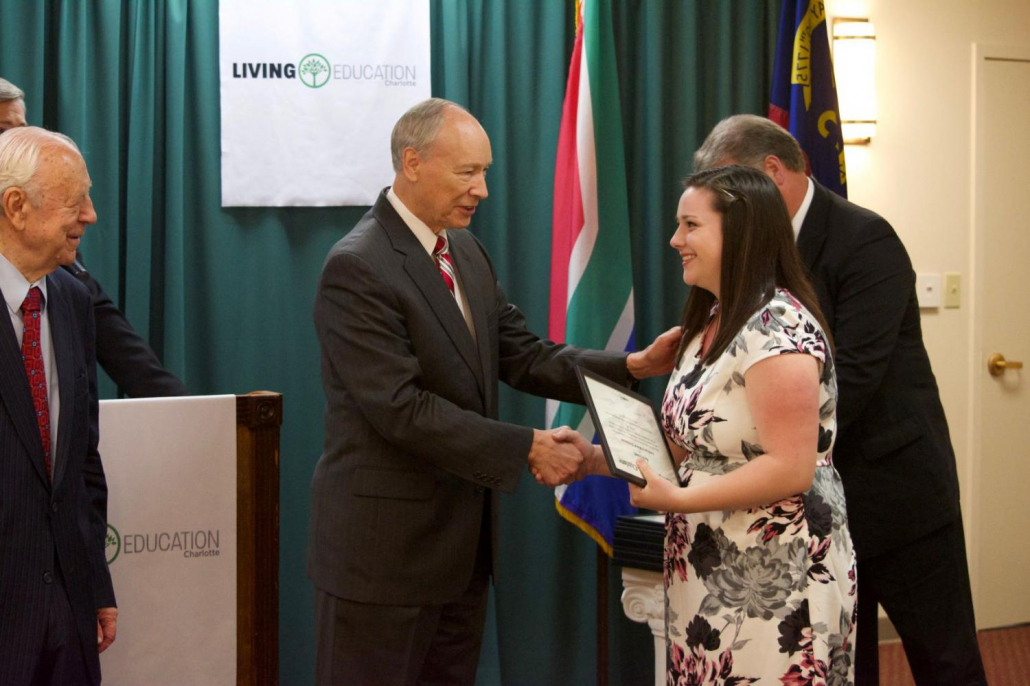
After Dr. Douglas Winnail’s address, Dr. Scott Winnail directed the students to form a line. One by one, their names and hometowns were read, and the students were each given a hard-earned Certificate in Biblical Foundations, framed and ready for proud display upon office walls and living room mantles. Each student was also gifted with an officially-marked Living Education binder, which was, by one student’s description, “swanky.”

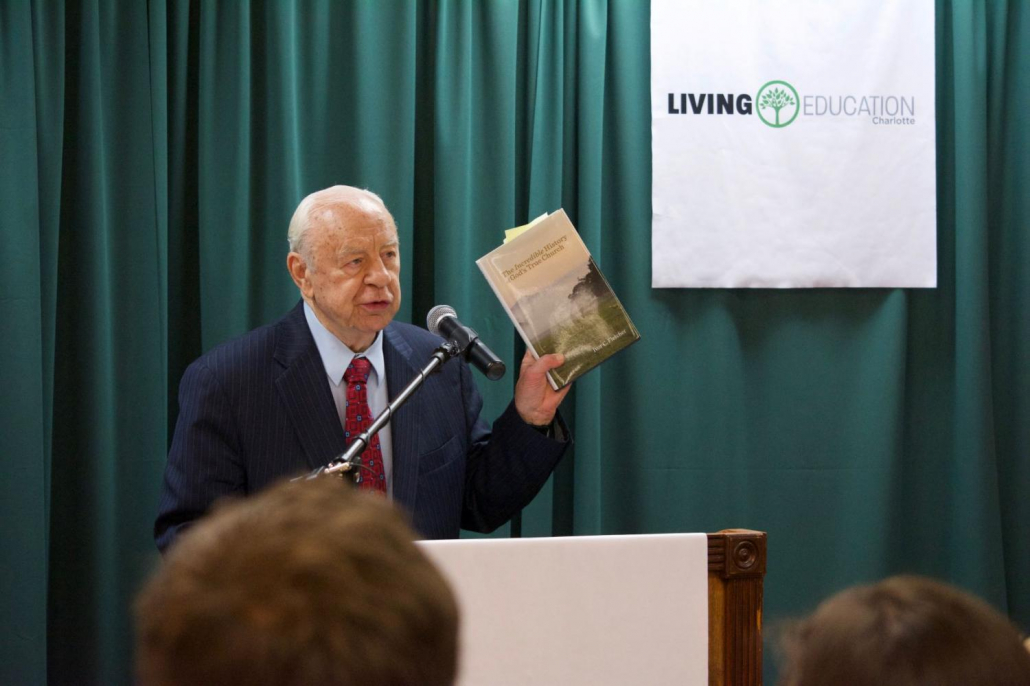
Finally, Mr. Gerald Weston, Presiding Evangelist of the Living Church of God, spoke to the students with an empowering graduation address. Mr. Weston reminded everyone of this world’s increasing hostility toward God’s way of life, and assured the students that they have a “rendezvous with destiny” as the end of the age draws ever closer. Students were encouraged to move forward boldly in Christ’s name, and to strive to grow in His grace and knowledge not because such a task is easy, but because it is right.

As theology faculty member Mr. Kenneth Frank closed the ceremony with a prayer, the students digested the spiritual food they had been served not only throughout the morning’s proceedings, but over the course of their nine-month Living Education experience. Living Education-Charlotte’s inaugural year having come to a close, its students prepared to once again be back in the world, grateful for the training they’d received in becoming greater Ambassadors for Christ.


Commencement address given by Mr. Gerald Weston | More on Instagram

Children’s Bible Program – Level 3: Lesson 29 “Pentecost and God’s Plan of Salvation”

Photo by rawpixel on Pixabay

Read Together: Before time began, God, who became the Father, and the Word, who became Jesus Christ, planned to have a family. The plan was to create human beings in God’s image and place them on the earth where they could learn to choose God’s way and develop godly character. God recognized that under the influence of Satan the devil, mankind would choose to sin, but He had a plan for that as well. Most of humanity, including those who profess Christianity, do not understand God’s plan, but we can. Through His Holy Days, God has revealed His plan to redeem mankind and offer every human being an opportunity for eternal life. The first step in God’s plan, Passover, has already been fulfilled. The Word was born as a human to pay for the sins of mankind by dying for His creation. Pentecost teaches us that God will begin to work with a small number of people through the power of His Holy Spirit. It pictures a harvest of the few that God is working with now who will one day assist Christ in the millennium. Jesus Christ was resurrected from the dead and is now our High Priest awaiting the time when He will return to the earth as King of kings. The firstfruits will be the kings who will rule with Christ in the future.

Read Together: Leviticus 23:15–21; 1 Peter 1:18–21; Revelation 13:8; John 1:29, 36; 1 Corinthians 5:7; Hebrews 4:14–15; Revelation 14:3–4; 17:14.

Discuss:

  • God’s plan to have a family is a central theme throughout the Holy Scriptures. Much of the Bible is a history of what God has done, is doing, and will do to bring about His plan.
  • Ask your child explain the meaning of the first three Festivals in God’s plan of salvation.
  • God gives understanding to those who do what He says (Psalm 111:10). Obedience comes before understanding. Use as an example Mr. Armstrong keeping the Holy Days before God revealed their meaning. Explain that we may not understand everything now (1 Corinthians 13:12).

Children’s Bible Program – Level 2: Lesson 29 “Pentecost and the Firstfruits”

Read Together: Through the annual Festivals, God has revealed to the Church His plan to offer salvation to every human being who has ever lived. The first steps in God’s plan are revealed with Passover and the Days of Unleavened Bread which picture Christ’s sacrifice for our sins and our response to His sacrifice by repenting of our sins. The next Holy Day is the Feast of Pentecost or “The Feast of Weeks”. Once a person is called to God’s way of life and repents of breaking His law they are baptized into the body of Christ, His church. After being baptized, the person has hands laid on them to ask God to give them His Holy Spirit.Once a person receives God’s Spirit, they are then sanctified—set apart for good works, and become one of God’s firstfruits. The Day of Pentecost pictures the harvest of firstfruits, the beginning of God’s spiritual harvest of all people into His family

Photo by Farsai Chaikulngamdee on Unsplash

Read Together: Leviticus 23:15–22; John 6:44; Acts 2:38–39; Romans 6:3–4; Acts 8:14–17; Galatians 2:20; Titus 3:8; James 1:18

Discuss:

  • Ask your child to explain in their own words the meaning of the feast of Pentecost in God’s plan of salvation.
  • Discuss with your child the meaning of repentance. When we repent, we stop breaking God’s laws and start to obey them.
  • Explain to your child that even though they are too young to be baptized, they can begin to follow God’s laws now and reap the blessings from doing so. Children of those with God’s spirit are still set apart for a special purpose.

Review Memorization.

Acts 2:38 “Then Peter said to them, ‘Repent, and let every one of you be baptized in the name of Jesus Christ for the remission of sins; and you shall receive the gift of the Holy Spirit.’”

Children’s Bible Program – Level 3: Lesson 28 “Samuel – The Last Judge”

Read Together: Samuel had an uncommonly fascinating beginning.  Hannah was childless. In her sorrow, she prayed to God for a child, vowing that she would dedicate him to God. God heard her prayer and Samuel was born. When Samuel was weaned, his mother took him to live and serve in the tabernacle with Eli the priest. God spoke to Samuel while he was yet a child, and it became clear that God had chosen Samuel to be a prophet. After Eli’s death, Samuel judged throughout the land of Israel. When Samuel grew old, he appointed his sons as judges to assist him. But his sons were evil, and did not follow in his footsteps. The people revolted against Samuel, and demanded a king. This was disconcerting to Samuel after all his years of faithful service, but God reassured him. The truth was that they had rejected God – not Samuel.  With God’s approval, Samuel anointed two kings of Israel—Saul and David. It was Samuel’s leadership that helped Israel transition from a theocracy that was managed by judges under God to one in which the people were subjects of a king. Samuel, the last judge of Israel, lived in very exciting times, and his story is recorded in the Scriptures, waiting to inspire you.



Richard Gunther (www.lambsongs.con.nz) | FreeBibleImages.org

Read Together: 1 Samuel 1–10;16:1–13; 25:1.

Discuss:

  • What might it have been like for Samuel to grow up serving in the tabernacle from the time he was about four years old? God can use people no matter their age if they are willing to serve. What are some ways you might be able to serve in the congregation?
  • The sons of Eli and Samuel had great opportunities because of their fathers, but they threw them away. Explain to your child that they also have great opportunities as a young person in God’s Church.
  • Even though Israel demanded a king, God chose who would be king. There was no voting. This may be a good opportunity to discuss different forms of human government and how they differ from God’s form of government.
  • Samuel lived in very exciting times. As you read through the entire book of 1 Samuel, have your child identify their favorite scene, character, and miracle in the book.

Review Memorization:

Judges 21:25  “In those days there was no king in Israel; everyone did what was right in his own eyes.”

Children’s Bible Program – Level 2: Lesson 28 “Israel Returns Home”

Richard Gunther (www.lambsongs.con.nz) | FreeBibleImages.org

Read Together: For many years, Jacob worked for his Uncle Laban, but he was not happy. Sensing his discontent, Laban agreed to give some of his sheep to Jacob in payment for his labor. Before long, Jacob’s flocks thrived, and he began to become very wealthy.

Now it was Laban’s turn to be unhappy. As his jealousy and envy deepened, Jacob knew it was time for his family to escape. While Laban was gone, Jacob and all his family made their getaway. Ten days later, Laban and his relatives caught up. What happened? You’ll have to read the story! Don’t worry…they parted ways and no-one was harmed.

But just when Jacob thought things were going better, he found out that his brother Esau was headed his way…with four hundred men! Remember Esau? He was Jacob’s brother. The last thing we heard from him was a promise that he would kill the brother who took his blessing. Things did not look good for Jacob and his family!

Thankfully, things did eventually take a turn for the better for Jacob. He survived yet another hostile encounter, and lived a long and prosperous life, as he passed on God’s promise to Abraham to his twelve sons.

To find out how Jacob survived these adventures, and also wrestled with God, read the chapters below! Oh, and did I mention, he also wrestled with God!

Read Together:  Genesis 30-35

Discuss:

  • Ask your child why they think Jacob left Padan Aram in secret. How does Proverbs 22:3 apply to what Jacob did? How does this principle apply today?
  • Remind your child that Jacob left Canaan with next to nothing, but he returned a wealthy man. Explain that Jacob’s wealth was a result of God’s blessings.
  • Help your child see that God names things what they are. Jacob was no longer the schemer he had been, and his new name, Israel, better reflected his new character. Note the humility Jacob expressed when he met his brother Esau.
  • Explain to your child that the promise of national prominence and great riches were passed down from Abraham to Isaac, and from Isaac to Jacob who became Israel. The nation of Israel is named for this patriarch.

Review Memorization:

Genesis 32:28  “And He said, ‘Your name shall no longer be called Jacob, but Israel, for you have struggled with God and with men, and have prevailed.’”

Second Thoughts: The Chair Legs of Our Lives

Author: Thomas White | Student at LivingEd-Charlotte

“Things will happen that can shock you to your foundation, and depending on what your foundation is, [that] is going to determine how you come through that particular trial.”

Mr. Gerald Weston, Presiding Evangelist | Student Assembly: May 9, 2019

I never planned to be in the Living Church of God. I never planned to sever ties with the organization I was previously involved with, and never planned to be set adrift in a new Church culture, knowing just few enough people to feel lost at the beginning. I did plan to dance with my mom at my—planned—future wedding, and definitely planned to go to her for advice while raising my—planned—future children.

But as Mr. Weston reminded us in the final assembly of Living Education’s inaugural year, life doesn’t go as planned. Not for me, and not for anyone. We all lose things we thought or desperately hoped we would always have, and we are all, at every moment, just one loss away from what we perceive as the ultimate test of our faith.

“Those who are founded on Christ’s teachings are going to be as one who is on a rock foundation. Yes, the waves will come, the wind will blow, even the rock beneath your feet may shake, but if you are solidly attached to it, you’ll come through.”

Our lives are built on a lot more than we might realize, unless we’ve really stopped to think about it. They’re built on the relationships we have with the people with whom we are the closest, on what we do every day to earn an income, on how our bodies continue to function, even on what we spend our leisure time doing.

It is almost like we’re each standing on a chair, occasionally jumping up and down, and all the while hoping that the many, many legs of the chair won’t break. But a lot of them will. As we lose jobs, friends, family members, self-perceptions, our health, places where we felt safe, the chair legs of our lives break.

So we can thank God for the fact that, as Mr. Weston reminded us, we only need three.

“You need to build that strong foundation on a personal basis: Does God exist, is the Bible His word, and where is He working? And if you know the answers to those three questions, and you can prove them to yourself… when the storms come, you will be able to stand.”

As it turns out, our chairs are more like three-leg stools. Even as we lose more, and more, and more parts of ourselves—pieces of our foundation—if as there are three specific legs that always remain in place, the chair won’t fall, and we will remain upright. If we know beyond doubt that God exists, know that the Bible is His inspired and infallible word, and know where He is working through His Church, we can put all of life’s weight on those three legs, and know that we won’t fall.

Our adversary will try to break those three legs, and he’ll usually do so by breaking other legs near them. As Mr. Weston said, we have to constantly guard them with our lives, because they are the true support for our lives. We may be only one loss away from the ultimate test of our faith, but if those three pillars remain strong, it’s not a test we have to fear. It’s just another one we will pass.


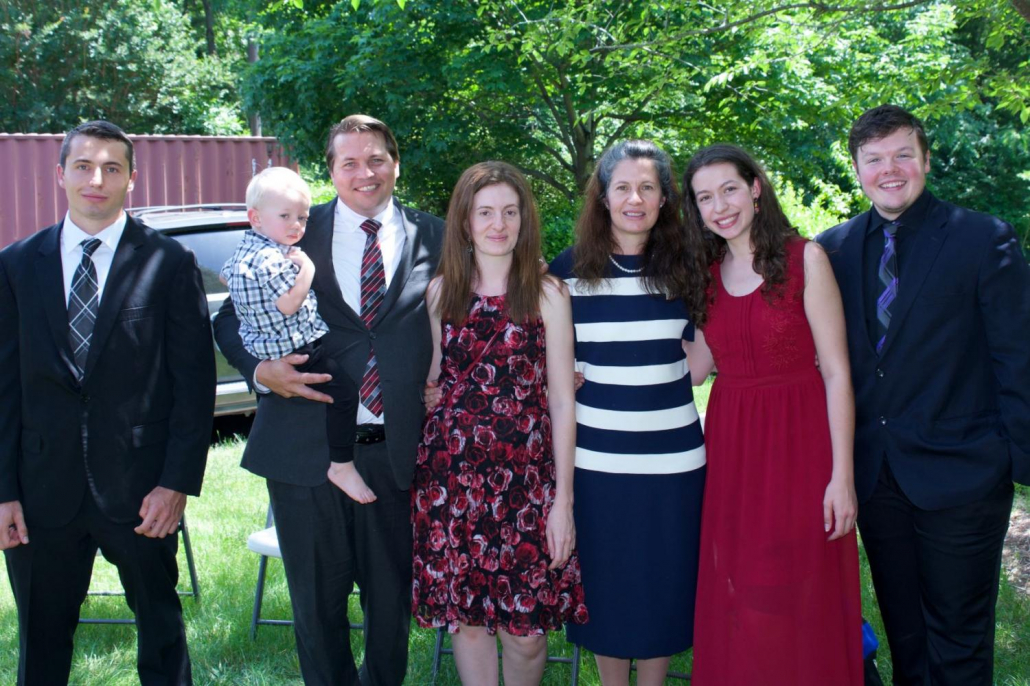
Thomas White headshot

Thomas White was one of the onsite Living Education students for the 2018-2019 semesters. He also has a Bachelor’s Degree in English. Thomas currently works as an Editorial Assistant for the Living Church of God. According to his wife, he eats pizza in entirely the wrong way.

Children’s Bible Program – Level 3: Lesson 27 “Gideon”

Read Together: When we read about Gideon in the book of Judges, we see that, once again, the children of Israel were in trouble. Year after year, the Midianites swarmed across the land of Israel. These nomadic people would set up their camps, allowing their camels and livestock to roam over the land, eating all the crops of the Israelites, leaving nothing. The children of Israel were left with no food for themselves. They hid in caves to escape the Midianites, with no food and no hope. Finally, they cried out to God to deliver them. The story of what happened next is one of the most amazing stories of bravery in the whole book of Judges. God used Gideon and 300 men to save Israel from the Midianite hordes. Read on to learn how!

Sweet Publishing | FreeBibleImages.org

Read Together:  Judges 6-8

Discuss:

  • Did Gideon blame God for Israel’s problems (Judges 6:13)? Explain that people often blame God, but it is usually because of sin that bad things happen. To help illustrate this point, you may want to select an appropriate news story and discuss how the calamity is a result of sin.
  • God does not leave people unaware of their sins and its consequences (Judges 6:8–10). Why did God allow the Midianites to terrorize Israel? Discuss the Church’s role in warning modern day Israel.
  • Why did God have Gideon send all but 300 warriors home?
  • Discuss with your child how Gideon tested God. God was very patient with Gideon by doing as he asked in order to help Gideon to trust Him.
  • The people wanted to make Gideon their king. What was Gideon’s response?

Review Memorization:

Judges 21:25  “In those days there was no king in Israel; everyone did what was right in his own eyes.”

Children’s Bible Program – Level 2: Lesson 27 “Jacob’s Wives and Sons”

Read Together: Jacob arrived in Padan Aram, and began looking for his uncle Laban. Instead, he met Laban’s beautiful daughter, Rachel. Jacob fell in love with Rachel and desperately wanted her as his wife. Laban agreed to give her in marriage to Jacob. But, in return, he demanded that Jacob work for him for seven years. Jacob agreed and served Laban, tending his flocks. When the time for the wedding came, Laban prepared a feast. At the end of the feast, when it was finally time for Jacob to be with beautiful Rachel, Laban tricked him! Instead of Rachel, Laban presented Leah, the older sister, to Jacob. Jacob was furious! He had married the wrong woman! Devious Laban suggested a solution. If only Jacob would work for another seven years for him, he would let him marry Rachel too! Reluctantly, Jacob agreed. But having two wives caused lots of problems for years to come. Jacob continued working for Laban for many years. He eventually became father to eleven sons and one daughter. As he grew older, he finally decided it was time to take his growing family and move back to Canaan.

Richard Gunther (www.lambsongs.con.nz) | FreeBibleImages.org

Read Together:  Genesis 29; 30:1–27

Discuss:

  • Ask your child how they think Jacob felt to be tricked by his uncle. What lessons do you think he might have learned?
  • Help your child to recall the names of Jacob’s sons.
  • Names have meanings. Discuss with your child the meaning of the names given Jacob’s sons. Give a hint of how some of the names portray their future roles. Explain how your child was named and its meaning.
  • Remind your child that God’s intent is for marriage to be between one man and one woman. Jacob’s example shows that anything else causes problems.

Review Memorization:

Genesis 27:29 “Let peoples serve you, and nations bow down to you. Be master over your brethren and let your mother’s sons bow down to you. Cursed be everyone who curses you, and blessed be those who bless you.”

Bonus Memory Verse! Genesis 29:20 “So Jacob served seven years for Rachel, and they seemed only a few days to him because of the love he had for her.”


Children’s Bible Program – Level 3: Lesson 26 “Deborah the Prophetess – Judge of Israel”

Read Together:  In Judges 4, we read that God chose a woman, Deborah, to judge Israel for a period of time. She was well prepared when God called her to be a prophetess and a judge because she knew God’s laws and was wise in their execution.  God told Deborah to send for Barak and tell him to fight against their oppressors – Jabin, king of Canaan and Sisera, the commander of his army. Barak responded that he would only go if Deborah went with him. Though Deborah knew women did not normally fight in war she agreed to go, but Barak would have to sacrifice the glory of the victory to a woman. God gave them the battle plan which they executed with precision. Barak along with ten thousand troops from Napthali and Zebulun soon had Sisera and his troops on the run. They killed them all, but Sisera escaped from the battle to the tent of Jael, a woman whom he thought was an ally. While Sisera slept, she drove a tent peg through his head, and Jael became the heroine of the battle instead of Barak just as Deborah had said. This marked the end of Jabin’s oppression, and Israel had peace for forty years. Yet after all this, Israel again turned to her evil ways.

John Paul Stanley/ YoMinistry.com | FreeBibleImages.org

Read Together:  Judges 4:1 – 6:1

Discuss:

  • Discuss with your child the role of a prophet(ess) and the role of a judge.  What is the role of women in the Church government structure? (See Ephesians 4:11.)
  • Speculate with your child why God might have called a woman to judge Israel at that time.  Perhaps she was the best qualified. Remember, God is not a respecter of persons (Romans 2:11).
  • Point out to your child that Deborah is not the only prophetess referred to in the scriptures(See Exodus 15:20; 2 Kings 22:14; Isaiah 8:3; Luke 2:36).
  • Ask your child why they feel Barak wanted Deborah to go with him to war. Was Barak’s bravery in question? Remember, Barak is listed in the faith chapter of Hebrews 11
  • Explain to your child that those born into the family of God are neither male nor female (Galatians 3:28).  Everyone will have equal opportunity to serve in the Kingdom of God and and be rewarded based on your works (Matthew 16:27).

Review Memorization:

Judges 21:25  “In those days there was no king in Israel; everyone did what was right in his own eyes.”

Children’s Bible Program – Level 2: Lesson 26 “Jacob Flees to Padan Aram”

Sweet Publishing | FreeBibleImages.org

Read Together:  Esau despised Jacob for tricking him, and Rebekah, their mother, discovered his plot to kill him. Rebekah advised Jacob to go to her brother Laban’s home and stay there until Esau had calmed down. Now Isaac and Rebekah were not pleased that Esau had taken Hittite women as wives, so Isaac told Jacob to take a wife from his uncle’s daughters in Padan Aram. Jacob set out from Canaan to the land of Haran with nothing but his staff. On his way, Jacob stopped for the night, and he had a very strange dream while sleeping under the stars. He dreamed there was a ladder that reached from heaven to the earth with angels going up and down. God spoke to him in the dream and gave Jacob the same promises that He had made to Abraham and Isaac. God promised to give him the land of Canaan and to multiply his descendants.  God promised to be with him and to bring him back safely to the land. Jacob was filled with awe! He anointed the stone where he slept and called the place Bethel, which means house of God. For his part of the covenant, Jacob promised to obey God and to tithe to Him. Jacob completed his journey, arriving at his uncle Laban’s home in Padan Aram.

Read Together:  Genesis 27:41-46; 28:1-22; 29:1-13

Discuss:

  • Esau was very angry with Jacob and thought to kill him.  Discuss with your child how thoughts become actions, and we must learn to control our thoughts.  One strategy is to replace bad thoughts with good ones; we can also pray for anyone we may have bad thoughts about. How could Esau apply this?
  • Explain to your child that most dreams do not have any meaning; they are just dreams. Jacob’s dream was special and God caused him to understand that.
  • Discuss with your child what a tithe is.
  • Remind your child that Haran is the place where Abraham and Sarah lived before their sojourn in Canaan; it is near modern day Syria. Laban was Rebekah’s brother, but he was also the son of Abraham’s nephew Bethuel.
  • Point out to your child that Bethel is an important place in biblical history and that we will hear more of it in future Bible studies.

Review Memorization:

Genesis 27:29 “Let peoples serve you, and nations bow down to you. Be master over your brethren and let your mother’s sons bow down to you. Cursed be everyone who curses you, and blessed be those who bless you.”