Crossword Puzzle 02/20/26
Credit for answers and questions: Colleen Frank
Note: Some questions have hints to help you solve them. To view the hint, click on the blue box at the end of the question.

Credit for answers and questions: Colleen Frank
Note: Some questions have hints to help you solve them. To view the hint, click on the blue box at the end of the question.
Author: David Markopoulos | Living Education
These posts summarize the forums that our Living Education-Charlotte students attend each week.
Mr. Chet Carpenter is an area pastor serving in the northern California and south Oregon area. In a recent forum message addressed to the Living Education-Charlotte students, Mr. Carpenter gave important principles to be prepared for the end-times.
Are You a Prepper?
Mr. Carpenter began by asking this question. Many of us know individuals who enjoy camping and the outdoors, and those who aim to be preppers in case of survivalist situations. The world is an unpredictable place, and the results of being unprepared for disasters can be deadly. The things we hope won’t happen often do, and we should be prepared for physical danger.
As we march closer toward the end and the return of Christ, we see world events heating up. It’s important for us as Christians to be prepared not only physically, but also spiritually for the trials that we know are coming. God expects us to be prepared and ready as we seek to inherit His Kingdom.
Building a Fire
Mr. Carpenter spent time explaining some important elements of prepper skills, beginning with fire. Any survivalist should know how to build a fire for emergency situations—but what about spiritually?
It takes physical action to be mentally prepared. Open the Bible, pray, fast, and meditate—these actions help not only keep us focused on God and His way, but they also build a fire of zeal within us. We should be actively stoking this fire and allowing God’s will to consume us. 2 Timothy 1:6 states: “Therefore I remind you to stir up the gift of God which is in you through the laying on of my hands.” Maintaining this fire takes effort on our part. As trials come, our motivation, fortitude, and resilience that are rooted in God’s word keep us ignited for His purpose. To be spiritual preppers, it’s important to start and maintain a spiritual fire.
Food
One of the other critical elements of being a prepper is food. Knowing how to find safe food in the wilderness is an important skill, and spiritually, we have access to spiritual food as well. God has given us His word as a source of sustenance, inspiration, and learning, and through it, we are both informed and satisfied.
Water
Water is undoubtedly a necessity of life. Without water, no one can survive very long. A prepper needs adequate water storage. Spiritually, God has given us living waters and the gift of His Spirit to help us.
The other side to this equation is the fact that we must have a thirst for that living water God is offering. Psalm 63:1 states: “My soul thirsts for You; my flesh longs for You in a dry and thirsty land where there is no water.” God offers the only solution to our thirst, and we must appreciate and seek it out by developing a relationship with Him. If we have a deep awe and thirst for what God gives us, He in turn will give us that gift of His Spirit.
Spiritual Shelter
As a natural result of these steps—igniting an internal fire for God, seeking out the food of His word, and relying on the living waters of His Spirit—we can have rest, protection, and true shelter in God.
While there is nothing wrong with preparing physically for emergencies and trials, we should also remember to keep the big picture in mind, follow the right steps, and keep God first. We should always stay loyal and on fire for God and His will, seek and crave His spiritual food, and rely on the refreshing water of life He gives. God loves us and promises to watch over and protect us, and we should take comfort in His promises.
David Markopoulos is a Living Education alumnus from the 2023-2025 school years. Originally hailing from Chicago, he currently works for the Living Education program.
Credit for answers and questions: Colleen Frank
Note: Some questions have hints to help you solve them. To view the hint, click on the blue box at the end of the question.
Author: David Markopoulos | Living Education
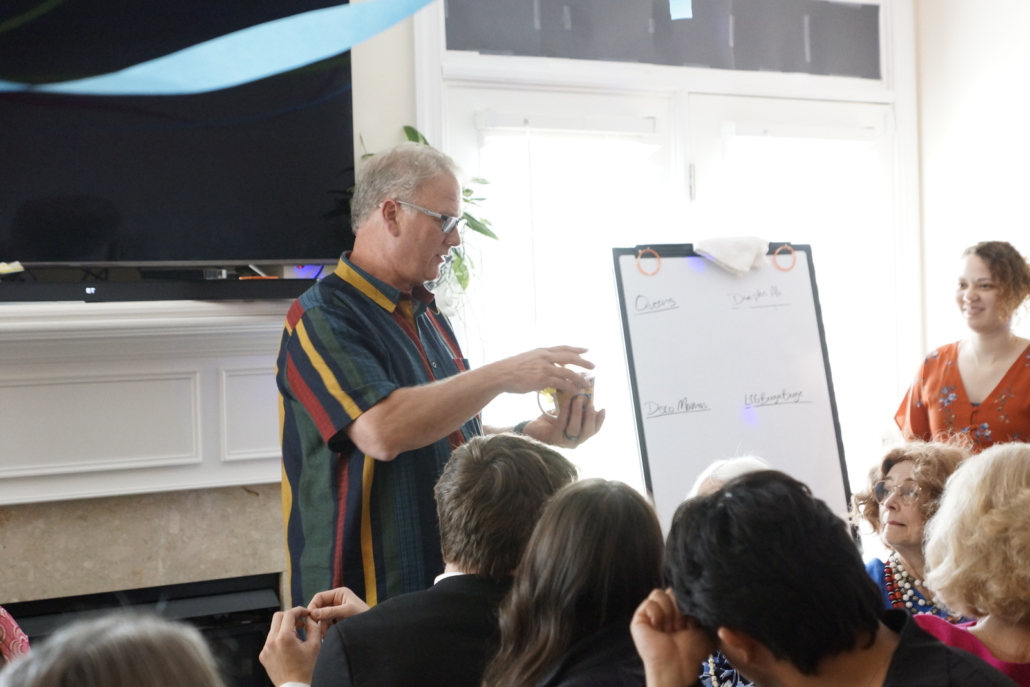
This previous Sunday, the Living Education-Charlotte students hosted the annual Ladies’ Bingo Brunch activity at the LivingEd women’s dorm. The purpose of the activity was to provide an exciting and inclusive activity for the local ladies, and to allow the students to get to know them better.
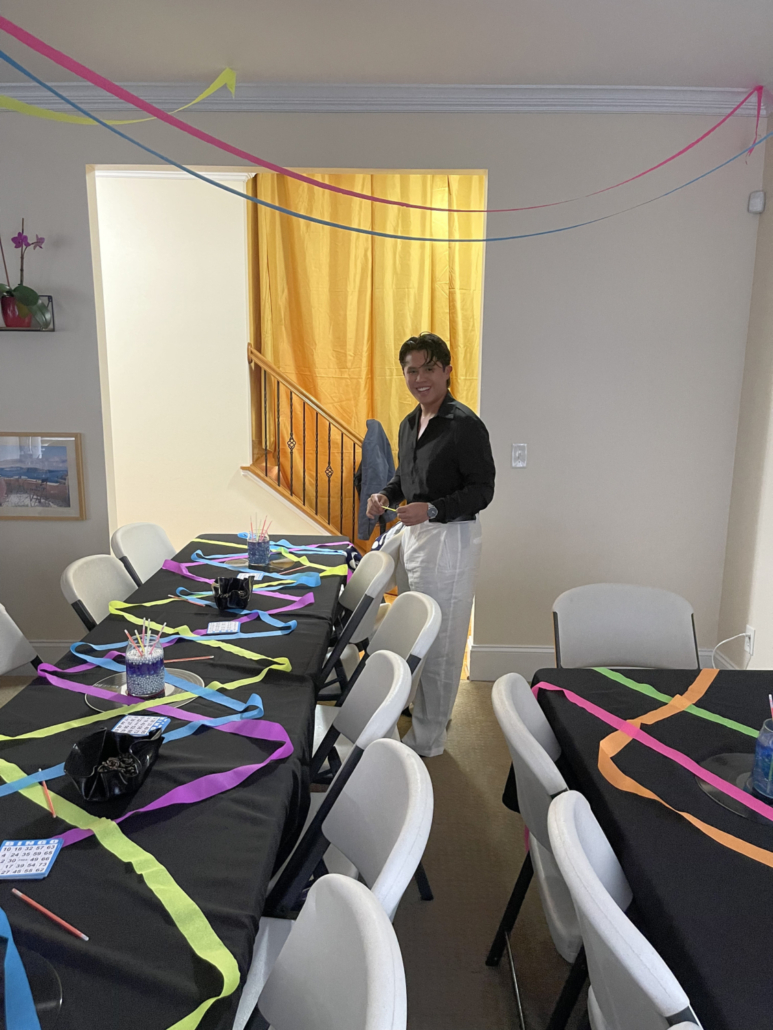
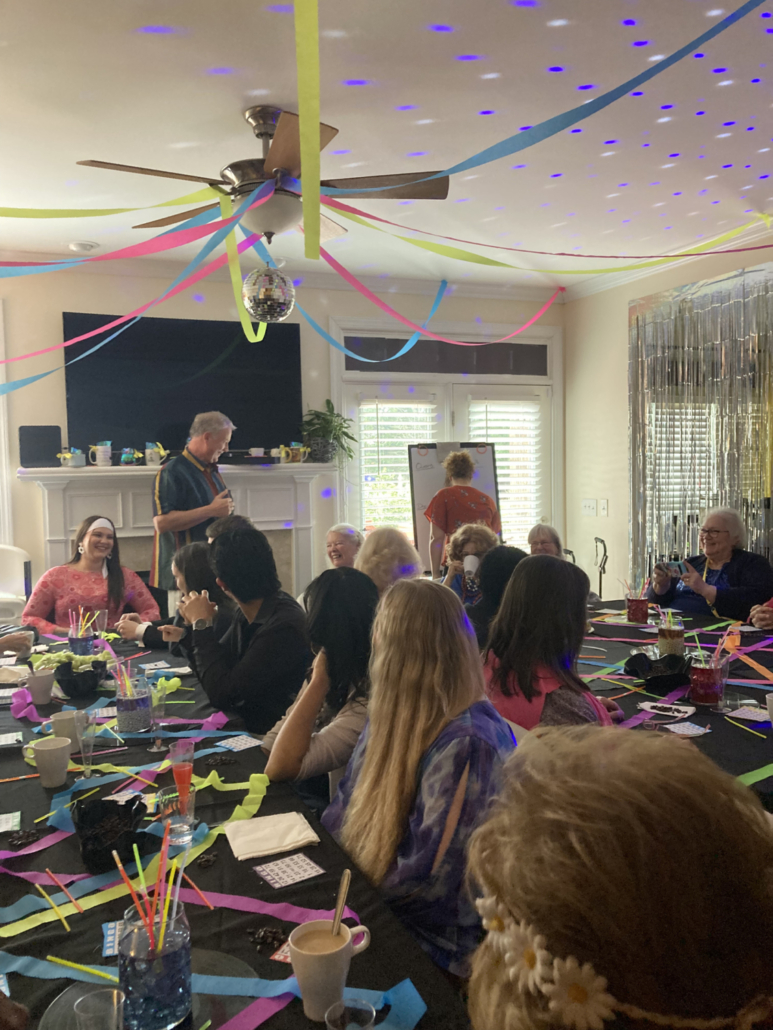
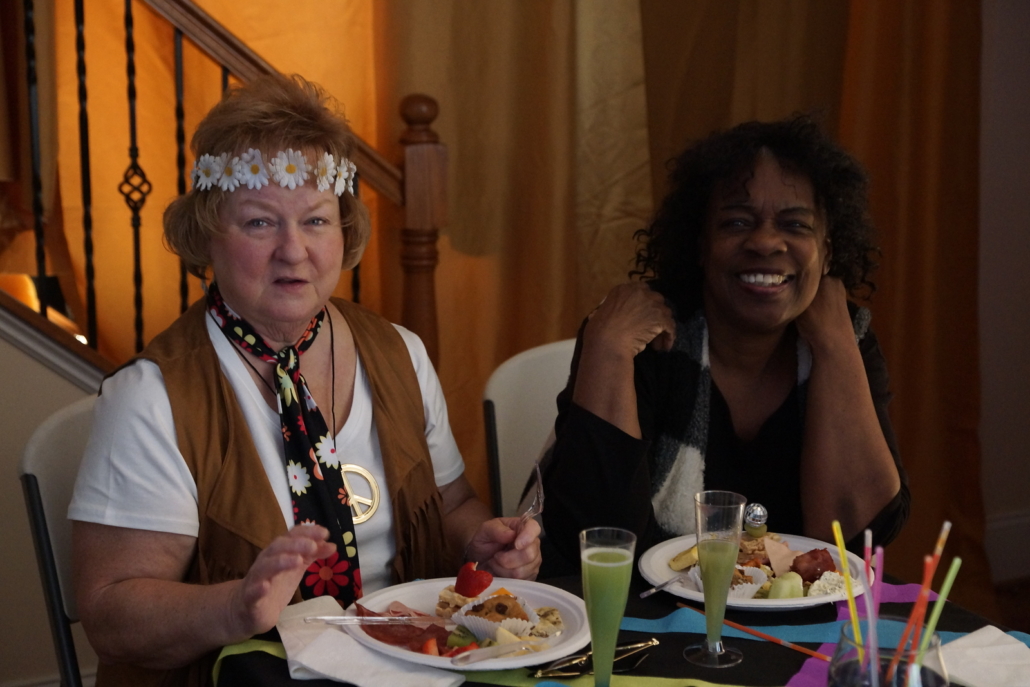
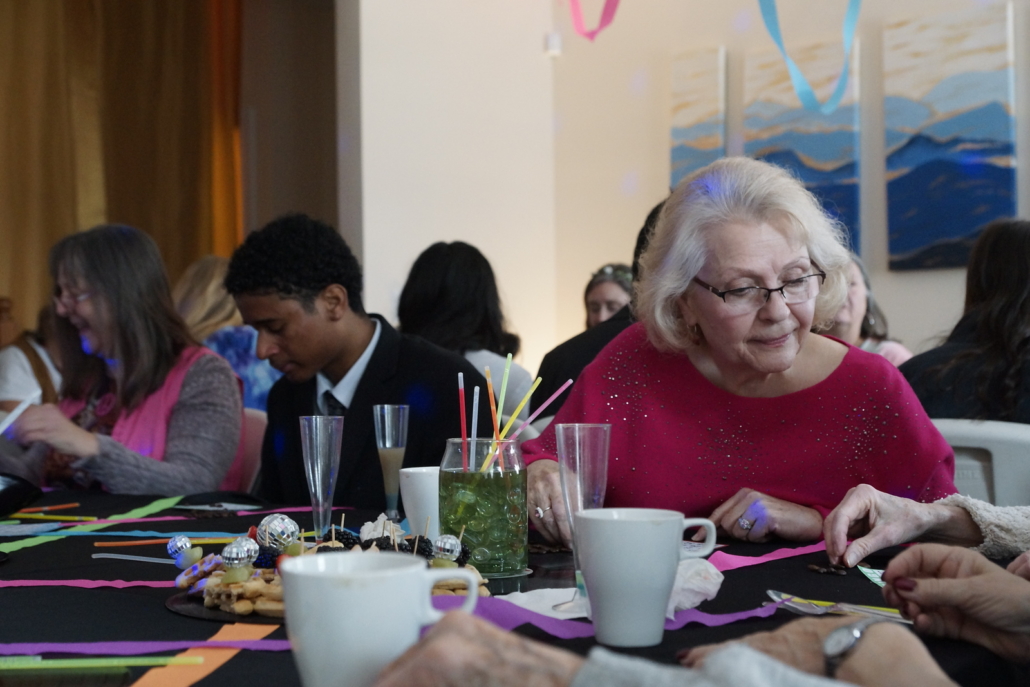
This year introduced a new theme: 1970s Neon Disco. True to the theme, the students spent weeks preparing a menu plan, decorations, invitations, and, of course, their costumes. The night before the activity was spent in busy preparation transforming the downstairs area of the house into a real 1970s disco club. From preparing food and drinks to bedazzled neon outfits to the bright lights and the disco ball in the living room, the students worked hard to give the ladies a positive and enjoyable experience.
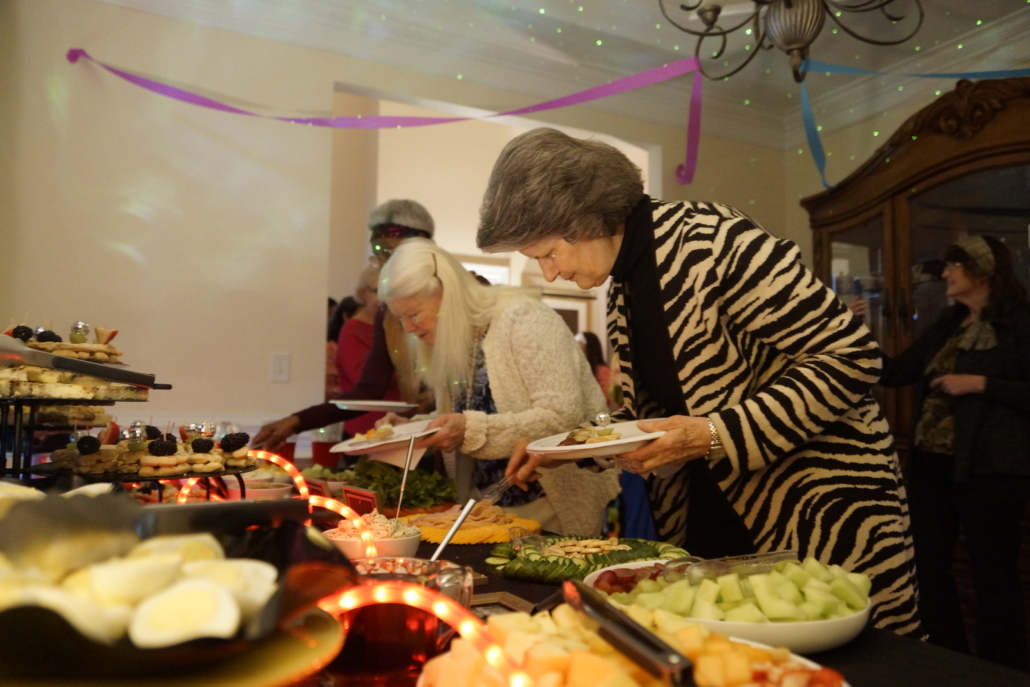
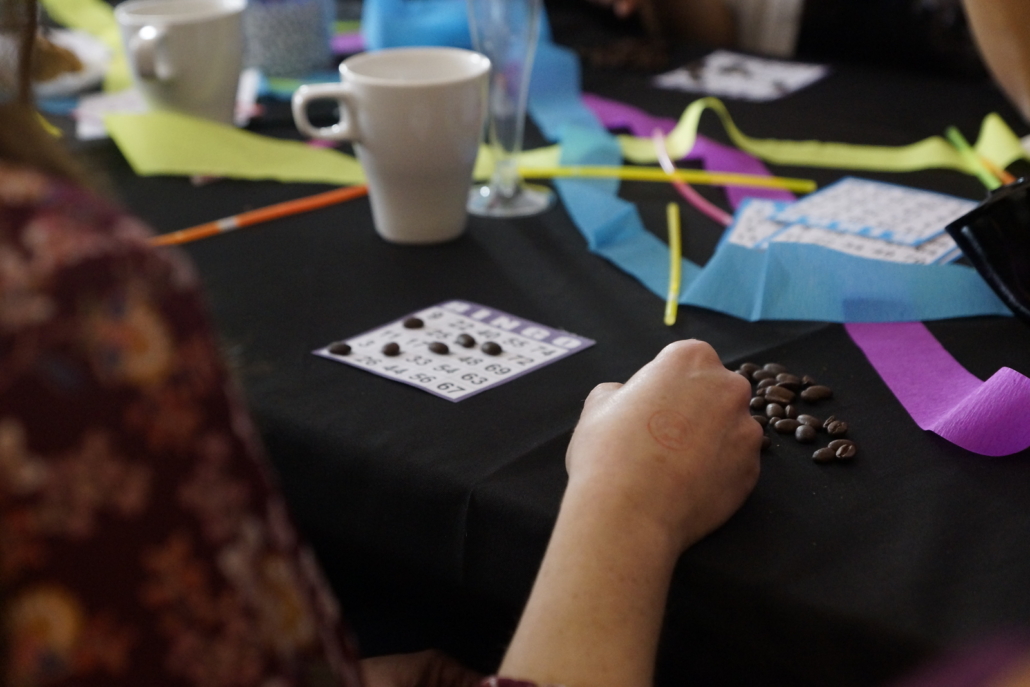
The morning of the activity saw final preparations completed, and as the guests arrived in costumes of their own, the atmosphere was full of energy and enthusiasm. The brunch table was filled with delicious food, and a disco-themed “bar” offered homemade drinks. After the meal, the ladies and students participated together in several lively rounds of bingo played with coffee beans. Several prizes neatly placed in unique coffee mugs were won by each team, and prizes were even given out by Mr. McNair for “most creative costume.”
As the morning passed and the activity concluded, the students and ladies fellowshipped for a time before departing. After a successful activity, the students turned around and set to work taking down the decorations and wrapping up a substantial cleaning effort. This year’s Bingo Brunch activity was a success straight out of the 70s!


David Markopoulos is a Living Education alumnus from the 2023-2025 school years. Originally hailing from Chicago, he currently works for the Living Education program.
Author: David Markopoulos | Living Education
These posts summarize the forums that our Living Education-Charlotte students attend each week.
In a recent forum message, Mr. Rod McNair, an evangelist serving as the Assistant Director of Church Administration, spoke to the Living Education-Charlotte students about what the Church Administration Department does. CAD fulfills a variety of functions within the Church, and Mr. McNair spent time explaining in particular how CAD organizes Tomorrow’s World Presentations, and how it works with the local ministry. In order to do so, Mr. McNair referred to a number of statistics that highlighted what CAD has accomplished over the years. Statistics can be a helpful measure of how much progress is being made.
CAD’s Mission
Church Administration’s mission statement is as follows: “Our mission is to serve, edify, and support the worldwide ministry of the Living Church of God in fulfilling Christ’s commission with coordination, training, and administrative assistance.” This mission statement covers the commission Christ gave His apostles to both preach the Gospel and to feed the flock. Christ’s words implied a sense not only of tending and guiding, but also overseeing and governing.
Tomorrow’s World Presentations
From the early days of Mr. Armstrong’s ministry, not only did he host his popular radio program, he also conducted live presentations. This was part of a 3-point campaign on his part to spread the Gospel: hosting the radio program, printing the mimeographed magazine, and hosting personal public meetings. This was a helpful and important method for promoting the Gospel. Over time, as Dr. Meredith helped revive the Work, ministers who had experience hosting public lectures led the way to a new series of public presentations, what we now call Tomorrow’s World Presentations, or TWPs. TWPs have been an important effort in giving people who are responding to the telecast and the magazine a chance to attend local services.
Today, CAD handles the organization and logistics of TWP planning, coordinating with local pastors and sending out invitations to guests. Since the program’s inception in 2006, over 52,000 people have attended a TWP. There are a variety of topics that intrigue potential guests, such as prophecy and the Holy Days. With so many people looking for someone to answer their questions, TWPs stand in the gap to answer these and other questions. To date, we have held over 2,360 TWPs, and 135 new attendees began coming to Church in 2024 and 2025 thanks to a TWP.
The Local Churches
Another major aspect of what CAD handles is the area of the local Churches. Director Douglas Winnail and Mr. McNair coordinate and work with the local ministry and area pastors to ensure the wellbeing of areas and congregations. We have 433 congregations around the world, with over 12,500 people attending the Church. About 7,400 people have been baptized since 1999—reflecting the growth in the Church in recent decades. There are about 3,000 responses per week to the telecast—an average of which 800 were first-time literature requests.
Our Part Before God
As the local ministry seeks to fulfill the needs of an ever-growing Church, Church Administration fulfills a necessary function within the Body of Christ—not only to govern, but to serve. Mr. McNair referenced Matthew 24:45-46: “Who then is a faithful and wise servant, whom his master made ruler over his household, to give them food in due season? Blessed is that servant whom his master, when he comes, will find so doing.” This instruction is relevant to all of us in the Church, and we should bear it in mind as we do our part to support the Work being carried out to preach the Gospel.
David Markopoulos is a Living Education alumnus from the 2023-2025 school years. Originally hailing from Chicago, he currently works for the Living Education program.
Author: David Markopoulos | Living Education
These posts summarize the forums that our Living Education-Charlotte students attend each week.
In a recent forum presentation, Regional Pastor Mr. Brandon Fall spoke to the Living Education-Charlotte students on the subject of God’s design in the universe. God’s handiwork is visible throughout the many wonders of creation, and the incredible design of our universe points directly to Him.
Ramifications of a Designer
As we in the Church understand, there are numerous proofs throughout creation that point to God, disproving the atheistic idea of the universe randomly coming into existence. The simple reality is that to believe in evolution requires more effort than to accept the evidence of intelligent design. The ramifications of intelligent design dictate purpose, order, and intent in everything that exists.
God’s Detailed Design
We see evidence of that intentional design in unique ways. For example, our sun is not only 400 times larger than our moon, it is also 400 times further away—meaning that from earth, we are able to witness perfect solar eclipses. The mathematical improbability of such precision points not to blind chance, but the wisdom of an intelligent Designer.
The dramatic scale of the universe in which we live is also deeply impressive and an exciting thing on which to meditate. Mr. Fall explained that the earth could fit into Jupiter 1400 times—and that Jupiter could fit into the sun 900 times itself. While we may not realize the size and scale of the universe in which we live, it all points to the design and creativity of God.
Conditions for Life
Mr. Fall explained that in the past, there have generally been two criteria by which scientists believed life could exist on other planets:
1. A planet needs the right kind of star
2. A planet must be the right distance away from a star
Using this criteria, scientists have carefully searched for life on other planets. With only two parameters, it should seem easy—but over time, we have determined far more specific criteria for the kind of planet that can host life. As more and more criteria is added all the time, the odds of a planet like our earth that is capable of hosting life becomes far more slim—showing that the earth is unique by God’s design.
Stretching the Heavens
Mr. Fall pointed out that the truth about the universe defies the logic and probability that tries to refute the idea of a Creator. It takes far more blind faith to believe in blind chance than it does to believe in God’s intelligent design. That design is visionary and expansive—Isaiah 40:22 states: It is He who sits above the circle of the earth… who stretches out the heavens like a curtain, and spreads them out like a tent to dwell in.” Science shows the universe is constantly and rapidly expanding—something that God has placed in motion.
The Same Sky
The design and beauty of the universe and its elements is incredibly complex, and points to the wonderful and creative mind of God. King David mused in Psalm 8:3-4: “When I consider Your heavens, the work of Your fingers, the moon and the stars, which You have ordained, what is man that You are mindful of him, and the son of man that You visit him?” We can be filled with wonder and excitement at the thought that the sky full of stars we see today is the same sky King David looked at ages ago, and that the God who created it all is the same God who has called us now.
David Markopoulos is a Living Education alumnus from the 2023-2025 school years. Originally hailing from Chicago, he currently works for the Living Education program.
Credit for answers and questions: Colleen Frank
Note: Some questions have hints to help you solve them. To view the hint, click on the blue box at the end of the question.
Credit for answers and questions: Colleen Frank
Note: Some questions have hints to help you solve them. To view the hint, click on the blue box at the end of the question.
Author: David Markopoulos | Living Education
These posts summarize the forums that our Living Education-Charlotte students attend each week.
Mr. Michael DeSimone, who serves as the Manager of Broadcast and Digital Media for the Church, delivered a forum message to the Living Education-Charlotte students on the subject of getting a job, sharing three keys to obtaining the job you want. The steps he shared can be critically helpful in obtaining the job you’re working to obtain.
Getting the Interview
Mr. DeSimone began by explaining how to get an interview. Most people simply send out batches of applications to listings they see. This is an ineffective way to ensure an interview, let alone get the job itself. Mr. DeSimone encouraged the students to pray and research companies that they would be interested in working for, rather than listings. Furthermore, don’t wait for an opening to apply to the company – the sky is the limit.
Mr. DeSimone gave specific instructions to help get your resume at the top of the stack rather than discarded. You should send an introductory letter to the company that states your name at least three times to build name recognition. To follow up, you should also send your cover letter and resume. You should also be sure to send it to someone who can make a hiring decision, or to someone who will forward it along to the right person. Finally, follow up with a phone call. Be persistent and don’t settle for voicemail. Instead, try your hardest to follow up directly via call.
Mastering the Interview
Once you’ve gotten the interview, Mr. DeSimone encouraged the students to never wing it. Show up 5-10 minutes early, well-groomed, and dressed appropriately for the situation. Mr. DeSimone advised being dressed a step or two above the level of the work you’d be expected to do. Furthermore, remember to be conservative with fragrance or jewelry.
Mr. DeSimone also encouraged the students to prepare for potential questions and to practice mock interviews beforehand. It’s important to know yourself, and to understand your strengths and weaknesses. Be prepared to answer questions about yourself and to be honest with your interviewer.
Negotiating Compensation
If the interviewer recognizes that you can provide value to the company and is intent on hiring you, it’s important to calibrate your enthusiasm before negotiating salary. Don’t discuss pay too early or too late in the game. If your interviewer is set on having you, they will want to retain the prospect of hiring you. That means they’re less likely to go lower on a perceived win-win compensation agreement. Don’t discuss the salary until you know that you have the job in the bag and that you want each other.
These principles are important and useful tools for obtaining an interview, mastering it, and navigating the details of compensation. Mr. DeSimone encouraged the students to pray before pursuing a job, and to be persistent and proactive.
David Markopoulos is a Living Education alumnus from the 2023-2025 school years. Originally hailing from Chicago, he currently works for the Living Education program.
Author: David Markopoulos | Living Education
These posts summarize the forums that our Living Education-Charlotte students attend each week.
January 16th, 2026 was the 40th anniversary of the death of Mr. Herbert W. Armstrong. For a recent forum presentation, the Living Education-Charlotte students had the opportunity to watch a Behind the Work film from the year 1982. This video covered several major aspects of the Work being done by the Worldwide Church of God, and familiarized the students with the heritage of the Church of God.
The video contrasted the humble beginnings in Eugene, Oregon to the extensive facilities in Pasadena at the time. Mr. Armstrong pioneered the modern era of the Work from a small office space. By 1982, the Church’s headquarters included many buildings such as the Ambassador Auditorium, various college facilities, and more.
The film also showed several behind-the-scenes meetings between Mr. Armstrong and department heads, showcasing different aspects of the Work, including the editorial process, the college, facilities management, and Church administration. Today, we have several departments following in those same footsteps and performing many of the same types of jobs. At that point in time, the Church had over 400 congregations, and regularly maintained refresher courses for the ministry to keep them up-to-date and focused on their mission to serve the membership.
While this era of the Church may seem far in the past for us, this was a relatively recent time in history. God used Mr. Armstrong and other faithful men and women to carry out a large-scale Work, making use of resources and technology that had never existed up to that point in history. Today, we have the responsibility of carrying on that same Work of preaching the Gospel and preparing for the coming Kingdom.
David Markopoulos is a Living Education alumnus from the 2023-2025 school years. Originally hailing from Chicago, he currently works for the Living Education program.